

Air Cooled Hydraulic Piston Pump Services for Ceramic Filter Press Systems
2026-08-19
Keeping a ceramic filter press at full capacity often comes down to one overlooked component: the air cooled hydraulic piston pump. When it stumbles, filtration cycles drag, pressure drops, and expensive downtime follows. That’s where Sinou steps in—not with generic fixes, but with service built around the real operating conditions of your press. From heat-related wear to seal degradation and flow instability, our team handles the issues that off-the-shelf maintenance misses. In this post, we’ll walk you through what dedicated pump service looks like and why it matters for your ceramic process.
What Ceramic Filter Press Operators Should Watch for in Air-Cooled Piston Pumps
Ceramic filter press operators often treat the hydraulic power unit as a black box, but air-cooled piston pumps demand closer attention than their water-cooled cousins. The first thing to watch is the cooling fins themselves. A thin layer of clay dust or slurry splash can act like a blanket, trapping heat that would normally dissipate into the air. In a typical press room, airborne particles settle fast, so a quick visual check every shift beats waiting for a temperature alarm. If the fins feel hot but the air around them is moving freely, chances are they need a blast of compressed air or a soft brush, not a full teardown.
Another overlooked signal is the sound pattern during the high-pressure hold cycle. Air-cooled piston pumps often run slightly hotter at the cylinder head, and if a bearing starts to wear, the pump will emit a rhythmic knock that gets sharper as the hydraulic oil thins out. Operators can pick this up by standing near the pump during the final pressing stage, when flow demand drops but pressure stays high. A consistent metallic tick that tracks with piston speed usually points to cavitation from a restricted suction line or low oil level. Ignoring it can turn a minor seal leak into a scored cylinder bore.
Finally, monitor the oil temperature trend rather than relying on a single reading. Air-cooled piston pumps tolerate brief spikes, but sustained operation above 65°C degrades seals and accelerates varnish formation. Operators should note how quickly the temperature returns to normal after the press opens. A slow recovery often means the fan shroud is clogged on the intake side or the oil cooler bypass valve is stuck open. Simple fixes—like relocating a nearby hot slurry pipe or adding a small duct to direct cooler air—can extend pump life without any component changes.
Rebuilding Worn Pump Cores Without Replacing the Entire Assembly
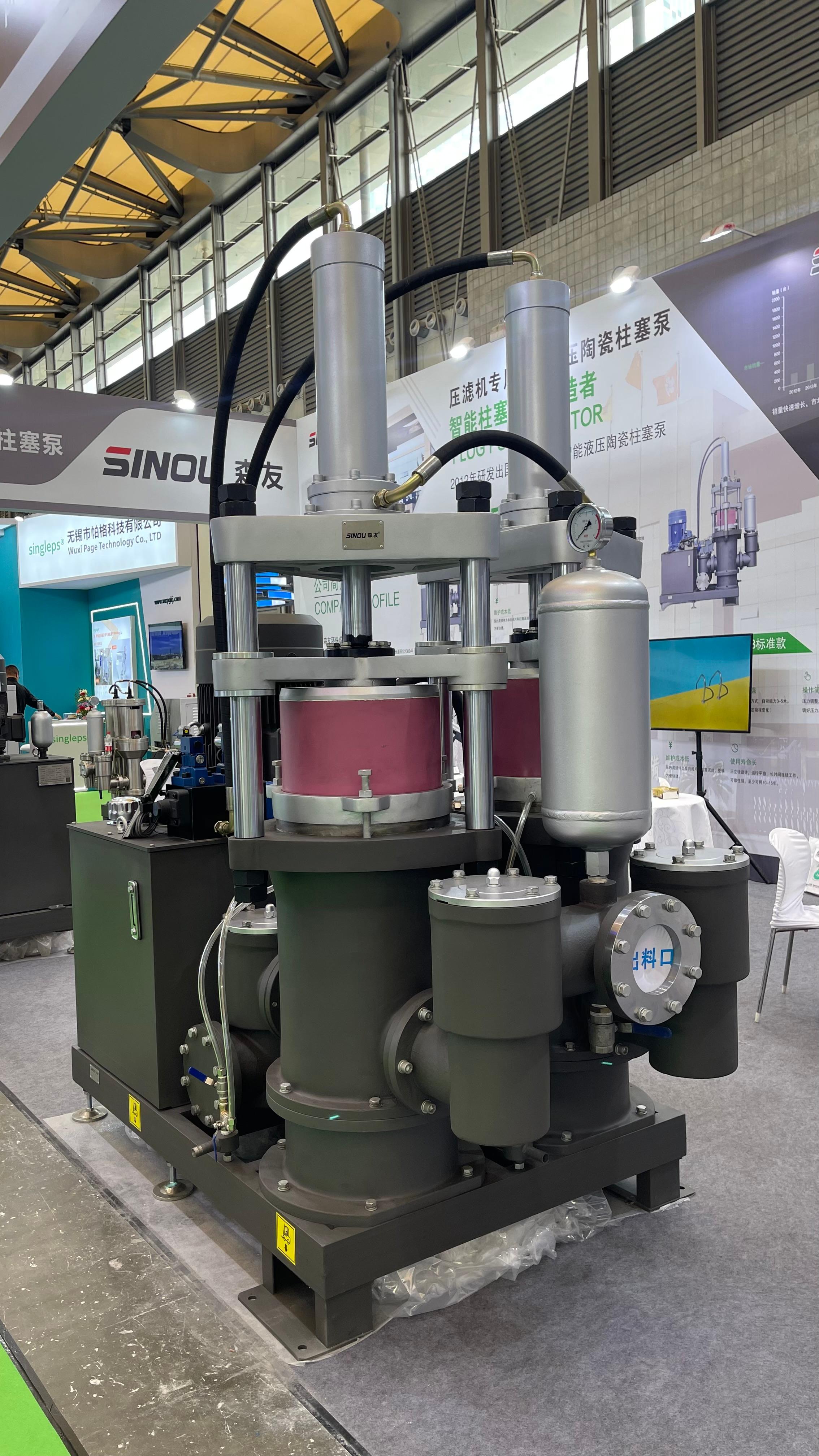
A pump core rarely fails all at once. Erosion and cavitation chew at the impeller vanes and volute lips long before the casing becomes scrap. Rebuilding starts with a detailed dimensional map of the wearing rings, shaft sleeves, and bearing fits. The goal is to find the original hydraulic profile underneath the damage and restore it, not to guess at what a new part should look like.
Once the core is stripped and blasted, worn surfaces are built back up with weld overlay or thermal spray, then machined to the original clearances. On multi-stage pumps, this means resetting the interstage bushing bores and re-establishing the impeller hub runout to within a few thousandths. New wear rings are often machined from bar stock and shrunk in place, which lets the shop hold tighter running clearances than many OEM replacements. Sealing faces get lapped rather than replaced, preserving the casing's original centerline.
The payoff shows up in both lead time and cost. A rebuilt core can be back on the skid in three to five weeks, compared to months for a full assembly. More importantly, the original pressure boundary stays intact, so there's no need to requalify welds or update piping. Final checks include a wet run to verify vibration and flow, plus a leak test across the mechanical seal faces. For plants with repeated wear patterns, keeping a spare rebuilt core on the shelf turns a planned outage into a one-day swap.
Matching Hydraulic Output to Filtration Cycle Demands
Getting the hydraulic output right for each stage of the filtration cycle isn't just about picking a bigger pump. It means reading the pressure curve as the cake builds, then adjusting flow so the media doesn't blind early or compact unevenly. A common misstep is running the same flow rate from precoat through final rinse, which wastes energy and shortens run length. Instead, match the ramp-up to the actual permeability drop, and let the system breathe during backwash rather than forcing a fixed reversal.
Field adjustments often reveal that the peak demand comes not at the start of the cycle, but when the differential pressure climbs past two-thirds of the terminal setpoint. At that point, slight reductions in output can extend the cycle without compromising throughput. Operators who log pressure versus time for a few weeks usually spot a repeatable pattern, allowing them to set a hydraulic profile that tracks the real resistance curve instead of a flat specification.
One practical approach is to stage the supply with a variable-speed drive tied to a differential pressure transmitter. The control loop doesn't need to be aggressive; a soft response over thirty to sixty seconds prevents hunting. During the rinse and purge steps, a lower, steady flow clears residual solids more effectively than a sudden surge, which can re-entrain particles. The goal is to let the filtration media dictate the pace, and then supply only what each phase actually needs.
On-Site Repairs That Keep Filter Lines Moving
When a filter housing starts weeping at the clamp or a differential pressure gauge spikes mid-shift, sending the unit back to a workshop eats hours that most plants simply don't have. On-site repair crews bring the machine shop to the line, swapping out gaskets, re-torquing bolts, and replacing damaged pleat packs right where the equipment stands. This eliminates freight time and keeps the process fluid from cooling or settling, which matters more than most people realize for viscous or temperature-sensitive streams.
A good field technician shows up with a kit that goes beyond basic wrenches: portable hydraulic test stands, borescopes for inspecting internal welds, and a stock of OEM-identical seals and diaphragms sized for the specific filter models in use. Instead of guessing, they run a quick pressure-decay test to pinpoint the leak path, then pull the element stack and check the end caps for bypass. Many jobs—like replacing a scored shaft on a rotary filter or reseating a flanged connection—can be finished in two or three hours, with the line back to full throughput before the next break.
The real payoff shows up on the maintenance log. Plants that schedule quarterly on-site inspections and allow the repair crew to do minor rework immediately see far fewer emergency shutdowns from filter blowouts or sudden pressure drops. It's not about heroic midnight callouts; it's about having someone on the floor who knows which cheap O-ring will fail next month and swaps it during a planned lull. That keeps the filter line moving without drama, and without the hidden cost of running a backup unit at reduced flow for days.
Spare Parts Planning for Older Air-Cooled Pump Units
Bearings, shaft sleeves, fan blades, drive belts, cooler cores, and gaskets usually wear out first on aging air-cooled pump units. Track the operating hours and condition of these items after every inspection. Since original manufacturers often discontinue support for models older than 15 years, confirm interchangeability with aftermarket or remanufactured parts before you face an unplanned outage.
Set reorder points around the longest realistic lead time plus the time needed for shaft inspection and bearing fit checks. For units that have exceeded their design life, keeping a complete rotating assembly, or at minimum an impeller and bearing cartridge, on the shelf can shorten repairs dramatically. Adjust inventory levels using vibration and temperature trends rather than calendar age alone.
Cross-reference current part numbers with obsolete supplier databases and salvage networks, and record dimensional data for critical components in case custom machining becomes necessary. Pay extra attention to fasteners, cooling fins, and fan shrouds because corrosion often drives replacement more quickly than mechanical wear on older air-cooled designs.
Thermal Tuning for Pumps Running Around the Clock
Continuous operation pushes every component toward a steady thermal state, but reaching that state without controlled tuning often means living with inefficiencies. For pumps that never stop, the clearances between wear rings, impeller hubs, and casing bores shift as temperatures rise. Instead of accepting these shifts as fixed, field teams can adjust axial positioning or use preloaded bearing arrangements to hold running clearances within a narrower band. The goal is not to eliminate thermal growth—that would fight the machine—but to steer it into a repeatable pattern that maintains hydraulic efficiency hour after hour.
One often-overlooked area is the temperature differential between the pump casing and the shaft. When the casing heats faster than the rotating assembly, internal gaps can close quickly and cause light rubbing, which then adds more heat and accelerates wear. A practical thermal tuning approach involves measuring differential expansion during a cold start and again after four or six hours of running. Those two data points reveal how much the rotor position drifts. From there, shimming the thrust bearing or adjusting the mechanical seal setting can compensate for most of the drift before it becomes a problem.
Cooling jackets and heat exchanger flow rates also play a direct role. Rather than running auxiliary cooling at maximum capacity all the time, matching the jacket water temperature to the process fluid temperature keeps thermal gradients shallow. Shallow gradients mean less distortion in the casing and less chance of the shaft bowing during a hot restart. It takes a few extra temperature sensors and some trial adjustments, but the result is a pump that settles into its operating envelope instead of constantly fighting it.
FAQ
Watch for a gradual drop in clamping pressure, unusual whining or knocking noises under load, or the pump running hotter than normal even with clean cooling fins. On ceramic filter press systems, a slight internal leakage at the piston shoes often shows up first as slower plate shifting before complete failure.
These systems often run long cycles in dusty, warm environments where water cooling can be messy or unreliable. An air cooled design uses a fan and finned housing to pull heat away from the pump body. If the fins get caked with clay or slurry dust, the pump can overheat, which breaks down oil viscosity and leads to piston scoring.
For most plants running 8–10 hours a day, a thorough inspection every 2,000 hours or every six months is a solid starting point. But if your press handles abrasive slurries or runs at the high end of its pressure range, shortening that to 1,200–1,500 hours can catch piston shoe lift-off and valve plate wear before they cause damage.
A focused visit includes checking case drain flow to measure internal leakage, inspecting the cooling fan and fins, replacing shaft seals, and looking at the condition of the piston shoes, swash plate, and valve plate. On ceramic filter press applications, we also verify that the pump's pressure settings match the press's closing and holding stages rather than just running at a generic maximum.
Many minor issues like shaft seal replacement, cooling fin cleaning, and pressure adjustment can be handled with the pump still mounted. But a full rebuild—replacing the rotating group, swash plate bearings, and valve plate—usually works better on a bench where we can control cleanliness. On a ceramic filter press, pulling the pump also gives you a chance to flush the suction line and check the bell housing alignment.
Look for a high-quality ISO VG 46 or VG 68 anti-wear hydraulic oil with good thermal stability. For air cooled pumps in dusty ceramic plants, we often recommend an oil with a higher viscosity index so it maintains film strength on the piston shoes during hot afternoon cycles. Avoid multi-grade engine oils—they can cause varnish on the valve plate.
As the piston pump wears, internal leakage increases, so it takes longer to build and hold the high pressure needed for the final squeeze. That can extend cycle times and leave cakes wetter than normal because the press never reaches the proper holding pressure. Sometimes operators compensate by increasing the relief valve setting, which only stresses the pump further and raises oil temperature.
The cooling fins and the hydraulic oil cooler bypass. Many operators remember to check oil level but forget that a layer of slurry dust on the fins acts like insulation. Also, the case drain filter—if equipped—gets ignored. A restricted case drain can pressurize the pump case, blowing the shaft seal and causing leaks that get blamed on the wrong part.
Conclusion
Ceramic filter press operators often treat the hydraulic power unit as a black box, but with air-cooled piston pumps, subtle changes in noise, case temperature, and cycle time reveal a lot about internal wear. Instead of waiting for a full seizure, crews can spot vane or piston scoring early by logging pressure drop during the holding phase and checking for metallic residue in the oil. When wear is confirmed, replacing the entire pump assembly is rarely necessary. A service approach that rebuilds the worn core—regrinding cylinder bores, fitting new piston shoes, and resealing the port plate—restores flow and pressure at a fraction of new-unit cost. The real trick is matching hydraulic output to what the filtration cycle actually demands. Oversized pumps generate excess heat; undersized units struggle to hold clamp pressure during cake formation. Fine-tuning the compensator setting and selecting the right displacement for each press size keeps the system from working against itself.
Field service work on these pumps should not mean days of downtime. On-site repairs—lapping valve plates, swapping shaft seals, or replacing a failed bearing—can bring a filter line back without crating the unit off to a shop. But that only works if critical spare parts are already on the shelf. For older air-cooled pump units, planning around known failure points like shaft seals, relief valve cartridges, and cooling fan motors saves hours when a leak or overheat alarm hits. Thermal tuning matters just as much for plants running around the clock. Cleaning fins, verifying airflow direction, and adjusting case drain flow all keep oil temperatures low enough to protect seals and maintain viscosity. Done consistently, these service habits extend pump life well beyond the manufacturer's typical rebuild interval and keep ceramic filter presses cycling without hydraulic surprises.
Contact Us
Contact Person: HaiYan
Email: [email protected]
Tel/WhatsApp: +86 18957325588
Website: https://www.senyoubeton.com/