

Best Gate Valve Supplier for Reliable Industrial Flow Control Solutions
2026-10-31
Industrial flow control often looks simple on a diagram—until a gate valve jams, leaks, or fails under pressure. Then downtime eats into margins and safety becomes a gamble. The real question isn't whether you need a gate valve, but which supplier you can trust when every cycle counts. That's where ZMV comes in. We don't just sell valves; we engineer dependable shut-off for harsh liquids, gases, and steam. In this post, you'll discover what separates a truly reliable gate valve supplier from the average catalog vendor, and why plant teams keep turning to ZMV when failure isn't an option.
Why Wedge Design Often Outweighs Alloy Choice in Gate Valves
Most engineers fixate on trim materials when specifying gate valves, yet the wedge geometry quietly dictates whether the valve will hold a bubble-tight seal or leak after a few hundred cycles. A solid wedge, for instance, can distort under thermal cycling, even if it is cast from an expensive nickel-based alloy. The simpler truth is that a well-designed flexible or split wedge made from a modest carbon steel often outperforms a premium alloy solid wedge in real service conditions.
The reason lies in how the wedge interacts with the seats. A flexible wedge allows slight angular movement to match seat misalignment caused by pipe stresses or temperature swings, maintaining line contact without excessive torque. Alloy selection, by contrast, only addresses surface degradation—corrosion, erosion, or galling—but does nothing to compensate for poor mechanical conformity. In low-pressure steam or dirty water applications, a split wedge in standard 316 stainless will seal far more reliably than a monolithic wedge in Hastelloy, simply because the geometry self-adjusts.
Maintenance records from refinery shutdowns reinforce this pattern: the majority of seat leakage complaints trace back to wedge distortion or galling between the wedge and guides, not to alloy corrosion. Upgrading the wedge design—moving from a solid to a flexible or two-piece configuration—often costs less than switching to a higher alloy and extends service life more predictably. Before paying a premium for exotic metallurgy, it is worth asking whether the wedge itself is the weak link.
The Seat Leak Test That Predicts Real-World Shutoff Performance
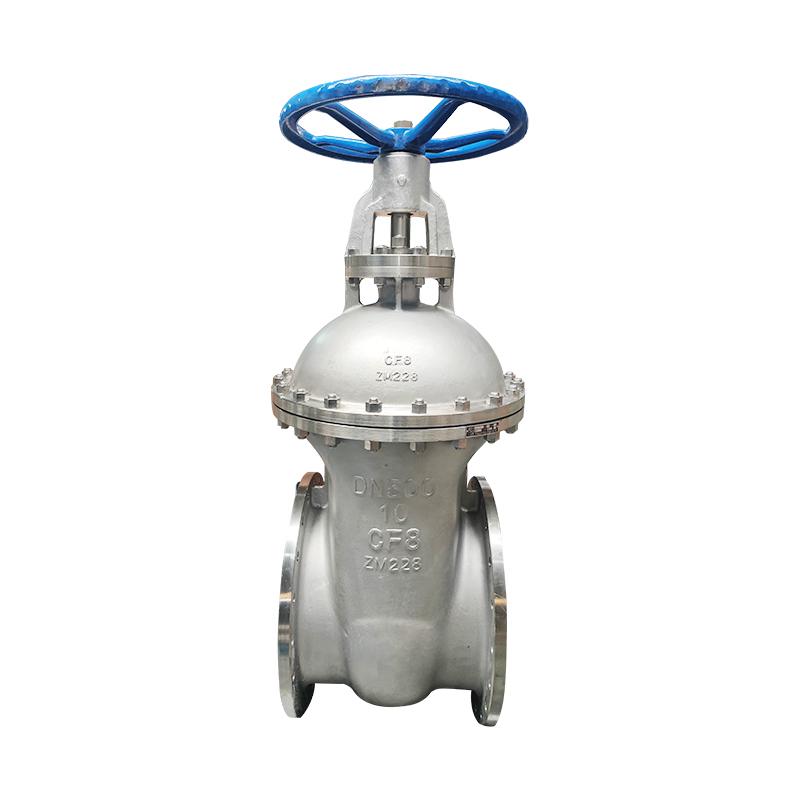
Seat leak tests often get dismissed as a pass/fail box-check, but the version that matters for real-world shutoff is run at the exact differential pressure the valve will see when it has to hold back process fluid. Instead of spraying soapy water at ambient conditions and looking for bubbles, you pressurize the downstream side or pull a vacuum on the upstream cavity, then watch for pressure decay over a timed interval. The leak rate is converted to bubbles per minute or volumetric flow, which gives you a number you can compare against the valve’s shutoff class.
One reason this test tracks actual performance is that it forces the seat ring and closure element to deform the same way they will in service. A soft seat that seals fine on a bench can open up a leak path when the body sees line pressure and the seat groove shifts a few thousandths of an inch. By testing with the valve body under real load—not just the trim on a fixture—you catch those small geometry changes before they turn into unwanted emissions or product contamination.
That prediction comes from the slope of the pressure decay curve, not just the final drop. A fast initial decay that flatlines tells you the leak is mostly trapped air or seat settling. A slow, continuous decay at full differential pressure matches the behavior of a worn or misaligned seat that will gradually weep in the field. When the test setup mirrors the shutoff direction, the media temperature, and the seat material’s recovery time, the measured leak rate is one of the few bench numbers that translates directly to a control valve or isolation valve holding tight after weeks of cycling.
How a Supplier’s Stock Answer Changes on a Friday Afternoon
Monday morning, a supplier's stock answer runs long. It has a greeting, a thank-you, a breakdown of lead times, and maybe a suggestion to schedule a call. By Wednesday, the same answer compresses into two lines—enough to satisfy but not to invite follow-up questions. The shift is subtle, but anyone tracking inboxes notices it.
Friday afternoon turns that stock answer into a single sentence. No greeting, no sign-off. Just the bare minimum: "In stock, ships Monday." If you're lucky, there's a comma. It's not rudeness; it's end-of-week fatigue. The supplier has answered the same question forty times since Monday, and the brain has learned to trim everything that doesn't move the order forward.
So if you need a real conversation—about alternatives, custom specs, or anything that requires actual thought—send your question before noon on Thursday. By Friday at 3 p.m., you're not talking to a strategist. You're talking to someone watching the clock and drafting an out-of-office reply.
The Difference Between a Hydro Test and a Seat Tightness Test
Understanding the distinction between a hydro test and a seat tightness test starts with recognizing what each procedure is actually checking. A hydro test, short for hydrostatic test, is primarily concerned with the structural integrity of the valve body and shell under pressure. Water is pumped into the isolated valve cavity at a pressure typically 1.5 times the rated working pressure, and the valve is held there for a specified duration. The goal is to detect leaks through the walls, joints, or bonnet connections—anywhere the pressure boundary might fail. It does not focus on how well the valve closes off flow; that is a separate concern.
A seat tightness test, on the other hand, evaluates the sealing performance of the closure mechanism itself—the disc, ball, gate, or plug against its seat. Here the valve is closed, and test pressure is applied to one side of the seat while the other side is monitored for leakage. The allowable leakage rate depends on the standard being followed, such as API 598 or ISO 5208, and often involves counting bubbles or measuring pressure drop over time. Unlike a hydro test, which may be performed with the valve partially open, a seat tightness test always requires the valve to be fully closed. Some valves can pass a hydro test yet fail a seat tightness test if the seat surfaces are worn or misaligned.
In practice, both tests are often performed on newly manufactured valves, but they serve different acceptance criteria. A hydro test confirms the valve will not rupture or leak externally under high pressure, while a seat tightness test confirms internal leakage is within acceptable limits for the intended service. For critical applications, such as high-pressure gas or toxic fluid lines, the seat tightness test may be repeated after installation or at regular maintenance intervals, whereas the hydro test is usually a one-time factory test. Knowing which test is required—and what it is actually measuring—can prevent confusion during commissioning or troubleshooting.
What Full Material Traceability Actually Saves During an Audit
When an auditor traces a single raw material lot through production, the absence of full traceability turns a routine check into a scavenger hunt. With it, you hand over a continuous chain—supplier COA, receiving inspection notes, bin transfers, batch usage, and finished goods dispatch—in under five minutes. That speed usually prevents the auditor from widening the scope or issuing an observation for missing controls.
More importantly, it saves you from the costly ripple effects: paused shipments while you reconstruct records, rushed rework to recreate documentation, and supplier phone calls that erode trust. In some cases, it even avoids a temporary production hold that would otherwise cascade into late delivery penalties and expedited freight charges.
The deepest savings, though, show up in the audit close-out. Clear material linkage lets you respond to nonconformances with evidence instead of excuses, often reducing a major finding to a minor note—or eliminating it entirely. That means less follow-up, fewer re-audits, and a quality team that spends its time improving processes rather than defending them.
When Your Valve Supplier’s Engineering Desk Becomes Your Best Tool
Most procurement teams treat valve suppliers like order-takers: send the spec, get a quote, move on. But when you stumble on a supplier whose engineering desk actually picks up the phone, the dynamic shifts. Suddenly you’re not just buying a component—you’re borrowing a brain that has seen a thousand flow loops fail in ways your own drawings never anticipated.
That engineer might glance at your pressure drop across a three-way diverter and ask why you’re not using a reduced-port ball valve instead. They might sketch a spring-return actuator orientation that saves you two inches of clearance nobody thought about. These aren’t upsells—they’re the kind of quiet corrections that keep a project from stalling during commissioning at 2 a.m.
The best part is how the relationship compounds. Once that desk knows your plant’s quirks—the sticky slurry in line 4, the vibration on the mezzanine—their recommendations stop being generic catalogue picks and start sounding like they’ve walked your pipe racks themselves. You stop dreading design reviews and start forwarding them your weirdest problems first.
FAQ
Focus on suppliers with a track record in your specific industry, not just generic distributors. Ask about their material sourcing, pressure and temperature ratings, and whether they offer full traceability on valve bodies and trim. The best suppliers also provide engineering support to help you select the right wedge type and bonnet sealing for your media, rather than pushing whatever is in stock.
Look beyond certifications and ask for references from facilities with similar operating conditions. A reliable supplier will happily share case studies or put you in touch with maintenance teams. Also check if they stock replacement parts locally and have a clear warranty process that doesn't require months of back-and-forth.
The answer depends on your media. For corrosive services, stainless steel or alloy bodies with Stellite-faced seats and wedges handle both erosion and chemical attack well. For high-temperature steam lines, cast steel or chrome-moly bodies with flexible wedges and pressure-seal bonnets are common. A knowledgeable supplier will ask about your exact temperature range, pressure cycling, and fluid composition before recommending a material.
Yes, the better suppliers maintain relationships with foundries and machine shops that can modify standard patterns or cast unusual sizes. Expect longer lead times for custom work, but the supplier should give you a clear production schedule and drawings for approval before cutting metal.
Rising stem valves show open/closed position at a glance and keep stem threads out of the media, so they're great for above-ground installations where vertical space isn't limited. Non-rising stems work well in buried or tight spaces but expose threads to the flow, making them less ideal for dirty or corrosive fluids. Your supplier should ask about your installation constraints before recommending one.
Request a line-item breakdown including body material, trim material, testing (hydrostatic, pneumatic), painting/coating, and documentation. Ask whether the price includes third-party inspection or only the manufacturer's standard test. Many low-cost valves skimp on thickness or use lower-grade fasteners, so compare total lifecycle cost rather than initial purchase price.
Oil and gas, chemical processing, water treatment, power generation, and mining all have different demands. A supplier focused on industrial flow control will understand the specific standards (API 600, API 603, AWWA, etc.) and know which options matter for each application, such as fire-safe design for refineries or lead-free materials for potable water.
At minimum, they should offer replacement parts like stems, wedges, and packing sets, along with torque specifications and installation guidance. The best suppliers provide on-site troubleshooting or training for your maintenance crew. Ask upfront about their parts inventory and response time for urgent replacements.
Conclusion
A gate valve's long-term reliability often hinges less on the alloy name stamped on the body and more on how the wedge is machined and guided. A well-executed wedge design will seat tightly even after hundreds of cycles, while an exotic alloy with a sloppy wedge can leak from day one. That is why a supplier worth trusting will talk about seat leak tests before bragging about material grades. The seat leak test—not to be confused with a basic hydrostatic shell test—pressurizes the closed valve on one side and measures allowable leakage across the seat. It is a far better predictor of real-world shutoff performance than a simple shell test that only checks for external leaks. The difference between the two is something a genuinely capable supplier can explain without hesitation, even if you call late on a Friday afternoon.
Full material traceability is another area where the right partner quietly saves you money. When an audit comes around, having heat numbers, mill certificates, and pressure test reports for every component means the difference between a two-hour review and a two-week scramble. The best gate valve suppliers keep these records organized and accessible, not buried in a filing cabinet. Sometimes the most valuable resource is not the valve itself but the supplier's engineering desk. A supplier who asks about your flow media, pressure spikes, and actuation style before quoting a valve is already solving problems you haven't fully articulated. That kind of support turns a transactional purchase into a reliable industrial flow control solution.
Contact Us
Contact Person: Lucas Lin
Email: [email protected]
Tel/WhatsApp: +8613968913000 / +8613868610141
Website: https://www.zhengmaogroup.com