

Blast Freezer Supplier Selection: Essential Tips for Finding the Right Partner
2026-05-18
Choosing the right blast freezer supplier is a critical decision that impacts your entire cold chain operation. With so many options on the market, finding a partner who truly understands your needs can be challenging. That’s why Worldbase is here to simplify the process—offering reliable, tailored solutions backed by deep industry know-how. In this article, we’ll share essential tips to help you evaluate suppliers effectively and secure a partner that delivers consistent quality and support.
Assessing Core Refrigeration Expertise
True refrigeration proficiency isn’t about memorizing textbook cycles—it’s the ability to diagnose a struggling system when pressures don’t align with theory. It means recognizing that a slightly elevated superheat on an R-404A walk-in freezer often points to an underfed evaporator, not just a TXV fault, and knowing that subcooling readings can reveal hidden condenser issues long before a compressor fails. Mastery lives in the subtle interplay between airside performance and refrigerant behavior.
The most telling sign of deep expertise is how a technician approaches an intermittent problem. Instead of swapping parts, they analyze the sequence of events leading to a failure: why a head pressure climbs only during defrost cycles, or why oil return suffers after a retrofitted rack system. This level of insight comes from hands-on troubleshooting across diverse equipment, where patterns emerge that no manual can teach. It’s a blend of thermodynamic intuition and practical grit.
Beyond troubleshooting, core expertise is measured by preventive strategies. It’s the engineer who specifies a heat reclaim loop knowing the precise balance point where savings offset capital cost, or the senior tech who advocates for floating head pressure control after weighing historic ambient data against cumulative compressor amp draw. These decisions aren’t guesses—they’re the fruits of years spent tracing copper lines and interpreting oil log sheets, transforming raw experience into refined judgment.
Evaluating Build Quality and Component Sourcing
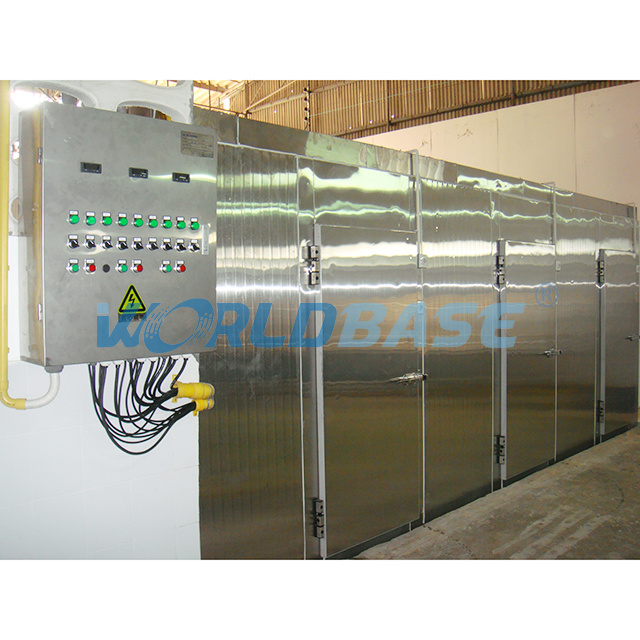
A product’s longevity often hinges on details that are easy to overlook until something fails. Instead of relying on spec sheets alone, we look at how materials interact under stress—whether a seam is reinforced, how a connector is anchored, or if thermal paste application is consistent. Small inconsistencies in assembly, like uneven gap widths or loosely secured cables, can signal deeper manufacturing shortcuts that won’t surface during brief initial use.
Sourcing is equally telling. We trace where critical parts originate, not to rank suppliers by country, but to understand whether a manufacturer prioritizes tight tolerance components or drifts toward cost-cutting substitutes. When a capacitor rated for 105°C is replaced with an 85°C alternative mid-production run, it rarely appears on any bill of materials. Spotting these shifts requires component-level teardowns and cross-referencing batches, which reveals how consistent the quality commitment really is.
Real-world resilience is what matters. We’ve seen products with impeccable individual parts fail because of poor solder joints, while others with modest specs endure years of abuse thanks to thoughtful layout and redundancy. That’s why we don’t just count features—we stress connectors, flex boards, and cycle heat to see what survives. The aim isn’t to create a winner’s list, but to illuminate the difference between products built to pass a test and those engineered to last.
Understanding Customization and Modular Options
Customization isn’t just about picking colors or swapping a logo—it’s about shaping the entire experience so it feels native to your workflow. When tools adapt to the way you think and operate, they stop being generic software and start working like a natural extension of your process. That’s where modular design enters the picture: instead of forcing a one-size-fits-all solution, it lets you assemble just the pieces you need, exactly how you need them. You’re not locked into a rigid structure; you can pull apart, rearrange, or leave out features until the setup mirrors your real-world priorities.
The beauty of a modular approach is that it grows with you. Need to add a reporting layer next quarter? Plug it in without disrupting what already works. Want to swap out an integration because your stack evolved? You can do that without starting from scratch. This flexibility means you’re never paying for bloat you don’t use, and you’re never stuck waiting for a vendor to build the exact combination you envisioned. Each component operates independently yet fits into a coherent whole, so updates to one module don’t cascade into unexpected breakages elsewhere—a subtle but critical advantage for teams that value stability alongside agility.
Where this really shines is in environments where no two days look the same, like project management or client-facing dashboards. You might need a stripped-down view for quick daily stand‑ups and a richer, data‑dense layout for weekly reviews—modular customization makes that trivial. Instead of toggling between disconnected tools, you build personal workspaces that surface what’s relevant right now and tuck everything else out of sight. It’s less about having more features and more about having the right ones at your fingertips, which quietly eliminates friction and lets you focus on what actually moves the needle.
Performance Testing and Compliance Verification
Real-world performance testing uncovers how a system truly holds up under stress—something checklists and static reviews rarely capture. By simulating peak loads, rapid data surges, or unexpected failures, you expose bottlenecks that only surface when components interact under pressure. This isn't about pass/fail metrics alone; it's about understanding how your stack breathes, where it sweats, and what breaks first when pushed beyond comfort zones.
Compliance verification often starts with a paper trail, but the real proof sits in runtime behavior. We pair automated policy checks with hands-on failure drills, validating that every control works as intended when alarms go off. Instead of ticking boxes for an auditor, you build an operational memory of your system's security posture—one that evolves as configurations drift or new threats emerge.
The overlap between performance and compliance is where resilience is forged. A perfectly compliant system can still crumble if it hasn't been strained to its limits, while a high-performing setup might violate data boundaries under load. Our approach melds these disciplines, using targeted chaos experiments to confirm that your safeguards and your throughput targets coexist without compromise—even when the unexpected hits.
After-Sales Support and Parts Availability
We understand that a machine is only as reliable as the support behind it, which is why our after-sales team operates on a “no runaround” policy—when you call, you reach a specialist who knows your equipment inside out, not a call center script. From remote diagnostics that often resolve issues within the hour to on-site repairs scheduled at your convenience, we keep downtime to a bare minimum. Our technicians are factory-trained on the exact models you use, carrying a deep inventory of critical spares in their vans, so most common fixes are completed same-day without waiting on freight.
Part availability is treated as a design priority, not an afterthought. We stock genuine components in regional hubs on every continent, with many critical items available for 24-hour dispatch. For older or custom machines, our in-house machining capability means we can often reproduce a part that might otherwise be considered obsolete, extending the productive life of your investment. Real-time inventory tracking gives you visibility into what’s on hand, so you can plan maintenance around parts lead times rather than being surprised by them.
Instead of a one-size-fits-all service contract, we build support packages that align with your actual usage patterns—whether that’s quarterly preventative visits, on-demand emergency response, or a hybrid model that puts you in control. Every interaction feeds into a shared equipment history, creating a feedback loop that helps us spot trends before they become problems. It’s an approach born from years of listening to production managers who told us that uptime isn’t just about fixing things fast; it’s about making sure they rarely break in the first place.
Total Cost of Ownership Analysis
When evaluating any significant purchase, focusing only on the upfront price tag can be a costly mistake. Total cost of ownership (TCO) analysis steps back to consider the bigger picture—everything from routine maintenance and energy bills to eventual disposal or resale value. It’s not just about what you pay today, but what you’ll keep paying over the lifespan of the asset.
Many businesses overlook operational expenses like software licensing, training time, or unexpected downtime. A cheaper option often ends up more expensive when these hidden costs pile up. TCO forces you to model those long-term commitments, so you can compare alternatives on equal footing rather than getting swayed by an initial discount.
Even on a personal level, TCO applies—consider a car that guzzles fuel versus a slightly pricier hybrid. The analysis doesn’t have to be complex; a simple spreadsheet projecting costs over 3–5 years can reveal which choice truly protects your budget. Understanding the full financial impact is what separates a smart decision from a short-sighted one.
FAQ
Focus on their experience with businesses similar to yours. Ask for case studies or references and pay attention to how they handled installation challenges or tight timelines. A solid history often points to reliability.
It can make or break your operation. Check if they offer prompt technical assistance, readily available spare parts, and regular maintenance programs. A supplier that disappears after the sale will cause headaches down the road.
Yes, but not at the expense of performance. Look for freezers that balance energy savings with rapid cooling capabilities. Ask the supplier to provide real-world consumption data, not just brochure estimates.
Picking a supplier based solely on the lowest bid. Cheaper units often lead to higher long-term costs from repairs, inefficiency, and downtime. Always weigh total cost of ownership.
Describe your specific workflow and space constraints. The right partner will ask detailed questions and suggest modifications, not push a one-size-fits-all unit. Prototyping or layout help is a good sign.
If feasible, yes. Seeing their production environment gives you insight into their quality control and build processes. It's also a chance to meet the team behind the product.
Ensure they meet relevant safety and hygiene regulations for your region, such as CE, UL, or HACCP compatibility. A supplier familiar with your industry's compliance demands saves you time and risk.
Conclusion
Choosing a reliable blast freezer supplier starts with a thorough evaluation of their core refrigeration expertise and manufacturing quality. Dig into their engineering track record, how they handle temperature pull-down rates, airflow uniformity, and system redundancy. Look beyond marketing claims and ask about component sourcing—compressors, evaporators, controls. A supplier who uses globally recognized brands and shares detailed specs openly is more likely to deliver consistent, long-term performance. Equally important is their ability to tailor solutions: whether you need modular configurations for future expansion or custom sizing for unique product loads, flexibility in design signals a partner who understands real-world food processing demands rather than just selling standard boxes.
Performance validation and regulatory compliance should never be an afterthought. Insist on documented testing under actual load conditions, not just empty-chamber certifications. Verify that their equipment meets relevant safety and hygiene standards, from electrical codes to NSF or EN requirements. But the partnership doesn't end at installation—strong after-sales support determines day-to-day reliability. Check response times, local spare parts inventory, and whether their service team truly comprehends cascade refrigeration systems. Finally, shift the conversation from upfront price to total cost of ownership. Account for energy efficiency, maintenance frequency, and expected lifespan. A slightly more expensive unit with lower operating costs and superior support often proves far cheaper over a decade of use. This holistic approach helps you avoid short-sighted decisions and secure a supplier who genuinely supports your cold chain operations.
Contact Us
Contact Person: Mr Yang
Email: [email protected]
Tel/WhatsApp: +8613809083091
Website: https://en.worldbase.cn