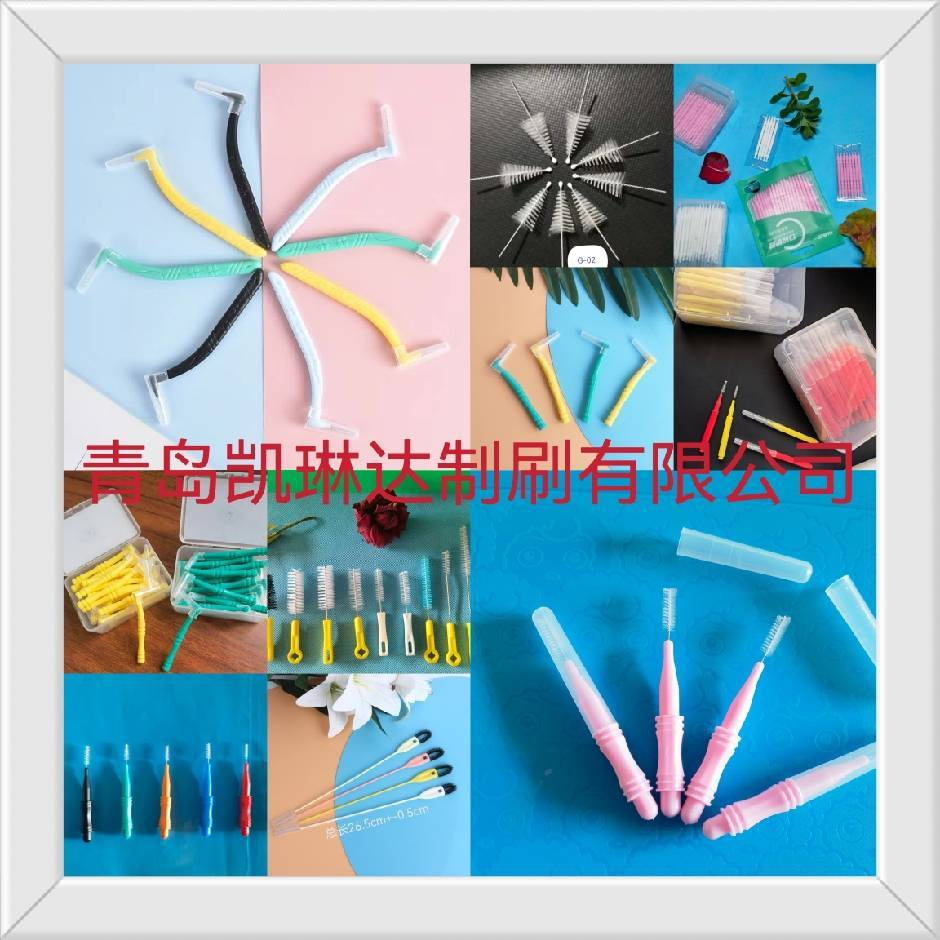

Bulk Oral Care Brush Exporter Offers Premium Oral Hygiene Products for Global Markets
2026-10-13
Most bulk oral care buyers assume premium quality means paying a premium price—until they meet an exporter like KLDZS. As a bulk oral care brush exporter serving global markets, KLDZS flips that assumption on its head, delivering high-performance toothbrushes, interdental brushes, and more without the usual markup or friction. If you’re still settling for generic stock, the next few minutes might change how you source.
Why Bulk Buyers Rely on Specialized Oral Care Exporters
Specialized oral care exporters bring a depth of product knowledge that general trading companies rarely match. They understand the nuances of bristle density, handle ergonomics, and fluoride concentration limits across different markets. This expertise translates into fewer specification errors, consistent batch-to-batch quality, and faster resolution when a buyer requests a tweak to the formula or packaging. For high-volume purchasers, that reliability is often worth more than a marginal price reduction from a non-specialist supplier.
Regulatory alignment is another quiet advantage. Oral care products face shifting requirements around ingredient disclosure, child-resistant packaging, and biocompatibility testing depending on the destination country. Exporters who focus solely on this category maintain up-to-date documentation libraries and often hold multiple certifications simultaneously. Bulk buyers avoid the delays and rework that arise when a supplier scrambles to produce a certificate they have never needed before.
Finally, specialized exporters tend to offer more flexible production windows. Because their lines are already configured for toothpaste tubes, floss dispensers, or interdental brushes, they can accommodate shorter lead times and smaller minimum order quantities for repeat customers. This operational agility lets large distributors test new formats or regional variants without committing to a year of inventory upfront, making the buyer-supplier relationship feel less like a transaction and more like a shared production strategy.
The Materials That Make a Brush Feel Premium
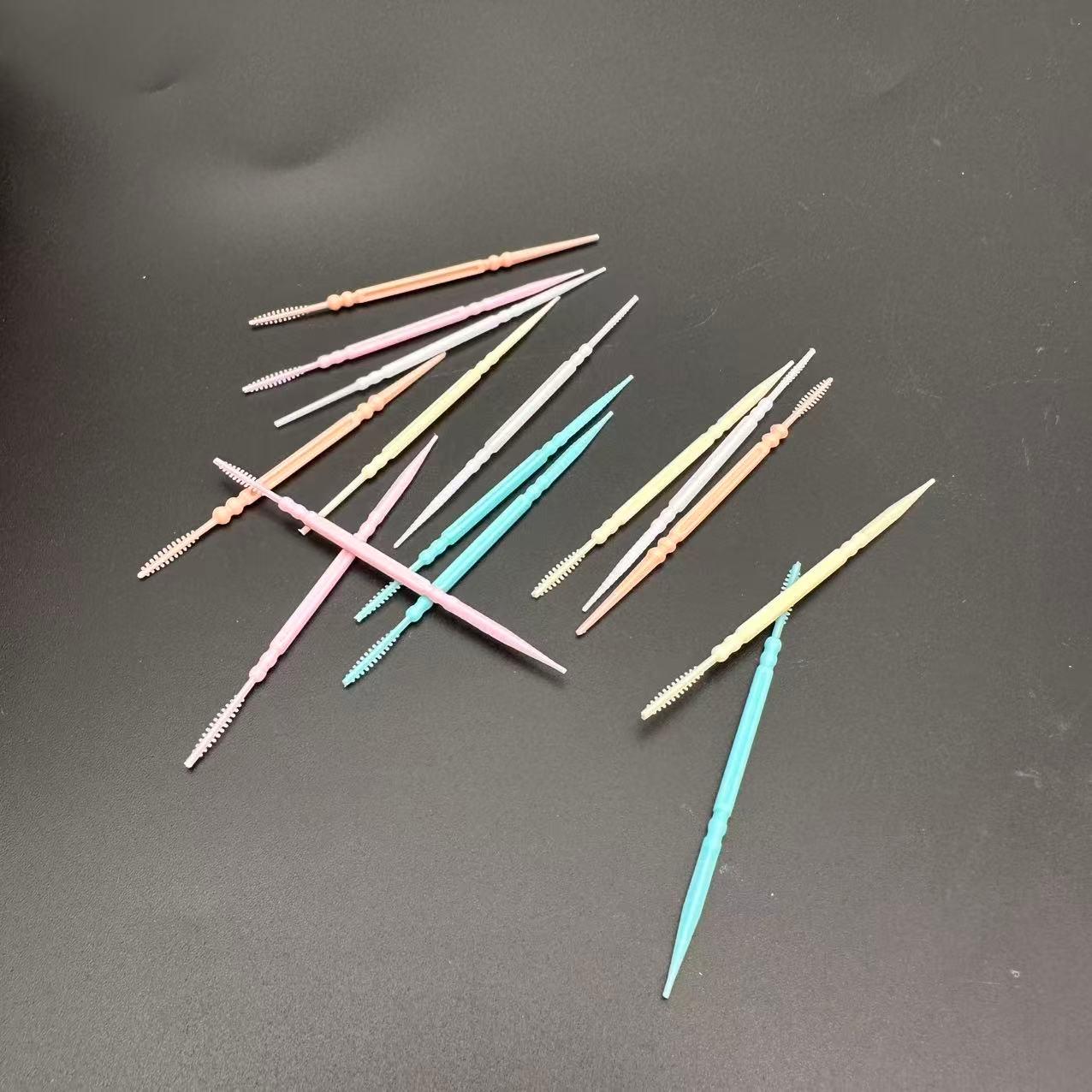
A brush starts to feel premium the moment you pick it up. Handles cut from dense resin or stabilized hardwood have a cool, smooth heft that cheap plastic can't fake. The finish matters too—too glossy and it slips, too matte and it feels unfinished. You want that slight drag under your fingers, like a well-worn tool, not a toy.
The ferrule is where lesser brushes give themselves away. A solid brass or nickel ferrule adds just enough weight at the bristle end to balance the handle, and it doesn't dent when you squeeze it. If the crimp is uneven or the metal feels thin as foil, the whole brush will rattle loose within weeks. Premium brushes use a tighter, cleaner join—often seamless or with a single polished crimp line.
Then there are the bristles. Natural badger, goat, or pony hair has a slight texture that grabs and releases product in a way that feels deliberate, not scratchy. Top-tier synthetic fibers taper to a whisper-fine tip and hold their shape after rinsing. The real test is the density: packed firmly enough to spring back when you press, softly enough to avoid streaks. That combination of materials is what makes a brush feel like it belongs in your hand, not just in your makeup bag.
Design Tweaks That Win Over International Retail Shelves
A subtle shift in packaging proportion can do more than a loud rebrand. When a product sits on a shelf in Tokyo, Milan, or São Paulo, the eye travels differently across the label. Adjusting the hierarchy of typography—allowing the product name to breathe while tucking technical details into a quieter corner—often makes the difference between a curious glance and a confident purchase. Small tweaks like widening the kerning on a serif face or switching to a matte finish for humid climates speak directly to local shopping rituals without shouting for attention.
Color psychology is never universal, but context is. A deep forest green that reads as premium in Northern Europe might feel medicinal in parts of Southeast Asia. Winning shelf presence comes from testing not just hue, but placement: moving a color block from the top third to the bottom edge can shift perceived weight and value. International buyers often reward designs that leave room for regional accents—a foil stamp here, a sticker-free window there—so the core identity stays intact while local cues get a quiet nod.
Texture and material choices carry hidden signals. A soft-touch laminate suggests luxury in one market but fragility in another where rough handling is common. Uncoated paper with visible fibers may evoke craft in Scandinavia yet feel unfinished in the Middle East. The smartest tweaks are almost invisible: a slightly deeper emboss on the logo, a resealable tab angled for left-handed openers, or a barcode relocated to the side panel so the front face remains pure. These micro-adjustments compound into shelf confidence that travels across borders without a single word of explanation.
From Molding to Loading Dock: Quality Checks That Matter
The first real checkpoint happens right at the press, before the part even cools completely. Operators pull a sample every few cycles and compare it against a master set, checking for sink marks, flash, or short shots that wouldn't fly on the assembly line. It's not about catching every defect here—it's about catching the drift early, before you've filled a whole gaylord with bad parts.
Once the batch moves to secondary operations, the checks get more tactile. Someone with trained hands runs a fingernail along the parting line, flexes a thin wall to feel for brittleness, or drops a threaded insert into a hole just to see if it seats without cross-threading. These aren't in the official spec sheet, but they catch the stuff that a caliper or a CMM won't.
At the dock, the final pass is less about the part and more about what happens after it leaves. Pallet weights get spot-checked against the packing slip, labels are scanned for legibility, and a random box gets torn open to make sure the protective layers are doing their job. If a part arrives scratched or warped because someone saved three cents on foam, every upstream check was just theater.
Compliance Made Simple for Cross-Border Oral Care Shipments
Cross-border oral care shipments get messy fast because toothpaste, mouthwash, whitening strips, and even floss land in different regulatory buckets depending on the destination. The EU treats most fluoride toothpastes as cosmetics but flips them into medical devices if you add strong therapeutic claims. The US FDA, on the other hand, juggles OTC drug monographs for anti-cavity and anti-gingivitis rinses while leaving plain brushes and floss mostly alone. Nail the classification first—it drives everything else from label warnings to import paperwork.
A practical shortcut is to build a one-page compliance sheet for each SKU. List the target countries, the product category they assign, any restricted or banned ingredients (like certain bleaching agents or cetylpyridinium chloride limits), and the required label language plus symbols. For markets like Canada or Australia, you may need a local agent or responsible person listed on the package. Hand that sheet to your customs broker before the first shipment, and it saves days of back-and-forth at the border.
Also keep an eye on quiet rule changes. Fluoride limits in the EU and cosmetic ingredient updates in ASEAN and the Gulf states shift every few years, and a formula that cleared last year might not pass today. Rather than chasing alerts, set a quarterly reminder to check the official registers for your top three destinations. It’s a small habit that keeps oral care parcels moving instead of sitting in a warehouse over a missing certificate.
Bulk Pricing That Keeps Your Margins and Your Reputation Intact
Volume discounts rarely fail because the math is hard—they fail because the logic gets sloppy. When you hand out a flat 20% off for any order over a thousand units, you quietly train buyers to expect that discount forever, and worse, to question why the base price was ever that high. A better approach treats bulk pricing as a mirror: each tier should reflect actual savings in logistics, production runs, or forecasting confidence, not just a number pulled from a competitor's sheet.
Your reputation hinges on consistency. If a long-term client discovers that a new account got the same bulk rate for half the volume, you've created a trust deficit no future discount can repair. So build tiers around observable thresholds—order frequency, lead time flexibility, annual commitment—and make the rules boringly transparent. That way the discount feels earned, not arbitrary, and your margin stays protected because every concession is tied to a real cost reduction on your side.
The sharpest operators treat bulk pricing as a conversation, not a price list. Ask what makes an order truly cheap for you to fulfill: maybe it's pallet-level shipping, maybe it's a single SKU run with no changeovers, maybe it's payment upfront. Then attach the discount to those specific behaviors. Buyers respect a seller who protects their own economics; it signals the business won't cut corners elsewhere to make up the difference.
FAQ
They cover a wide range, including adult and children's toothbrushes, interdental brushes, and eco-friendly bamboo options. Bristle softness can be adjusted from soft to medium, and handle designs range from standard straight to ergonomic curved shapes.
Yes, private labeling is a core part of their service. Buyers can customize the logo, packaging, handle colors, and even bristle stiffness. They also offer low trial order quantities for custom designs, making it easier to test new markets.
All products comply with FDA, CE, and ISO standards. The materials are BPA-free and food-grade, and they can provide REACH compliance documentation for European buyers upon request.
They export regularly to North America, Europe, the Middle East, and Southeast Asia. Packaging can be done as retail-ready blister packs or bulk cartons, with options for ocean or air freight depending on your timeline.
For stock designs, the minimum is usually around 5,000 pieces. Custom colors or packaging may require 10,000 pieces or more, but the sales team is open to negotiating for first-time buyers.
Absolutely. Handles are made from FDA-approved PP or biodegradable bamboo, and bristles use non-toxic nylon. Everything is free from BPA, phthalates, and heavy metals, so they are safe for both kids and adults.
They have an in-house QC team that checks every production batch. Random samples are pulled for tensile strength and bristle retention tests, and third-party inspections are arranged before shipment if needed.
Their strength lies in blending ergonomic design with premium materials at a cost-effective price. They also offer sustainable packaging options and quick turnaround times, which helps buyers stay competitive without sacrificing quality.
Conclusion
When sourcing oral care products at volume, buyers quickly learn that a specialized exporter brings more than just a low unit cost. The right partner understands how material choices—from bristle density to handle weight—create a premium feel that consumers notice the moment they pick up a brush. Subtle design adjustments, such as contouring the grip or adjusting the tuft pattern, can make a product fit local expectations without a full redesign. These details are rarely captured in a spec sheet, but they determine whether a shipment moves quickly off retail shelves or lingers in storage.
Behind the scenes, quality control is where many suppliers stumble. A reliable bulk exporter runs checks at every stage, from mold temperature during injection to final visual inspection before palletizing. Cross-border compliance, including material safety documentation and labeling variations, is handled proactively rather than as an afterthought. And because bulk pricing is structured to protect both margins and brand reputation, buyers avoid the hidden costs of returns or rejected lots. That combination of consistency and commercial sense is what keeps international retail relationships intact.
Contact Us
Contact Person: Caiju Zhang
Email: [email protected]
Tel/WhatsApp: +86 14763963294
Website: https://www.kldbrush.com