

Cabinet-Type Static Var Generator: Choosing the Best Factory for Your Power Quality Needs
2026-07-03
Ensuring stable and efficient power quality is no longer a luxury—it's a necessity in modern industrial and commercial environments. As voltage fluctuations, harmonics, and reactive power issues threaten equipment lifespan and energy costs, the demand for reliable solutions has surged. Enter the cabinet-type static var generator, a compact yet powerful tool for dynamic reactive power compensation. But with countless suppliers claiming superiority, how do you identify a manufacturer that truly delivers on performance and durability? For those in the know, GEYA stands out as a partner that combines technical expertise with strict quality control, offering SVG cabinets engineered for real-world challenges. In this guide, we’ll walk you through the essential criteria to select the best factory, ensuring your investment translates into measurable power quality improvements.
Understanding the Role of Static Var Generators in Modern Power Systems
Static Var Generators, or SVGs, have become indispensable in today’s power grids. Unlike older capacitor banks, they use power electronics to inject or absorb reactive power instantly, helping to keep voltage levels steady even when loads shift unexpectedly. This speed and precision make them a go-to choice for renewable energy plants, where output can fluctuate by the minute.
Beyond simple voltage support, SVGs play a subtle but critical part in maintaining overall grid health. By actively smoothing out sags and swells, they reduce stress on transformers and transmission lines. In industrial settings, this means fewer trips in automated processes and longer equipment life—details that often go unnoticed until something fails.
What sets an SVG apart is how it operates almost silently in the background. It doesn’t just correct power factor; it adapts. When a large motor starts or a cloud passes over a solar farm, the SVG responds in milliseconds, adjusting its output to match the system’s immediate needs. This adaptive quality is why grid operators increasingly rely on them, not just to meet technical specs, but to give breathing room in an unpredictable energy landscape.
Key Design Features That Set Cabinet-Type SVGs Apart
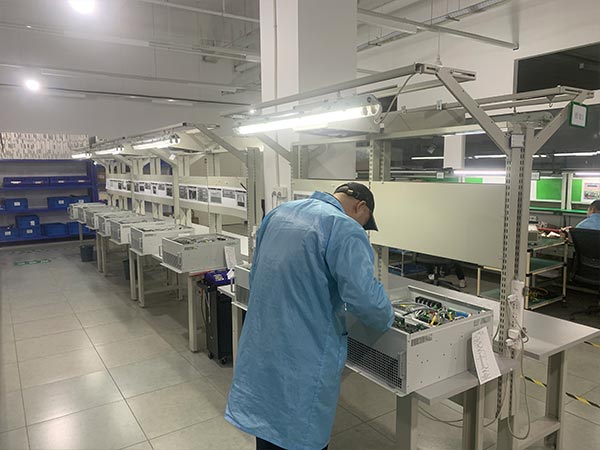
Unlike open-frame or wall-mounted units, cabinet-type SVG systems integrate power electronics, cooling, and control modules within a fully enclosed, self-supporting structure. This design inherently protects sensitive components from dust, moisture, and physical tampering, making them suitable for harsh industrial environments where consistent air quality and security are operationally critical.
A defining advantage lies in their modular internal layout, which isolates functional blocks like power cells and filter reactors for quick access and swapped maintenance. The forced-air or liquid-cooling pathways are carefully channeled away from live parts, ensuring that thermal buildup remains controlled even at full reactive power output, allowing the cabinet to maintain a compact footprint without sacrificing electrical headroom.
Evaluating Manufacturing Expertise and Quality Assurance
Truly grasping a manufacturer’s expertise requires looking beyond glossy brochures and polished sales pitches. It’s about scrutinizing their track record with materials and processes that parallel your own project’s demands. A seasoned team doesn’t just follow blueprints; they anticipate potential hiccups in scaling from prototype to full production, drawing on decades of cumulative insight. Ask for case studies where they solved complex tolerance challenges or reconfigured lines to accommodate a novel assembly method—these reveal an ability to innovate under real-world constraints, not just replicate existing work.
Quality assurance, in this context, is not a department but a mindset woven into every stage of production. It manifests in rigorous first-article inspections, real-time process monitoring, and a culture where line workers are empowered to halt a run if something feels off. Certifications like ISO 9001 or IATF 16949 provide a baseline, but what sets a partner apart is the maturity of their corrective action system: how swiftly they trace root causes and embed fixes to prevent recurrence. You can gauge this by discussing past non-conformances—the honest ones will share not just the problem but the systemic remedy, demonstrating a commitment that’s far more telling than a wall of certificates.
Ultimately, evaluating this blend of skill and quality control comes down to trust, but trust built on tangible evidence. Arrange a detailed plant visit, not just a guided tour, and watch how operators interact with equipment, how tooling is maintained, and whether data drives decisions or merely decorates dashboards. A manufacturer confident in their expertise welcomes such scrutiny and uses it to foster a collaborative partnership, recognizing that your success is inseparable from the reliability they deliver with every shipment.
Matching Factory Capabilities to Your Specific Power Quality Demands
Every facility has its own electrical fingerprint, shaped by the equipment it runs and the processes it can't afford to interrupt. Matching our capabilities to your needs starts with stepping onto your floor, taking real measurements, and listening to what your operators see every day. We don't assume a one-size-fits-all fix; instead, we map the specific signatures of voltage sags, harmonics, or transient spikes that eat into your productivity.
Our engineering approach adapts to the sensitivity of your operations. A wafer fab can't tolerate even a few milliseconds of disturbance, while a heavy manufacturing line might struggle with low power factor penalties piling up month after month. By dissecting these differences, we configure our solutions—from active filters to dynamic voltage restorers—so you invest precisely in the protection that matters, without overspending on generic hardware that only solves half the problem.
Beyond initial installation, we stay engaged as your electrical load evolves. We track how new machinery or shift changes alter your power profile, and we retune systems accordingly. This ongoing calibration keeps nuisance trips at bay and extends the life of your assets, making power quality management a seamless part of your operation rather than a recurring fire drill.
Beyond the Spec Sheet: What Real-World Performance Tells You
Spec sheets are polished summaries, not blueprints for daily life. They list ideal numbers—battery life in controlled labs, processor speeds under perfect conditions. But once a device leaves the box, a hundred subtle factors begin to rewrite that story. Network fluctuations, background apps, ambient temperature, and even the way you hold the device turn those pristine benchmarks into a rough sketch of reality.
What matters is how a gadget navigates compromises. A laptop might boast a twelve-hour runtime on paper, yet if the fan spins up like a jet engine during a video call, that figure means little. Real performance reveals itself in the unscripted moments: how quickly a camera launches when you pull it from your pocket, whether the screen stays legible under direct sun, or if connecting to a pair of earbuds remains seamless across a crowded subway platform. These are the tests no lab can simulate.
Listening to what daily use tells you shifts the focus from numbers to nuance. It’s in the keyboard that doesn’t tire your wrists after an afternoon of emails, the audio that doesn’t distort at the volumes you actually use, the build that survives an accidental drop without a case. Devices aren’t just collections of components—they’re companions in your routine. Paying attention to that unspoken feedback turns a purchase into a lasting tool instead of a fleeting spec sheet trophy.
Long-Term Support and the True Cost of Ownership
People often fixate on the upfront cost of software, but the real story unfolds over time. Long-term support (LTS) versions promise stability and extended maintenance, which sounds like a safe, cost-effective choice. Yet, the hidden expenses—from infrastructure lock-in to the drain on internal expertise—can quietly reshape your budget. What appears as a modest initial investment sometimes turns into a creeping financial burden that only becomes visible years down the line.
When you commit to an LTS release, you're also marrying a specific technology stack for a decade or more. This can breed complacency; teams delay necessary upgrades, and the technical debt piles up. The cost isn't just in licensing fees—it's in the missed opportunities, the talent war to maintain legacy systems, and the rising complexity of integrating modern tools. Eventually, that stable foundation can feel more like a concrete block tied to your ankles, slowing every forward move.
A smarter approach is to look beyond the sticker price and evaluate the total economic impact. Factor in the cost of retraining staff, the risk of running outdated components, and the agility you sacrifice. Sometimes, a more frequent, well-managed upgrade cycle—backed by a responsive community or vendor—ends up being cheaper than the supposedly safe harbor of a long-term release. The true cost of ownership isn't found on an invoice; it's embedded in every decision deferred and every innovation left on the drawing board.
FAQ
A cabinet-type static var generator is a compact, enclosed unit that dynamically injects or absorbs reactive power to stabilize voltage and improve power factor. Unlike traditional capacitor banks, it uses power electronics to respond almost instantly to fluctuations, ensuring consistent power quality without mechanical switching delays.
The cabinet enclosure provides crucial protection in harsh industrial environments, shielding sensitive components from dust, moisture, and accidental contact. It also simplifies installation, with pre-wired connections and integrated cooling, making it a turnkey solution that saves engineering time and reduces on-site complexity.
A specialized factory invests heavily in R&D for power electronics, offers customized control algorithms tailored to your load profile, and uses high-grade IGBTs and capacitors for longevity. They also provide thorough factory acceptance testing and local after-sales support, which generic suppliers often lack.
Request a detailed test report under full-load conditions, not just simulated scenarios. Inquire about their in-house testing capabilities—true experts have dedicated high-power labs. Ask for reference installations in your industry and speak to those users about real-world uptime and harmonic filtering performance.
Yes, they continuously adjust from inductive to capacitive modes, which is vital for modern facilities with intermittent renewable generation or rapidly changing motor loads. This bidirectional capability prevents both undervoltage sags and overvoltage swells, safeguarding sensitive equipment regardless of power flow direction.
Minimal routine maintenance is needed if the design includes high-efficiency heat dissipation, dust filters that are easy to replace, and redundant fan modules. The best factories use hot-swappable components and provide remote monitoring options, so you can track performance and get alerts before minor issues escalate.
In-house production of key components like power modules and control boards ensures tighter quality control and faster customisation. However, a factory that expertly integrates proven components can still deliver a reliable SVG if they have a rigorous testing protocol. Look for transparency in their supply chain and a willingness to share design philosophy.
A factory that uses energy-dense power modules and efficient cooling can significantly lower your electricity bill through reduced system losses. Moreover, robust design and local support minimise unplanned downtime and spare parts lead times. That initial cost difference often vanishes when you factor in a decade of reliable operation.
Conclusion
When your facility’s power factor sags or harmonic distortion creeps upward, a cabinet-type Static Var Generator does more than tick a compliance box—it directly shields sensitive equipment and trims energy waste. Unlike rack-mounted alternatives, the enclosed, self-contained design simplifies installation in harsh industrial environments, while internal forced-air or liquid cooling keeps IGBT stacks within safe temperature bands even under continuous reactive swings. Leading manufacturers demonstrate this with thermal imaging reports from full-load burn-in tests, not just calculated MTBF figures. Real-world commissioning data reveals whether the step response truly hits sub-cycle targets when real perturbations hit, and how gracefully the unit rides through grid voltage dips rather than tripping offline. Ask for site-specific simulation files that model expected harmonic spectra against the factory’s control architecture, because a one-size-fits-all tuning approach often falls short when upstream transformers or long cable runs reshape the impedance landscape.
Factory evaluation often overlooks what happens after the pallet leaves the loading dock. The best suppliers maintain application engineers who can interpret power quality audit logs—not just sales engineers who cross-reference part numbers. Verify whether the factory offers modular internal layouts, field-replaceable power cell drawers, and firmware update roadmaps that align with evolving grid codes. Dig into the supply chain: do they wind their own reactors or outsource them? Component-level traceability and full-bridge test protocols separate assembly houses from true design shops. The true cost of ownership surfaces not in the initial quote, but in the availability of emergency spares, remote diagnostic capabilities, and the presence of local technical partner networks capable of performing annual infrared inspections and capacitor discharge time checks. When a cabinet-type SVG is specified and supported correctly, it operates as a transparent layer within the electrical infrastructure—quietly maintaining voltage stability while the production lines never notice it’s there, which is exactly the point.
Contact Us
Contact Person: Leo
Email: [email protected]
Tel/WhatsApp: +86-13567770207
Website: https://www.geyapower.com/