

Calcium Chloride 77% Granules Exporter Guide for Reliable Industrial Sourcing
2026-11-01
Finding a dependable calcium chloride 77% granules exporter can feel like a gamble—one wrong shipment and your entire operation stalls. Purity claims, granule consistency, and on-time delivery vary wildly across suppliers. This guide breaks down exactly what to verify before signing a contract, so you can source with confidence. And if you'd rather skip the trial-and-error phase, Shouguang Golden Chemical has quietly become a go-to name for industrial buyers who need reliability without the usual runaround.
Why 77% Calcium Chloride Granules Demand a Closer Look Before You Commit
A quick glance at a spec sheet rarely tells the whole story with 77% calcium chloride granules. The remaining 23% isn't just inert filler—it can include moisture, sodium chloride, or trace metals that quietly affect how the product spreads, dissolves, and performs under load. If you're switching suppliers or bidding on a large order, pin down the actual assay and impurity profile before assuming all 77% material behaves the same.
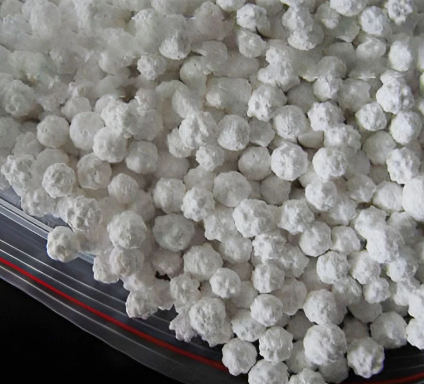
Granule size and hardness matter just as much as the percentage on the bag. Some batches arrive with a wide particle range that leads to uneven coverage and clogged spreaders, while others break down into fines during transport. For de-icing or dust control, that difference shows up as bare patches or wasted product. Ask for a sieve analysis and, if possible, a small sample to test in your own equipment.
Storage conditions can also make or break the value. Calcium chloride is hygroscopic, and 77% granules will pull moisture from the air faster than you might expect. Without sealed packaging and dry storage, you can end up paying for water weight and dealing with a caked mess. Factor in handling time and packaging integrity, not just the quoted price per ton.
Separating Dependable Exporters from One-Shipment Sellers
Not every exporter who ships once deserves the label "dependable." The real test lies in what happens after that first container leaves the port. One-shipment sellers often vanish when problems arise—quality disputes, customs holds, or payment delays. Dependable exporters, by contrast, treat that first order as the beginning of a relationship, not the end of a transaction. They keep communication lines open, respond to issues with concrete solutions, and document every step so both sides stay informed.
A closer look at order history reveals the pattern. Dependable exporters typically show a steady rhythm of repeat orders, often from the same buyers or their referrals. Their shipping records match their promises: consistent packaging, accurate labeling, and on-time departures. One-shipment sellers, on the other hand, may have a single impressive shipment followed by silence. Buyers who dig into trade data or ask for references can quickly spot the difference.
The cost of misjudging this distinction is high. A low price from a one-shipment seller might look attractive, but the hidden risks—no after-sales support, no accountability, no recourse—can erase any savings. Smart importers develop simple checks: request a sample reorder, ask for a live video of the warehouse, or confirm the exporter's registration and export history. These steps separate the sellers who are merely shipping boxes from the exporters who are building dependable supply chains.
The Packaging and Shipping Details Most Buyers Overlook Until It’s Too Late
Most buyers focus on the product itself — the specs, the photos, the price — and never think twice about how it arrives at their door. Then the box shows up dented, the inner wrapping is flimsy, or there's no clear labeling to tell a courier how to handle it. Those little oversights become big headaches: damaged goods, delayed replacements, angry customers. It's not glamorous, but the way something is packed often says more about a supplier than the product does.
Think about double-wall versus single-wall cartons, corner protectors for furniture, moisture barriers for electronics, or even the exact tape pattern used to seal the box. A supplier might quote a lower price by skimping on these things, and you won't notice until a shipment arrives with crushed edges or rust spots. Ask for packing photos or a short video before you commit — not the polished marketing shots, but real footage from the loading dock. If they hesitate, that's your answer.
Also pay attention to labeling and documentation. A missing "fragile" sticker or an unclear HS code on the outer carton can trigger customs delays or rough handling that no insurance policy fully covers. The best suppliers treat packaging as part of the product, not an afterthought. They'll mention drop-test results, pallet configurations, and even how many units fit per master carton without you having to prompt them. Those are the ones who save you money in the long run.
Reading Past the Certificate: What Quality Claims Actually Mean
A certificate tells you a product passed a specific audit on a specific day. It doesn’t tell you whether that standard matches your own definition of quality, or how often the manufacturer slips between inspections. “ISO certified” can mean a factory met baseline documentation requirements, not that every batch leaving the dock is flawless.
Quality claims often lean on words like “premium,” “lab-tested,” or “certified organic,” but these carry different weight depending on who issued the credential and what they actually measured. A lab test for one contaminant doesn’t rule out others; a certification for material composition says nothing about durability or workmanship.
Before trusting a claim, ask what it omits. Real assurance comes from traceable records, repeat audits, and a willingness to share the specific test methods. The certificate is only as meaningful as the system behind it—and most buyers never see that system.
Pricing Traps and Contract Clauses That Quietly Erode Your Margins
Most margin erosion doesn’t show up as a single bad deal—it hides inside renewal formulas, automatic uplifts, and rebate conditions that compound over time. A contract might promise a 4% annual increase but tie it to an index that lags real costs, or a volume discount schedule might reset thresholds in a way that rewards your client for consolidating orders late in the year, effectively lowering your average selling price. These clauses feel minor during negotiation, yet they quietly shift value to the buyer every quarter.
Another trap sits in how services are scoped. Fixed-fee agreements often bury assumptions about travel time, rush requests, or after-hours support, while “not to exceed” clauses can flip into open-ended obligations if a client adds scope without a formal change order. The fix is less about pushing back and more about naming the true cost: build in a margin floor for every tier, cap the number of free revisions, and make any index-based pricing transparent by attaching it to the same metric you use for internal cost planning.
Real-World Sourcing Problems and How to Head Them Off Early
A sourcing plan that looks solid on a spreadsheet can unravel fast once real suppliers get involved. One frequent issue is silent specification drift: the factory quietly substitutes a cheaper material or a slightly different tolerance to protect their margin, and you don't catch it until a container shows up with product you can't sell. Another classic problem is mismatched expectations around lead times, especially when a supplier overpromises during the quote stage and then blames raw material delays later.
The good news is most of these headaches can be headed off before they become expensive. Start by writing RFQs that include not just the product dimensions, but photos of acceptable and unacceptable finishes, packaging requirements, and testing protocols. Then, before committing to a large order, run a small pilot batch and inspect it yourself or through a third party. Ask the supplier to walk you through their production schedule line by line and confirm which components are sourced externally. That simple conversation often reveals whether their promised lead time is realistic or just a sales pitch.
Finally, build a feedback loop after the first shipment. If a supplier knows you will track defect rates, late deliveries, and communication responsiveness, they are far less likely to cut corners later. Keep a shared living document of spec revisions and approved samples, so both sides have a reference when questions come up. Early effort on clarity and verification tends to pay for itself many times over by preventing chargebacks, rework, and lost sales.
FAQ
Start with the actual assay on the certificate of analysis, not just the claimed 77%. Ask for a recent third-party lab report and compare the stated calcium chloride content, magnesium and alkali metal chlorides, and water-insoluble matter. A dependable exporter will share this without hesitation.
Granule size influences dissolving speed and dust generation. For de-icing or dust control, a 2–4 mm granule often works well, while oilfield drilling fluids may need a finer mesh. Confirm the exporter can sieve to your required range and provide a particle size distribution chart.
Moisture is the main enemy. Look for 25 kg or 50 kg bags with an inner polyethylene liner, or 1,000 kg bulk bags with a moisture barrier. Ask whether the exporter adds an anti-caking agent and whether pallets are shrink-wrapped to reduce exposure to humid sea air.
Vague replies about origin, unwillingness to share the production date, no reference customers in your region, or a price far below the market average. Also be cautious if the exporter cannot explain the manufacturing process, such as whether it is made from by-product hydrochloric acid or natural brine.
The 77% grade offers a good balance between active calcium chloride content and handling safety. It provides faster brine preparation and stronger exothermic reaction than 74% flakes, while avoiding the higher cost and more aggressive moisture absorption of 94% prills for many applications.
At a minimum request the commercial invoice, packing list, bill of lading, certificate of origin, and a detailed certificate of analysis. For certain destinations, also ask for a safety data sheet, REACH compliance statement, and any port-specific inspection certificate.
Ask the exporter to state moisture as a separate line item, usually below 1% for granules. If possible, request a pre-shipment sample and have it tested by an independent lab. Also compare the net weight on the packing list with the actual gross weight minus tare to spot hidden water weight.
Common uses include dust suppression on haul roads, concrete acceleration in cold weather, tire weighting for agricultural equipment, and brine preparation for oil and gas operations. Each use may demand different granule hardness, purity tolerance, or packaging size, so clarify your end-use before negotiating with an exporter.
Conclusion
Sourcing calcium chloride 77% granules at industrial volume isn't a checkbox exercise. Too many buyers lock in a supplier after glancing at a COA and a competitive quote, then discover that moisture clumping, slow dissolution, or inconsistent granule sizing wreaks havoc in de-icing, dust control, or concrete acceleration. Before you commit, ask for a sieve analysis from an actual production batch, not a marketing sheet. Verify how the exporter handles hygroscopic loading under humid conditions and whether they can match your packaging expectations—jumbo bags with inner liners, palletization, or custom labeling—without turning lead time into a moving target.
Reliable exporters stand out through what they do after the proforma invoice. They name the port buffer stock, share real loading supervision photos, and don't hide behind vague “factory standard” clauses when you request moisture limits or purity tolerances. Watch for contract language that lets them substitute lower-grade material, shift demurrage costs, or quietly shrink bag weight. Seasoned buyers also probe past the certificate: request traceable batch numbers tied to third-party lab reports, and ask how the supplier handles soft lumps formed in transit. The goal isn't the cheapest FOB price, but a repeatable flow of product that arrives dry, free-flowing, and ready to perform in your process without constant rework or emergency sourcing calls.
Contact Us
Contact Person: Tom Cui
Email: [email protected]
Tel/WhatsApp: +8618663670626
Website: https://www.jinjigoldenchem.com