

Cast Parts Factory: Inside Precision Manufacturing from Mold to Final Product
2026-09-29
Most people see a cast part and assume it's just a chunk of metal. But inside a precision casting factory, every dimension starts with a meticulously engineered mold and ends with a component that can withstand extreme loads. At Zhaoyuqi, that process isn't left to chance—it's a controlled sequence of material science, thermal management, and quality checks. In this article, we walk you through each stage, from mold preparation and pouring to finishing and inspection, revealing what it really takes to turn molten iron into a reliable finished part.
Mold Design Sets the Stage Before the First Pour
The mold is far more than a negative space waiting to be filled. It is a carefully orchestrated system of gates, risers, vents, and cooling channels that dictates how molten metal will enter, flow, and solidify. Every curve and dimension influences turbulence, pressure drop, and heat transfer—long before any metal is tapped.
A designer who treats mold layout as an afterthought often pays for it later in scrap and rework. Experienced engineers use solidification modeling and past casting data to position ingates where metal can fill the cavity without trapping air, and to place risers where shrinkage is most likely to occur. These choices aren't just technical; they're a form of risk management baked into the tooling.
When the first pour happens, a well-designed mold already has answers built into its geometry. It anticipates hot spots, compensates for contraction, and gives escaping gases a clear path. That's why foundries that invest heavily in mold engineering see fewer misruns, lower porosity, and a much shorter path from prototype to production part.
Molten Metal Meets Its Match in the Cavity
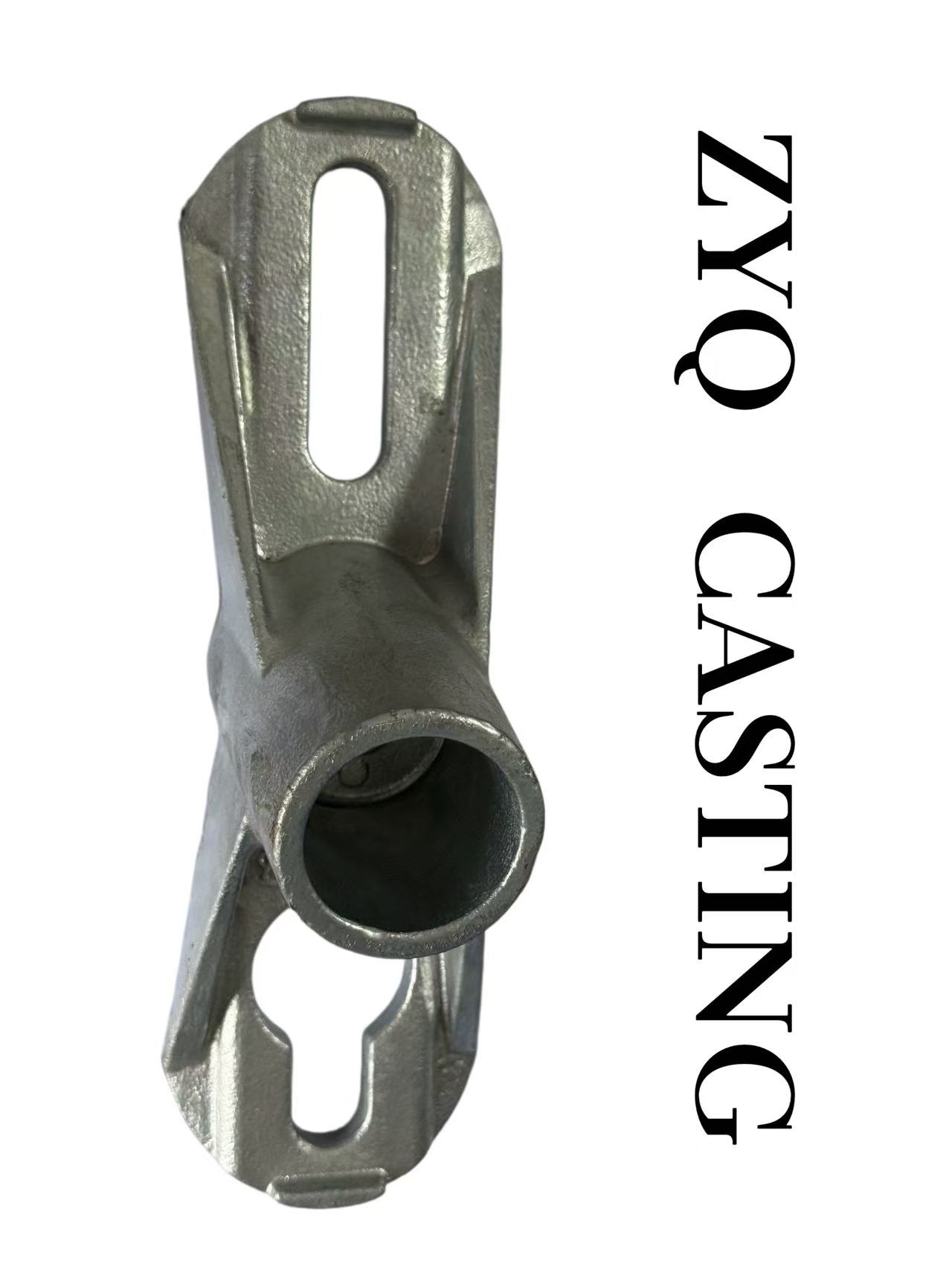
There is a moment in the foundry when molten metal, furious and glowing, finally surrenders to geometry. The cavity waits—precise, cold, patient—and the liquid iron or aluminum pours in not as a wild force, but as an obedient stream. It fills every corner, every sharp angle and hidden curve, until the shape that was once only a hollow impression becomes a solid, undeniable thing. This is not a battle won by strength alone; it is a negotiation between heat and space, where the cavity's design ultimately dictates what the metal will become.
What makes the cavity such a formidable opponent is its refusal to yield. Even as the metal rushes in at temperatures that would soften most materials, the cavity holds its form. The sand or ceramic mold has been packed, cured, and tested to withstand that thermal shock. And so the metal must adapt—cooling just enough at the walls to form a skin, flowing inward where it still runs liquid. The result is a casting that carries the cavity's fingerprint: every vent, every riser, every deliberate draft angle now mirrored in metal.
Yet the meeting is not purely adversarial. The cavity and the molten metal, for all their opposition, need each other. Without the cavity, the metal spills into shapeless waste. Without the molten metal, the cavity is only an empty promise. When the pour is successful, the two become inseparable—the cavity's negative space and the metal's positive mass locked into a single finished component. That is the match: not a defeat, but a fusion, where fire meets form and both are transformed.
Micron-Level Machining After the Casting Cools
Once a casting has fully cooled and stabilized, its surfaces rarely meet tight dimensional demands on their own. Thermal contraction during solidification leaves behind subtle warpage, sink marks, and residual stress that can shift critical features by several microns. That is why the real precision work happens after the part reaches room temperature. Skilled machinists then use coordinate measuring machines to map the actual geometry against the CAD model, identifying exactly where material must be removed to bring bores, faces, and mating surfaces into tolerance.
Achieving micron-level accuracy on a cooled casting calls for more than just a capable CNC mill. Processes like jig grinding, wire EDM, and precision lapping are often combined, each chosen for how it handles the part's specific material grain and hardness. Temperature control in the shop becomes just as important as tool selection—even a few degrees of drift can expand the workpiece enough to ruin a cut. Operators will often let the part rest between operations so heat from machining does not reintroduce distortion.
This level of refinement is what separates a raw casting from a functional component in aerospace, medical, and optical systems. A bearing seat or sealing surface machined to within a few microns ensures proper load distribution and leak-free assembly. Without this post-cooling machining stage, even the best casting design would fail under real-world operating conditions, where mating parts demand near-perfect alignment.
Porosity and the Fight Against Hidden Flaws
Casting porosity rarely announces itself. It hides beneath machined surfaces, inside thick sections, or along abrupt geometry changes where solidification fronts collide. The real danger isn't the visible pinhole you can circle with a marker—it's the micro-shrinkage network that only shows up after a pressure test fails or a fatigue crack starts years into service. Foundries often treat porosity as a cosmetic nuisance, but in load-bearing components, even a 1% void fraction can cut fatigue life by half.
Fighting these hidden flaws starts with understanding how they form. Gas porosity from dissolved hydrogen or entrapped air tends to produce spherical voids, while shrinkage porosity creates jagged, interdendritic cavities that follow the last metal to freeze. Neither responds well to post-cast inspection if the part geometry blocks ultrasonic signals or if radiographic contrast gets washed out by section thickness changes. The most effective defense is process-level: controlling mold filling turbulence, designing feeders that remain liquid longer than the casting, and using chills to steer solidification away from critical regions. Yet even the best gating system won't save you if the alloy's degassing step was skipped or the sand binder releases too much gas at pour temperature.
A practical approach pairs simulation with targeted validation. Solidification modeling can predict where hot spots and porosity will cluster, but it needs real-world calibration—thermocouple data from trial pours, sectioning of sample castings, and pressure decay tests on machined parts. The goal isn't zero porosity, which is physically impossible in most alloys, but pushing it out of the load path. That means asking a harder question: not "how much porosity is acceptable?" but "where can porosity exist without compromising the part's function?" Answering that question requires looking past the obvious surface flaws and into the internal architecture of the casting.
Alloy Selection Quietly Dictates Part Lifespan
Most failure analyses start with visible cracks or worn surfaces, but the root cause often sits further upstream, in the material spec sheet. A part that looks identical to its predecessor can lose a third of its service life simply because a cheaper alloy slipped into the bill of materials. Thermal expansion differences, corrosion pitting in a specific pH range, or a drop in fatigue strength at elevated temperatures rarely show up during a first-article inspection. The lifespan gets decided quietly, long before the first load cycle.
Take two stainless steels with nearly the same tensile strength. One resists chloride stress corrosion, the other does not. In a coastal installation, the second part may fail in months while the first runs for years, yet both pass the same dimensional and hardness checks. That gap is invisible on a drawing but obvious in a teardown. Engineers who treat alloy selection as a procurement detail, rather than a design decision, end up chasing failures that should never have been possible.
Suppliers can also make substitutions without flagging them. A heat number change, a different mill source, or a slight tweak in composition to improve machinability can all nibble away at durability. The part still meets the print, but it no longer meets the environment.
Final Checks That Separate Good from Scrap
A final check is where you stop hoping the work is done and start proving it. Most people breeze through this step because they're tired, or because they've already mentally moved on to the next task. That's exactly when the small, expensive mistakes slip through. The ones that separate good from scrap aren't caught by casual glances — they're caught by someone who assumes there is still something wrong and keeps looking until they're convinced otherwise.
Put the thing down, walk away for ten minutes, then come back and handle it like a first-time user or a stranger off the street. Does the edge catch where it shouldn't? Does the sentence loop back on itself? Does the button do what the label promises? Don't read the manual you wrote in your head — read what's actually in front of you. A checklist helps, but only if you use it to ask harder questions, not to rubber-stamp what you already believe is fine.
The real test is whether you're willing to scrap something that's almost good. Good enough is the enemy of finished. Scrap gets thrown away because someone lied to themselves at the final check: the weld looked okay from the outside, the typo was in a footnote, the tolerance was barely off. If you wouldn't put your name on it and hand it to a paying customer without a flinch, it fails. That single standard, repeated without mercy, is what keeps good work from turning into scrap.
FAQ
The process moves through pattern or mold creation, metal melting and pouring, cooling, shakeout, grinding, heat treatment if needed, machining, and final inspection. Every step has its own tolerance checks, so a flawed mold doesn't get to ruin an entire batch.
Mold dimensions directly transfer to the casting, including shrinkage allowances and draft angles. If the mold isn't machined to tight tolerances or isn't maintained, the part will need extra rework, which defeats the purpose of precision casting.
Aluminum, zinc, magnesium, and various steels are common. Aluminum alloys like A356 are popular for lightweight structural parts, while stainless steels show up in food or chemical equipment where corrosion resistance matters.
Porosity, cold shuts, hot tears, and inclusions are the usual suspects. Factories use X-ray or ultrasonic testing for internal flaws and coordinate measuring machines for dimensional verification rather than relying on visual checks alone.
Casting can produce complex internal cavities, undercuts, and variable wall thicknesses without wasting a huge amount of material. It also allows higher production rates once the mold exists, so the per-part cost drops quickly for medium to large batches.
They design the casting with a machining allowance on critical surfaces. After casting, those surfaces are finished on CNC mills or lathes. This hybrid approach keeps the cost down while still meeting the tolerance demands of assemblies.
A precision facility invests in controlled mold production, automated pouring, thermal management, and rigorous metrology. Basic foundries may skip those steps, leading to wider variations and a higher reject rate when parts need to fit into engineered systems.
Conclusion
A cast part's story begins long before any furnace lights up. The mold geometry—draft angles, gate placement, cooling channels—determines how metal will flow, freeze, and release. Small adjustments at this stage ripple through every later step. Once the cavity is cut and the mold assembled, molten alloy enters under controlled turbulence, filling thin webs and thick bosses alike. The real challenge isn't just filling the shape; it's managing shrinkage as the metal transitions from liquid to solid. Here, risers and chills earn their keep, feeding the casting as it contracts and steering solidification away from critical sections.
After shakeout and cooling, the part still carries a rough skin and dimensional drift. Micron-level machining brings bores, faces, and mounting pads into true position, often revealing what the naked eye can't—subsurface porosity, micro-tears, or inclusion clusters. Alloy choice quietly writes the part's service biography: a high-silicon aluminum may machine beautifully but crack under fatigue; a ductile iron might forgive impact but resist corrosion poorly. Final checks separate the good from scrap through a mix of pressure testing, X-ray or CT scans, and coordinate measuring. Each rejected casting feeds back into mold tweaks, gating revisions, or heat-treat adjustments. In a precision foundry, the line between mold, metal, machine, and microscope is never static—it's a loop where every finished part carries the memory of every decision made upstream.
Contact Us
Contact Person: Nico Yin
Email: [email protected]
Tel/WhatsApp: 8618561567088
Website: https://www.ductileironparts.com/