

China At-Home Skincare Devices: Are They Worth Adding to Your Routine?
2026-09-17
At-home skincare devices have exploded in popularity across China, promising salon-level results without leaving your bathroom. But with so many gadgets—from LED masks to microcurrent wands—it's hard to tell which ones actually earn a place in your routine. Are they worth the hype or just another drawer filler? We dig into the science, the trends, and the real user experiences, including standout options like Omeina, to help you decide.
Why China’s At-Home Skincare Device Boom Feels Different This Time
A few years ago, the at-home beauty device craze in China was driven mostly by fear of missing out and aggressive livestream selling. Many people bought cheap LED masks or facial rollers, used them for a few weeks, saw little change, and then abandoned them in a drawer. This time, the conversation has shifted from promising instant glass skin to understanding things like wavelength ranges, energy density, and how radiofrequency actually remodels collagen. Buyers are asking for clinical trial data before they pay, and they are comparing specs across brands instead of just following a celebrity endorsement.
What also feels different is that local brands are no longer just rebranding generic OEM devices. Several Chinese companies now run their own labs and publish safety and efficacy studies on Chinese skin types, which matters because sensitivity and pigmentation concerns differ from Western markets. Some devices are being designed with lower default energy levels and built-in cooling to reduce the risk of post-inflammatory hyperpigmentation. Retailers are also offering in-store skin analysis so customers can see baseline measurements before they commit to a routine.
Community behavior has changed, too. Instead of one-off viral posts, you now see long-term tracking threads where users post monthly close-up photos under identical lighting. Negative reviews about warmth comfort or battery life get as much attention as positive ones, which pushes brands to iterate quickly. That kind of accountability loop makes the current boom feel less like a bubble and more like a maturing category where word of mouth is earned through visible results.
What a $50 LED Mask Can (and Can’t) Do for Your Skin
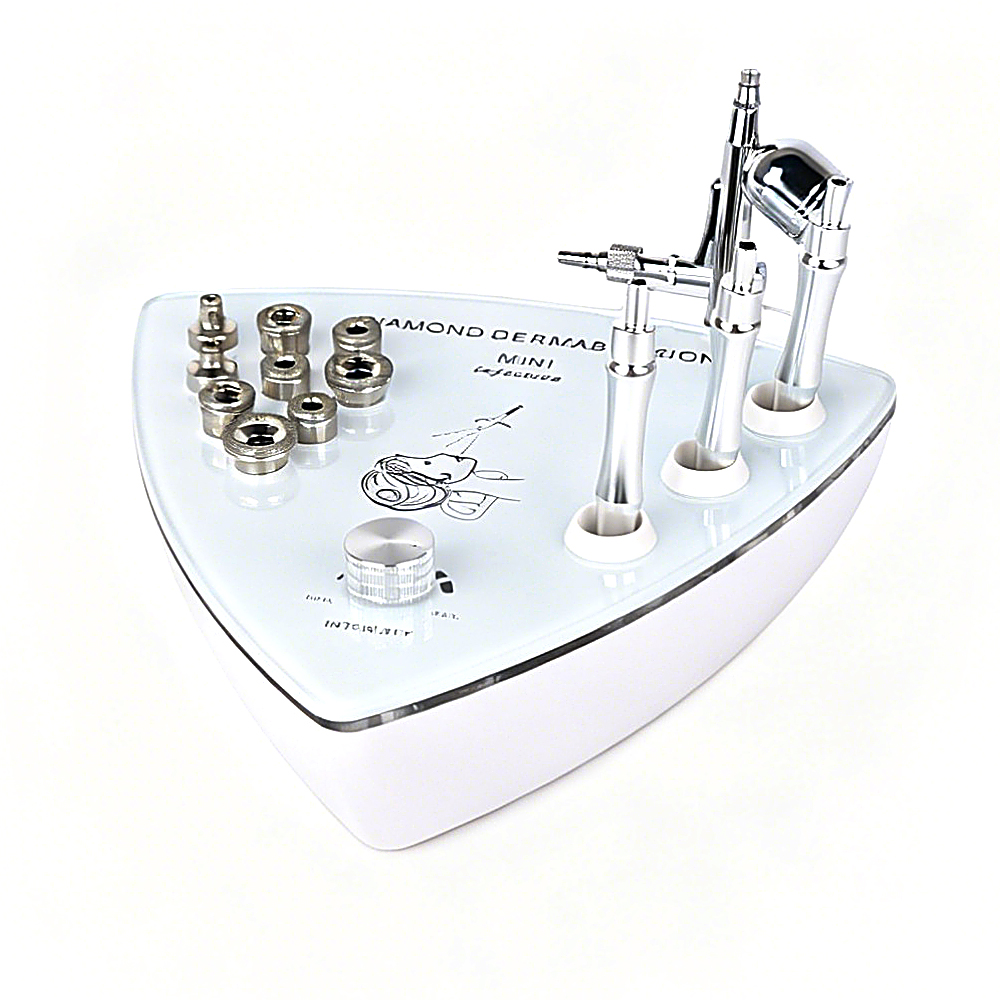
A $50 LED mask usually includes red and near-infrared diodes, but at lower counts and weaker output than clinical devices. That means you might notice a mild calming effect on redness and a slight brightness after regular use—think eight to twelve weeks of consistent sessions. It won’t trigger the same deeper repair response because the light energy simply doesn’t reach the same depth or intensity.
At this price point, build quality and wavelength accuracy also vary. Some masks emit a broad red spectrum rather than the precise 630nm or 660nm bands tied to most research on skin. The result is unpredictable: one person sees smoother texture, another gets nothing beyond a warm, relaxing ten minutes. If your main goal is daily maintenance on otherwise healthy skin, that’s acceptable.
What it can’t do is replace stronger treatments. Don’t expect a $50 mask to flatten deep wrinkles, clear cystic acne, or firm sagging jawlines. Those changes require higher irradiance, longer clinical use, or entirely different modalities. Use the budget mask as a low-stakes add-on—not your sole anti-aging strategy.
Your Routine Is Already Full: Where Devices Actually Fit
Most days already feel tightly packed. The commute eats an hour, work spills past five, and dinner still needs to be made. Adding a new habit, especially one involving a device, sounds like asking for trouble. But the real question isn't where to add time, it's where to swap friction. Brushing teeth takes two minutes, yet half of that is spent just standing there. A smart toothbrush with a pressure sensor doesn't lengthen the routine; it makes the existing two minutes count toward something measurable. The device fits into the slice you already have, not a new block carved out of the evening.
Consider the kitchen counter. A smart scale already lives there for baking. It doesn't demand a separate step; it replaces the old scale and quietly logs ingredients as you go. The same logic applies to a smart plug on the coffee maker. You still make coffee, still press the button, but now the machine is warm before you get downstairs. The routine's shape stays the same. The device simply slides into the gap between intention and action, making the familiar path a little less resistant.
The trap is thinking a device must create a new ritual. It rarely does. It works best when it attaches to something you already do without thought. That's why fitness trackers succeed on wrists and fail in drawers when they push for a 6 a.m. jog. The step counter doesn't ask for a workout; it just counts the walk to the bus. Fitting a device into a full routine means finding the seam where you're already moving, already cooking, already winding down. There, it disappears into the day instead of competing with it.
Pairing Tech with Serums Without Wrecking Your Barrier
Most of the trouble starts when a device and a serum are treated as separate steps rather than a single protocol. If you're using anything that relies on electrical current or ultrasound, pick a serum that's mostly water-based and free of heavy oils. A thin hyaluronic or beta-glucan formula lets the tool move without drag and won't leave a film that traps heat. Save creamy serums, vitamin C, and exfoliating acids for a different time of day—layering them under a gadget can turn a mild flush into full-blown irritation.
Your skin will usually tell you when the combo is too much. Tightness after a session, redness that lingers past an hour, or stinging when you apply your usual moisturizer are all signs the barrier needs a break, not another active. On those nights, put the device down and reach for something with ceramides, squalane, or panthenol. A few barrier-repair-only evenings make it easier to reintroduce tech and serums later without the same backlash.
Claims vs. Reality: What Chinese Brands Leave Out
When a Chinese brand boasts about its latest smartphone’s 200MP camera, the marketing pages glow with moon shots and neon-lit cityscapes. What gets quietly omitted is the computational photography pipeline that aggressively smooths skin textures and over-saturates foliage—turning a sunset into a candy-colored cartoon. The spec sheet may list a massive battery and 120W charging, but it rarely mentions the battery health degradation after 18 months of daily fast charging, nor the software throttling that kicks in during sustained gaming sessions. These aren’t hidden defects; they’re deliberate trade-offs buried under headline numbers.
Similarly, electric vehicle startups from China love to tout range figures measured under the lenient CLTC cycle, which can be 15–20% more optimistic than the EPA’s real-world test. The missing piece is often the winter range drop—some models lose over 40% of their claimed range in sub-zero temperatures, yet the brochure’s fine print only whispers “varies with conditions.” Meanwhile, advanced driver-assistance systems are marketed with names like “Navigate on Autopilot,” but the user manual disclaims responsibility for lane changes near exit ramps and construction zones, while actual hands-free operation may be limited to pre-mapped highways in a handful of cities.
In the smart home and wearables space, the gap between claim and reality often hides in data handling. A fitness tracker may promise “24/7 heart rate monitoring,” but it won’t tell you that the optical sensor’s accuracy plummets during high-intensity interval training or on darker skin tones—a well-documented issue across the industry. The companion app requests location, contacts, and microphone access “for enhanced features,” yet the privacy policy, written in dense legalese, reveals that user data can be shared with unnamed third-party partners for “service optimization.” Chinese brands, in particular, face extra scrutiny here, but the real omission is universal: the seamless, glowing product demo never shows the pop-up that says “This app would like to track your activity across other companies’ apps and websites.”
The 60-Day Consistency Test Nobody Talks About
Most consistency advice collapses around day 23. Not because motivation dips—though it does—but because nobody warns you about the stretch where progress stops feeling like progress. The 60-day window is long enough to expose your actual relationship with the work, not the version you promise yourself on a Sunday night.
What gets tested isn't your schedule. It's your tolerance for doing something when the novelty is dead and the results are still invisible. Some days you'll coast. Others you'll have to bribe yourself with terrible coffee and a timer set to eight minutes. The people who quit rarely fail from laziness; they fail because they expected a drumroll and got a Tuesday.
By day 60, the question stops being "Can I stick with this?" and becomes "Is this actually worth sticking with?" That's the part nobody talks about. Consistency isn't a moral virtue—it's a filtering mechanism. If you're still showing up after two months, you're not more disciplined than anyone else. You've just stopped needing the applause.
FAQ
It depends on the technology and how consistently you use them. For hair removal, devices like the Ulike Sapphire Air have strong user feedback showing slower regrowth after four to six weeks of weekly sessions. For anti-aging, radiofrequency devices from brands like AMIRO or Comper can temporarily plump fine lines if used three times a week for a couple of months, but the effect fades if you stop. Realistic expectations matter: they won't match in-office lasers, but they can maintain results between professional visits.
Most reputable Chinese devices include built-in skin sensors and adjustable intensity levels, which helps. If your skin is reactive, start with the lowest setting on a small area behind your ear or jawline and wait 24 hours. Avoid using radiofrequency or microcurrent devices over active breakouts, eczema patches, or after strong chemical peels. Ulike's sapphire cooling tip is particularly useful for sensitive areas during IPL hair removal because it reduces the sting.
You're often paying for brand trust and long-term clinical data with international names. Chinese devices typically offer similar core technology at half or a third of the price, sometimes with extra features like app connectivity or built-in cooling. The trade-off is that independent third-party studies are scarcer, and warranty support can vary by seller. For simple tasks like facial cleansing or IPL hair removal, many Chinese options perform just as well. For nuanced microcurrent lifting, I'd still lean toward brands with a longer track record.
No, and anyone promising that is overselling. At-home devices legally have to stay below certain energy thresholds, so they're safer but much weaker than what a clinic uses. Think of them as maintenance tools: a Chinese at-home LED mask can help keep acne calmer between facial visits, or a home RF wand can prolong the results of a professional tightening treatment. If you have severe acne scarring or deep wrinkles, save your money for a dermatologist.
The strongest categories are IPL hair removal, ultrasonic cleansing, and LED light therapy for mild acne or redness. Red and infrared light masks from Chinese brands are affordable and easy to use while reading or watching TV. Radiofrequency and microcurrent devices work for fine lines and puffiness, but require more patience. Avoid buying a multi-function device that claims to do everything; it usually does each thing less effectively than a focused tool.
There's a huge quality gap between a $30 no-name facial brush and a $150 Chinese device from a brand with a real customer service department. Cheap devices often have weak motors, harsh bristles, or inconsistent energy output, which either does nothing or irritates your skin. Spend enough to get a known brand like AMIRO, Ulike, or Comper, and check for replaceable heads or bulbs, because ongoing costs can outweigh the initial saving.
Start with one specific concern, not a bundle of hopes. If unwanted facial or body hair is your main annoyance, go for an IPL device with a cooling tip and at least 500,000 flashes. If dullness and mild breakouts bother you, pick a red/blue LED mask with a comfortable fit. Read reviews that mention using the device for longer than a month, and verify the voltage works in your country. Also check the return policy—many people realize after two weeks whether they'll actually keep using it.
Conclusion
China's at-home skincare devices have moved past gimmick status, but the hype still outruns the evidence. A $50 LED mask can deliver real, if modest, collagen stimulation and acne-calming benefits—provided you use specific wavelengths and keep expectations grounded. It won't erase deep wrinkles or replace in-office treatments, and many Chinese brands quietly omit that red and near-infrared light need weeks of near-daily use to show even subtle changes. The current wave feels different because the devices are cheaper and sleeker, not because the biology has changed. Marketing often leans on before-and-after photos with better lighting rather than controlled trials, and fine print about eye safety or skin-type suitability is easy to miss. That gap between what's promised and what's proven is where a lot of buyers get burned.
Realistically, these tools only earn a spot if you already have a stable cleanse-moisturize-protect base. Adding a device on top of a crowded shelf of actives is a recipe for irritation, especially if you pair LED or microcurrent with strong retinoids or acids without spacing them out. The smart move is to treat the device as a supplement—use it on bare, damp-free skin after cleansing, wait, then apply a minimal serum, and watch for stinging or tightness over the first two weeks. The part nobody talks about: a 60-day consistency test. Most people quit around day ten, blame the device, and move on. If you can't commit to five sessions a week for two months, save your money. For those who do stick with it, the payoff is usually subtle firmness and smoother texture—not a miracle, but a reasonable add-on for the patient.
Contact Us
Contact Person: Tina Liu
Email: [email protected]
Tel/WhatsApp: 8618681405932
Website: https://www.omeinabeauty.com/