

China Preserved Moss: Transform Your Space with Effortless Natural Beauty
2026-10-04
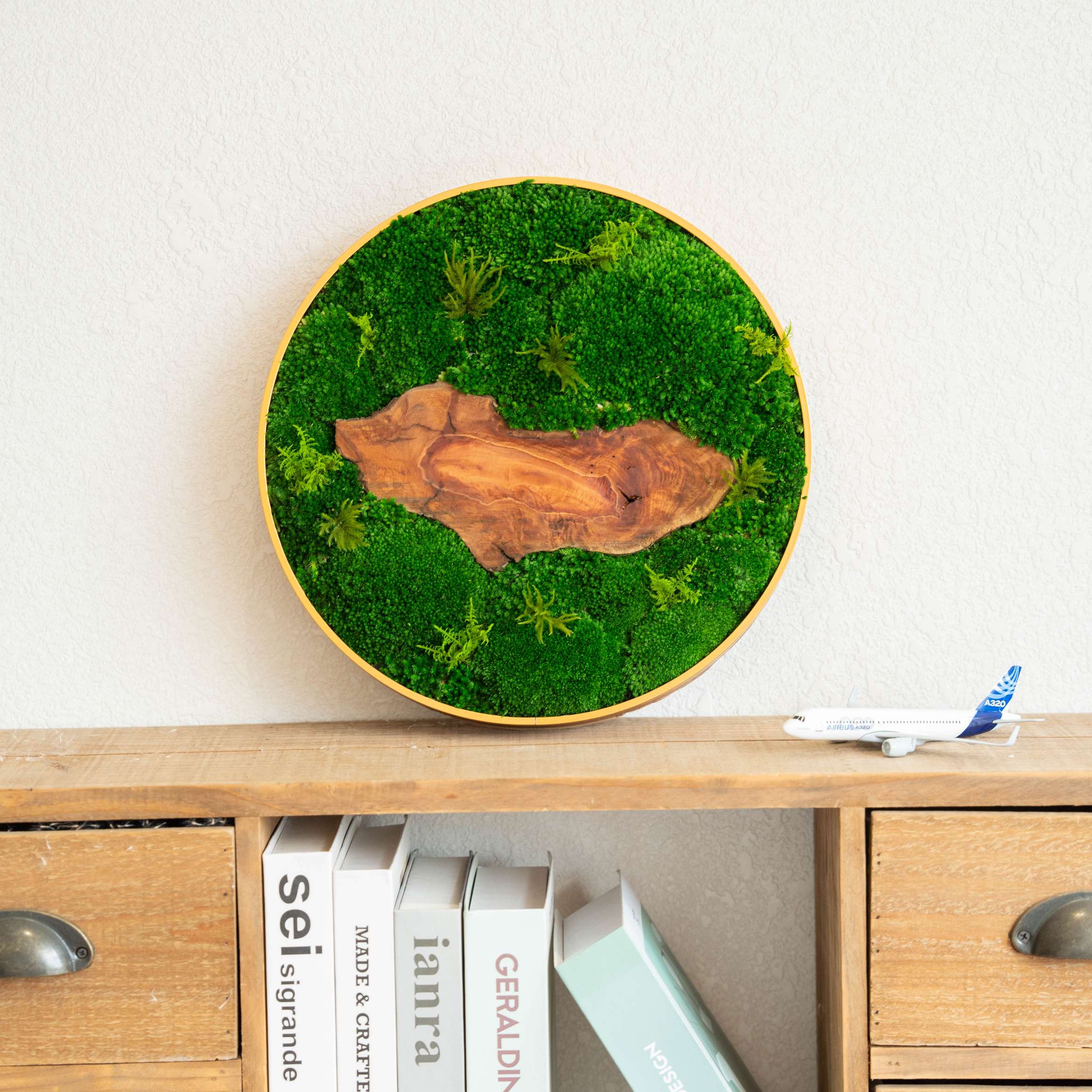
Moss doesn't ask for much, and preserved moss asks for even less. That's the quiet appeal of China preserved moss—the soft, forest-floor texture you remember, kept vivid without soil, water, or worry. Whether you're styling a reading corner or rethinking an entire office wall, it delivers that effortless natural beauty most plants only promise. At PHLEEYA, we've seen this material turn sterile spaces into something you want to touch. Not because it's trendy, but because it works. Here’s what makes it different.
The Case for Moss That Never Needs Water
Most people don't realize that moss can survive without a single drop of water once it's been preserved. The process locks in its soft texture and rich green tones, so it never wilts, browns, or turns crispy. Instead of misting, watering, or worrying about humidity, you simply hang it on a wall or place it in a frame. That alone changes how we think about bringing nature indoors.
This kind of moss also sidesteps the usual indoor plant failures. There's no soil to attract fungus gnats, no drainage trays, no sunlight requirements to juggle. It works in windowless bathrooms, dark hallways, and offices where live plants struggle. For anyone who loves the look of greenery but hates the upkeep, no-water moss offers a quiet, lasting alternative.
The appeal goes beyond convenience. Preserved moss can be shaped into panels, logos, or living walls without the weight and irrigation systems that real living walls demand. It keeps its color for years, not days. That makes it a practical choice for designers, renters, and busy households alike—proof that you don't need a green thumb to enjoy a green space.
Turning Walls into Living Canvases
A blank brick wall on a side street rarely gets a second glance. But let an artist spend a few nights with rollers and cans, and suddenly the same surface becomes a story you can't ignore. This shift doesn't happen by accident. It starts with noticing how light falls across the facade, how the texture of old paint and mortar can hold a color, how a single curved line can change the mood of an entire block.
The best living canvases aren't frozen in time. They breathe with the neighborhood. A portrait might gain a halo of ivy after a rainy spring, or a geometric pattern might get interrupted by a new window box. Instead of fighting that change, many artists now design for it, leaving gaps where weather and plants and passersby can add their own marks. The wall becomes a collaboration between intention and accident.
What makes people slow down isn't just scale or bright pigment. It's the feeling that the wall has stopped being a boundary and started talking. Maybe it holds a memory of someone who lived above the shop, or a pattern borrowed from a tile floor inside. When the work settles into its surroundings, it no longer reads as decoration. It feels like the building finally exhaled.
Small Touches of Moss Bring Big Calm
A thin cushion of moss tucked between stones can hush a busy corner of the garden. Unlike flowering plants that shout for attention, moss softens edges and absorbs sound, inviting the eye to rest. Its tiny leaves hold moisture after rain, releasing a faint green scent that makes the air feel fresher.
Indoors, a small moss terrarium works the same quiet magic on a desk or shelf. Watching the slow spread of its velvet surface pulls your breathing into a slower rhythm. You don't need a large display; a single patch in a shallow dish can become a daily focal point for a few calm minutes.
Caring for moss is also forgiving. It asks for shade and dampness rather than constant pruning or feeding. That low demand makes it an easy companion for anyone looking to bring a measured, green pause into everyday spaces.
No Soil, No Mess, No Problem
Most people assume growing fresh herbs at home means bags of potting mix, drainage trays, and a permanent dusting of dirt across the kitchen counter. This setup flips that idea entirely. The roots sit directly in nutrient-rich water, so there is no soil to spill, no repotting to schedule, and no need to scrub muddy tools after a planting session.
That also changes how much space and effort you actually need. A narrow windowsill or a corner of the desk is enough, because the system stays self-contained. When the water level drops, you refill it; when the nutrients run low, you add a capful of solution. There’s no guesswork around overwatering or underwatering, and the usual indoor garden clutter simply never appears.
The result is a cleaner routine that fits into a busy week. You get steady growth without dragging a bag of earth through the living room, and you can harvest a few leaves at dinner without washing grit off the stems. It’s a quieter, tidier way to keep something green within arm’s reach.
Why Preserved Moss Belongs in Every Room
A patch of preserved moss does what no framed print or accent pillow can: it brings a quiet, tactile softness that makes a room feel less like a showroom and more like a place you actually want to sit down in. Unlike fresh plants, it never demands a sunny windowsill or a watering schedule, so it thrives in windowless bathrooms, dark hallways, and rented bedrooms where drilling a shelf feels like a commitment. Just hang it, lean it, or tuck it into a tray, and it holds its deep greens and soft grays without fading, wilting, or dropping a single leaf.
There's also the simple fact that preserved moss absorbs and breaks up sound far better than flat walls or glossy cabinets. A few panels behind a desk or above a headboard take the edge off echoes, making a studio apartment or a home office feel noticeably calmer. And because it's real moss that has been stabilized, not plastic or painted foam, it keeps an organic irregularity—each clump has its own texture, clusters bunch differently, and the color shifts slightly with the light. That imperfection is exactly what makes it read as alive, even though it never grows.
For renters or anyone tired of replacing dead houseplants, preserved moss is a practical upgrade. It doesn't need pruning, insect checks, or drainage trays, and it won't trigger pollen allergies or attract gnats. You can mount it in a frame, use it as a table runner under a glass top, or cover an entire accent wall without worrying about humidity or soil. It's a low-effort way to add a natural element that feels deliberate rather than decorative, and it fits every room because it asks for nothing but a little wall space.
The Quiet Luxury of Natural Texture
The appeal of natural texture lies in what it leaves unsaid. A wall of hand-troweled lime plaster, a length of undyed linen falling softly over a chair, a slab of honed stone with its fissures still visible—these surfaces do not announce themselves. They invite the hand to pause, the eye to linger. Their quietness comes from an absence of gloss and uniformity, where subtle irregularities record the touch of a maker and the passage of time. This is luxury that whispers rather than declares, offering depth through touch before it ever asks to be seen.
Color, too, bends toward restraint when it rises from natural matter. Think of the chalky warmth of raw wool, the cool grey-green of unfired clay, the bone-white of sun-bleached oak. These tones shift with the light, never sitting still, because the fibers and grains beneath them are alive with variation. A single linen curtain can hold a dozen shades in one fold, while a polished resin floor remains stubbornly identical from edge to edge. Living with natural texture means accepting a gentle instability—a room that breathes and changes through the hours, refusing to be captured in a single perfect frame.
What makes this approach feel so different is its patience. It does not chase novelty or rely on a single striking detail. Instead, it builds an atmosphere through repetition and restraint: the rough weave of a wool throw beside a smooth wooden armrest, the grit of a plaster wall catching low evening light. Each imperfect edge becomes a mark of permanence rather than flaw. In a culture of polished surfaces and instant refresh, choosing the quiet luxury of natural texture is a small act of defiance—a decision to live among materials that still remember where they came from.
FAQ
No, it's real moss that has been preserved through a non-toxic process. It keeps its soft texture and lush color but won't grow or need watering, which makes it perfect for indoor spaces where live plants struggle.
It's sourced from managed forests in China, harvested in a way that doesn't harm the local ecosystem. Each batch is cleaned and treated to stay vibrant for years without sunlight or soil.
You can attach them to a clean, dry surface using construction adhesive or staples. For larger walls, start from the bottom and work upward, overlapping edges slightly so no backing shows through.
Almost none. Keep it out of direct sunlight and away from extreme humidity. If it gets dusty, a quick pass with a hair dryer on cool setting or a soft brush is enough.
Yes, as long as the space is well ventilated and the moss isn't in direct contact with water. It tolerates normal humidity, but you shouldn't place it where it will be splashed constantly.
With proper care, the color stays rich for many years. Fading usually happens only if it's exposed to direct sun or very dry indoor heating for long periods.
The preservation process uses non-toxic, food-grade ingredients, so it's safe. However, it's not meant to be eaten, so it's best to keep it out of reach of curious pets and toddlers.
Absolutely. It cuts easily with scissors or a utility knife. You can piece together different shades to create patterns, and the seams blend nicely because of the natural texture.
Conclusion
There’s a quiet shift happening in how we bring greenery indoors, and China preserved moss sits at the center of it. This isn’t the fussy plant that sulks if you forget to water it. Preserved moss holds its soft, vivid texture for years without a single drop of water, which makes it perfect for anyone who loves the look of nature but not the upkeep. You can cover an entire accent wall to create a living canvas that swallows sound and softens a room’s edges, or tuck a small framed panel into a hallway for a breath of calm between rooms. Because it needs no soil, there’s no dirt to spill, no bugs to manage, and no mess to clean up—just pure, tactile green that stays exactly as it was arranged.
What makes preserved moss feel less like decor and more like a quiet luxury is the way its natural texture catches light without demanding attention. It works in a bright kitchen, a dim bathroom, or a windowless office because it doesn’t rely on sunlight. That flexibility means every room can borrow a piece of forest floor without worrying about humidity, drainage, or seasonal changes. And when you pair larger moss panels with smaller touches—a tray centerpiece, a pair of moss-filled coasters, a narrow strip along a shelf—the effect is cumulative. The space feels calmer, more grounded, as if the walls themselves know how to breathe. It’s not about adding another thing to maintain. It’s about choosing one material that quietly does the work of many.
Contact Us
Contact Person: Mr. Luo
Email: [email protected]
Tel/WhatsApp: 86 18100895505
Website: https://www.feiliyaflowers.com/en/