

China Specialty Fasteners: A Comprehensive Sourcing Guide for Industrial Buyers
2026-10-14
When your production line grinds to a halt because a custom shoulder bolt or tamper-proof screw didn't meet spec, the appeal of 'cheap' sourcing disappears fast. China remains the world's most capable market for specialty fasteners, but only if you know how to separate precision suppliers from middlemen. This guide demystifies the sourcing process, covering material grades, coating options, quality audits, and logistics pitfalls that trip up even experienced industrial buyers. At Peak Fasten, we've seen firsthand where sourcing programs succeed or stall, and the insights here will help you build a supply chain that holds up under pressure.
Why China's specialty fasteners remain hard to replace on cost and lead time
Specialty fastener production in China benefits from a deeply clustered supply chain that most other regions simply cannot replicate. Raw material mills, wire drawing shops, cold heading facilities, heat treatment lines, and plating houses often sit within a single industrial zone. That geographic density removes freight between process steps, trims handling damage, and allows a single order to move from rod to finished part without excessive warehousing. For buyers, this shows up as a unit price that reflects not just cheap labor but a compressed physical footprint where each process adds value with minimal non-productive time.
Lead times stay short because many Chinese fastener makers maintain dedicated tooling teams and in-house die shops. When a drawing changes or a new specialty profile arrives, the turnaround is measured in days rather than weeks. Western suppliers typically outsource toolmaking, which forces quoting delays and risks misalignment between design and production. Chinese shops, especially those in Guangdong, Zhejiang, and Jiangsu, can run multiple trial batches a week, adjust tolerances on the fly, and still meet original delivery dates. That flexibility matters when downstream assembly lines cannot afford to wait for a box of custom shoulder bolts or non-standard flanged nuts.
Attempts to shift specialty fastener sourcing to lower-cost countries often fail because they underestimate the value of accumulated process knowledge. A Vietnamese or Indian factory may offer cheaper labor, but it lacks the decades of iterative problem-solving around thread rolling, hydrogen embrittlement, and surface finish that Chinese workshops have internalized. The result is that China holds a cost-and-speed advantage that is not based on a single factor, but on the interplay of logistics, metallurgy, and shop-floor experience. Replicating that combination would require years of investment and a supplier network that simply does not exist elsewhere at the same maturity.
Five field-tested ways to spot a genuine factory versus a trading company
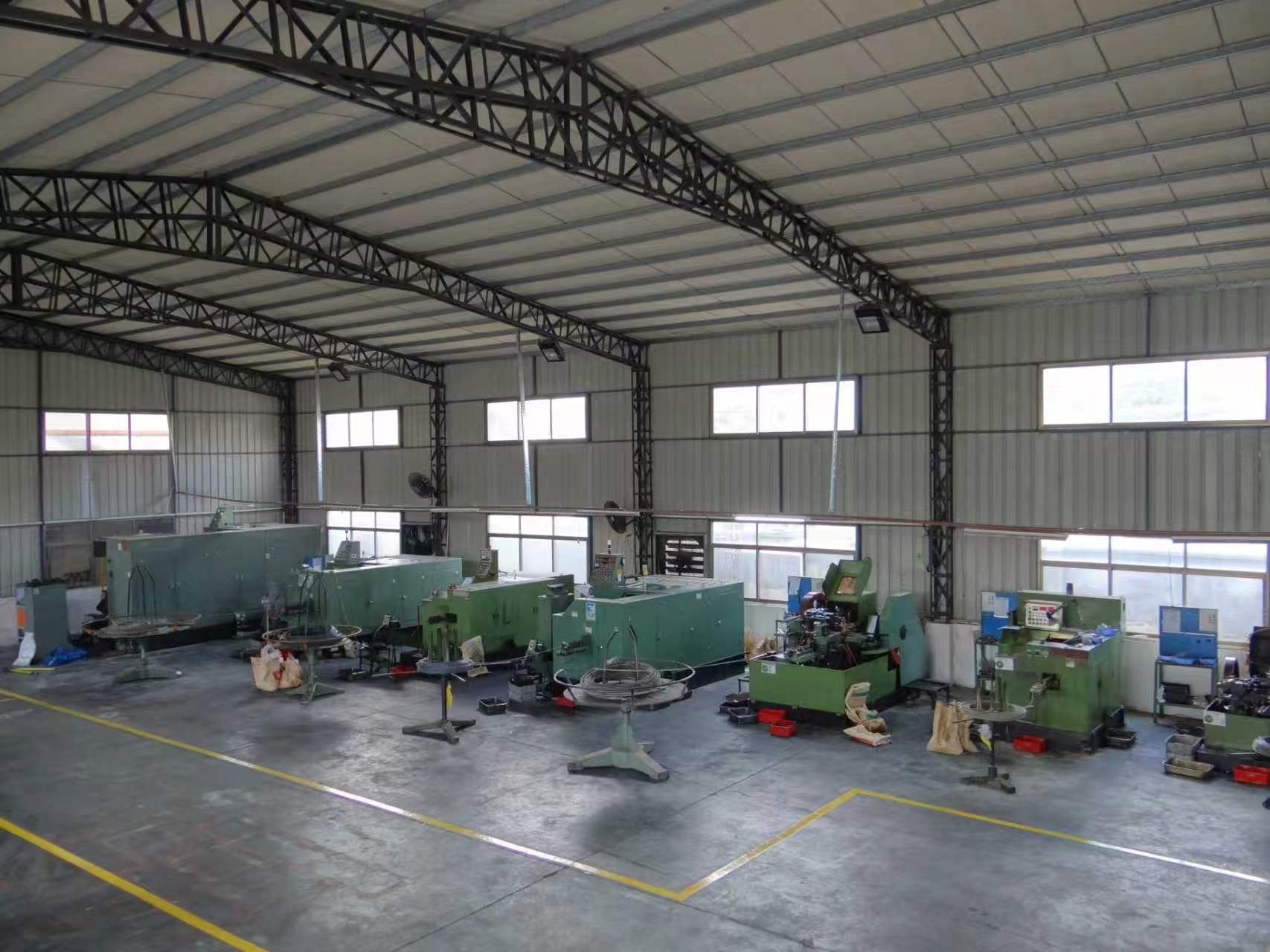
Over the years I've learned that genuine factories often reveal themselves through small operational details that trading companies can't easily fake. Ask to see the production line live over a video call, not just polished sample photos. A real factory will usually agree quickly, even if the connection is shaky, because the floor is already running. Trading companies tend to stall or send you a carefully staged warehouse clip that shows boxes but no actual machines in motion.
Another reliable signal is how they handle customization and minimum order quantities. Factories typically quote based on raw material costs and machine time, so their MOQs are often lower or more flexible for a new buyer. A trading company usually pads the MOQ because they need to hit a commission threshold, and their responses to technical questions about tolerances, material sourcing, or production lead times will be vague or delayed while they forward your message to the real supplier.
Finally, check the paperwork trail. Genuine factories usually have direct answers about export licenses, in-house quality inspection records, and equipment maintenance schedules. If you request a certificate of origin or a mill test report, a factory will pull it from their own files, while a trading company has to ask a third party and often sends you a redacted or mismatched document. Trust those messy, unscripted moments more than any glossy brochure.
Hidden variables in non-standard orders that affect strength and thread precision
Non-standard orders rarely come with the same statistical safety net as high-volume production. A slight shift in raw material chemistry between two heats of the same alloy, for example, can alter hardenability and leave the threads either too soft to resist stripping or brittle enough to crack under assembly torque. When the order is for a non-standard length or diameter, this variation gets magnified because there is no historical process data to predict how the material will respond to the unusual geometry. The result is a strength value that looks acceptable on paper but behaves unpredictably in the field.
Thread precision suffers from its own set of hidden variables. Custom pitch diameters and unusual flank angles force machinists to adjust tool offsets and rolling pressures more frequently, and each adjustment introduces a small but real deviation. Coolant concentration, die wear, and even the temperature of the workpiece at the moment of cutting can shift the final thread form by a few microns. In a standard order, these shifts average out across thousands of parts. In a non-standard order of fifty pieces, they do not average out—they accumulate, and the last part can measure noticeably different from the first.
Post-processing steps add another layer of hidden variation. A heat-treatment furnace may have a cold spot that was never a problem for standard parts because their geometry placed the critical threads away from that zone. For a non-standard order with an unusual shoulder or reduced shank, that same cold spot can produce inconsistent core hardness and, therefore, inconsistent thread strength. Similarly, the applied coating or plating thickness may vary more on a custom thread profile, affecting the effective pitch diameter. These variables are not shown on the drawing, yet they quietly determine whether the parts meet the intended clamping force or fail early.
Heat treatment to surface coating: common practices and overlooked pitfalls in Chinese plants
Many Chinese heat treatment shops have standardized the transition from quenching or carburizing to coating by focusing almost exclusively on hardness and case depth. Parts coming out of a sealed quench furnace often go straight into shot blasting, then a quick alkaline wash, followed by zinc phosphating or a spray primer. On paper this looks efficient, but the rush to move parts through the line hides a lot of variability. A typical line will treat a batch of 200 shafts exactly the same way, even if the incoming steel chemistry drifted slightly or the quenching oil was due for filtration. The coating team rarely sees the furnace charts; they just inherit whatever surface condition the heat treater produced.
One common practice is to rely on visual inspection after heat treatment and assume that a uniform grey or black surface is ready for coating. Overlooked pitfalls start here. Residual carbon from a cracked atmosphere, burnt-in quench oil, or silicate scale from annealing can survive shot blasting. If the pre-paint phosphate bath is not aggressively descaled, the coating will sit on a weakly bonded layer and fail early in cyclic corrosion testing. Another frequent issue is over-tempering or skipped stress relief before coating. When a cured powder coat or e-coat oven reaches 180–200°C, a part that was tempered at 160°C can undergo further dimensional movement, causing the coating to crack at sharp edges or around press-fit bores.
The most dangerous overlooked pitfalls are not in the coating line but in the gap between heat treatment and surface preparation. Hydrogen introduced during carburizing or acid pickling is often left unchecked, and delayed brittle failure shows up weeks after assembly. Condensation on freshly heat-treated parts in humid southern Chinese workshops is another silent killer: a thin rust film can form within hours and then get painted over, creating perfect conditions for underfilm corrosion. Sorting out these problems requires more than adding a rust preventive. The heat treater needs to record surface hardness, residual stress, and cleaning bath pH for every batch, and the coating line should reject parts with visible temper colors or water break marks. Until that shared data exists, the same coating failures will keep repeating.
Transitioning from pilot batch to volume supply without letting quality drift
Scaling from a carefully nurtured pilot batch to full commercial volume often unravels the very control that made the initial run succeed. The temptation is to lift-and-shift the same recipe, same timings, same manual checks, but the physics shift: larger vessels heat and cool unevenly, mixing dynamics alter reaction kinetics, and the statistical weight of a single operator's judgment starts to fray. Quality drift rarely announces itself with a bang—it shows up as a widening spread in viscosity, a subtle shift in color, a slow upward creep in impurity profiles. Catching that drift demands pre-planned guardrails, not post-mortem firefighting.
A practical approach is to anchor the scale-up on critical-to-quality parameters rather than on the original process steps. Identify the handful of measurements that truly predict field performance, then force every scale increment to prove it can hold those parameters within tightened limits, not just within spec. Run intermediate volumes, deliberately stress the edges of the new operating window, and compare the resulting distribution against the pilot baseline. If the variance grows even as the mean stays acceptable, treat that as a quality risk—tighten the window before pushing further. This shifts the conversation from "does it pass inspection" to "does it behave like the batch customers already trust."
Supplier and equipment changes often hide the biggest drift vectors during volume transition. A different lot of raw material that met the same specification can interact differently at higher throughput; a larger mixer can shear where the old one gently folded. Document every substitution, run side-by-side trials where possible, and build a feedback loop that flags early warning signals—like rising standard deviations or increased rework rates—before they compound. The goal is not to freeze the pilot process forever, but to deliberately evolve it with visibility, so that volume supply becomes a controlled expansion rather than a roll of the dice.
Navigating national standard differences in material certification and toughness for industrial buyers
Industrial buyers often discover that a plate certified under one national standard does not transfer cleanly to another project governed by a different code. A 16 mm structural steel plate meeting ASTM A36 with a 250 MPa minimum yield and Charpy values reported at 20°C will not automatically satisfy EN 10025-2 S275JR, where the yield minimum is 275 MPa and impact testing typically follows a different temperature and specimen preparation protocol. The mill certificate itself is a major variable: an EN 10204 3.1 certificate includes independent test results, while a US MTR may rely on the producer's own testing, and some projects demand third-party inspection beyond the base certificate.
Toughness requirements add another layer of difficulty because they are rarely expressed in the same way across standards. ASME SA-516 Grade 70 commonly uses 20 J at -45°C in transverse orientation for pressure vessel service, but EN 10028-3 P355NL1 may require 27 J at -50°C with longitudinal specimens, and the two test results are not directly interchangeable. Buyers who only compare the numeric impact energy without checking the test temperature, specimen orientation, or whether sub-size specimens were used can end up with material that fails a later audit or, worse, performs poorly in cold service.
A practical approach is to treat certification and toughness as linked but separate decision points. Before placing an order, request the full material certificate, including heat treatment details, impact test temperature, specimen size, and the exact standard designation, then map those values against the requirements of the final application. Where two standards appear equivalent, default to the stricter combination—higher minimum impact energy at the lower test temperature, and the more transparent certification route—and document any assumptions with the supplier so there is no ambiguity during incoming inspection.
FAQ
Chinese suppliers cover a very wide range, but industrial buyers most often source micro screws, self-clinching fasteners, security and tamper-resistant screws, threaded inserts, custom cold-headed parts, and high-strength bolts for automotive or machinery use. The strongest clusters are in Zhejiang, Jiangsu, and Guangdong, where shops specialize in different processes like multi-station cold heading, thread rolling, and precision CNC turning.
Many factories combine multi-stage cold forming with secondary operations such as CNC milling, drilling, broaching, and grinding. For parts with tolerances down to a few microns or unusual head shapes, they often pair in-house tooling with automated optical sorting to catch dimensional drift. Buyers should ask for capability studies or sample inspection reports rather than assuming every plant can hold the same tolerances.
Expect at least ISO 9001 as a baseline. Suppliers serving automotive or electronics sectors frequently hold IATF 16949 and ISO 14001, and they should provide material certificates, RoHS and REACH declarations, and sometimes PPAP documentation for production parts. A robust supplier will also have in-house tensile testing, hardness checking, salt spray testing, and a formal corrective action process.
It depends heavily on the production method. Cold-headed fasteners usually require 10,000 to 50,000 pieces to justify tooling, while CNC-machined or turned parts can start at 100 to 500 pieces. Some suppliers accept smaller trial runs at a higher unit price, but buyers should confirm whether the MOQ applies to the raw material lot, the heat treatment batch, or the final finished part.
Standard stock items typically ship within 7 to 15 days. Custom parts that need new tooling often take 4 to 6 weeks for sampling and another 2 to 4 weeks for mass production, while complex multi-step parts can stretch to 8 to 10 weeks before shipping. Ocean freight to North America or Europe adds another 3 to 6 weeks, so buyers should plan total lead time rather than just factory turnaround.
Reputable Chinese suppliers work with alloy steels, brass, bronze, aluminum alloys, titanium, and high-temperature alloys like Inconel and Monel. Some also mold or machine engineering plastics such as PEEK, nylon, and PTFE. The key is to verify the supplier has actual experience with the requested grade, because improper heat treatment or tooling wear can cause hidden failures in exotic materials.
Common problems include unrealistically low prices that mask substandard raw material, mixing of heat treatment lots, unclear print interpretations, and sample-to-production variation. Buyers can reduce risk by visiting the factory or hiring a third-party inspector, asking for material traceability reports, specifying plating thickness and salt spray hours, and placing a small pilot order before committing to large volumes.
Yes, experienced suppliers often suggest changes that lower cost without hurting performance, such as switching a machined part to cold heading, combining a screw and washer into a single assembly, or replacing an expensive plating with a functionally equivalent finish. However, design support quality varies widely, so buyers should test proposed changes thoroughly and require updated drawings, samples, and dimensional reports for every revision.
Conclusion
Industrial buyers sourcing specialty fasteners from China keep coming back because the combination of short lead times and cost remains difficult to match elsewhere. But the real sourcing advantage depends on knowing who you're dealing with. A genuine factory usually offers a narrower but deeper catalog, has in-house tooling or machining capabilities, and can quickly produce revised drawings, while a trading company tends to rely on outside workshops and may hesitate when you ask for process-level details. Beyond that, non-standard orders carry subtle risks: minor deviations in thread root radius, pitch diameter tolerance, or under-head fillet geometry can quietly reduce fatigue strength or encourage galling. Asking for actual dimensional inspection reports and material traceability before the first batch is often more telling than comparing unit prices.
Heat treatment and surface coating are where Chinese plants frequently cut corners that don't show up until after assembly or exposure to load cycles. The difference between a properly controlled quench-and-temper line and a rushed batch in a box furnace shows up in core hardness scatter, decarburization depth, and brittle fracture risk. Coating choices—zinc flake, zinc-nickel, phosphate, or plain oil—also need to match the service environment, not just the drawing callout. When moving from pilot samples to volume production, the practical safeguard is not re-approving a new supplier, but locking the exact process route, furnace loading density, plating line parameters, and inspection frequency. Finally, material certifications across GB, ISO, DIN, and ASTM are not interchangeable; checking tensile, yield, elongation, and low-temperature toughness against your own application matters more than a certificate name.
Contact Us
Contact Person: Mason Lv
Email: [email protected]
Tel/WhatsApp: +86 13027998452
Website: https://www.peakfastentech.com