

CNC Machining Manufacturer: What to Consider for High-Quality Parts and On-Time Delivery
2026-10-06
What separates a reliable CNC machining manufacturer from one that causes sleepless nights? It's rarely the machines alone—it's the attention to tolerances, lead times, and communication. At Peak Fasten, we've seen how the right partner turns complex specs into delivered parts without drama. In this guide, we'll cover the key factors that ensure both high-quality parts and on-time delivery.
Material Choices That Quietly Determine Part Success
A bearing that survives 100,000 cycles in a test rig might seize after 2,000 on a cold morning. The difference rarely shows up on a spec sheet. It lives in grain structure, thermal expansion, and how a polymer sheds heat when a shaft spins at 8,000 rpm. Engineers who chase only tensile strength often miss the quiet killers: moisture absorption shifting dimensions by half a millimeter, or a steel alloy that work-hardens at the worst possible moment.
Consider a gear pair in a factory robot. Switching from acetal to glass-filled nylon adds stiffness, but the glass fibers abrade the mating tooth flank, doubling wear debris within weeks. Meanwhile, a switch from 303 to 316 stainless solves corrosion but drops yield strength 15 percent — and the new surface finish changes how lubrication clings. These aren't failures of design intent. They're failures of material context.
The best material decisions happen before a single CAD model is reviewed. Prototype with a cast aluminum that machines easily, then switch to a forged variant for the final run. Test at the part's actual service temperature, not room temperature, because creep and embrittlement hide in thermal gradients. Ask not just "what is this material?" but "what does this material become after ten thousand load cycles, a splash of cutting fluid, and six months of UV exposure?" That is where part success is quietly determined.
The Tolerance Conversation Most Buyers Overlook
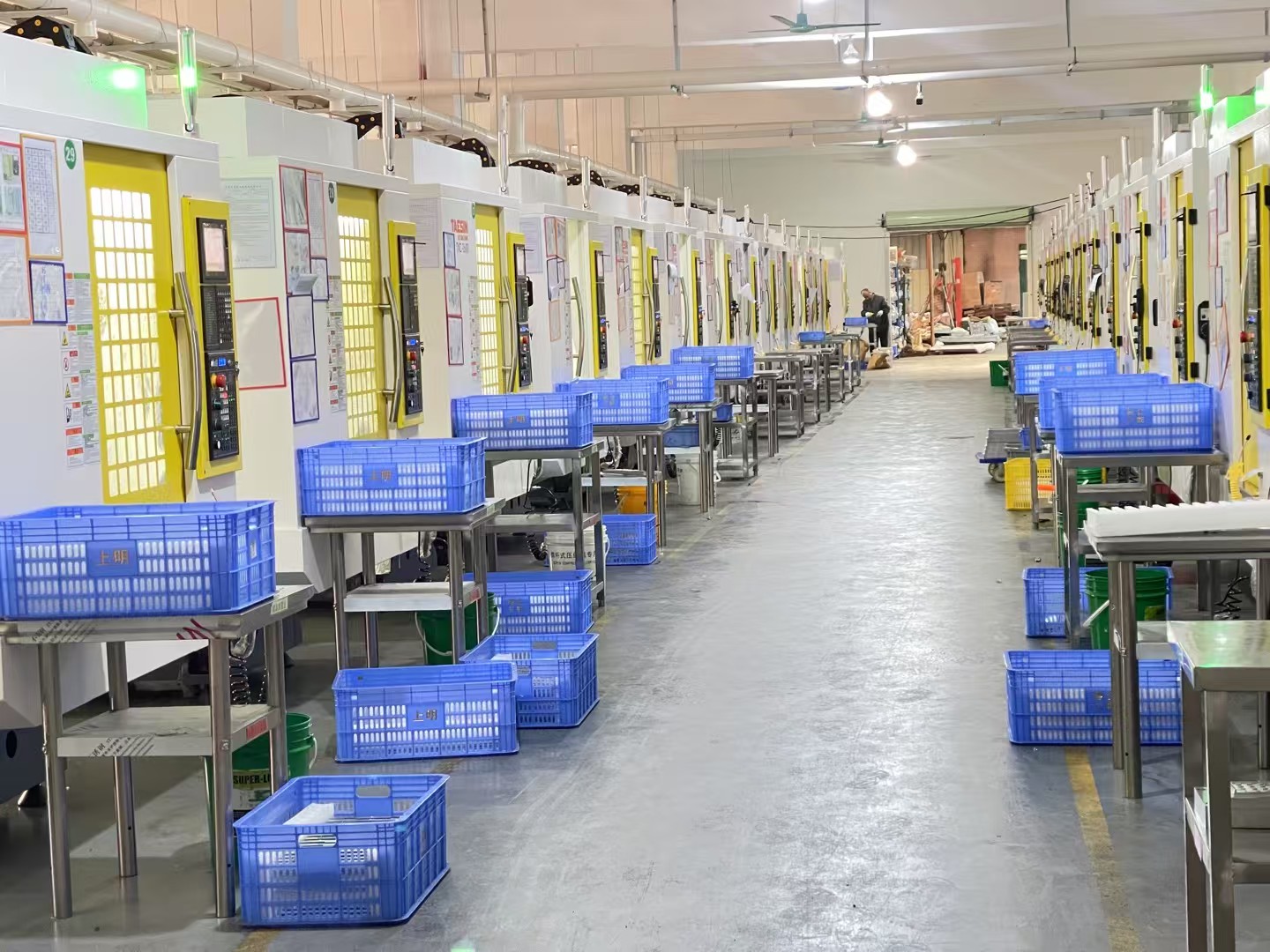
When buyers talk about tolerance, they usually mean dimensional specs — the ±0.005 inches, the flatness callouts, the surface finish numbers. But what they rarely discuss is the tolerance that matters after the part ships: how much variation their own process can absorb before the assembly fails. A vendor can hold a tight band on paper, yet if the buyer hasn't mapped out the real functional limits of the mating components, they end up paying for precision that buys them nothing on the floor.
Consider a bracket that locates a sensor. The drawing says hole position within 0.2 mm. The vendor hits 0.1 mm consistently, and the buyer feels safe. But the sensor itself has a mounting boss with 0.5 mm of play, and the final adjustment happens at installation anyway. In that case, the overlooked tolerance isn't in the machining — it's in the assembly sequence. The real conversation should start with a simple question: where does variation actually stop mattering? Once you know that, you can stop over-specifying and start building in forgiveness where it counts.
Some of the best supply relationships I've seen begin with a shared tolerance map, not a drawing. The buyer walks through the full stack-up with the machinist, showing which dimensions are critical to function and which are just habits copied from an old print. That thirty-minute exchange often saves thousands in unnecessary grinding, inspection, and scrap. And it turns tolerance from a checklist item into what it should be: a design decision that respects both the part and the process.
Lead Times That Reveal a Shop's True Capacity
Any shop can print “fast turnaround” on a brochure, but the real story hides in the lead times they quote for different jobs. A fabricator might promise two weeks for a simple bracket, yet quietly push the same project to five weeks once the drawing includes a welded assembly and a powder coat finish. That gap is not a random delay; it is the shop’s true capacity showing through. Lead time is less a fixed number and more a stress test that reveals how much slack actually exists on the floor, how many jobs are already queued, and which processes get outsourced when pressure builds.
Look closely at the spread between standard and complex orders. A shop running at 90 percent utilization can still quote three days for a turned pin because that cell has open time, but the same shop may need four weeks for a multi-step housing that crosses three departments. The sudden jump does not mean the housing is four times harder; it means the shop lacks cross-trained operators or flexible fixturing to absorb mixed work. Shops with genuine excess capacity tend to keep lead time ratios tighter—not because every job is easy, but because they can reroute people and machines without breaking the schedule.
The practical takeaway for anyone buying fabricated parts is to ask for recent lead times on work that resembles your own, not the generic numbers posted on a website. A shop that gives you a staged timeline—cutting, welding, finishing, inspection—and explains where your job sits in the queue is usually telling the truth about its load. The one that promises next week without checking the board is often just dressing up a bottleneck with optimism. Lead time, read correctly, is the most honest capacity metric a shop will ever give you.
Inspection Reports Beyond the Basic Pass-Fail
Most inspection reports hide behind a binary verdict—pass or fail—and leave everyone guessing about what actually happened on site. A more useful report reads like a field record, capturing subtle wear patterns, environmental conditions, and deviations that still fall inside tolerance but could shift over time. That kind of context turns a simple score into a story about the asset’s condition and trajectory.
Severity levels matter more than a single stamp. Instead of labeling an item as failed, break findings into clear tiers—minor, moderate, major, and critical—with specific definitions for each. Pair those tiers with annotated photos and timestamps so a facility manager in another city sees the same rust line or misalignment without needing a phone call. This removes the guesswork that usually follows a pass-fail sheet.
What often gets missed is the forward-looking part. After listing defects, include recommended corrective actions, realistic timelines, and a suggested owner for each item. Even better, compare the current findings against the last two inspection cycles to flag recurring trouble spots. That shift from snapshot to trend helps teams allocate maintenance budgets intelligently and shows regulators that the inspection process is alive rather than a formality.
Shop Floor Experience in Your Specific Niche
Walking onto a shop floor that actually understands your niche feels different from the first step. It’s not just about rows of machines or neatly stacked inventory—it’s the quiet confidence that comes from seeing every workstation and every tool placed with a purpose. In a high-end custom bicycle workshop, for instance, the truing stand sits right next to the torque wrench station, not because a layout planner said so, but because the lead mechanic learned years ago that wheel builds almost always need a final bolt check. That kind of unspoken logic can’t be copied from a generic playbook.
The real texture of a niche shop floor shows up in small, lived-in details. There’s usually a worn spot on the bench where a specific jig has been clamped a thousand times, or a handwritten note taped to a shelf reminding everyone which supplier’s batch of wax runs thin below 68 degrees. New visitors often miss these things, but experienced hands read them like a map. A visitor who has spent time in similar niche spaces will notice that the coolant tanks are drained and wiped every Friday, not because a checklist demands it, but because the shop owner once lost a month of work to bacterial contamination in a single neglected sump.
Most importantly, a niche shop floor reveals its character through the people who move across it. There’s a rhythm to how a seasoned technician will stop, listen to a bearing for half a second, then adjust a feed rate without saying a word. In a ceramic glaze studio, you might see someone test a new batch by rubbing a pinch of dry material between finger and thumb, then jot a note in a pocket notebook before mixing a single bucket. Those tiny, almost automatic gestures are the true shop floor experience—not the equipment list, not the square footage, but the accumulated judgment that only comes from working inside one specific niche long enough to know what the manual got wrong.
Finishing Touches That Impact Performance and Lifespan
A surface left rough from machining isn't just an aesthetic issue; those microscopic peaks and valleys become stress concentrators. When a component cycles through load, temperature, or vibration, cracks tend to start in exactly those irregularities. Taking the time to deburr, radius sharp edges, and apply a controlled finish removes the weak points that shorten service life.
Coatings and seals do more than change the appearance. A properly specified finish creates a barrier against moisture, oxidation, and chemical attack, which are the usual culprits behind corrosion. Even something as simple as choosing a dry film lubricant over bare metal can reduce friction enough to lower operating temperatures and delay wear, which means the part doesn't just look better on day one, it continues to perform well after thousands of cycles.
FAQ
Ask for a recent first-article inspection report from a job with tolerances similar to yours. A shop that genuinely holds ±0.0005 in will show measured values on every critical dimension, not just a line saying 'passed.' Also listen for how they talk about thermal drift and tool wear—if they don't bring those up, they probably aren't compensating for them.
It usually comes down to whether they schedule realistically instead of promising whatever you want to hear. Shops that always hit dates tend to quote longer lead times upfront and then beat them. They also have backup tooling, raw material stock for common grades, and a clear escalation path if a machine goes down. If a quote says '3 days' without asking about your part's complexity, that's a warning sign.
The same part design can machine beautifully in 6061 aluminum and become a nightmare in 304 stainless. Material affects speeds, feeds, tool life, and even dimensional stability after machining. A good manufacturer will flag if your chosen alloy is overkill or if a slight tweak could cut cost and lead time without hurting performance. Those conversations are a sign they're thinking about your outcome, not just running your file.
Ask how they handle nonconforming parts: do they have a documented process for containment, root cause, and corrective action? Also ask what measuring equipment they actually use for your tolerances and when it was last calibrated. Shops with genuine QC will name specific CMMs, vision systems, or surface profilometers and give you calibration dates without hesitation.
Request a line-item breakdown: setup, programming, tooling, material, machining time, finishing, and inspection. If a quote only gives a lump sum, ask what happens when a design change or tolerance adjustment comes through. Shops that are transparent about their pricing logic rarely surprise you later. Also be clear about quantities—some quotes assume a full production run and hide the fact that one-off setup fees would make the first part expensive.
Watch for vague answers about current workload or machine availability. If they can't tell you which machine your job will run on and what's ahead of it in the queue, they likely don't have a real scheduling system. Another red flag is overpromising: 'we can do anything in 48 hours' usually means your job will get bumped when a bigger customer calls. A trustworthy shop will give you a date and explain what could jeopardize it.
Conclusion
Finding a CNC machining partner that delivers high-quality parts on schedule often comes down to details that don't show up on a quote. Material selection is one of them. The same aluminum grade can behave differently depending on temper, grain direction, or even batch, and a shop that asks about your end use—rather than just machining what's specified—can prevent failures you'd never trace back to the raw stock. Tolerances matter in a similar way. Chasing ultra-tight numbers where they aren't needed drives up cost and lead time, while skipping them where they matter ruins fit and function. A good manufacturer will challenge your drawing, pointing out which dimensions actually control assembly and which can be opened up.
Lead time claims tell you more about a shop's real workload than its marketing. Consistently meeting dates, even during peak periods, signals disciplined scheduling and honest capacity. When you ask for inspection reports, go beyond pass-fail checkboxes. You want to see actual measured values, CMM data, or surface finish readings that show the shop understands variability. Experience in your specific niche—medical, aerospace, robotics, or oil and gas—means fewer surprises with tricky features, material quirks, or regulatory demands. Finally, don't ignore finishing. Anodizing, passivation, or even deburring can change part performance and lifespan. The right partner discusses these before cutting metal, not as an afterthought.
Contact Us
Contact Person: Mason Lv
Email: [email protected]
Tel/WhatsApp: +86 13027998452
Website: https://www.peakfastentech.com