
Containerized Generator Original Manufacturer Selection Guide for Reliable Power Solutions
2026-09-02
Power failures don't call ahead, and neither should your backup strategy. When the grid goes dark, a containerized generator is often the only thing standing between a brief hiccup and a full-blown crisis. That makes your choice of original manufacturer the single most important decision in the whole system. In this guide, we'll break down what separates a dependable containerized unit from a costly compromise—and why builders like DINGBO POWER earn their place in mission-critical projects. Let's get into the details that spec sheets leave out.
Factory-Owned Production Lines: A Clearer Signal Than Certifications Alone
Walking through a facility where the factory actually owns and operates its own production lines tells you more than any framed certificate on the wall. Certifications confirm a snapshot of compliance, but factory-owned lines reveal daily discipline. The people who run those machines answer to the same management that controls quality, scheduling, and maintenance. There is no gap between the name on the audit report and the reality on the floor. When something drifts out of spec, the correction is immediate because the line is not outsourced to a third party with conflicting incentives.
Ownership also changes how problems get solved. A factory running its own lines can pull a batch, adjust tooling, and retrain operators without waiting for an external workshop to respond. That speed shows up in fewer defects and shorter lead times. Buyers who have been burned by suppliers holding certifications but quietly subcontracting to unvetted shops learn to look for this. The absence of subcontracting layers is not a marketing phrase; it is visible in the tooling marks, the uniform work instructions, and the fact that the same engineers who designed the process are standing next to it.
None of this makes certifications useless, but they are a baseline. A factory-owned line is a structural signal. It means the company has invested in equipment, training, and long-term process control rather than renting capacity. When you visit, you can trace a product from raw material to final inspection under one roof, with one accountable team. That continuity is hard to fake and harder to maintain without real operational discipline.
What Containerized Actually Means When the Covers Come Off
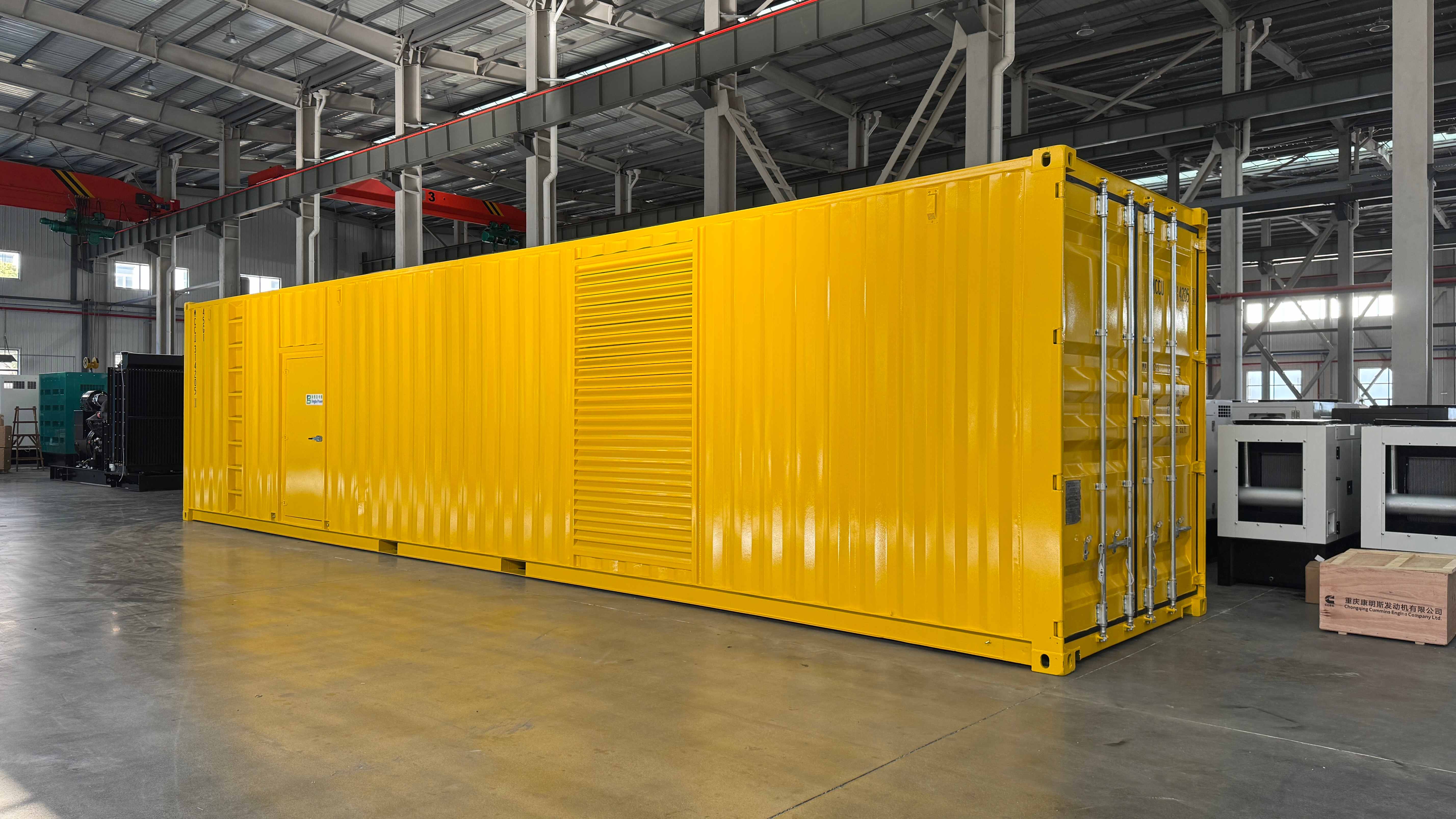
Most people imagine containers as tidy little boxes with their own operating system inside. Peel back that mental image and things get stranger. A running container isn't a virtual machine; it's a process with a very convincing costume. It borrows the host's kernel, gets its own view of the filesystem through layers and mounts, and is fenced off with namespaces and cgroups. The "container" is really just a set of boundaries drawn around a process so it feels like a separate machine without actually being one.
The covers-off view also explains why containers can start so fast and why they can feel fragile. There's no guest OS to boot, no virtual hardware to initialize. Instead, the runtime unpacks a root filesystem, applies a few isolation flags, and hands control to your executable. That speed comes from sharing; the isolation is more like giving each process its own labeled drawer in the same filing cabinet than renting separate rooms.
Once you see that, a lot of container behavior clicks. Networking quirks, storage that vanishes when the container stops, security patches that require rebuilding images—these aren't bugs so much as trade-offs of sharing a kernel while pretending not to. The covers aren't hiding magic; they're hiding a clever arrangement of Linux features that have been around for years, repackaged with a friendly interface.
Load-Step Response and Transient Handling: The Forgotten Reliability Test
Most power supply datasheets highlight static regulation and ripple, but field failures often trace back to how a unit behaves when the load suddenly changes. A load-step test applies an abrupt current change—typically from 10% to 90% of rated output in a few microseconds—and captures the resulting voltage dip or overshoot. The exact recovery time and shape of that transient reveal whether the control loop has enough phase margin or if it's on the edge of oscillation. Units that look fine under steady-state conditions can ring excessively or even lose regulation when a processor, FPGA, or motor driver switches its current demand.
Transient handling is not just about staying within a voltage window. The nonlinear behavior during recovery matters just as much. Some converters overshoot once and settle cleanly; others exhibit multiple ringing cycles that can couple noise into sensitive analog rails. Worse, a marginal design may pass at room temperature but collapse when the loop gain shifts at cold or hot extremes. Since many end-use loads are dynamic by nature—think burst-mode radios, inrush from capacitors, or PWM-driven actuators—testing only with a resistive load gives a false sense of margin.
A practical load-step test should vary both the slew rate and the amplitude. Fast edges in the 1 A/µs to 10 A/µs range tend to excite parasitic inductance and expose decoupling weaknesses, while slower but larger steps reveal low-frequency loop gain issues. Observing the output with an oscilloscope set to a bandwidth high enough to catch ringing is essential. If the recovery envelope is not monotonic or the peak deviation exceeds the specified tolerance, the design needs compensation work before it reaches the field. This test is often skipped during bring-up because it requires a dynamic load and careful probing, but it provides one of the earliest warnings of latent reliability problems.
Parts, Service, and Warranty Depth From the Builder, Not a Reseller
When you buy direct from the builder, the person answering your parts inquiry has likely walked the assembly line. That changes everything for long-term ownership. Instead of waiting on a reseller to forward your question to a supplier, you get a straight answer about lead times, compatibility, and installation quirks from the team that actually engineered the machine.
Warranty support works the same way. If a component fails under load, you're not stuck in a three-way email chain. The builder can authorize a replacement, pull the part from inventory, and put a service tech on the phone who has rebuilt the same assembly dozens of times. That depth of service is hard to replicate when the seller's only connection to the product is a purchase order.
How Enclosure Climate Control Protects Electronics Beyond the Data Sheet
Manufacturers rate their components in a clean, steady-state environment—typically 25°C with modest humidity and no abrupt changes. Inside a sealed enclosure, reality looks nothing like that. A drive mounted near a furnace or a controller box on a south-facing wall can swing from freezing overnight to over 60°C by mid-afternoon. Those cycles force expansion and contraction across solder joints, connectors, and PCB substrates. Climate control doesn't just cool the air; it slows the mechanical fatigue that leads to hairline cracks and intermittent failures long before any datasheet limit is formally exceeded.
The second layer of protection is condensation control. When warm, moist air hits a cold metal housing after a process shutdown or a sudden rainstorm, water forms exactly where it can do the most harm—on exposed terminals, board edges, and inside cable glands. This isn't a steady-state humidity issue, so a datasheet's “95% RH non-condensing” spec offers little guidance. Active enclosure cooling or heating keeps internal surfaces above the dew point, preventing the invisible film that accelerates corrosion, electrochemical migration, and leakage currents across high-impedance nodes.
Finally, sealed climate control handles airborne contaminants that the datasheet never anticipates. Sulfur compounds, salt spray, or fine conductive dust can settle on boards and combine with trace moisture to create unpredictable resistive paths. Over time, even a well-designed power supply can drift out of tolerance or fail outright. Managing the internal atmosphere—filtering intake air, maintaining slight positive pressure, and moderating temperature—turns the enclosure into a protective bubble. That's the gap between a component's laboratory rating and years of reliable service in the field.
Avoiding the Oversizing Trap: Matching Generator Architecture to Your Real Duty Cycle
Most generator buyers fixate on peak kilowatts, then end up with a machine built for a marathon that only ever sprints. The result is wet stacking, carbon buildup, and premature wear that no maintenance schedule can fully undo. The fix starts with an honest audit of your actual duty cycle—how many hours per week you run, at what load percentage, and whether those loads swing hard or stay steady.
A standby unit for a small data closet doesn't need the same architecture as a prime-power workhorse on a drilling rig. Oversized gensets often never reach the exhaust temperatures required to burn off unburned fuel, especially in lightly loaded diesel engines. Over time, that unburned fuel washes cylinder walls and contaminates oil. Matching engine displacement, alternator winding class, and cooling system capacity to your real load profile avoids this silent degradation.
Instead of defaulting to the largest frame size your budget allows, map out a typical week. Note the baseline load, the highest sustained load, and how often you hit near-peak. That data points to the right tier—continuous, prime, or standby—and prevents paying for copper and iron you'll never use while protecting the engine from the slow death of chronic underloading.
FAQ
Going straight to the original manufacturer eliminates layers of intermediaries, so you get accurate technical data, direct warranty handling, and quicker access to engineering changes. It also means the people who designed the enclosure, cooling, and control systems are the ones accountable for the whole package—not just the engine or alternator.
Reliability in a containerized design comes from how well thermal management, airflow, vibration isolation, and weatherproofing are integrated. A purpose-built container should maintain stable internal temperatures under full load, keep noise within local limits, and protect critical components from dust, moisture, and corrosion—without sacrificing service access.
Ask for photos or videos of the production floor, check if they weld and assemble the container structure themselves, and request a factory visit. In-house builders can usually show you raw steel fabrication, painting booths, generator set mounting, and load bank testing under one roof. If they outsource the container, lead times and quality control become harder to pin down.
At minimum, expect a full load bank test at rated power, a step load test to observe transient response, and checks for insulation resistance, earth leakage, and control system functions. For critical sites, ask for a factory acceptance test with your own inspectors present, including sound level measurements and fuel consumption verification.
It is often the deciding factor. Off-the-shelf containers rarely match site-specific needs for cable entry, exhaust routing, fire suppression, or remote monitoring. A capable original manufacturer should offer engineering changes without treating every modification as a special project, so the generator fits your installation rather than forcing your site to adapt.
Look for a manufacturer that stocks critical spare parts, offers documented maintenance intervals, and can deploy field service engineers quickly. They should also provide clear manuals, wiring diagrams, and software updates for controllers. Direct access to the factory engineering team—not just a call center—often prevents small issues from turning into long outages.
Yes, but only if the original manufacturer accounts for the specific risks. Desert use demands heavy-duty air filtration, high-ambient cooling packages, and UV-resistant coatings. Coastal or offshore sites need marine-grade corrosion protection, sealed electrical connections, and possibly stainless steel hardware. The container itself must be rated for wind load and, in some regions, seismic conditions.
Request guaranteed sound pressure levels at a defined distance—usually 1 meter or 7 meters—under full load. For emissions, ask if the engine meets local or international standards such as EPA Tier 4 Final, EU Stage V, or equivalent. The original manufacturer should provide certified data, not just marketing brochures, and explain how the enclosure contributes to sound attenuation.
Conclusion
Choosing a containerized generator original manufacturer is about more than ticking boxes on a datasheet. Factory-owned production lines tell you far more than a wall of certifications, because when the builder controls welding, panel assembly, and engine fitment under one roof, quality stops being a hope and becomes a repeatable process. Pull the covers off a supposedly “containerized” unit and you may find a standard open-frame generator merely bolted inside a steel box. A true containerized design integrates airflow, exhaust routing, and structural reinforcement from the start, so the enclosure works with the genset instead of against it. Too many buyers overlook load-step response and transient handling until a motor start or pump kick causes lights to flicker or controls to reboot. A builder who tests under real block loading, not just steady-state resistive load banks, proves their alternator and governor can hold voltage and frequency when it matters.
Equally critical is the depth of parts, service, and warranty support direct from the manufacturer, not a reseller whose loyalty shifts with the next purchase order. Enclosure climate control is another silent killer: electronics, batteries, and voltage regulators degrade fast when humidity, dust, and temperature swings are not actively managed, regardless of what the component data sheets claim. Finally, resist the oversizing trap. Matching generator architecture to your actual duty cycle—whether prime, continuous, or standby with occasional heavy motor starts—prevents wet stacking, fuel waste, and premature wear. A reliable power solution comes from a manufacturer who asks how you actually run, then builds the container, cooling, control logic, and service plan around that truth.
Contact Us
Contact Person: Rita
Email: [email protected]
Tel/WhatsApp: +8613481024441
Website: https://www.dbdieselgenerator.com/