

Corrugated Box Supplier: How to Find a Partner That Meets Your Packaging Needs
2026-11-18
Choosing a corrugated box supplier is rarely just about price. The wrong fit shows up later as crushed corners, repacking time, and frustrated customers. Zemeijia takes a different approach, designing packaging around the way your products actually ship and store. Here are the signals that separate a true packaging partner from a vendor who only moves boxes.
Match the Box to the Journey It Will Take
A box that survives a cross-country move has little in common with one that sits on a shelf for a decade, yet most packaging is treated as if every trip were the same. The first step is to stop thinking about the container and start thinking about the route: will it bounce through sorting centers, ride in the back of a van, or get stacked under heavier freight? The journey decides the weak points. A box heading to a humid coastal warehouse needs a moisture barrier and reinforced tape, while one bound for a short local delivery can afford lighter walls. Choosing the right box means matching its strength, coating, and closure to the specific abuse it will meet along the way.
Weight alone is not the whole story. A twenty-pound item packed tightly behaves differently from a twenty-pound item that can shift, and a box that handles a static load on a pallet may fail when it is tossed onto a conveyor. Look at how the box will be handled, not just how far it will go. Double-walled corrugated board makes sense when the package will be stacked or dropped repeatedly, but it is overkill for a short trip in a cushioned tote. Edge crush tests and burst ratings matter more than thickness, because a box that keeps its shape under vertical pressure may still blow out at the seams if it gets knocked sideways.
Finally, think about what happens when the box arrives. If it needs to be opened and resealed, a tear strip or a tuck-in design saves time and reduces damage. If it will sit outdoors before the recipient picks it up, a wax-treated exterior or a poly liner keeps the contents dry. The best choice is rarely the most expensive one; it is the box whose features line up with the actual path from your hands to the customer's door. Match the box to the journey, and you cut waste, reduce breakage, and make the unboxing feel like the start of a good experience rather than a rescue mission.
Dig Into How They Handle Flutes, Board Grades, and Weight Limits
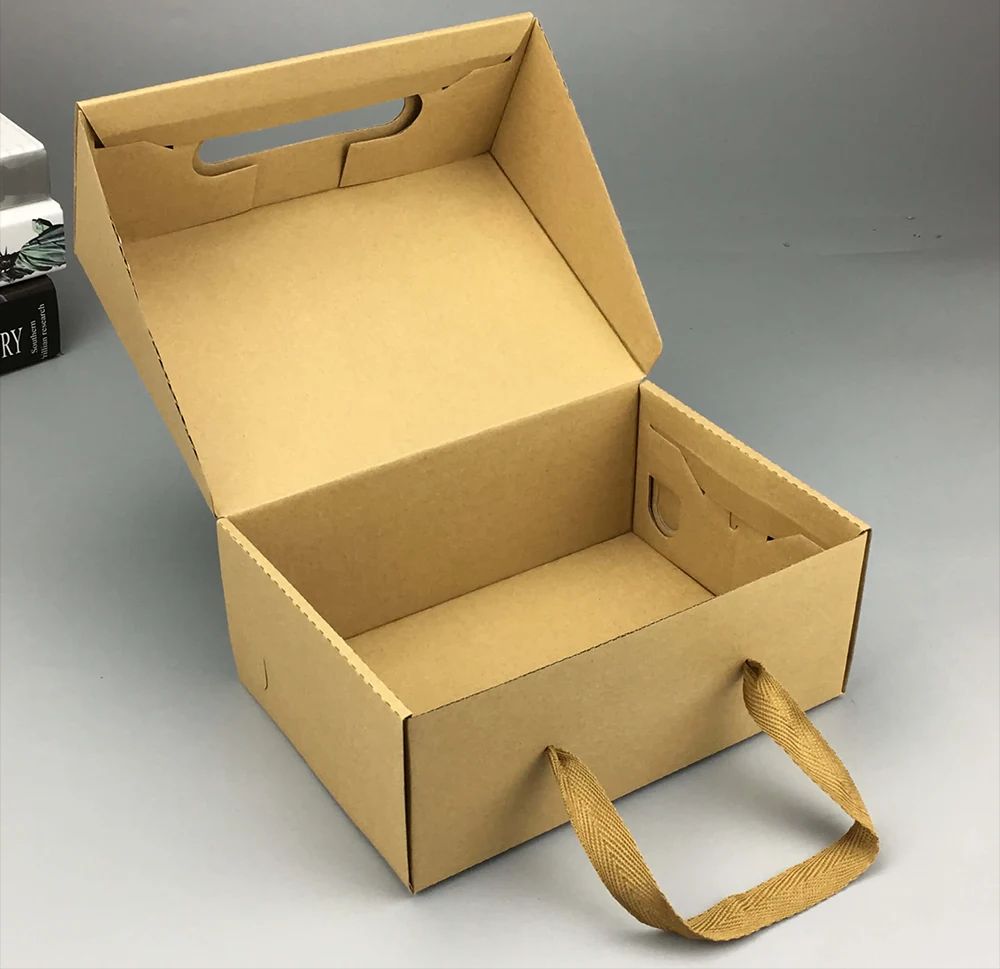
Most packaging suppliers will talk about flutes as if they're interchangeable, but the profile changes everything. A larger A-flute cushions better and adds thickness without much extra weight, while a slimmer E-flute gives you a cleaner printing surface and resists crushing under stacked loads. Rather than accepting whatever flute is on hand, ask to see samples with the same board grade and compare how the corrugated arches hold up under finger pressure along the edges.
Board grades are where the real differences hide. Two boxes can look identical from the outside, yet one uses a 32 ECT C-flute sheet and the other a 44 ECT BC doublewall. If the product is dense or the warehouse stacks cartons five high, the lighter sheet may pass a quick visual check but fail after a few humid weeks in storage. Pay attention to the edge crush test value rather than just wall thickness, and don't assume a higher price automatically means a stronger board.
Weight limits printed in a catalog are useful only as a starting point. Real performance depends on flute direction, box dimensions, and how the load is distributed. A wide, shallow carton with a 40 lb rating can buckle when lifted from the ends if the contents shift. When in doubt, run a rough test with the actual product, stacked for a day or two, and watch for bowing at the side panels or softened corners near the bottom flaps.
Ask for a Walk Through Their Quality Checks and Real Lead Times
A supplier can describe a quality checklist in broad terms, but that tells you little about how they handle a bad batch or a tight deadline. Ask them to walk you through the exact inspection points they use from incoming material to final packing, and pay attention to whether they mention specific tools, documented limits, or sampling rates. If they gloss over what happens when something fails, press for a concrete example from the last six months—what was caught, how it was contained, and what changed afterward.
On lead times, ignore the standard “30 to 45 days” answer and ask what the last three orders actually shipped. Request a breakdown of production, finishing, and pre-shipment inspection time, not just a single number. Most delays happen between steps, not inside them, so a useful answer will mention queue time, material availability, and what gets prioritized when orders collide. If a supplier cannot show real shipment dates or explain a recent late order without blaming everyone else, treat that as part of the quality check.
The goal is not to trap anyone. A decent supplier will welcome the chance to show how their process works because it gives them a reason to stand out from competitors who only quote fast promises. A walk-through also makes vague terms like “strict QC” or “on-time delivery” testable. You end up with fewer assumptions, a clearer idea of how your orders will be handled, and a baseline for what to expect when volume increases or a specification changes.
Create a Small Test Order Before You Commit to Volume
Before you sink money into a full production run, place a small order that mirrors the final product as closely as possible. This lets you check the actual stitching, material weight, print alignment, or packaging instead of relying on staged photos and spec sheets.
A trial run also shows how the supplier handles problems. Late replies, vague excuses about delays, or inconsistent labeling tend to surface early when the stakes are low. It is far easier to correct those issues with a few dozen units than with a warehouse full of inventory you cannot sell.
Make the test specific. Order the same colors, sizes, and finishes you intend to stock, and treat the small quantity as a serious evaluation rather than a box to tick. If the sample run arrives clean and on time, scaling up feels less like a leap of faith.
Look for a Supplier Who Flags Cost-Saving Design Tweaks
A supplier worth keeping doesn't just quote the drawing—they question it. The best ones will come back with notes like, "If we switch this radius to a standard tool size, you'll cut machining time by a third." That kind of feedback rarely shows up in a bid comparison, but it changes the final invoice more than any line-item price cut.
Cost-saving tweaks can be small and easy to miss: a slightly looser tolerance where it doesn't matter, a different surface finish that still meets spec, or a material substitution that avoids a long lead time. You want a partner who flags those unprompted. If they stay silent and just build whatever is on the page, you're paying for their convenience, not their expertise.
During sourcing conversations, ask directly about the last time they suggested a design change to save money. Their answer will tell you whether they see themselves as a supplier or as part of your engineering team.
Choose a Partner Who Can Grow When Your Packaging Needs Shift
Packaging demands have a way of drifting from what you planned six months ago. A new retail channel might require a different case count, a sustainability target may force a switch to thinner films, or a seasonal spike could push you into a higher-volume tier. A manufacturing partner worth keeping is one that treats those shifts as normal rather than disruptive. Look for demonstrated range, not just a list of equipment, but actual examples of customers who changed formats, materials, or run sizes without starting over.
That range usually comes from having a mix of line capabilities and a technical staff that can adjust quickly. Ask how they handle transitions between substrates, whether they keep tooling or plate archives for repeat work, and what happens when your forecast jumps by thirty percent on short notice. The right partner will talk about qualification schedules, buffer capacity, and material sourcing in concrete terms. If every answer circles back to a single narrow process, you are likely to outgrow them sooner than expected.
Growth also shows up in less obvious ways, such as help with regulatory shifts in a new market or guidance on lightweighting without compromising seal integrity. Choose a supplier that asks about your next product line before you finalize the current one. That kind of forward-looking conversation is a stronger signal than any brochure claim.
FAQ
Ask about current production capacity, lead times under load, and request references from brands with similar order sizes. A floor tour or recorded walkthrough helps, since you can see whether the equipment matches the sales pitch.
Go beyond single wall or double wall. A useful supplier will discuss board grades, flute profiles, recycled content, coatings, and what holds up for your product weight and shipping conditions. If they ask about your fulfillment process before quoting, that is usually a good sign.
It depends on freight costs, order frequency, and how much design back-and-forth you expect. A local shop can be easier for fast turns and face-to-face problem solving, while a bigger operation may offer better pricing at scale but less flexibility.
They matter mainly when your product ships to retail, food, or export markets. Look for ISTA testing, FSC chain-of-custody, or food-contact compliance only if they are relevant to your use. Otherwise, focus on their quality checks and damage rates.
It varies widely. Some suppliers run short-run or digital lines and can handle a few hundred boxes, while traditional corrugators may expect several thousand per size. Ask early because MOQ affects both unit price and warehousing space.
Request itemized pricing that separates board, printing, tooling, and freight. Compare setup fees, delivery terms, and what happens if a run has defects, not just unit cost. The lowest quote often shifts cost into downtime or reorders.
Place a small pilot order with your most complex box style or printing, then watch how they handle proofing, timelines, and communication. That reveals more than any sales call.
Yes, the better ones will study your product, current damage rates, and dimensional weight charges, then suggest board grades or box styles that cut waste and freight. If they only push a standard RSC, they may not be thinking about your total cost.
Conclusion
A dependable corrugated box supplier earns trust by understanding the path a package takes before it reaches a customer. That means talking through stacking strength, moisture exposure, rough conveyor lines, and how the box will sit on a pallet or shelf. Ask specific questions about flute combinations, board grades, and weight limits, because vague answers usually hide a lack of testing. It is equally useful to review their quality checks and confirmed lead times rather than relying on polished brochures. A short trial run with your actual product remains one of the clearest ways to see whether the box protects the contents, holds its shape, and arrives without crushed corners.
A thoughtful supplier will also mention design changes that lower material use without weakening the box—perhaps a different flute, a revised insert, or a smaller blank that still fits your product. Those suggestions often come from hands-on experience and can reduce ongoing costs if you are open to testing them. At the same time, look for a partner who can adapt as your range grows or your fulfillment model changes. The ability to handle varied order sizes, new box styles, and quick re-quotes matters more than a one-time low price, because packaging needs rarely stay static for long.
Contact Us
Contact Person: Sasha Du
Email: [email protected]
Tel/WhatsApp: +86 13869836645
Website: https://www.zmjpackagings.com/