

FUS Transducer Vendor Selection: Essential Criteria for Clinical and Research Applications
2026-08-24
Choosing a FUS transducer supplier is not just about specs on a datasheet—clinical accuracy and research reproducibility hang in the balance. Yet many teams still rely on outdated checklists or generic vendor comparisons. This guide cuts through the noise and highlights the essential criteria, plus why forward-thinking labs are taking a closer look at Siansonic before finalizing their shortlist.
When a Transducer's Spec Sheet Falls Short in Real FUS Applications
Spec sheets paint a tidy picture: a transducer rated for a certain frequency, a certain focal depth, a certain acoustic power. But in the messy reality of focused ultrasound, those numbers rarely survive first contact with tissue. Real FUS applications demand that a transducer perform across a range of depths, through heterogeneous layers of skin, fat, and muscle, while temperature shifts and mechanical loading subtly warp the very geometry that defines its focus.
The gap between datasheet and delivery shows up in small but critical ways. A transducer that tests perfectly in a water tank may lose a third of its effective gain when coupled to a curved, moving anatomical surface. Electrical impedance matching optimized for one cable length drifts as soon as the system is reconfigured for a different treatment head. Even thermal drift over a long ablation session can push the resonance peak away from its nominal operating point, forcing the driver to work harder for the same output—or quietly reducing the energy reaching the target.
Experienced developers learn to treat the spec sheet as a starting point, not a contract. What matters is how the transducer behaves after it has been integrated into a real system: mounted in a housing, bonded to a membrane, driven by a real amplifier, and pressed against living tissue. Those who rely only on the published numbers often find themselves chasing ghosts—wondering why a lesion is smaller than expected, or why a beam profile looks nothing like the simulation. The answer is rarely in the datasheet. It is in the details that no spec sheet ever captured.
Clinical-Grade or Lab-Grade? The Vendor Distinction That Matters Most
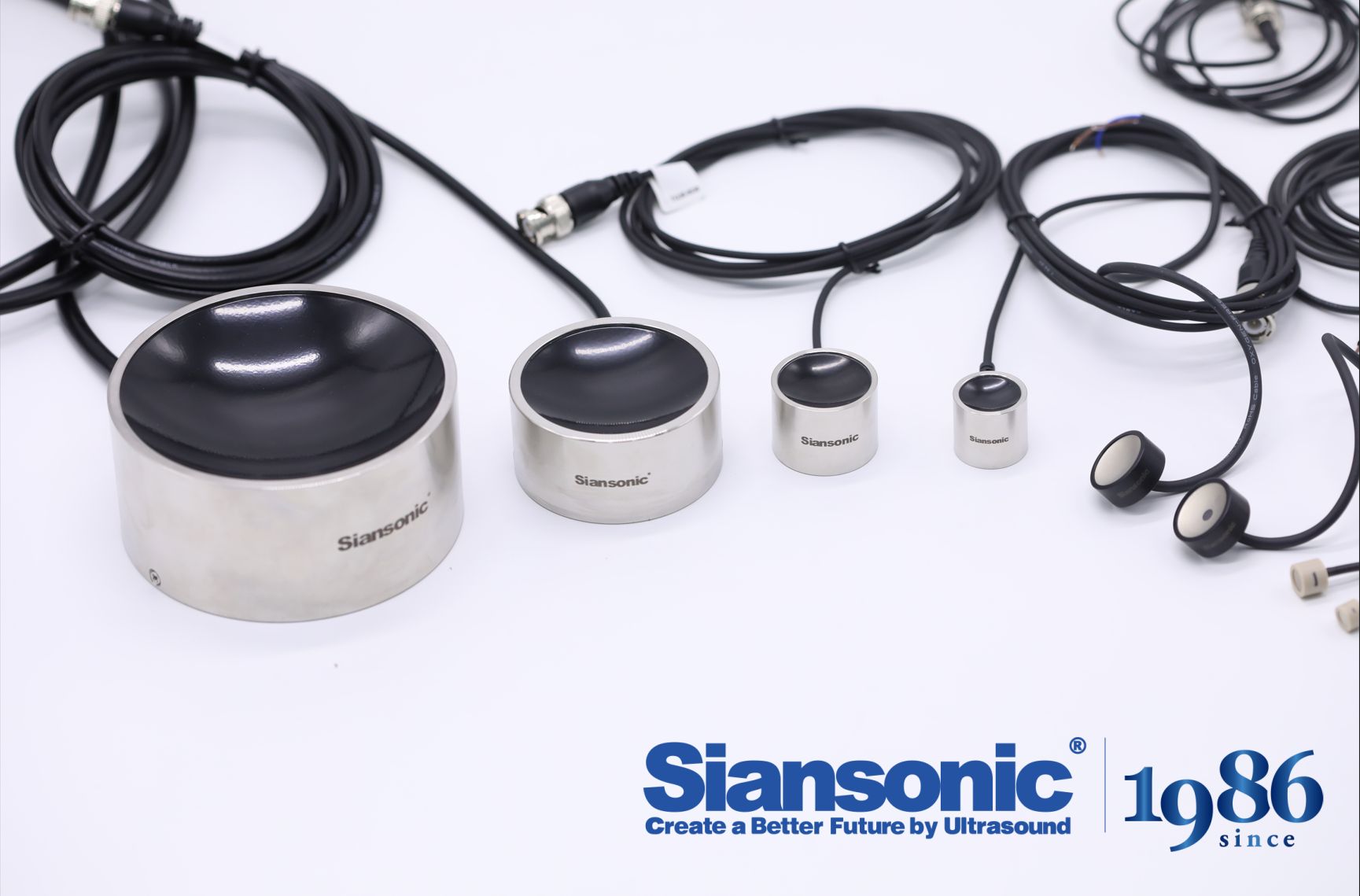
Most buyers assume that a vendor's certifications tell the whole story, but the real gap lies in how a product is built from day one. Lab-grade components are designed for controlled experiments, where variables are isolated and failure is a learning data point. Clinical-grade, by contrast, must survive the chaos of real-world deployments: fluctuating power, untrained operators, and regulatory scrutiny that leaves no room for a graceful reboot. The distinction isn't a badge on a spec sheet—it's a philosophical divide that shows up in every solder joint and software patch.
When a vendor leans on lab-grade roots, their support team speaks the language of research papers and statistical significance. That confidence evaporates when the device is stuck in a rural clinic with intermittent connectivity and a nurse who needs an answer in the next ten minutes. Clinical-grade vendors have already closed that loop: their firmware defaults to conservative modes, their error logs prioritize actionable telemetry over raw debug dumps, and their update cycles respect patient safety over feature velocity. You won't find that in a marketing deck, but you'll feel it the first time something goes wrong at 2 a.m.
The ultimate test is how a vendor treats failure. Lab-grade teams view every bug as an opportunity to refine the model. Clinical-grade teams view every bug as a potential harm event with a documented root cause and a prevention plan. One mindset produces elegant prototypes that impress in a pilot study. The other produces unglamorous devices that keep working when the air conditioning fails and the backup generator doesn't kick in. For anyone deploying outside a controlled lab, that distinction isn't just important—it's the only one that matters.
Paperwork Before Purchase: Regulatory Hurdles Your Vendor Should Clear
Before you commit to a vendor, ask for a folder of their regulatory paperwork—not just a verbal promise. Depending on what you're buying, this might include a manufacturing license, a product safety certificate, or proof of compliance with a regional standard like REACH or FCC. Some industries also require a certificate of free sale or a batch testing report. If the vendor can't produce these documents within a reasonable time, treat it as a red flag; it often means they haven't completed the necessary registrations or they're reselling from an unverified source.
The real test comes when you compare the paperwork against the actual product. Check that the model numbers, factory addresses, and expiration dates match across all certificates. Many buyers skip this step and later discover the certificate belongs to a different item or has lapsed. Also confirm who bears responsibility for customs paperwork—incoterms matter here. A vendor that pushes all export declarations onto you without guidance is leaving you exposed to delays at the border. Insist on seeing the commercial invoice and packing list before payment, not after.
Once you have the documents, keep them organized in one place. Regulatory audits, insurance claims, and even resale agreements often require you to show proof of origin and compliance. If the vendor later changes factories or updates a formula, request updated certificates immediately. This isn't about being difficult; it's about making sure the product you pay for is the product that's legally allowed to enter your market.
Does Your FUS Transducer Play Well with Existing Systems?
Compatibility is often the last thing anyone checks when adding a FUS transducer to a research setup, yet it quietly determines whether your next experiment runs smoothly or becomes a week of troubleshooting. The physical mounting, the driving electronics, the cooling lines, the imaging registration—each piece assumes the transducer speaks a certain language. A transducer that fits only one specific amplifier or requires an unusual impedance match can force you to redesign entire stages instead of just swapping a component. Before you commit, ask whether the connector types, cable lengths, and acoustic output levels align with what your current hardware already expects.
Beyond the obvious electrical specs, the real friction shows up in software and control timing. Some transducers come with proprietary firmware that locks you into a single driving waveform or a fixed pulse sequence, which might not talk to your existing function generator or MRI trigger. Others pass the electrical tests but introduce enough RF noise or mechanical vibration to disrupt simultaneous electrophysiology or optical recordings. A useful exercise is to run a dry integration test: connect the transducer to your system, trigger a low-power burst, and watch whether your other instruments notice. That simple check can reveal incompatibilities that spec sheets never mention.
The good news is that modern FUS transducers are increasingly designed with open interfaces—standard BNC or LEMO connectors, wideband matching layers, and documented control protocols. When evaluating options, ask vendors for a reference integration with hardware similar to yours, not just a datasheet. Look for transducers that allow you to adjust the matching network or swap the cable without voiding the warranty. In practice, choosing a transducer that plays well with your existing systems saves more time and grant money than chasing marginal gains in focal spot size or peak pressure. The smoothest experiments are rarely about the fanciest transducer; they are about the one that disappears into your setup.
The Support Call That Could Save Your Research Timeline
A field ecologist was three weeks into a soil moisture study when every sensor flatlined. Reboots didn't help, and the manual's troubleshooting section ended at "contact support." One call later, a technician recognized the firmware version from the first sentence of the error log, talked through a console command that wasn't in any public documentation, and had the data flowing again in twenty minutes. That single phone call kept a full growing season from being a write-off.
It's not always about dramatic fixes, though. A clinical research coordinator once called about a rejection loop in an IRB submission portal two days before the deadline. The support rep had seen the same issue with a hidden validation rule, suggested a temporary workaround that bypassed the buggy field, and the application went through before lunch. Without that call, the study would have been pushed back an entire review cycle, and patient enrollment would have stalled for months.
The real value is that support engineers see dozens of deployments a week, so they know which settings conflict, which cable adapters cause intermittent failures, and which workflows are just slower than they need to be. A call placed before you buy equipment or before you commit to a protocol can uncover those friction points early. Ten minutes on the phone can save six weeks of trial and error later, and that's a trade most researchers would take every time.
Counting the Hidden Costs of FUS Transducer Ownership
The price on the purchase order is just the entry fee. A focused ultrasound transducer accumulates costs in ways that rarely show up on the initial quote. Calibration is a recurring line item: acoustic elements shift with every thermal cycle and pulse sequence, so output checks require a service visit that often falls outside basic warranty coverage. When a single element degrades, the whole array may need to be sent out for refurbishment, which can sideline the system for weeks. Loaner units, expedited shipping, and revalidation after return all add up, and none of that appears in the original budget. On top of that, consumables—degassed water filters, coupling gel, membrane kits, and sterilization supplies—are constant, low-visibility expenses that chip away at the operating margin.
Downtime is where hidden costs multiply. A transducer out for service doesn't just sit quietly; it forces rescheduling of patient cases, ties up staff with paperwork, and can extend waitlists in a way that erodes referral patterns. Meanwhile, technicians need ongoing training because each transducer model carries its own handling, cleaning, and storage quirks—one improper cleaning cycle can void a warranty or shorten the array's life. Software licensing tied to specific transducer serial numbers adds another layer of recurring fees, and some facilities discover too late that they need upgraded water cooling, electrical isolation, or shielded rooms to meet operational requirements. The real cost per treatment ends up far removed from the figure quoted at the sales meeting.
FAQ
Frequency directly shapes penetration depth and focal spot size. For therapeutic applications targeting deep tissue, lower frequencies around 0.5–1.5 MHz are often preferred because they attenuate less, while higher frequencies above 3 MHz give tighter focal zones for superficial or precise ablation. You need to match the transducer's bandwidth and center frequency to the specific tissue depth and lesion volume you plan to achieve, and ask vendors for measured acoustic field maps rather than just nominal specs.
Request a detailed power handling test report that includes continuous-wave and pulsed duty cycle limits, surface temperature rise under maximum rated load, and any failure points observed during accelerated lifetime testing. A credible vendor will also supply impedance and return loss data across the operating frequency range, because a mismatch can cause excessive reflected power and premature transducer failure.
Single-element transducers are straightforward to drive and calibrate but lock you into a fixed focal geometry. Phased arrays allow electronic steering and dynamic focusing, which is essential for treating multiple targets without mechanical repositioning. However, phased arrays demand multi-channel driving electronics, complex phase calibration, and more extensive vendor support. The right choice depends on whether your protocol needs real-time focal adjustments or can work with a static focal point.
You should insist on measured beam profiles from a calibrated hydrophone, including lateral and axial full-width at half-maximum dimensions at multiple drive levels, along with side lobe and grating lobe levels for arrays. Simulated field data is useful for initial screening but cannot replace hydrophone measurements, especially if the transducer will be used in clinical trials where spatial targeting accuracy is audited.
Durability often gets overlooked until the first transducer fails mid-study. Ask vendors about their transducer's track record in similar applications, especially regarding delamination, piezoelectric element cracking, and matching layer degradation. A slightly higher upfront cost can be justified if the vendor offers a longer warranty, replaceable elements, or a documented mean time between failures based on field data.
For clinical use, you need evidence that the transducer meets relevant medical device standards, such as IEC 60601-2-62 for focused ultrasound equipment, and that the vendor holds necessary certifications like ISO 13485. Request the device master record summary, biocompatibility test reports for patient-contact materials, and any FDA 510(k) or CE marking documentation if the transducer is marketed as a medical device component.
A good custom vendor will provide a clear interface control document that specifies electrical impedance matching, connector types, and mounting fixtures without forcing you to buy their proprietary driving system. Ask for a statement of work that includes iterative design reviews and prototype milestones. It is also wise to check whether the vendor has experience with university research groups, because that often translates into more flexible communication and realistic timelines.
Beyond the purchase price, consider connector adapters, impedance matching networks, cooling interfaces, and calibration services that may be sold separately. Some vendors charge for software updates, technical support beyond the first year, or recertification after repair. A thorough total cost of ownership comparison across three to five years will expose whether a cheaper transducer becomes more expensive through proprietary accessories or high maintenance fees.
Conclusion
Selecting a FUS transducer vendor demands scrutiny beyond glossy spec sheets. In real applications, parameters like efficiency, bandwidth, and acoustic output often shift under load or when coupled with tissue-mimicking media. Distinguish between clinical-grade and lab-grade vendors: those serving regulatory pathways understand biocompatibility, sterilization, and repeatable manufacturing, while lab suppliers may lack that rigor. If your project will ever touch humans, choose a vendor already familiar with ISO 13485, FDA or CE documentation, and material traceability – otherwise you risk stalled approvals.
Compatibility is equally decisive. The transducer must interface with your existing amplifiers, matching networks, and imaging or MR guidance systems without custom engineering that inflates cost and delay. Probe the vendor’s support model: how fast can they troubleshoot impedance shifts, delamination, or cable failures? Support that arrives within days, not months, protects research timelines. Finally, calculate total ownership – not just list price. Hidden costs include recalibration, spare elements, custom fixtures, and lost time from downtime. A cheaper transducer that lacks application engineering or regulatory documentation often becomes the most expensive choice. Ask vendors for references in similar FUS setups, and test a loaner unit before committing. The right partner combines acoustic performance with regulatory readiness, system integration skills, and responsive support.
Contact Us
Contact Person: Ivy Zhang
Email: [email protected]
Tel/WhatsApp: +86 1081502288
Website: https://www.siansonic.com/