

Geomembrane Liner Exporter Guide for Quality Assurance
2026-09-26
When a geomembrane liner fails, the cost goes far beyond material replacement—contaminated soil, project delays, and lost client trust. That’s why choosing an exporter isn’t just a purchasing decision; it’s a quality assurance decision. This guide strips away the marketing noise and focuses on what actually matters: resin traceability, thickness consistency, seam strength, and independent batch testing. JInseed Geosynthetics Solution has learned through years of critical containment work that QA isn’t a final checkbox—it’s built into every roll. If you’re sourcing liners for landfill, mining, or water containment, here’s how to separate reliable exporters from costly risks.
Resin Lot Tracking from Pellet to Finished Liner
Every resin shipment enters the plant with a lot code tied to a specific production run at the supplier. That code moves with the pellets through drying, extrusion, and liner formation, not just on paper but in the daily shift logs and the in-line scanner records. If a batch sits too long in a silo or gets blended with another lot, the operator records the exact percentages and the new internal lot number.
Once the liner is formed, the lot code is printed on the edge or embossed into a non-critical area. Traceability does not stop at the finished roll. Samples from each lot are kept for pull testing and thickness checks, and the final inspection sheet links the liner back to the pellet lot, the extrusion line, the operator shift, and the date. That way a field complaint about a split seam can be traced to a specific pellet shipment rather than a vague bad batch.
Why Lab Reports Alone Won't Catch Every Defect
A lab report captures behavior under tightly controlled conditions, but the real world rarely cooperates that way. Temperature swings, voltage fluctuations, odd user habits, and interactions with third-party hardware all introduce variables that a bench test never sees. A component can pass every prescribed check and still fail the moment it leaves the building.
Time is another blind spot. Accelerated aging gives useful clues, but it cannot reproduce the slow accumulation of dust, oxidation, or mechanical wear that happens over months of daily use. Software updates and driver changes also arrive after the report is written, quietly breaking assumptions that were valid during testing.
Then there is the human element. Testers often follow the expected path because they know how the product is supposed to work. Edge cases get missed not through negligence, but through familiarity. A report records pass and fail results, yet it rarely captures the faint anomalies that flicker once and disappear, never triggering a formal flag but hinting at deeper trouble.
Pre-Shipment Checks for Seam Strength and Thickness
Before any batch leaves the production floor, a few hands-on checks catch the issues that only reveal themselves under real stress. For seam strength, the simplest reliable method is a manual pull test: grab the fabric on either side of the seam and apply steady, firm tension at several points along the stitch line. Look for thread slippage, puckering, or any needle holes that widen under load. A seam that passes the visual inspection but fails a firm tug often signals tension problems at the sewing machine or a dull needle that damaged the fibers.
Thickness demands a different kind of attention. Use a calibrated fabric thickness gauge at three separate spots on each roll or panel, avoiding areas within two inches of any edge or fold. Record the readings and compare them against the approved sample, not just the specification sheet, because the sample reflects the actual hand feel and drape accepted by the customer. If a reading strays more than five percent from the sample average, set that piece aside for a full inspection.
Finally, combine both checks on the same garment or panel whenever possible. A fabric with acceptable thickness might still unravel at the seam under diagonal stress, while a seam that looks perfect on thick fabric may behave differently on thinner sections. Mark any questionable area with removable chalk and resolve it before packing. These small, deliberate checks rarely slow down the line, but they prevent the expensive surprises that surface only after the container has been sealed.
Container Loading Rules That Prevent Roll Damage
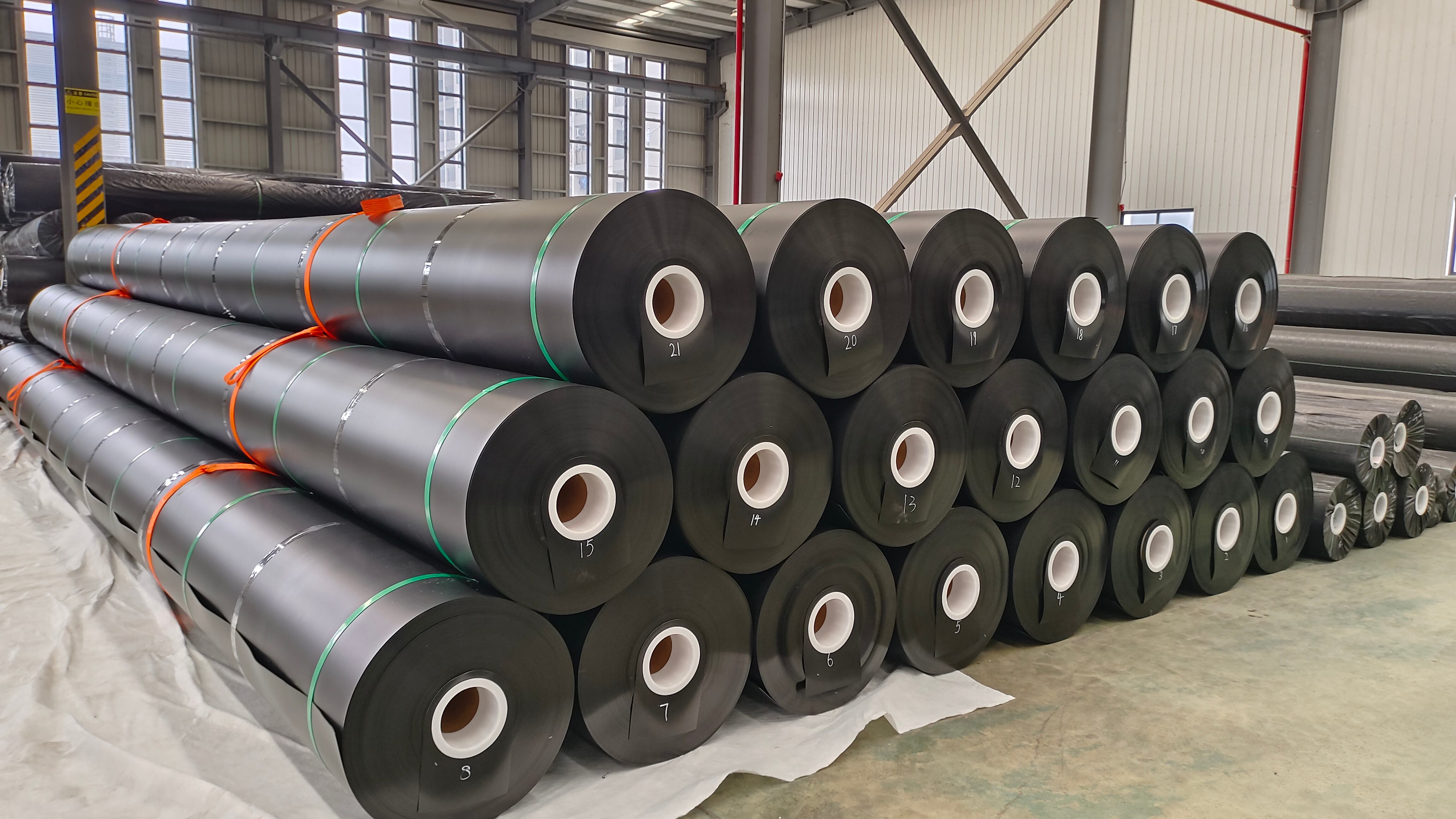
When rolls arrive with flat spots or crushed cores, the damage usually starts before the container moves. Load each roll so its axis runs parallel to the container's length, with the rounded face resting on wooden cradles cut to match the roll's curvature. Nail or screw the cradles into the container floor, then wedge angled chocks behind every roll. A single chock placed square against the roll will slide under braking; the chock must lean against the direction of travel so the roll climbs it instead of pushing it away.
Empty gaps at the rear doors are the most common source of rolling impact. Fill every gap wider than 10 cm with solid lumber or plywood, not just air bags. Inflatable dunnage bags only work when they press against flat, rigid surfaces; against a curved roll they can burst or leave the roll free to shift sideways. Place the heaviest rolls over the container's gooseneck tunnel or directly over the chassis rails, and alternate roll diameters across the width so the load locks together like puzzle pieces.
Straps alone will not stop a roll from rolling—they stop it from bouncing and tilting. Use woven polyester straps with edge protectors, running them through the roll cores and back to floor lashing rings at a slight downward angle. After the first two hours of road travel, stop and re-tension every strap, because wood cradles settle and air bags lose pressure as temperature changes. A final walk-around should include pushing each roll by hand; if any roll moves more than a finger's width, the container is not ready to leave the yard.
What Overseas Buyers Actually Ask About Quality
The first thing most overseas buyers want to know isn't your defect rate—it's how you handle problems after shipment. They'll ask what happens if a container arrives with moisture damage or if measurements drift beyond tolerance on a reorder. If you can walk them through a concrete corrective action report from a past issue and show photos of the exact packing changes you made, that carries more weight than any quality certificate.
They also dig into consistency across production batches. A buyer who has been burned before will ask how you lock in raw material sources and whether the same operator handles the same station every day. They want to hear about in-line checks, not just final inspection. Mentioning that you keep retain samples from each lot for at least two years often surprises them—most suppliers don't offer that unless asked.
Finally, expect questions about your definition of "acceptable." Buyers from different regions have different expectations for surface finish or stitch density, and they'll test whether you know which market you're making for. Instead of saying "we follow international standards," they appreciate specifics: "we set our seam allowance at 1.5 cm for the UK market because their import checks measure that." That level of granularity tells them you've shipped enough to learn what actually triggers a rejection.
Handling Warranty Claims Without Losing the Client
When a client returns a product under warranty, they are not just testing the product’s durability—they are testing your company’s character. The quickest way to lose them is to make the claim feel like an interrogation. Instead, treat the first call as a continuation of the sale: listen without interrupting, confirm the issue in plain language, and state exactly what happens next. A client who feels heard will tolerate a delay; a client who feels processed will not.
The claim process itself should be as frictionless as the purchase. Avoid sending clients through endless forms or asking them to prove the defect multiple times. Assign one point of contact, set a realistic timeline for inspection or replacement, and update them before they have to ask. If a resolution will take longer than expected, say so early and offer a temporary solution—a loaner, a discount on a future order, or an extended service plan. These small gestures shift the focus from what went wrong to how you fixed it.
After the claim is closed, follow up with a brief personal note or a call to confirm everything is working. Ask if there is anything about the product or the process you should improve. Clients rarely expect this level of attention, and it turns a potentially negative memory into a reason to recommend you. The goal is not just to replace a part or refund a charge—it is to leave the client more confident in your company than they were before the problem occurred.
FAQ
Resin quality, thickness uniformity, weldability, chemical resistance, and puncture strength are the main areas. A liner that looks smooth on a roll can still fail if the resin was overdosed with recycled content or if thickness drifts outside tolerance near the edges.
Request independent third-party lab reports for each production lot, not just a generic certificate. Check that the test methods match the standard specified in the purchase order, and keep a small retained sample from every batch so you can re-test if a dispute comes up.
Field welding is where most liner systems either prove themselves or fall apart. If the sheet has inconsistent carbon black dispersion or surface oxidation, the weld window narrows and installers see excessive squeeze-out, weak seams, or delamination. Exporters should ask for trial weld coupons from the same production run.
Use a sturdy core that won't collapse under stacking, wrap rolls in UV-resistant and waterproof film, and avoid strapping directly against the liner surface. Rolls should be lifted with a spreader bar, not slings that pinch the edges, and labels need the roll number, production date, and net length clearly visible.
Pull the batch records and the retained sample first, then measure thickness at multiple points across the width with a calibrated gauge. If the variation exceeds the standard tolerance, offer replacement or a price adjustment based on the actual minimum thickness, and share the root cause with the client rather than hiding behind paperwork.
OIT gives you a snapshot of how long the liner's antioxidant package will hold up under heat and oxygen. A low OIT often means the sheet will crack prematurely in service, even if other physical properties look fine. For export, insist on both standard and high-pressure OIT values if the destination has a hot climate.
Traceability links each roll back to the resin batch, production line, and shift. Without it, you cannot prove that the liner was made from virgin resin or that a quality deviation was limited to a single lot. Many overseas buyers now require a documented resin supplier and lot-level traceability as a condition of payment.
A complete package should include a certificate of conformity, lot-specific test reports, a raw material certificate, safety data sheets, and a handling and storage guide. Add a roll map showing which rolls correspond to which test results so the receiving team can inspect and install without guessing.
Conclusion
Tracking the resin lot from pellet to finished liner is not a bureaucratic exercise—it is the only way to know exactly which raw material batch ended up in each roll. When a buyer later reports premature cracking, that paper trail lets you trace the problem back to a specific supplier or extrusion run instead of guessing. Lab reports alone, however, will not catch every defect. A tensile test on a small sample misses weak spots, poor dispersion of carbon black, or uneven thickness that only show up under full-width scanning or a trained eye walking the line. Before the container leaves your yard, cut cross-sections from both edges and the middle of every fifth roll, measure thickness with a calibrated micrometer, and peel-test the seams at several points. Do not trust the factory's own numbers—verify them yourself.
Loading is where many exporters undo all that work. If rolls are stacked flat or strapped too tightly against the container wall, you will get flat spots, crushed cores, or abrasion on the edges that compromise weldability. Use cradles or A-frames, keep rolls off the floor, and leave enough gap for air circulation to avoid condensation. Overseas buyers rarely ask for the full QC manual; they ask three things: “Can you send the batch certificate before shipment? What is the actual thickness at the lowest point? Will you stand behind a weld failure after installation?” Answer those honestly and with evidence. When a warranty claim does come in, do not start by quoting the contract. Send a technician to inspect the site, share your own batch data, and offer a practical fix—replacement liner or a repair kit—before arguing liability. That is how you keep the client for the next project.
Contact Us
Contact Person: Jerry Qiu
Email: [email protected]
Tel/WhatsApp: +65 84265294
Website: https://www.jinseed-geo.com