

High Voltage Steel Pipe Towers: Top Solutions from China for Reliable Power Transmission
2026-07-03
In the evolving landscape of power transmission, high voltage steel pipe towers have become the backbone of modern grids. When reliability meets innovation, one name stands out: Anbang. As a premier manufacturer from China, Anbang is redefining how energy travels across vast distances. This post delves into the engineering excellence behind these towering structures and why global utilities are turning to Chinese expertise for solutions that truly endure.
Steel Pipe Towers: The Unseen Framework of HV Power
Along highways and across remote landscapes, steel pipe towers rise silently, carrying high-voltage lines that power cities and industries. Their streamlined cylindrical form might seem simple, but these structures are engineered to withstand extreme loads—from wind and ice to the constant tension of conductors. Unlike traditional lattice masts, pipe towers offer a compact, aesthetic footprint, making them ideal for corridors where space and visual impact matter.
Inside the hollow shafts, meticulous corrosion protection systems—often combining hot-dip galvanizing with internal coatings—guard against decades of weather exposure. The absence of bolted connections in the main shaft reduces maintenance nightmares, while their slender profile minimizes wind resistance, a critical factor in storm-prone regions. Each welded joint and flange is designed to diffuse stress evenly, ensuring the tower dances but never buckles under dynamic cable loads.
What often goes unnoticed is the precision behind their installation: foundations are deeply anchored, segments pre-fabricated for rapid assembly, and each tower precisely angled to maintain safe electrical clearances. As the backbone of modern grids, these steel giants quietly bridge the gap between generation and consumption, their true complexity hidden in plain sight.
Precision Engineering Behind China’s High-Voltage Tower Resilience
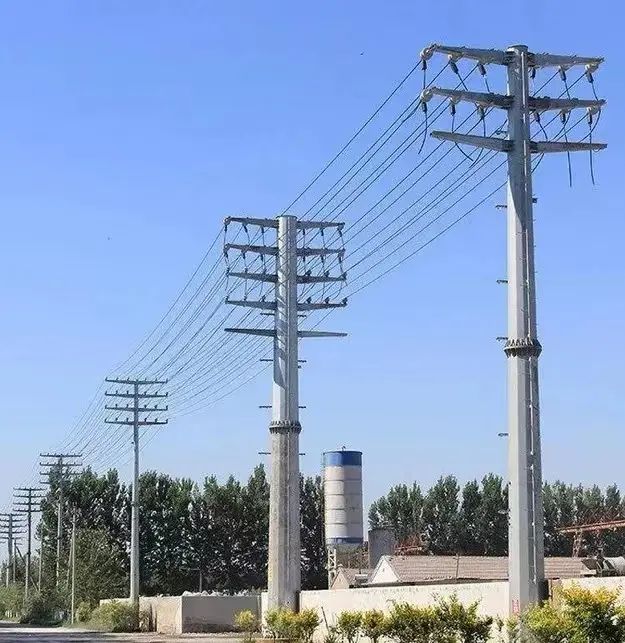
The resilience of China’s high-voltage towers begins with metallurgy that pushes conventional limits. Instead of standard carbon steel, engineers specify low-alloy, high-strength steels like Q420 and Q460, which achieve yield strengths up to 460 MPa while retaining enough ductility to survive extreme cold without brittle fracture. Micro-alloying with vanadium and niobium refines the grain structure, boosting fatigue resistance against decades of cyclic wind loads. Every batch undergoes ultrasonic testing at the plate mill, and welding procedures are choreographed down to the preheat temperature and interpass cooling rate to avoid heat-affected zone cracking. This isn’t just raw toughness—it’s tailored durability mapped to the specific climatic corridors each transmission line crosses.
Aerodynamic shaping plays a role often overlooked in lattice towers. Rather than simple angle-iron profiles, critical members receive customized edge chamfers and rounded corners, derived from computational fluid dynamics simulations that model vortex shedding patterns for wind speeds exceeding 180 km/h. Tubular sections at stress nodes flatten into elliptical cross-sections to reduce drag coefficients by nearly 25%, a detail that becomes critical during typhoon season along the coast. These refinements demand precision laser cutting and robotic assembly jigs that hold dimensional tolerances under a millimeter across a 60-meter tower section, ensuring the structure behaves exactly as predicted in a digital twin before a single bolt is torqued on site.
Quality control reaches beyond the factory floor. Full-scale prototype towers endure fatigue tests that mimic a century of ambient vibration, with accelerometers tracking modal response shifts that might hint at loosening connections. In parallel, salt-spray chambers accelerate decades of corrosion onto newly developed zinc-aluminum-magnesium coatings, which now outperform traditional hot-dip galvanizing by forming a self-healing patina when scratched. These coatings are graded through electrochemical impedance spectroscopy, a technique originally borrowed from aerospace, to validate that the tower’s skin will outlast its 50-year design life even in industrial zones heavy with sulfur dioxide. The result is a grid backbone that stands up not just to storms, but to time.
Streamlining Transmission: How Tower Design Impacts Grid Efficiency
Transmission towers might seem like simple steel skeletons scattered across the landscape, but their shape and structure play a decisive role in how much power reaches its destination. The conductor arrangement and the distance between phases alter the line's inductance and capacitance, which directly influence voltage drop and reactive power flows. A poorly chosen configuration can lead to corona discharge, especially in humid or high-altitude areas, silently bleeding away energy as heat and light. By refining tower geometry, engineers can minimize these losses, ensuring that more of the generated power actually powers homes and industries.
Beyond just holding cables, modern tower design tackles the subtle battle against impedance and thermal sag. Compact delta configurations, for instance, can reduce the line's surge impedance, boosting the line’s natural loading capacity without changing the voltage level. At the same time, taller towers and optimized cross-arm lengths allow for higher clearance and better heat dissipation, which keeps resistance lower during peak demand. These enhancements mean that existing corridors can carry more current without the need for expensive new right-of-way acquisitions, making the grid both leaner and more resilient.
Equally important is how towers interact with their environment to maintain efficiency over decades. Aerodynamic profiles shed wind loads instead of fighting them, reducing structural fatigue and the need for maintenance outages. In icy regions, the angle of insulator strings and conductor spacing can prevent galloping oscillations that cause faults and wear. Even the choice of materials—like advanced high-strength steels or composite cross-arms—can dampen vibrations and cut down on eddy-current losses. Every refinement in tower design is a quiet investment in a grid that wastes less, adapts to dynamic conditions, and delivers electricity with minimal fuss.
Endurance in Extreme Climates: What Sets Chinese Steel Towers Apart
When temperatures swing from desert heat to arctic cold, ordinary steel structures often falter. Chinese steel towers, however, are engineered with metallurgical precision that accounts for thermal expansion, brittle fracture thresholds, and microstructural stability. Special alloy formulations, developed through decades of research in material science, allow these towers to maintain their integrity where others would crack or warp. It’s not just about surviving a temperature extreme—it’s about enduring the relentless cycle of day-to-night shifts and seasonal transitions without accumulating damage.
Another often overlooked factor is the advanced protective coating system. In coastal regions with heavy salt spray or in industrial zones with corrosive pollutants, conventional galvanization falls short. Chinese manufacturers employ multi-layered shielding that fuses metallic and organic barriers, often enhanced with nano-scale ceramic additives. This creates a surface that repels moisture, resists UV degradation, and even self-heals minor scratches through cathodic protection. The result is a tower that can stand for decades in aggressive environments with minimal maintenance, something that sets them apart in long-term infrastructure planning.
Beyond materials and coatings, the design philosophy embraces adaptability. Rather than imposing a one-size-fits-all solution, engineers tailor each tower’s structural dynamics to local wind patterns, seismic activity, and soil behavior. High-strength bolted connections with graded fasteners allow for controlled flexing without loosening, while optimized bracing patterns dissipate energy from typhoons or ice loading. This holistic approach—blending metallurgy, surface science, and site-specific engineering—makes Chinese steel towers exceptionally resilient in climates that would quickly degrade lesser designs.
From Factory to Field: The Logistics of Delivering Reliable Tower Structures
Shipping a tower from the manufacturing plant to a remote installation site is rarely a straightforward affair. Each component, from the base plates to the topmost antenna mounts, must navigate a chain of transport modes that often includes flatbed trucks, railcars, and sometimes even barges. The real challenge lies in orchestrating these handoffs without delays, ensuring that no single piece arrives out of sequence. A misplaced bundle of bolts or a delayed anchor cage can stall the entire erection crew, turning a tight schedule into a costly waiting game. That’s why logistics teams obsess over route surveys, checking bridge capacities, overhead clearances, and road conditions months before the first truck leaves the gate.
Beyond the physical hauling, there is the matter of protecting the steel against the elements during transit. Galvanized sections demand careful handling to avoid scratches that could compromise the zinc layer and invite corrosion later. Specialized cradles and dunnage are cut to match the curvature of each segment, keeping the load stable and the coating intact. For truly oversized pieces, such as the mid-sections of a tall lattice tower, permitting becomes a puzzle of its own—coordinating with multiple state agencies, securing police escorts, and sometimes rerouting traffic to accommodate the wide turns. A single miscalculation in the load configuration can result in a stranded convoy and a pile of paperwork.
Technology has started to reshape this old-school domain, but it hasn’t removed the need for seasoned judgment. GPS tracking provides real-time visibility, while weather routing software helps convoys avoid storms that could make mountain passes impassable. Yet the best logistics coordinators still rely on gut instinct honed over years of troubleshooting in the field—knowing that a certain bridge tends to ice over in early November, or that a particular county’s permit office always closes for lunch at 11:30. It’s this blend of digital oversight and human experience that ultimately delivers a tower kit to a wind-swept plain or a rocky ridgeline, ready to be assembled without a hitch.
Material Innovations Driving the Next Generation of Steel Pipe Towers
Recent shifts in metallurgy are quietly reshaping how steel pipe towers are designed and deployed. High-strength low-alloy (HSLA) steels, once reserved for niche applications, now form the backbone of lighter, more resilient structures. These alloys offer a remarkable strength-to-weight ratio, allowing towers to reach greater heights without the proportional increase in mass. Engineers are no longer forced to choose between durability and transportability—a balance that was elusive just a decade ago.
Corrosion resistance has also taken a leap forward through advanced coating technologies. Rather than relying on traditional galvanization alone, newer approaches embed nano-ceramic particles directly into the steel's outer layer during the rolling process. This creates a molecular barrier that repels moisture and salt, dramatically extending service life in coastal or humid environments. The result is a generation of towers that require far less maintenance over their operational lifespan, reducing long-term costs and logistical headaches.
Perhaps most intriguing is the integration of self-healing material concepts. Research teams are experimenting with microencapsulated healing agents mixed into the steel matrix, which activate when micro-cracks begin to propagate. While still in early field trials, this innovation could fundamentally change how asset owners approach structural monitoring. Instead of scheduled inspections and reactive repairs, towers would autonomously mitigate early-stage fatigue, pushing the boundaries of reliability in remote or hard-to-access sites.
FAQ
These towers are sturdy metal structures used to support overhead power lines that carry electricity at high voltages over long distances. Their tubular steel design offers excellent strength-to-weight ratio, making them ideal for withstanding harsh weather and heavy electrical loads. They form the backbone of transmission networks, efficiently moving power from generation plants to substations.
China has invested heavily in advanced manufacturing and galvanizing technologies, enabling the production of towers that meet stringent international standards. Extensive experience in building massive domestic grid infrastructure has given Chinese firms deep engineering expertise. Plus, competitive pricing and reliable delivery schedules make them preferred partners globally.
The smooth, closed cross-section of pipe towers reduces wind resistance and ice accumulation, lowering the risk of structural failure. They have fewer connection points and bolts, which means less maintenance and fewer potential failure points. The tubular shape also protects against corrosion, especially when hot-dip galvanized, extending their service life significantly.
You'll find them in diverse settings—from coastal regions with salt spray to mountainous terrains with heavy snow. They're particularly suited for areas prone to strong winds or icing because of their aerodynamic profile. Urban areas also prefer them as they occupy a smaller footprint and look more aesthetically pleasing than lattice towers.
It starts with precision cutting and welding of high-grade steel plates into tapered or uniform pipes. Every joint is thoroughly inspected using ultrasonic or radiographic testing. The towers then undergo hot-dip galvanization, which coats them inside and out with a zinc layer that fends off rust for decades. Strict QC checks at every stage ensure they meet design loads and standards.
Absolutely. Manufacturers can tailor tower heights, cross-arm configurations, and base plate dimensions to match terrain, voltage level, and conductor types. They often use parametric design software to optimize each tower's geometry, ensuring it handles line tension and environmental loads precisely while keeping material use efficient.
Once installed, they need very little upkeep. Periodic visual inspections check for coating integrity or any signs of wear. The galvanized surface typically lasts 50 years or more without repainting. In rare cases, bolts may need re-tightening after initial settlement, but overall, they are a fit-and-forget solution.
Conclusion
High voltage steel pipe towers form the unseen backbone of modern power grids, silently carrying electricity across continents. Chinese manufacturers have mastered the precision engineering required to build these towering structures, ensuring exceptional resilience under load. By refining aerodynamic profiles and structural geometry, designers optimize wind resistance and reduce material waste, directly boosting transmission efficiency. The towers may be overlooked, but their role in maintaining stable, low-loss power delivery is indispensable.
In harsh environments—from desert heat to arctic cold—these towers maintain performance thanks to advanced anti-corrosion treatments and high-strength steel alloys. Material innovations, such as weathering steel and composite coatings, prolong service life with minimal maintenance. Beyond production, efficient logistics networks ensure timely delivery from factories to remote project sites, often involving pre-assembled modules that simplify on-site construction. This cohesive chain of R&D, manufacturing, and supply gives Chinese steel pipe towers a distinct edge in meeting global demand for reliable power transmission.
Contact Us
Contact Person: antor khan
Email: [email protected]
Tel/WhatsApp: 8613863903569
Website: https://www.qdabtower.com/