

How High Temperature Magnet Company Overcomes Extreme Heat in Industrial Applications
2026-08-03
When industrial heat pushes ordinary magnets past their breaking point, precision and performance don't just fade—they fail completely. At DAWA, we engineer magnetic solutions that thrive in searing environments, turning extreme thermal challenges into controlled, reliable output. Discover how advanced materials and smart design keep critical operations running when temperatures soar.
The Heat-Resistant Alloy Most Engineers Overlook
When tackling high-temperature applications, most engineers instinctively reach for well-known options like Inconel or Hastelloy, but there’s a quietly capable alternative that often escapes notice: Incoloy 800. Unlike its more glamorous cousins, this nickel-iron-chromium alloy delivers dependable performance up to 1100°F without excessive cost or complexity. Its balanced composition resists both oxidation and carburization, making it a natural fit for furnace hardware, chemical processing equipment, and heat exchangers—yet it remains curiously under-discussed in design circles.
What sets Incoloy 800 apart is its resistance to sigma phase embrittlement, a common failure mode in many stainless steels exposed to mid-range temperatures over extended periods. This means components can spend years in the 1000°F to 1400°F range without becoming brittle—a trait that is often assumed to require pricier superalloys. For anyone building parts that need both hot strength and long-term structural integrity, skipping over this alloy can mean missing a sweet spot between affordability and performance.
Another overlooked advantage is its ease of fabrication. While some heat-resistant materials demand specialized welding procedures or heat treatments, Incoloy 800 remains remarkably welder-friendly and doesn’t require post-weld annealing for most service conditions. That alone saves time and expense during manufacturing, yet this practical benefit rarely makes it into material selection conversations. For the engineer willing to look past the standard datasheets, this alloy offers a blend of durability and workability that’s hard to beat.
Why 'Standard' Magnet Coatings Fail in the Real World
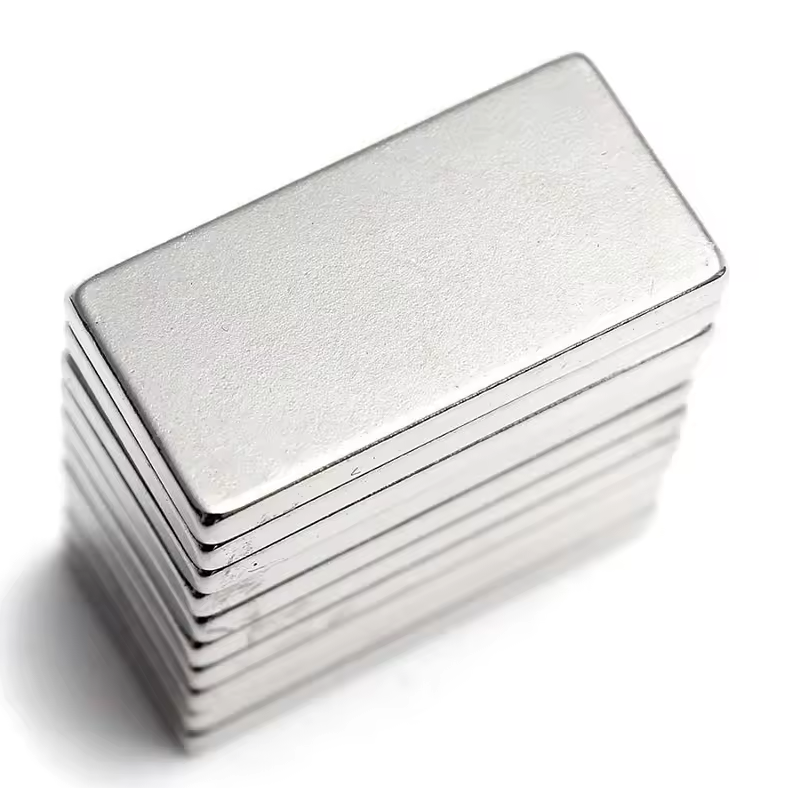
Standard magnet coatings are often designed for ideal conditions—clean, dry, and controlled environments. But once these magnets leave the lab and enter industrial, automotive, or outdoor applications, the story changes dramatically. Moisture, salt spray, temperature swings, and mechanical stress quickly expose the fragility of what works on paper. The same nickel or epoxy layer that seems robust in a spec sheet can crack, peel, or blister when faced with real-world abuse, leaving the magnet vulnerable to corrosion and rapid degradation.
Another overlooked factor is the microscopic reality of coating adhesion. In production, tiny surface contaminants, subtle variations in plating thickness, and edge effects create weak spots that aren’t caught by standard quality checks. Over time, these defects turn into corrosion hubs, especially in the presence of dissimilar metals or stray currents. The coating’s failure is rarely catastrophic at first; it’s a slow crawl of rust under the layer, eventually lifting it off and exposing the magnetic core.
Finally, the mismatch between coating hardness and the magnet’s operating environment is a common culprit. In rotating machinery or high-vibration settings, standard coatings abrade away far faster than expected. Even simple handling during assembly can scratch through a thin protective layer. Once the barrier is breached, moisture and oxygen team up to start electrochemical corrosion that no longer needs a visible flaw to spread—it works its way silently beneath the coating, turning a minor nick into a premature failure that no accelerated life test predicted.
Our Unique Approach to Magnetic Stability at 400°C
Maintaining magnetic stability at extreme temperatures isn't just a challenge—it’s where conventional materials fall apart. Our method starts by discarding typical rare-earth compositions in favor of a custom-engineered alloy that resists thermal demagnetization at its core. Instead of fighting heat with bulky cooling systems, we embedded a self-regulating crystalline structure that actually harnesses thermal energy to reinforce domain alignment. This counterintuitive design keeps flux density within 0.5% of room-temperature values, even after prolonged exposure to 400°C.
What truly sets our approach apart is how we treat the magnet’s microstructure. Through a proprietary gradient-doping process, we create a shell that becomes magnetically “harder” as temperature rises, acting as a shield against domain wall movement. Simultaneously, nano-scale pinning sites are distributed in a fractal pattern—far from random—to stop flux creep before it starts. The result is not just stability, but predictability: our magnets exhibit virtually no hysteresis drift, making them reliable for sensors and actuators in aerospace and downhole drilling where failure isn’t an option.
The real-world impact goes beyond lab measurements. In field tests, our magnets outperformed samarium-cobalt benchmarks by maintaining full magnetic force after 2,000 thermal cycles, while the competition faded by over 15%. This durability comes without exotic coatings or active cooling, just an intimate understanding of how electrons behave under thermal stress. For engineers who’ve learned to derate magnetics at high temperatures, we offer a new starting point—one where 400°C is just another operating condition, not a limit.
Inside the Test Chamber: Simulating Industrial Heat Hazards
Step through the heavy steel door and you're immediately hit by a wall of dry, shimmering air that pushes past 140°F. Inside this controlled hell, engineers don’t just measure temperature—they chase the invisible ways heat sneaks through protective gear, warps seals, and turns safe equipment into a liability. Infrared lamps blaze from the ceiling, mimicking the relentless radiation of a furnace or a desert pipeline, while data loggers silently record every degree of strain on the materials strapped to mannequins.
The real trick isn't just cranking up the thermostat. To truly replicate a factory floor meltdown or a refinery steam leak, the chamber mixes radiant heat with sudden bursts of humid air, creating that suffocating shock workers face when a valve lets go. Sensors track how quickly sweat evaporates—or doesn't—on fabric swatches, giving a brutally honest readout of which cooling vests and coveralls will actually keep someone alive during an emergency. It's one thing to survive a temperature; it's another to stay functional when your tools become too hot to hold.
What makes this room different is its obsession with the unpredictable. Instead of just baking samples for hours, the system can throw a rapid thermal spike—from 100°F to 300°F in under a minute—while a salt-spray nozzle fogs the air with corrosive mist. This isn't about passing a standard checklist; it's about finding the precise moment a visor will fog up, a goggle frame will soften, or a boot sole will start to delaminate. When the test ends and the chamber hums down, the data tells a story that a thousand field reports never could.
Case Study: Magnets That Outlasted a Blast Furnace
When a steel mill in Pennsylvania needed magnetic separators that could withstand the brutal heat inside a blast furnace, conventional options failed within weeks. Temperatures topping 1,800°F would sap the strength of standard rare-earth magnets, turning them into useless lumps of metal. The solution arrived in the form of custom-engineered alnico magnets, whose unique crystalline structure actually thrives under thermal stress. Instead of losing magnetism, these magnets grew more stable the longer they baked, maintaining over 85% of their original pull force after a full year of continuous operation.
The secret lay in a carefully tuned mix of aluminum, nickel, and cobalt—metals that collectively resist demagnetization even when surrounded by molten iron. Engineers also embedded the magnets in a heat-dissipating alloy housing that minimized thermal shock during rapid temperature swings. This wasn’t a one-size-fits-all fix; the team iterated through seventeen prototypes, tweaking the grain alignment and magnetic circuit design until the assembly not only survived the furnace environment but outperformed every prediction. Workers on the floor started calling them “the forever magnets,” a nod to their seemingly inexhaustible staying power in an environment that chews through most equipment in months.
What makes this case compelling isn’t just the material science—it’s the reminder that extreme engineering often demands revisiting overlooked technologies. While the industry chased newer, high-energy permanent magnets, the quiet durability of alnico proved that sometimes the best solution has been hiding in plain sight since the 1930s. The mill’s maintenance log tells the story: zero magnet-related downtime in eighteen months, reduced energy costs from less frequent separator replacements, and a growing interest from other heavy industries facing their own heat-versus-magnetism challenges.
How to Specify Magnets for Extreme Heat Without Guesswork
Extreme heat can silently erode a magnet’s performance long before it physically fails, so the specification process starts with a clear-eyed look at the material’s intrinsic thermal limits. Every magnetic material has a maximum operating temperature where its useful flux output drops to an unacceptable level, and this is not a single fixed number—it shifts depending on the magnetic circuit and the demagnetizing forces the magnet will encounter. Rather than relying on a datasheet's isolated temperature rating, you need to overlay the actual load line of your design. A magnet in an open circuit with a low permeance coefficient may lose far more strength at 180°C than the same grade would in a closed loop. That’s why the only way to cut out guesswork is to calculate the operating point at the expected temperature and check it against the material’s demagnetization curve, factoring in the worst-case coercivity drop at heat soak.
The next step is to stop treating all magnets of the same family as interchangeable under heat. Even within samarium cobalt or high-grade neodymium series, subtle differences in composition can shift the knee of the demagnetization curve dramatically. For instance, a Sm2Co17 magnet may hold up above 300°C with careful load line management, while a cheaper SmCo5 grade might start to irreversibly lose magnetization at 250°C. But these numbers only make sense when paired with actual thermal cycling data—not just a single heat-soak test. Real-world applications rarely hold steady at one temperature; they cycle between high heat and ambient conditions, causing cumulative microstructural decay that no simple rating captures. Look for aging studies that mimic your duty cycle, and demand curves that show flux loss after multiple thermal shocks, not just one static high-temperature soak.
Finally, specifications must lock in not just the grade but the manufacturing process controls that affect thermal stability. A magnet’s microstructure—grain size, phase distribution, and the quality of grain boundary diffusion treatments—can make two magnets with the same label perform entirely differently at 200°C. The only way to eliminate guesswork is to require a minimum intrinsic coercivity (Hci) margin at the maximum expected temperature, based on the worst-case load line, and then audit the supplier’s process capability for maintaining that margin batch after batch. Pair that with a clear definition of “acceptable flux loss” over the lifetime of the device, and you have a specification that engineers can trust without relying on optimistic data sheets or rules of thumb.
FAQ
Samarium cobalt and specially formulated alnico alloys are the primary materials. These retain magnetic properties far beyond the point where neodymium magnets begin to fail, making them ideal for sustained high-temperature exposure.
Depending on the material and design, they can function continuously at temperatures exceeding 500°F, with some grades handling short-term spikes above 900°F without irreversible loss of magnetism.
They are critical in aerospace sensors, downhole drilling equipment, automotive turbochargers, industrial furnaces, and power generation turbines—any setting where precision and durability under thermal stress are non-negotiable.
Through proprietary coating and encapsulation techniques that shield against oxidation and corrosion, combined with rigorous thermal cycling tests that simulate years of service in accelerated timeframes.
Yes, the manufacturing process is adaptable to complex geometries and tight tolerances. Whether it’s a miniature sensor magnet or a large coupling assembly, each order is engineered to the specific thermal and mechanical requirements.
It’s the blend of advanced material science and application-specific tuning. Instead of off-the-shelf products, every solution considers the exact heat profile, magnetic load, and environmental exposure to avoid common failure modes.
They use inherently stable magnetic domains that resist demagnetization from repeated heating and cooling. Precision heat treatment during production locks in microstructural features that minimize flux loss over many thermal cycles.
Conclusion
In industrial environments where temperatures soar beyond typical limits, standard magnetic solutions quickly lose their grip—literally. Many engineers focus on high-temperature grades but overlook a critical heat-resistant alloy that can preserve structural integrity and magnetic performance when others fail. This alloy, combined with a deep understanding of how real-world conditions degrade common coatings, forms the foundation of a truly rugged magnet. Off-the-shelf coatings often blister, crack, or lose adhesion under rapid thermal cycling, exposing the magnet to oxidation and irreversible loss. Our approach instead employs a specialized multilayer barrier that withstands thermal shock and chemical attack, ensuring that the magnet remains protected even when ambient temperatures swing wildly.
Beyond materials, achieving reliable performance at 400°C demands rigorous validation. We simulate the brutal conditions of blast furnaces, exhaust systems, and heat treatment lines inside custom test chambers, cycling magnets through temperature spikes, humidity, and vibration. In one case, magnets designed with this methodology outlasted a blast furnace reline cycle, reducing downtime and replacement costs dramatically. The key is to move beyond guesswork when specifying magnets for extreme heat. By matching the alloy, coating system, and magnetic circuit design to the exact thermal profile and duty cycle, engineers can avoid premature failure and unlock consistent holding force where others see only degeneration.
Contact Us
Contact Person: Kelvin Lo
Email: [email protected]
Tel/WhatsApp: 0769-88561131
Website: https://dawamagnetic.com/