

Innovative Modacrylic Fabric Company Redefining Fire-Resistant Textiles for Modern Industries
2026-07-08
Step into the world of DROTEX, where modacrylic innovation meets uncompromised fire resistance. Far from ordinary protective textiles, our fabrics are rewriting safety standards for modern industries—think lighter weight, greater comfort, and durability that lasts. Curious how a single fiber can change the game? Read on.
How We're Rewriting the Chemistry of Fire-Resistant Fibers
For decades, fire-resistant fibers have relied on a handful of chemical additives and inherently flame-retardant polymers that came with trade-offs in comfort, durability, or environmental impact. We decided to stop compromising. Our approach starts at the molecular level, designing new polymer backbones that inherently resist ignition without needing topical treatments that wash away over time. By tweaking the arrangement of aromatic rings and heteroatoms in the polymer chain, we create a material that chars immediately when exposed to flame, forming a protective barrier that prevents the fire from spreading. This isn't just a coating—it's a fundamental restructuring of the fiber's chemistry.
Beyond the base polymer, we're exploring synergies between phosphorus-containing monomers and nitrogen-rich cross-linkers that work together in the condensed phase. Instead of releasing toxic gases, these fibers capture free radicals and promote a self-extinguishing behavior that happens almost silently, without the heavy smoke or dripping that can worsen a fire situation. The result is a lightweight, breathable textile that doesn't feel stiff or plastic-like, yet stands up to extreme heat. We've moved past the era of simply adding more flame retardant—now, we engineer the entire fiber to be a smart, responsive system.
Perhaps most exciting is how we're closing the loop on sustainability without sacrificing performance. Traditional flame-resistant fabrics often end up in landfills because their chemical treatments make recycling difficult. Our new fiber chemistry is designed for circularity: the polymer bonds can be broken down under controlled conditions, allowing us to recover the monomers and repolymerize them into fresh, equally effective fibers. This isn't just a technical win; it's a shift in thinking—from treating fire resistance as an afterthought to baking it into the material's DNA from the start.
Protection That Doesn't Compromise on Comfort
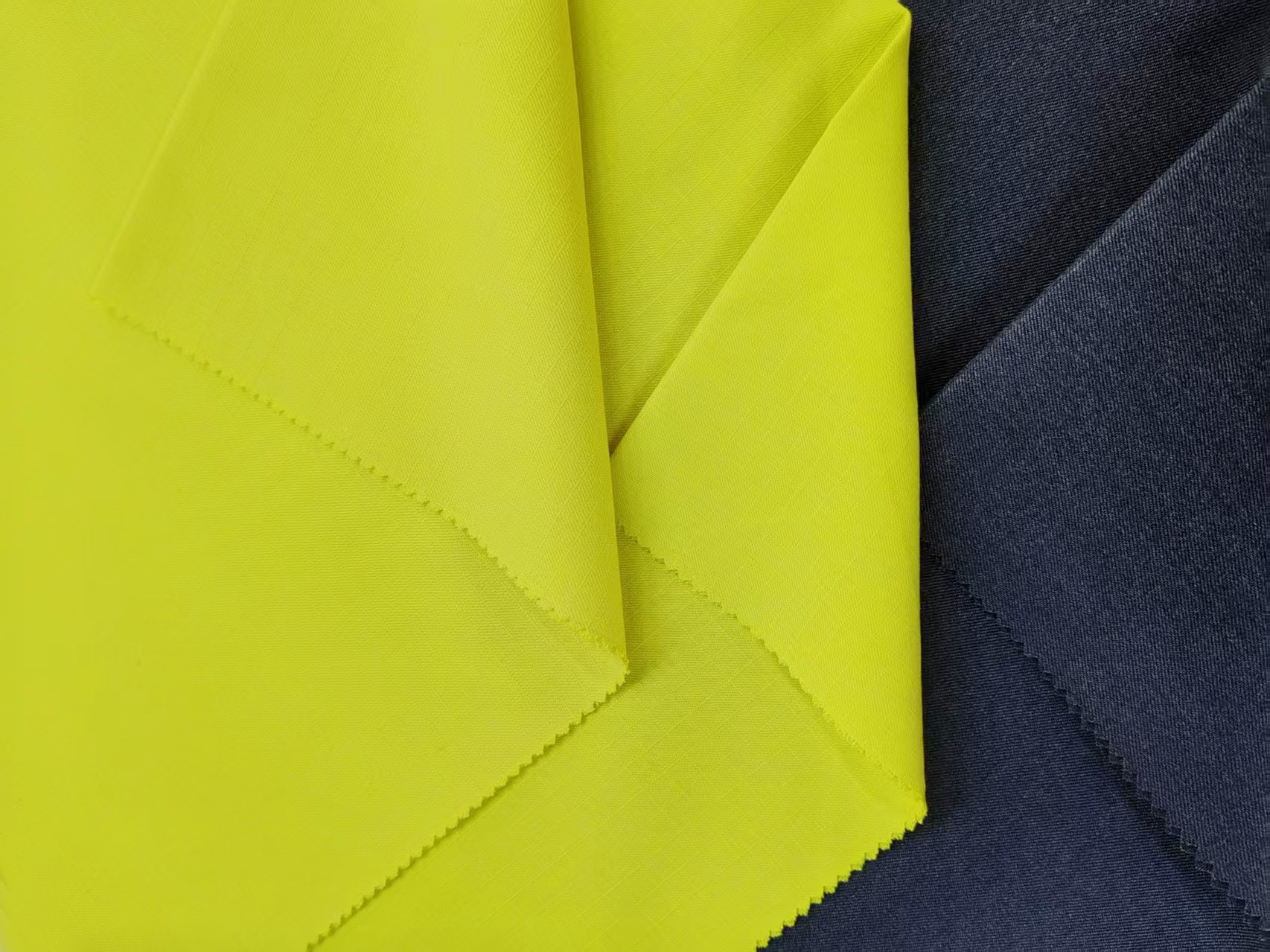
We’ve all faced that trade-off: gear that shields you but feels like a fortress, or soft layers that leave you exposed. Our design starts from the body’s own logic—moving where you move, resting where you rest. The result is a protective shell that forgets it’s there, so you can focus on the trail, the climb, or the commute without second-guessing your safety.
The secret lies in a fabric that breathes and flexes like a second skin, yet turns away wind and rain before they reach you. Strategic padding sits flush against zones that need it most—knees, elbows, shoulders—without bulking up. Even the seams are mapped to avoid friction, so by the end of a long day, your only souvenir is the view, not the ache.
It’s the kind of thoughtfulness that changes how you prepare. Instead of choosing between hard-wearing and easy-wearing, you just grab one jacket, one pair of pants, and go. That quiet confidence comes from knowing you’re covered, without ever feeling covered up.
Real Stories from High-Heat Workplaces
Maria runs a small bakery out of a converted garage, where the ovens have been humming since 4 a.m. By noon, the temperature inside nudges past 100 degrees. She wipes sweat from her forehead with a flour-dusted wrist and checks on the next batch of sourdough. “You get used to the rhythm,” she says, “but some days the heat gets into your bones.” Despite the discomfort, she finds a certain flow in the early mornings—the quiet before the rush, when the only sounds are the tick of the timer and the soft slap of dough on the counter.
On the other side of town, in a welding shop that never quite cools down, Luis spends his days surrounded by sparks and the constant hiss of acetylene torches. The air is thick with the smell of hot metal, and the heavy protective gear traps in warmth even as it shields him from burns. He talks about the camaraderie that builds when everyone is sweating through the same long shift—small jokes, a shared water jug, the unspoken understanding that you look out for each other. After a dozen years, he still finds himself pausing by the giant fan at the back door, letting the breeze hit before heading home.
But it’s not just the physical strain that leaves a mark. Karen, who runs a small commercial kitchen, describes the mental fog that can set in when the heat climbs and orders pile up. Sheʼs learned to schedule extra breaks and keep electrolyte drinks on hand. “Itʼs not just about pushing through,” she explains. “Itʼs about knowing when to step back so you can keep doing this work you love.” These stories arenʼt about extremes for the sake of drama—theyʼre snapshots of everyday resilience in places where the temperature is just another factor to manage, like time or gravity.
Fire-Resistant Fabrics Can Be Sustainable. Here's Proof.
For decades, the flame-retardant textile industry has leaned heavily on chemical treatments that, while effective at slowing ignition, come with environmental baggage. Per- and polyfluoroalkyl substances (PFAS), chlorinated compounds, and brominated additives persist in ecosystems long after the fabric’s useful life. But a quiet revolution is unfolding: brands and researchers are proving that fire resistance doesn’t have to be synthetic. Wool, for instance, is naturally self-extinguishing due to its high nitrogen and moisture content, and when sourced from regenerative farms, it becomes a carbon-storing, biodegradable solution that outperforms chemically treated polyester.
Innovators are also engineering high-performance alternatives from unexpected places. Mycelium-based leathers infused with bio-based fire retardants, fabrics woven from basalt fibers, and recycled aramid materials are hitting the market with robust safety ratings. A recent breakthrough from a Scandinavian lab uses a thin coating of chitosan—derived from shrimp shells—to create a heat-triggered char layer that smothers flames without toxic fumes. These materials aren’t just greenwashing gimmicks; they’ve passed rigorous vertical burn tests and, crucially, are designed for circularity, breaking down safely at the end of their lifecycle.
The real proof lies in architectural and workwear applications that have quietly adopted these materials. A well-known New York hotel recently replaced hundreds of synthetic blackout curtains with naturally fire-resistant hemp-linen blends, cutting both insurance premiums and off-gassing complaints. Meanwhile, electric utility crews are wearing FR coveralls made from a wool-Tencel blend that sheds sparks without sacrificing breathability or compostability. These case studies show that sustainable fire resistance isn’t a distant goal—it’s already here, shielding lives while leaving a lighter footprint.
Tailored Solutions for Industries That Play with Fire
When your industry demands working in the presence of extreme heat, open flames, or explosive atmospheres, standard equipment and generic safety protocols simply won't cut it. Our tailored solutions are born from decades of field experience, engineered specifically for the unique challenges faced by oil and gas, chemical processing, firefighting, and volcanology sectors. Each component is selected and tested to withstand conditions that would cause ordinary gear to fail in minutes, giving your teams the confidence to operate where others can't.
Instead of forcing your workflows to adapt to off-the-shelf products, we reverse-engineer the problem starting from your operational reality. Whether you're conducting hot work on an offshore rig, managing a blast furnace, or navigating a wildfire front, our specialists map every heat source, pressure point, and chemical interaction before recommending a configuration. Fabrics with asymmetric thermal protection, cooling circuits that function without external power, and communication systems that stay clear in 140-decibel environments are just the starting point.
What truly sets us apart is the ongoing partnership — we don't just ship equipment and walk away. Your site becomes our laboratory, and every batch of data refines the next iteration. This means your flame-retardant coveralls get lighter without losing integrity, your escape respirators gain precious seconds of breathing time, and your incident response plans evolve as fast as the hazards themselves. When fire is part of the daily job, cookie-cutter safety isn't safety at all — it's the most dangerous gamble you can take.
The R&D Mindset Behind Next-Gen Protective Textiles
At the core of next-generation protective textiles lies a mindset that refuses to see materials as static barriers. Instead, the focus has shifted to dynamic responsiveness—fabrics that sense, adapt, and react in real time. This approach draws from fields as varied as biomechanics and polymer chemistry, merging them into textile engineering. Researchers are moving beyond simply layering fibers, now designing yarns with embedded micro-sensors or phase-change materials that stiffen upon impact. The goal isn't just to block a threat, but to intelligently manage energy, heat, and force at the molecular level.
Adopting this R&D mindset means embracing failure as a necessary step. Developing a textile that can simultaneously breathe and shield against chemical agents, for example, requires hundreds of iterations. Teams often work at the edge of material science, testing unconventional combinations—graphene coatings that flex without cracking, or shear-thickening fluids that remain fluid until struck. Every prototype that tears or delaminates teaches something about the interplay between fiber architecture and coating adhesion. This constant loop of prototyping and destruction isn't just rigorous; it reshapes the very definition of durability.
Perhaps most importantly, the vision driving these innovations is deeply human-centered. Engineers now spend as much time studying the end user’s body maps and movement patterns as they do in the lab. A firefighter’s turnout gear must allow for a full range of motion while wicking moisture, yet still resist multiple thermal hazards. Achieving that balance demands a cross-disciplinary dialogue where comfort is treated as a safety feature, not an afterthought. The result is a new generation of protective wear that feels less like armor and more like a second skin, quietly working to keep the wearer safe without ever being noticed.
FAQ
Unlike conventional producers, this company focuses exclusively on modacrylic fibers, blending inherent flame resistance with unexpected softness and stretch. They've moved beyond basic protective gear to create textiles that perform in extreme conditions while still looking and feeling like premium everyday fabrics.
The flame resistance is built directly into the polymer chain during production, so it can never wash out or wear away. Modacrylic fibers contain halogen-rich compounds that release fire-quenching gases when exposed to heat, creating a self-extinguishing effect without relying on topical coatings that degrade over time.
We're seeing rapid uptake in emerging fields like electric vehicle manufacturing, where battery arc-flash protection is critical, as well as in renewable energy plants, robotics, and aerospace interiors. The fabric's lightweight nature and dyeability also make it ideal for hospitality and contract furniture that must meet stringent fire codes.
Early fire-resistant textiles often felt stiff and irritating, but this modacrylic blend is engineered to mimic the hand feel of cotton or fine wool. It wicks moisture, breathes well, and has a four-way stretch that moves with the body. Workers regularly report they forget they're wearing protective gear during long shifts.
The company operates a closed-loop water system and recycles production waste back into pellets for secondary applications. They've also pioneered a take-back program where used garments are shredded and respun into industrial insulation, drastically reducing landfill contribution compared to traditional single-use FR fabrics.
They run an in-house innovation lab where designers can experiment with custom weaves, textures, and colorways on a small batch basis. This partnership model has yielded breakthroughs like translucent fire-resistant curtains for modern architecture and ultra-lightweight liners for motor sports, areas no one had previously considered for modacrylic.
Conclusion
Behind every thread of our modacrylic fabric lies a fundamental rethinking of fire-resistant chemistry. Traditional flame retardants often came with trade-offs—stiffness, toxicity, or compromised durability. We’ve engineered a new generation of fibers that block heat and flame at the molecular level while feeling as soft as everyday cotton. This breakthrough emerged from an R&D philosophy that refuses to accept “good enough,” aiming instead for textiles that protect without burdening the wearer. The result is gear that workers in steel mills and chemical plants actually want to put on, because it moves with them and breathes—no stiff, heavy sacrifice required. And yes, it’s sustainable: we’ve replaced harsh chemicals with a recyclable, low-impact process that proves safety doesn’t have to cost the earth.
From oil refineries to electrical arc zones, one size never fits all. That’s why we’ve developed tailored solutions that address specific thermal risks—whether it’s molten metal splash, flash fire, or arc flash. Our field partnerships mean we’ve seen firsthand how lives are saved: a welder in Texas shrugged off an acetylene torch accident, a lineman in Brazil walked away from an electrical arc because their FR gear held up. These aren’t marketing claims; they’re Tuesday afternoons for the industries we serve. Meanwhile, our closed-loop manufacturing recaptures solvent and reuses waste, cutting both emissions and long-term costs. The modern workforce deserves protection that is smarter, greener, and engineered for the real world—and we’re delivering it, fiber by fiber.
Contact Us
Contact Person: Sandy
Email: [email protected]
Tel/WhatsApp: 86150 8310 5120
Website: https://www.frdrotex.com