

Knitted Bag Supplier Shares Secrets to Choosing the Perfect Eco-Friendly Tote
2026-11-16
Ever stood in a store aisle, staring at rows of reusable bags and wondering which one won’t fall apart after a month? You’re not alone. As a supplier behind countless eco-conscious brands, YONGFENG has seen what separates a truly great tote from the ones that end up forgotten under a car seat. Here, we’re pulling back the curtain on the details that matter—so your next bag is more than just a green gesture.
What Most Buyers Overlook About Knitted Tote Fabrics
The stretch that makes knitted totes so comfortable to carry is also what quietly undermines their structure over time. It’s easy to spot the immediate drape and softness, but few pay attention to how the fabric behaves once it’s filled with a water bottle, a laptop, and the odd pouch of keys. Stitch tension and yarn twist matter more here than in woven fabrics—loosely twisted yarns or uneven tension can lead to bags that sag unpredictably, pulling the handles out of shape and distorting the silhouette in a way that no amount of careful packing can fix.
Another quiet detail is the edge finish, especially at the handles and seams where the knit’s tendency to ladder can turn a tiny snag into a runaway hole. A bag might feel sturdy on the rack, but without reinforced binding or a well-constructed selvedge, those high-stress points start to unravel after weeks of regular use. It’s the kind of flaw you won’t notice until it’s too late—because no one thinks to inspect how a knit handles friction until a strap gives way mid-commute.
Then there’s the weight-to-durability balance that gets masked by initial softness. Heavier-gauge knits feel substantial, but they can actually stretch out more dramatically than a denser, finer knit with better recovery. Labels rarely tell you about the fiber’s elastic memory or whether the bag’s shape will come back after being overloaded. Shoppers often choose by hand feel alone, forgetting that knitted textiles have a living quality—they adapt, shift, and sometimes give up in places that woven fabrics would simply hold firm.
The One Detail That Separates a Good Tote from a Great One
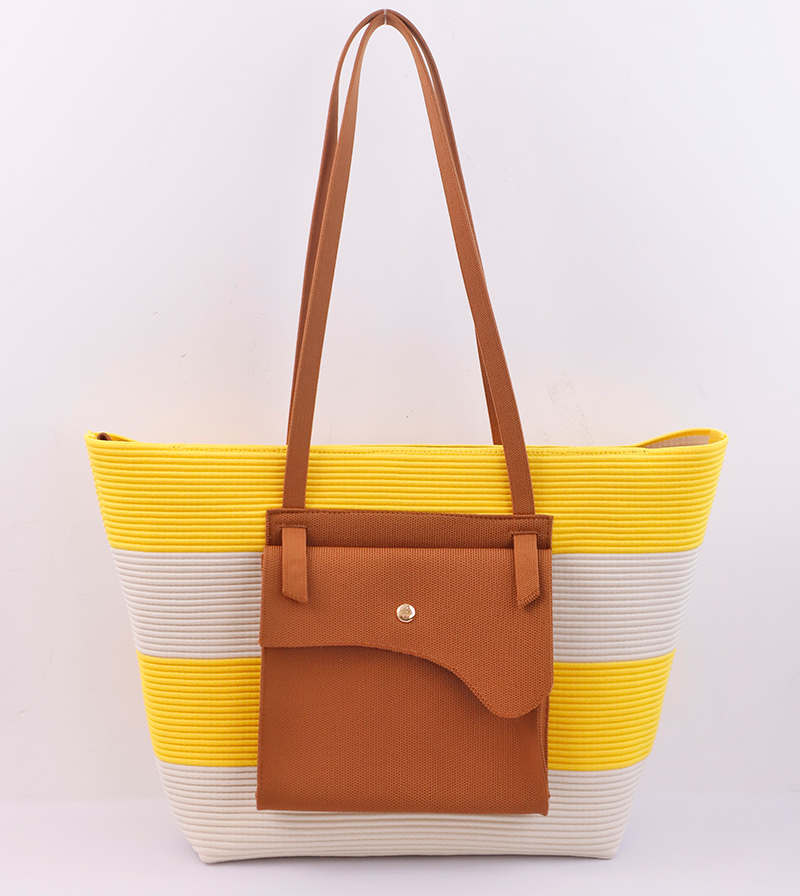
Most bags do the job of holding your things, but only a few vanish the moment you carry them. The difference sits at the bottom. A truly great tote refuses to collapse, and that quiet defiance comes from a structured base—firm enough to keep it upright on a subway floor, soft enough to mold against your hip when you’re weaving through crowds. It’s the kind of detail nobody notices because it simply works.
You feel it in the way the bag opens. No digging, no swearing under your breath while you hunt for keys. The shape stays open like an invitation. Designers who get it right usually add small metal feet or a floating leather panel, but the trick isn’t hardware—it’s the weight distribution. A base that’s slightly heavier than the rest lets gravity peel the sides apart instead of sucking them inward.
This is why flimsy totes betray you after a week. They pancake, they slump, they force you to prop them against chair legs like a drunk friend. A great one stands ready, architectural without being rigid. Next time you’re comparing two that look almost identical, press down on the center of the empty bag. If it folds flat without resistance, you’re holding a good tote. If it pushes back, you’ve found something better.
How to Spot a Supplier Who Cares About More Than Just Profit
Real care shows up in the questions they ask before the order is even placed. A supplier fixated purely on margins will push for the biggest quantities and fastest turnaround, rarely pausing to understand what you’re actually trying to achieve. When someone takes the time to dig into your long-term goals, suggests modifications that might reduce their own short-term revenue but improve your product’s shelf life or usability, and flags potential compliance hurdles early, you’re likely dealing with a partner who views the relationship as something beyond a transaction. This upfront curiosity is the first reliable signal that their priorities extend into your success, not just their invoice total.
Transparency becomes almost second nature when a supplier genuinely values the bigger picture. Instead of burying setbacks or spinning a delay into a vague “unforeseen circumstance,” they’ll share exactly what went wrong, outline the steps they’re taking to fix it, and often absorb the cost of a remedy without being asked. Watch how they handle material sourcing, too—do they voluntarily send batch test results, or openly discuss the factories where components are made? The ones who offer a window into their operations, even when the view isn’t flawless, are signaling that your trust matters more than preserving a spotless facade.
Longevity thinking changes the entire dynamic. A supplier focused purely on immediate gain might steer you toward the cheapest materials every time, but a partner who suggests a slightly pricier alternative with a better wear rating or a packaging tweak that cuts down on customer returns is already factoring in your reputation. They’ll follow up months after delivery to see how the product is performing in the real world, not just to pitch the next order. That kind of follow-through is rare, and it usually means they’re invested in a shared future rather than a quick hit, so lean into those signals when you spot them.
Why 'Eco-Friendly' Labels Can Be Deceiving—and What to Look For
Walk down any supermarket aisle and you'll be greeted by a sea of green leaves, recycling symbols, and phrases like “planet-friendly.” Many of these labels are little more than marketing gloss. The term “eco-friendly” isn't regulated in most countries, meaning a brand can slap it on packaging without meeting any universal standards. A bottle of cleaning spray might boast a biodegradable ingredient while the rest of the formula remains toxic to aquatic life. We assume we're making better choices, but without clear definitions, we're often just buying a nicer story.
Some certifications are genuinely meaningful—but you need to know which ones. Look for third-party seals that enforce specific criteria, such as the EU Ecolabel, USDA Organic, or Fair Trade Certified. Even then, dig a little deeper. A product might be certified organic but wrapped in layers of non-recyclable plastic, or it could travel halfway around the world, wiping out any local sustainability gains. The trick is to ignore the front-label buzzwords and zero in on the actual ingredients, materials, and the company's overall transparency. If a brand isn't sharing details about its supply chain or manufacturing footprint, that green leaf might be nothing but decoration.
The most reliable approach isn't relying on a single stamp of approval. Pair certification checks with common-sense habits: choose concentrates that reduce shipping weight, favor reusable packaging, and question anything that seems over-packaged in the name of being “green.” Often, the least flashy product—the one in a simple cardboard box with a short ingredient list—turns out to be the better environmental bet. Real eco-friendliness isn't about trendy adjectives; it's about resource use, longevity, and a brand's willingness to back up its claims with hard data.
The Simple Test That Reveals a Tote’s True Durability
Before you commit to a tote, yank the straps hard—not in a polite, store-display kind of way, but like you're wrestling baggage from an overhead bin. A seam that puckers, slips, or emits a faint tearing whisper under real tension won't survive daily shoves, grocery hauls, or the occasional laptop crush. Nylon webbing anchored with bar tacks beats polished leather stitching when it comes to this brutal sidewalk test.
Next, scrape your thumbnail along the inner seams where the lining meets the bag's base. If the thread feels waxy but gives off a powdery residue, it's poor-grade bonded thread destined to unravel after a few weeks of keys and water bottles rattling around. A truly durable tote has double-rolled edges here, with the stitches buried so deep you barely feel them—like a quiet indent, not a speed bump.
Finally, load the empty tote with anything heavy nearby—books, a melon, that cast-iron doorstop—and set it on concrete. Lift it by one strap and let it hang. Watch the corners: if the fabric instantly dimples into a sharp crease that won't shake out, it's already compromising the weave. The keepers will slump but spring back, their material memory intact, and that's the difference between a bag that ages gracefully and one that's already breaking down before you paid for it.
Styling Your Tote for Both Work and Weekend Without Sacrificing Sustainability
A tote that works for both your Monday morning meeting and your Saturday stroll really comes down to choosing one that feels intentional rather than trendy. Look for a shape that holds its structure without looking overly formal—think relaxed but not slouchy. Neutral tones or muted earthy shades often bridge the gap between professional and casual with ease. The key is to treat it as an extension of your outfit: tuck in a slim laptop sleeve and a reusable water bottle for the office, then swap in a scarf and a paperback for the weekend market.
Fabric choice matters more than people realise, both for longevity and for keeping your look cohesive across settings. Organic cotton canvas or recycled polyester with a water-resistant finish can handle commuting spills and still look clean paired with linen trousers or denim. Rather than chasing a new style each season, focus on details like reinforced stitching or interior pockets made from deadstock fabric. Those small decisions keep the bag out of landfill and make it feel like part of your daily rhythm instead of a disposable accessory.
Weekend styling doesn’t have to mean a complete outfit shift. If you’ve worn the tote with a blazer and loafers during the week, try it with a lightweight knit and comfortable trainers on Sunday—it instantly softens the look without feeling mismatched. Adding a playful keychain or tying a silk scarf around the handle can shift the mood just enough, while sticking with a bag you already trust keeps your routines simpler and genuinely more sustainable.
FAQ
Focus on natural, renewable fibers like organic cotton, hemp, or linen. Recycled cotton and deadstock yarns are even better since they give textile waste a second life. Avoid synthetic blends that shed microplastics.
Ask where the raw materials come from and how the bag is made. A trustworthy supplier will openly share certifications, dyeing methods, and production conditions. Vague claims like 'green' or 'natural' without details are often a red flag.
Check the stitch density and the handle attachment. Tightly knitted panels, reinforced seams at stress points, and double-layered bottom sections add serious carrying power without losing flexibility.
Yes, if it's well-constructed. Look for bags with a structured knit pattern or a built-in lining. Natural fibers with a bit of natural elasticity, like cotton, will relax slightly but shouldn't turn into a shapeless sack if the gauge is right.
Pick a neutral, versatile color and a clean silhouette. Inside pockets for your phone and keys make it practical, while a soft drape keeps it looking put-together. A removable inner pouch can transform it instantly.
Spot-clean stains with cold water and mild soap. For a full wash, hand-wash it inside out and lay it flat to dry, away from direct sunlight. Skip the dryer—it can shrink or distort natural fibers.
Conclusion
Many shoppers grab a knitted tote printed with “100% organic cotton” and assume they’ve made the green choice. They overlook the yarn count and knit density that decide whether the bag will pill into a fuzzy mess within weeks. A great tote reveals itself in the quiet structure—the mattress-stitch seams, the bar-tacked handle joins, the ribbon-bound inner edges. When a supplier talks about these specifics without being prompted, you’ve likely found one that invests in longevity rather than churning out disposable fashion.
“Eco-friendly” often means little more than a swing tag unless you dig deeper. Ask for the percentage of genuine post-consumer recycled content or whether the offcuts are reclaimed in-house. To gauge durability on the spot, crumple the side panel in your fist—it should bounce back without a crackling sound that hints at stiff, brittle fibers. Then tug the straps firmly; any give at the attachment point signals early failure. Once you’ve found a solid tote, styling it for both a client meeting and a farmer’s market run comes down to picking a heathered slate or deep charcoal tone and a roughly folded top. A removable inner pouch does double duty as a wristlet for errands, so you’re never tempted to grab a disposable plastic bag. These are the unvarnished truths a supplier should willingly share.
Contact Us
Contact Person: Mr Deng
Email: [email protected]
Tel/WhatsApp: +86-18926872657
Website: https://www.uniyongfeng.com/