
Large Capacity Centrifugal Compressor Manufacturer: Advancing Industrial Performance
2026-07-25
In the world of industrial operations, efficiency and reliability are non-negotiable. Large capacity centrifugal compressors are the backbone of many high-demand processes, but finding a manufacturer that truly pushes the boundaries of performance can be a challenge. That's where Seize Air comes in—a company dedicated to advancing industrial performance through precision-engineered compressor technology. Whether you're facing tough production targets or high energy costs, their solutions promise to reshape your expectations. Let's explore how Seize Air is driving real progress in the compressed air industry.
Engineering the Core of High-Volume Air and Gas Handling
Every component in a high-volume air and gas handling system must earn its place through rigorous performance demands. From impellers machined to micron-level tolerances to casings designed to direct turbulent flow without energy-wasting recirculation, the engineering starts with precision aerodynamics. The core challenge isn’t just moving massive cubic feet per minute—it’s doing so while maintaining pressure stability, minimizing vibration, and ensuring the entire assembly doesn’t shake itself apart under continuous operation.
Material choice becomes critical when you’re pushing corrosive gases or superheated air through the same housing day after day. Engineers often turn to duplex stainless steels or Inconel alloys for rotors, paired with abradable coatings that let blade tips run tighter gaps without catastrophic contact. Every bearing selection is a trade-off between load capacity and thermal expansion, and labyrinth seals are calculated not just for leakage rates but for how they’ll behave when the system goes through a cold start to full-bore heat soak in minutes.
The integration of controls is where many designs stumble. Modern cores need to breathe data—pressure transducers at multiple stages, vibration probes on bearings, and even acoustic sensors listening for blade anomalies. The mechanical engineering must coexist with a feedback loop that adjusts variable-geometry inlet guide vanes or bypass valves in real time, keeping the whole system at peak efficiency across a turndown range that might swing from 30% to 105% of design flow without surge or choke.
Beyond Standard Designs: Customized Compressor Solutions for Heavy Industries
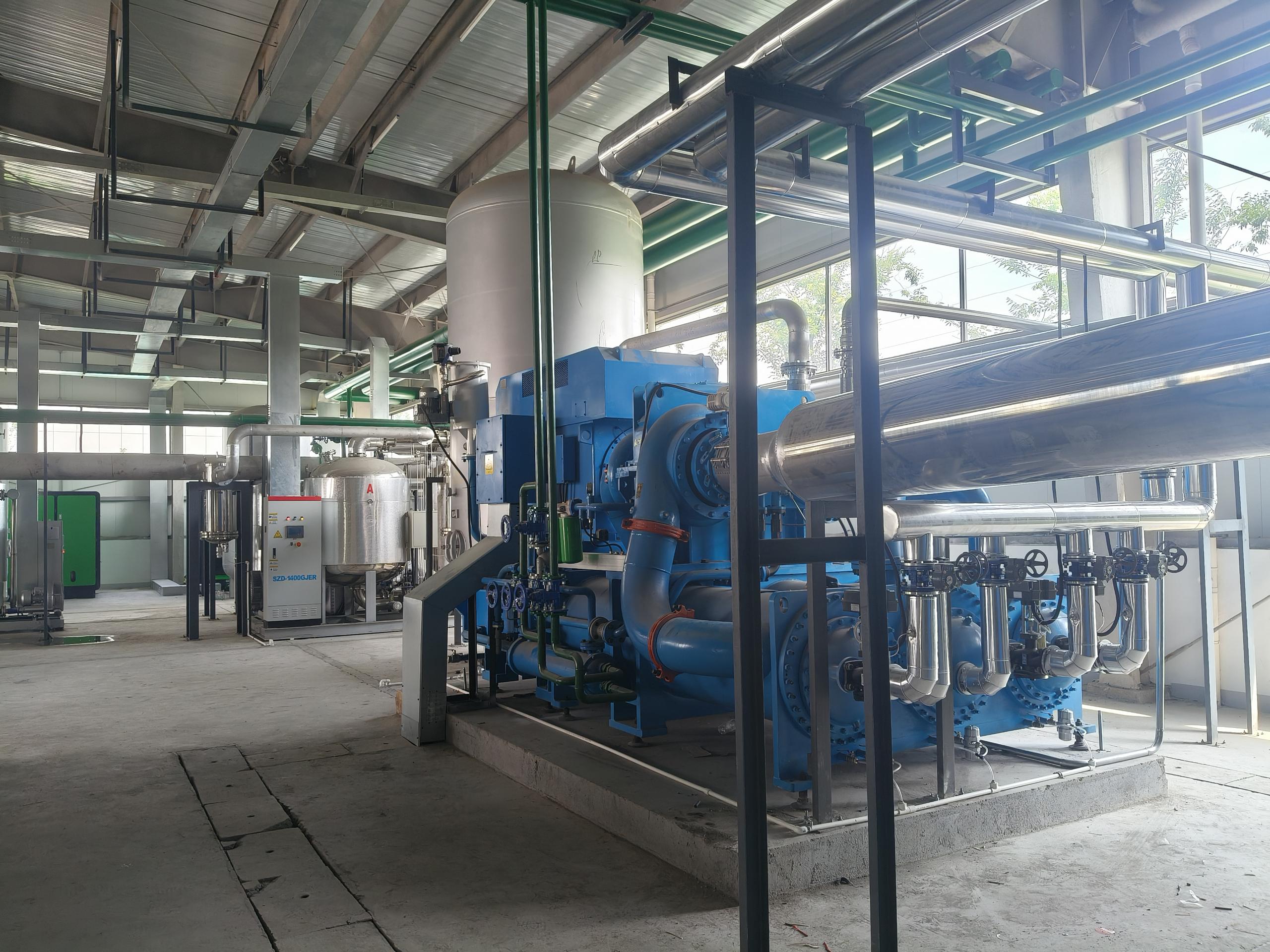
Heavy industries don’t run on one-size-fits-all logic—every mine, steel mill, or refinery has its own rhythm, its own brutal demands. That’s where off-the-shelf compressors fall short. We build from the ground up, engineering every stage to handle the exact pressure swings, corrosive gases, or dust-choked air that would choke a standard unit. It’s not about adding bells and whistles; it’s rewiring the whole machine around your process, so reliability isn’t a wish—it’s designed in.
The real difference shows when conditions turn extreme. Think of a coking plant where summer heat bakes the equipment yard, or an offshore platform with salt spray eating at every surface. Our team maps out thermal expansion, vibration nodes, and material fatigue long before a single bolt is cut. The result is a compressor that breathes with your plant, not against it. Sometimes that means oversized coolers, sometimes exotic alloys in the impellers—always, it means less downtime and fewer midnight phone calls.
Integration is the quiet art that separates a great solution from a collection of parts. We don’t just drop a skid on a pad and walk away. Our engineers stay embedded through commissioning, tuning control logic until the compressor responds to load shifts like a reflex. In one chemical complex, that meant syncing with legacy steam turbines so smoothly the operators barely noticed the transition. That’s the kind of invisible engineering that keeps flow sheets stable and operators sane—and you’ll never get it from a catalog.
Reliability Under Pressure: How Robust Construction Minimizes Downtime
When a critical system faces unexpected stress, it’s the invisible strength in its design that keeps things moving. Equipment built with reinforced frameworks, high-grade materials, and smart redundancy doesn’t just survive harsh conditions—it thrives in them. These design choices aren’t about overengineering; they’re about ensuring that vibrations, temperature swings, and heavy loads don’t turn into costly interruptions.
Robust construction means every joint, seal, and component is chosen to handle more than the rated capacity. For example, a motor with dual-bearing support and sealed windings resists contamination in gritty environments, while a pump with a reinforced casing shrugs off pressure spikes that would crack a standard unit. This kind of resilience keeps production lines humming even when external conditions get rough.
The real payoff is fewer unplanned halts and longer stretches between maintenance. When equipment doesn’t buckle under pressure, operations stay predictable, and teams can focus on their work instead of scrambling to fix breakdowns. In the end, reliability built into the hardware translates directly into peace of mind and a healthier bottom line.
Energy Efficiency at Scale: Reducing Operational Costs Intelligently
Trimming operational costs used to mean cutting corners, but at scale, that approach often backfires. Intelligent energy management flips the script by treating consumption as a dynamic variable rather than a fixed expense. Instead of blanket shutdowns or indiscriminate power reductions, facilities now layer real-time demand data with predictive analytics to pinpoint exactly where and when energy is wasted—and just as importantly, where it’s not. The result is a leaner operation that doesn’t sacrifice throughput, equipment health, or occupant comfort.
Modern buildings and industrial sites embed thousands of sensors that feed into centralized management platforms. These systems learn normal usage patterns, flag anomalies like air handlers running full-tilt on an unseasonably mild day, and autonomously dial back non-critical loads before peak pricing windows hit. Machine learning models correlate production schedules, weather forecasts, and even utility rate structures to shift energy-intensive processes to off-peak periods. The intelligence lies not in a single smart device but in how these nodes collaborate—making micro-adjustments that compound into significant savings without anyone touching a switch.
A data center in Scandinavia, for instance, cut cooling costs by nearly 30% after deploying a neural network that orchestrated its chiller arrays. The system interpreted temperature fluctuations across server rows, predicted transient loads from batch processing, and leveraged the region’s naturally cold air when conditions allowed. Facility managers saw the drop in monthly bills without a corresponding rise in thermal throttling or hardware failures. Stories like this underscore a shift from reactive belt-tightening to proactive intelligence—turning energy efficiency into a strategic asset that scales with the business rather than against it.
From Petrochemicals to Power Generation: Diverse Applications of Large Centrifugal Compressors
Large centrifugal compressors stand at the heart of many industrial processes, seamlessly moving vast volumes of gas with astonishing reliability. In petrochemical plants, they keep reactions under control by maintaining precise pressures in ethylene crackers and ammonia synthesis loops. Their ability to handle aggressive, high-temperature streams makes them indispensable for refining operations, where they circulate hydrogen and compress cracked gas without missing a beat.
But their influence stretches well beyond chemical processing. Power generation facilities lean on these machines for everything from gas turbine fuel gas boosting to carbon capture and storage systems. In combined-cycle plants, they often supply the compressed air that drives peak efficiency, while in more conventional thermal stations, they manage flue gas desulfurization and other environmental control processes.
What’s often overlooked is how the same core engineering adapts to entirely different roles. Whether compressing natural gas for pipeline transmission, chilling refrigerants in large-scale industrial cooling, or aiding in the liquefaction of gases for transport, these compressors quietly enable the energy infrastructure we depend on daily. Their versatility stems from clever aerodynamic design and material choices that let a single machine family span such wildly different duties.
The Manufacturing Edge: Precision, Testing, and Quality That Set Us Apart
Precision isn’t just a goal—it’s a mindset embedded across every production line. From initial material selection to final assembly, our teams rely on advanced CNC technology and real-time monitoring systems to maintain tolerances that exceed industry norms. Each component is measured and re-measured under exacting conditions, ensuring that even the smallest deviation is caught and corrected before it can ripple downstream.
Testing here is rigorous, not routine. We simulate extreme operational environments—temperature swings, vibration, sustained load stress—that go far beyond standard benchmarks. By pushing products to their limits before they ever leave the facility, we uncover potential weaknesses that typical compliance checks might miss. This proactive method turns data into actionable refinements, making each product iteration tangibly more resilient than the last.
Quality doesn’t hinge on a single inspection stamp; it’s woven into every handoff between design, engineering, and production. Cross-functional reviews happen at every critical milestone, blending fresh perspectives with seasoned experience. The result is a manufacturing process that consistently yields output with minimal variability—products that perform identically whether it’s the first unit off the line or the ten-thousandth.
FAQ
It’s their relentless focus on aerodynamic efficiency and robust engineering—think advanced impeller designs and high-performance sealing systems that minimize energy leakage. They also prioritize modular construction for easier maintenance and scalability, backed by in-house testing facilities that simulate real-world operating conditions, ensuring reliability under extreme pressures and flows.
They deliver high volumes of compressed gas with exceptional stability, even in corrosive or high-temperature environments. Custom materials like stainless steel or alloy internals resist wear, while integrated control systems adjust speed and load in real time, optimizing output and reducing process downtime. This directly boosts plant throughput and safety margins.
Innovation is woven into every stage, from computational fluid dynamics modeling that refines vane geometries, to magnetic bearings that eliminate friction and oil contamination. Manufacturers are also integrating IoT sensors for predictive analytics, enabling proactive maintenance and smarter energy management—key for industries pushing toward digital transformation.
Absolutely. Leading manufacturers offer bespoke solutions—adjusting inlet/outlet configurations, cooling methods, and foundation designs to fit existing infrastructure. With modular components and pre-engineered packages, they can slash installation time by up to 30%, allowing projects to go live faster without sacrificing precision or safety compliance.
They significantly lower carbon footprints by consuming less power per unit of compressed gas, thanks to optimized flow paths and energy-recovery features such as expanders on the discharge side. Some designs also reduce water usage in intercooling stages, aligning with stricter environmental regulations and corporate ESG goals.
Beyond rigorous factory testing, they provide global service networks for routine inspections, OEM spare parts, and performance audits. Remote monitoring capabilities allow engineers to diagnose issues before they escalate, while training programs equip on-site teams with advanced troubleshooting skills—extending equipment lifespan often beyond 20 years.
Core users include oil and gas, LNG liquefaction, chemical processing, and power generation. However, emerging areas like carbon capture, hydrogen compression, and large-scale air separation for green energy projects are now fueling a new wave of demand, pushing the limits of capacity and material science.
The right manufacturer brings decades of domain expertise, a track record of successful megaproject deliveries, and a collaborative approach to engineering. They become a strategic partner, helping clients optimize processes from FEED studies to commissioning, which ultimately unlocks higher throughput and lower total cost of ownership.
Conclusion
At the heart of high-volume air and gas handling lies an engineering discipline that few manufacturers truly master. Our large capacity centrifugal compressors are built around aerodynamically optimized impellers and precision-machined flow paths, ensuring stable performance even under fluctuating process conditions. Instead of forcing off-the-shelf units into complex industrial roles, we develop customized solutions from the ground up—matching casing materials, seal systems, and rotor dynamics to the specific demands of heavy industries like refining, chemical processing, and steelmaking. This tailored approach doesn't just fit the application; it extends equipment life and simplifies integration. The robust construction, from heavy-duty bearing housings to hardened shaft sleeves, is designed to absorb thermal and mechanical stresses that would sideline lesser machines.
Operational costs often hinge on energy consumption, which is why our designs incorporate features like variable inlet guide vanes and interstage cooling to flatten the efficiency curve across a wide operating envelope. These intelligent enhancements can shave millions off a plant’s annual power bill while maintaining the pressure ratios demanded by processes like ethylene production or gas lift. The same compressors thrive in diverse settings, from driving air separation units to serving as the backbone of combined-cycle power plants. Behind every unit is a manufacturing culture obsessed with precision: five-axis milling of impellers, helium leak testing of fully assembled bundles, and full-load string tests that replicate site conditions. This rigorous validation ensures that when a compressor leaves our shop, it doesn’t just meet the datasheet—it delivers decades of predictable, low-maintenance service.
Contact Us
Contact Person: Mia
Email: [email protected]
Tel/WhatsApp: +86 19821985894
Website: https://www.seize-air.com