

MCM Flexible Stone for Interior Walls Factory – Transform Your Home with Flexible Stone Panels
2026-08-25
Imagine walls that bend, curve, and flow with the warmth of natural stone—yet weigh a fraction of traditional cladding. That’s exactly what Magic Stone brings to your interiors with our MCM flexible stone panels. Crafted for real homes, not just showrooms, these ultra-thin sheets let you wrap pillars, archways, and even furniture in authentic stone texture without the hassle, mess, or structural load of quarried slabs. At our factory, every panel is made to order with a focus on detail usually reserved for high-end custom builds—because your home shouldn’t settle for flat, lifeless walls. Ready to see how flexible stone can reshape the way you think about interior design?
What Makes MCM Flexible Stone Feel Like Natural Stone Without the Fragility
The tactile resemblance to quarried stone comes from the mineral-based composition, primarily modified clay and natural aggregates. These materials are processed into thin, pliable sheets that retain the subtle grain and cool touch of real rock, yet they bend and flex under pressure instead of cracking.
Unlike rigid stone panels, the flexible version absorbs impact through its polymer-reinforced matrix. This means it can wrap around curved surfaces, tolerate structural shifts, and survive transport without chipping—qualities that natural stone simply cannot offer without heavy backing or careful handling.
The surface finishing also plays a role. By replicating the irregular pores and matte patina found on limestone or travertine, the material fools both the eye and the hand, while the flexible core removes the brittleness that makes natural stone prone to snapping at thin profiles.
The Installation Difference: Why You Don't Need a Stone Mason for These Panels
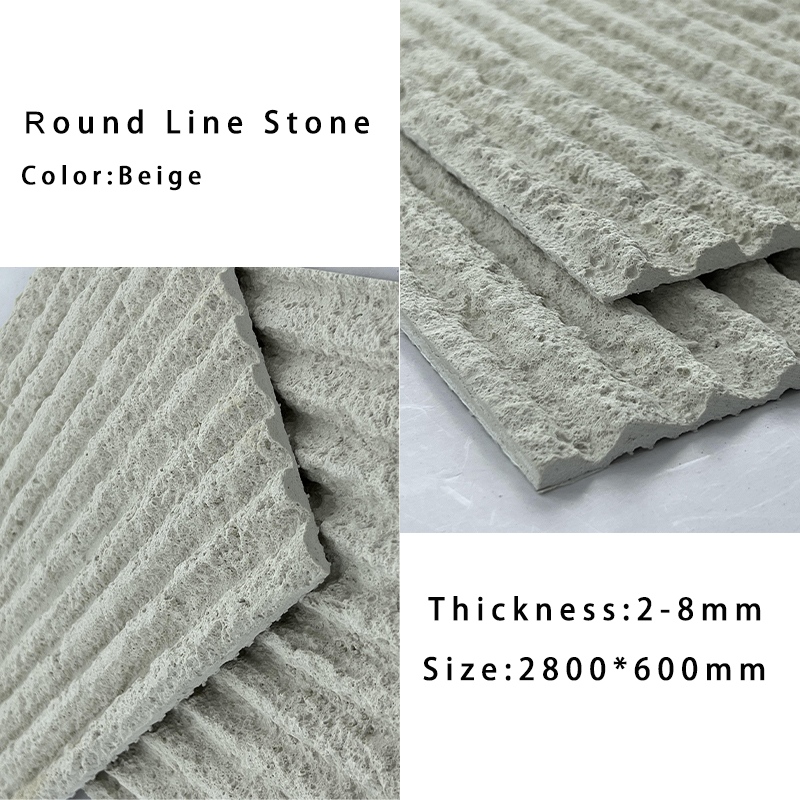
Most people assume a stone feature wall means weeks of dust, heavy lifting, and a specialist on speed dial. These panels flip that idea completely. They arrive ready to hang, with a simple interlocking edge and a lightweight core that won't fight you on the wall. If you can handle a level and a few screws, you've already got the skill set.
No wet mortar, no curing time, no need to rent a tile saw. The cuts are straightforward with basic woodworking tools, and the pieces align with a visible tongue-and-groove system that almost guides your hand. You're not shaping raw rock; you're fitting a finished surface that's already been engineered for a clean, even look.
That's the real installation difference. A weekend, a cordless drill, and a spare pair of hands beat a week of contractor scheduling. The panels take the mystery out of masonry, leaving you with the same rugged texture without the labor bill.
Rooms and Surfaces Where Flexible Stone Panels Outperform Paint and Tile
Bathrooms and laundry rooms punish ordinary wall finishes. Paint peels near steam, tile grout traps mildew, and both demand constant upkeep. Flexible stone panels handle these conditions without complaint—their non-porous surface shrugs off humidity, wipes clean with a damp cloth, and never needs resealing. The result looks like honed limestone or slate, yet it installs over existing drywall or even slightly uneven plaster, cutting out the demo and waterproofing headaches that a tile job would bring.
Curved walls, range hoods, and rounded kitchen islands are where tile logic falls apart—cutting dozens of small pieces to follow a bend is slow and ugly. Paint gives you color but no depth. Flexible stone sheets bend around radii as tight as a few inches, giving a continuous stone look without visible seams. The same advantage applies to wainscoting on stairwells or fireplace surrounds with awkward angles; you get a solid stone aesthetic in places rigid slabs or tiles simply cannot go without heavy fabrication.
For older homes with walls that have shifted or cracked, paint highlights every imperfection and tile eventually pops loose. A flexible stone panel bridges minor cracks and movement, acting like a forgiving skin rather than a brittle shell. It also adds a thin layer of insulation and sound damping that neither paint nor ceramic offers, while weighing far less than real stone. That mix of forgiveness, weight savings, and textured realism makes it the smarter choice for feature walls, mudrooms, and commercial spaces that see daily abuse.
Inside the Factory Process That Keeps Colors and Textures Consistent
On the production floor, color consistency starts long before a single batch is mixed. Technicians pull from a locked library of master standards—small, sealed swatches that have been measured under controlled lighting and stored away from UV exposure. Every incoming pigment lot is checked against these references using a spectrophotometer, and if the delta E value drifts beyond a tight tolerance, the entire shipment is rejected or adjusted before it ever reaches the blending tanks.
Texture gets similar scrutiny, but it's more about feel and flow than numbers on a screen. For a coated fabric, the line operator periodically draws a sample and runs it through a profilometer that tracks surface roughness in microns. That data is compared to a running baseline, and if the peaks start to flatten or sharpen unexpectedly, the line speed or curing temperature is nudged in tiny increments. Newer plants often pair this with a simple tactile check—an experienced hand gliding over the sample, because some inconsistencies only show up as a subtle drag or slickness that a machine might miss.
The real trick, though, is keeping all of this stable across shifts and seasons. Factories that do it well log every adjustment, no matter how small, into a shared system that feeds back into the morning setup. Humidity sensors near the mixing area trigger automated dehumidifiers before the first pour, and older equipment gets recalibrated on a schedule that ignores production pressure. It's not glamorous work, but it's why the tenth thousand unit off the line still matches the first one you approved.
How Thin Stone Composite Handles Moisture, Scratches, and Daily Life
A spilled glass of water on thin stone composite rarely gets a second glance. The surface is engineered to be dense and non-porous, so moisture stays on top instead of soaking into hairline cracks. Even in steam-heavy bathrooms or under a dish rack, the material keeps its shape without warping or developing that cloudy bloom you sometimes see on natural stone.
Keys, rings, and the occasional dropped pan don't leave much of a story here. The composite layer usually includes a tough resin that gives the stone a bit of flex, which means it absorbs impact without chipping. Scratches are superficial for the most part, and because the color runs through the top layer, a light scuff often just blends into the natural variation.
Daily messes come with the territory, but thin stone composite doesn't demand a special cleaner or a weekly sealant. A damp cloth with a drop of dish soap takes care of most spills, including coffee and tomato sauce. It's the kind of surface that gets better at hiding routine wear the longer you live with it—no stress about coasters, no panic over a fork falling off the counter.
Designing Curves and Seamless Corners Without Custom Fabrication Costs
Most shops can pull off tight radii without ever touching a custom die. The trick is to lean on stock flexible profiles and paired radius blocks, then use simple site-made jigs to hold the bend while the adhesive sets. Coil-form trim, kerf-cut sheet goods, and segmented aluminum extrusions all bend predictably enough for production work.
Relief cuts on the back of a rigid panel turn a flat board into a curve-friendly skin. Space the cuts to match the target radius, press the panel onto a curved substrate, and fill the grooves with a flexible adhesive before finishing. For trim, many manufacturers offer profiles with a built-in hinged web that folds around corners without kinking or flattening.
When a corner has an unusual angle, modular radius blocks fill the gap between straight runs. These off-the-shelf pieces keep sight lines clean and avoid the cost of a one-off extrusion run. In most cases, the only custom part is the layout itself—not the material.
FAQ
MCM flexible stone is made from natural mineral powders and pigments bonded to a flexible polymer base, giving it the look and texture of real stone but in a lightweight, bendable sheet. Unlike rigid stone veneer, it can wrap around curves, corners, and uneven surfaces without cracking or needing heavy support.
Most people with basic DIY skills can handle the installation. The panels are lightweight, cut with a standard utility knife, and adhere directly to clean surfaces using a suitable adhesive. For large commercial projects or complex layouts, a professional installer may save time, but it is not a strict requirement.
Yes, they perform well in humid environments as long as the substrate is properly sealed and the edges are finished with a waterproof sealant. The stone surface itself resists moisture absorption, but preventing water from getting behind the panel is key to long-term performance.
You can choose from a wide range of stone textures, including slate, travertine, limestone, and stacked stone patterns. Colors range from soft neutrals to bold charcoal and rust tones. Custom color matching and pattern layouts are often available through the factory for larger orders.
The surface is surprisingly tough for its weight. It resists minor scratches and scuffs from everyday contact, though sharp objects can still leave marks. For high-traffic areas, a clear protective topcoat can be added to improve impact and abrasion resistance without altering the stone appearance.
The pigments used are UV-stable, so significant fading is unlikely under normal interior conditions. Direct, prolonged exposure to strong sunlight may cause very slight changes over many years, but this is far less noticeable than with painted or dyed alternatives.
Regular dusting with a soft cloth or vacuum brush attachment is usually enough. For deeper cleaning, use a mild soap and water solution with a non-abrasive sponge. Avoid harsh chemicals, pressure washers, and stiff brushes, as they can damage the textured surface or edge seals.
Absolutely. That is one of the main advantages of flexible stone. It can bend to follow gentle curves, wrap around columns, and even be applied to barrel ceilings or arched openings. For very tight radii, heating the panel slightly with a heat gun can improve flexibility during installation.
Conclusion
MCM flexible stone gives you the look and touch of natural stone without the worry of cracking or chipping. The panels feel remarkably like real rock because the mineral-based surface is pressed thin but keeps the grain and slight irregularities you expect from quarried stone. You don't have to call in a mason or reinforce your walls; these sheets are light enough to cut with basic tools and hang almost like wallpaper, yet they sit flat and secure once adhered. In living rooms, hallways, bathrooms, or even around fireplaces, they outperform paint and tile by adding depth that flat finishes can't match and by staying warmer to the touch than ceramic.
Inside the factory, each batch is mixed and cured under controlled conditions so the color veining and texture stay consistent from panel to panel, meaning your accent wall won't look patchy. The thin stone composite shrugs off daily life: it won't swell from bathroom steam, it resists scuffs and scratches better than drywall, and a simple wipe keeps it clean. Because the material is flexible, you can wrap it around curved columns or create seamless corner returns without paying a fabricator for custom stonework. That combination of realistic texture, easier handling, and forgiving performance is what turns an ordinary interior into something that feels custom-built.
Contact Us
Contact Person: Vito
Email: [email protected]
Tel/WhatsApp: 86 13088879266
Website: https://www.magicstonemcm.com