
Non-Woven Geotextile Selection: How to Choose the Right Type for Your Project
2026-10-16
Choosing a non-woven geotextile often feels like guessing which hidden layer will quietly make or break your project. Pick wrong, and drainage clogs, soil migrates, or the fabric tears under stress — long before anyone notices. The real question isn’t just about weight or thickness; it’s about matching the fabric’s pore size, permittivity, and strength to the specific job. At JInseed Geosynthetics Solution, we’ve seen too many projects stall because the selection process was treated as an afterthought. This guide cuts through the confusion and gives you a clear, practical framework for choosing the right non-woven geotextile — so your next installation performs exactly as designed.
Read the Site Conditions Before You Even Look at a Spec Sheet
Most equipment failures on paper trace back to a single skipped step: nobody walked the actual site before trusting the datasheet. A spec sheet gives you laboratory numbers, not the way dust settles on a rooftop unit at 4 p.m. or how morning condensation pools near a ground-level intake. Those details change airflow, corrosion rates, and even the way a control panel reads ambient temperature. If you don't stand where the unit will live, you're designing for a generic climate that may not exist.
Start with the physical path. Is there enough clearance to open a service door without leaning over a handrail? Does the prevailing wind push exhaust back toward a fresh-air vent? Check the surface underfoot, the angle of the sun, and what's happening at the property line during normal working hours. These observations rarely appear in a cut sheet, but they determine whether a product runs quietly for a decade or becomes a recurring service call.
Separate True Hydraulic Needs from Generic Permeability Claims
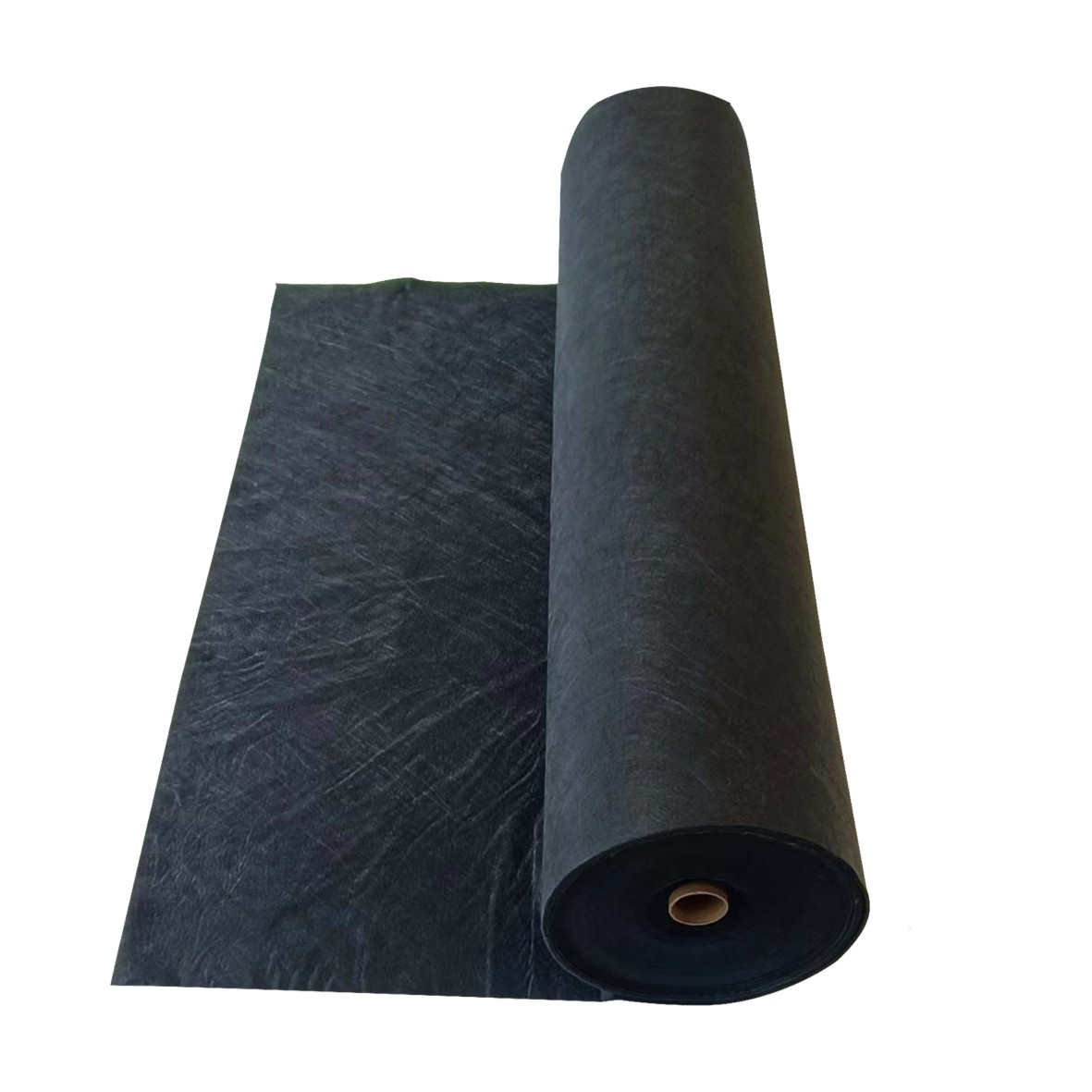
Permeability is often marketed as a catch-all solution, but real hydraulic performance demands a closer look at how water actually behaves under pressure. A material might let water pass through in a lab test yet fail to deliver the flow rates, drainage capacity, or retention balance that a specific site requires. Instead of accepting broad permeability percentages, focus on measurable hydraulic properties like saturated hydraulic conductivity, infiltration rate under compaction, and how the material performs once sediment and organic matter begin to accumulate in its voids.
Designers and engineers frequently inherit generic spec sheets that blur the line between simple porosity and engineered drainage. True hydraulic needs involve matching the system to the expected rainfall intensity, runoff volume, and load-bearing conditions—not just swapping in any permeable product. For example, a pavement that works in a low-traffic walkway may clog or deform under repeated vehicle loads, reducing its effective drainage far below the advertised rate. Separating these needs means asking for third-party test results under simulated field conditions, including long-term infiltration decline curves and maintenance intervals.
The practical distinction comes down to function over form. A permeable surface that cannot handle a 10-year storm without surface ponding is not meeting hydraulic requirements, regardless of its porosity rating. Site-specific calculations should govern material selection, considering subgrade infiltration capacity, groundwater depth, and freeze-thaw cycles where relevant. By treating permeability as a starting point rather than an endpoint, you avoid costly retrofits and ensure the system actually manages water the way the project demands.
Weigh the Cost of Overbuilding Against the Risk of Underbuilding
Overbuilding drains cash and creates idle capacity that quietly decays. A warehouse with twice the needed racking sits half-empty, but its HVAC still cycles, its insurance premium still climbs, and the capital tied up in steel could have covered a year of payroll. Underbuilding has its own price: the moment demand spikes, teams scramble, overtime bills balloon, and customers hear “we’re out of stock” one too many times.
The trick is not to aim for perfect balance, but to know which failure you can recover from faster. Adding floor space later might mean six months of construction and lost sales; adding modular racking later might mean a weekend and a forklift. So the real question isn’t “how much will it cost to build?” but “how much will it cost to catch up if we’re wrong?”
Seasoned operators often build for the middle of the demand band, not the peak. They accept occasional minor congestion because it forces discipline: better inventory turnover, tighter scheduling, fewer hidden inefficiencies. Then they reserve capital for the rare, high-confidence expansion trigger, rather than pre-spending to avoid every hypothetical squeeze.
Ask for Long-Term Durability Proof, Not Just Initial Strength Numbers
When a supplier hands you a spec sheet full of impressive tensile or compressive strength figures, it's tempting to assume the material or product will hold up. But those numbers usually come from short-term tests on fresh samples in controlled conditions. What you really need to ask for is evidence of how the product behaves after years of real-world exposure—UV cycling, freeze-thaw stress, chemical contact, or continuous load. A material can look great on day one and start cracking, fading, or creeping by year three, and that's the gap initial strength data won't reveal.
Push for long-term durability documentation: accelerated aging test results with actual correlation to field performance, warranty claims data, case studies from installations older than five or ten years, and any third-party certifications that cover weathering or fatigue resistance. If a supplier hesitates or only offers "projected" lifespan models without backing data, that's a signal. The best products earn trust through decades of documented service, not through a single impressive number printed on a brochure.
Match the Polymer and Bonding Method to the Chemicals in the Ground
The ground beneath industrial sites often holds a mix of chemicals, each requiring a specific polymer and bonding method. Heavy metals like lead or cadmium typically call for chelating polymers with ionic bonding—these polymers form coordinate covalent bonds with metal ions, turning soluble toxins into stable complexes. Organic contaminants such as solvents or petroleum hydrocarbons, on the other hand, respond better to hydrophobic polymers that rely on van der Waals forces and pi-pi stacking to pull nonpolar molecules out of groundwater.
Chlorinated compounds like TCE or PCE need polymers with nucleophilic functional groups that break carbon-chlorine bonds through substitution reactions, while the polymer matrix supports reductive dechlorination. For mixed contaminant plumes, a dual-bonding approach works best: anionic polymers bind cationic metals through electrostatic attraction, and the same backbone carries hydrophobic side chains to capture organic pollutants at the same time. Matching the polymer's bonding mechanism—ionic, covalent, hydrogen bonding, or hydrophobic—to the chemical's charge, polarity, and reactivity determines how effectively the ground can be treated.
Field results show no single polymer works for every chemical. Perfluorinated compounds resist most conventional bonding and require fluorinated polymers with strong dipole-dipole interactions, while ammonia or nitrates in soil are best handled with ion-exchange polymers that swap charged groups. The key is to identify the dominant chemical species in the ground first, then select a polymer whose functional groups and bonding method align with that chemical's behavior—otherwise, treatment stays superficial and contaminants rebound quickly.
Use Small-Scale Trials to Confirm Performance Before Full-Scale Installation
Skipping straight from a design drawing to a facility-wide rollout often ends with expensive surprises. A better move is to run a limited pilot first, maybe on one production line or in a single building zone. That gives you hard data on how the system behaves under real operating conditions, not just ideal lab settings.
During a small-scale trial, pay attention to the details that matter most: throughput, energy draw, downtime, and how easily your team can handle routine maintenance. Let it run long enough to catch intermittent issues, not just a quick afternoon check. If something doesn’t meet the mark, you can adjust the configuration, swap components, or fine-tune settings before committing serious money.
Only scale up once the pilot results line up with your original performance targets. Keep a written log of what worked and what didn’t, so the full installation starts from a proven baseline rather than guesswork.
FAQ
Focus on survivability first. Check grab tensile strength, tear strength, and puncture resistance against the expected construction loads. A lightweight fabric might fail during aggregate placement even if it looks fine on paper, so compare the spec to the required AASHTO class for your traffic conditions.
Drainage requires a balance of permeability and soil retention, so look at apparent opening size and permittivity rather than just weight. Separation fabrics often need more toughness to survive installation between coarse stone and soft subgrade, while drainage fabrics can be lighter if protected.
Not really. Two fabrics with the same weight can have different fiber types, bonding methods, and strength properties. Needle-punched polyester and polypropylene behave differently under load and in wet conditions, so check the manufacturer's data sheet for grab tensile and CBR puncture values instead of picking by ounces per square yard.
Needle-punched fabrics are thicker and more compressible, which helps with cushioning and drainage. Thermally bonded ones are thinner and more uniform, often preferred for filtration where a consistent pore structure matters. The choice depends on whether you need water flow or mechanical protection more.
For fine-grained cohesive soils, you need a fabric with a smaller apparent opening size to prevent clogging and particle loss. For sandy or gravelly soils, water flow is less restricted, but you may need better puncture resistance because sharp particles can damage the fabric during backfilling.
Use a heavy needle-punched non-woven with high puncture resistance and UV stability if it will be exposed for a while. The fabric's main role is to prevent soil from washing through rock voids, so choose one that can handle the drop height of stone placement without tearing.
Polypropylene is generally more chemical-resistant and lighter, making it a good default for most civil applications. Polyester has better creep resistance under sustained loading, so it may be worth the extra cost in reinforced soil slopes or beneath heavy embankments where long-term deformation matters.
They sometimes pick a thick, heavy fabric thinking it will drain better, but a dense fabric can actually restrict water flow if its permittivity is low. Match the fabric's flow rate to the surrounding soil's permeability and the expected inflow, and make sure the fabric is not over-compressed in the trench.
Conclusion
Choosing a non-woven geotextile starts long before the spec sheet hits the table. Site conditions—soil type, groundwater movement, slope stability, and drainage patterns—set the real performance boundary. A fabric that looks impressive on paper might fail quickly if it cannot handle the actual hydraulic load or if its permeability claim is generic rather than matched to the fines in your soil. Too often, projects overbuild out of fear, adding weight and cost that the site doesn't need; other times, underbuilding leads to clogging, erosion, or premature replacement. The smarter approach is to treat the geotextile as a filtering and separation layer whose pore structure, not just its overall flow rate, must fit the surrounding ground.
Long-term behavior matters more than initial grab strength or puncture resistance. Ask for test results that show how the polymer and bonding method hold up after exposure to the specific chemicals, pH, and microbial conditions on your site—polyester and polypropylene react differently, and needle-punched versus thermally bonded fabrics age differently. Before committing to full-scale installation, run a small trial section under real traffic and weather. That trial will reveal whether water passes through at the needed rate, whether soil particles are retained, and whether the fabric survives installation damage. These practical checks, combined with a clear-eyed look at site conditions and realistic performance data, give you a non-woven geotextile that fits the job rather than one that merely checks a box.
Contact Us
Contact Person: Jerry Qiu
Email: [email protected]
Tel/WhatsApp: +65 84265294
Website: https://www.jinseed-geo.com