

Plate Freezer Solutions for Superior Freezing Efficiency
2026-07-24
Freezing technology has come a long way, but achieving consistent, rapid cooling without sacrificing quality remains a challenge for food processors and cold storage operators. Plate freezers stand out as a game-changer, offering superior freezing efficiency that locks in freshness and reduces operational costs. At Worldbase, we see firsthand how the right plate freezer solution transforms production lines—minimizing dehydration loss and preserving texture like no other method. In this post, we’ll unpack what makes plate freezing uniquely effective and why it might be the upgrade your facility never knew it needed.
Rapid Cooling Through Advanced Contact Freezing
Advanced contact freezing has redefined rapid cooling by introducing direct, uniform heat transfer that outperforms traditional air-blast methods. Unlike systems that rely on cold air circulating around products, this technology employs refrigerant-filled plates or belts that make full contact with the product surface, pulling heat away almost instantly. The result is a significantly shorter freezing time that preserves texture, moisture, and cellular structure—qualities often compromised in slower processes.
A key advantage of this approach lies in its ability to bypass the insulating layer of air that naturally forms around items in conventional freezers. By physically pressing chilled surfaces against food, pharmaceutical, or industrial materials, the heat exchange becomes far more efficient and consistent. This not only boosts throughput but also reduces the formation of large ice crystals, which can rupture cell walls and degrade quality. In practice, that means fresher-tasting foods, more potent biologics, and less waste during production.
What sets modern contact freezing apart is its adaptability across a wide range of product geometries and packaging types. From flat, thin items like burger patties to delicate, irregularly shaped seafood, the technology can be tuned for optimal results without the need for excessive cold retention times. This flexibility, combined with lower energy consumption compared to tunnel or spiral freezers, makes it a compelling choice for manufacturers looking to modernize their cold chain without sacrificing product integrity.
Engineering Freezing Systems for Peak Throughput
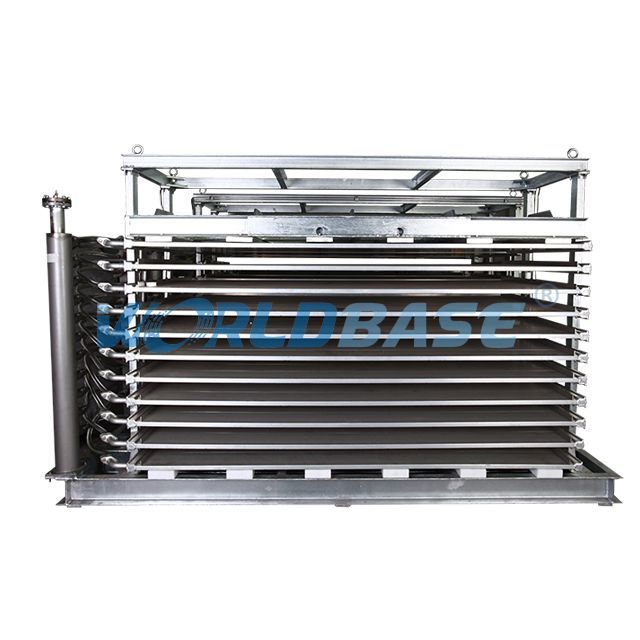
Designing freezing systems for maximum throughput starts with a deep understanding of the product’s thermal properties and the production cycle. Every material has a unique freezing curve, and tailoring the system to match that profile can dramatically reduce dwell time without compromising quality. This means going beyond off-the-shelf configurations to integrate customized air impingement zones, optimized belt speeds, and precise humidity control—all working in concert to pull heat out as quickly as the product can release it.
Component selection and layout directly influence how many units can be processed per hour. High-capacity evaporators paired with variable-speed fans allow the system to maintain consistent temperatures even as loads fluctuate. Strategic placement of baffles and airflow channels ensures that cold air reaches every surface uniformly, eliminating warm spots that would otherwise require longer residence times. The result is a balanced thermal environment where throughput isn’t limited by the slowest-cooling item on the line.
Modern systems push throughput further by embedding smart controls that adapt in real time. Sensors monitoring product core temperature and belt load feed data to algorithms that adjust fan speed, refrigerant flow, and dwell time on the fly. This closed-loop approach prevents over-freezing and energy waste while keeping the line moving at its theoretical maximum. By treating the freezer not as a fixed box but as a dynamic tool, operators can sustain peak rates shift after shift, even when dealing with seasonal variations in product size or composition.
Custom Plate Configurations for Diverse Production Lines
Manufacturing environments rarely follow a one-size-fits-all blueprint. That's why our plate configurations are built to flex—whether you're running a compact desktop line assembling microelectronics or a sprawling automotive floor handling heavy stampings. Each setup is tailored to your specific throughput, material thickness, and footprint requirements, so you never pay for capability you don't need or find yourself short on performance when demand spikes.
Behind every plate specification is a careful study of your workpiece geometry and clamping points. We swap out standard hole patterns for proprietary grids that minimize vibration without over-constraining the part, allowing faster cycle times and cleaner cuts. Need to switch between product variants on the fly? Quick-change bushings and modular sub-plates let operators reconfigure the setup in minutes instead of hours, turning line-change downtime into a competitive advantage.
Durability doesn't have to mean deadweight. By mixing high-strength alloys, we engineer plates that resist warping under thermal swings while staying light enough for robotic handling. From vacuum-chucked ceramics in cleanrooms to oil-hardened steels in forging cells, the materials and finishes are chosen not from a catalog, but from real-world load cases mapped to your production data. The result is a foundation that keeps tolerances tight across shifts, weeks, and product generations.
Reducing Energy Waste Without Compromising Speed
Modern systems often burn through power just to stay ready for peak demand—but that doesn't mean speed has to be the casualty. By aligning resource scaling with actual workload patterns, we can shed wasteful idle consumption without adding latency. The trick lies in dynamic tuning that reacts in real time, not in broad, pre-set rules that overcompensate.
Smart caching and predictive fetch strategies keep data close to the processing layer, so requests aren't forced to travel deeper into the stack unless absolutely necessary. Combined with just-in-time resource allocation, this approach keeps response times crisp while allowing hardware to step down into lower power states during lulls. The outcome feels snappy to users but draws far less from the grid.
Finer-grained telemetry also reveals where microseconds are actually lost, not just where we assume they are. Instead of blindly boosting clock speeds or overprovisioning, targeted optimizations—like trimming bloated serialization steps or adjusting thread pool granularity—trim both latency and energy draw simultaneously. It's about working smarter, not harder, and the results speak for themselves in quieter cooling fans and smaller energy bills.
Maintaining Texture and Freshness in Frozen Goods
Freezing can be a fantastic way to extend the shelf life of your favorite foods, but it's not as simple as tossing everything into the freezer. The key to preserving that just-made taste and texture lies in how you prepare and package items before they hit the cold. For instance, blanching vegetables briefly in boiling water then plunging them into ice water halts enzyme activity that would otherwise lead to mushiness. Fruits benefit from a light coating of sugar or syrup to help retain their structure and natural sweetness. When it comes to meats, wrapping them tightly in moisture-proof materials like freezer paper or heavy-duty foil prevents freezer burn and that dreaded leathery texture upon thawing.
Air is the enemy of frozen food quality, so squeezing out as much as possible from storage bags makes a noticeable difference. For delicate items like berries or sliced peaches, try the tray-freeze method: spread them out on a baking sheet until solid, then transfer to containers. This keeps them from clumping together and lets you grab just a handful without defrosting the whole batch. Another tip that often gets overlooked is to cool cooked dishes completely before freezing. Putting warm food into the freezer raises the temperature around it, causing large ice crystals to form and rupturing cell walls—the main reason soups and sauces can turn watery or grainy later.
Even with all the right techniques, how you thaw matters just as much. Slow, gentle thawing in the refrigerator is almost always best, allowing ice crystals to melt gradually without flooding the food's cellular structure. For breads and pastries, a quick refresh in the oven can restore that crisp crust and fluffy interior, often making them taste oven-fresh again. Don't underestimate the power of labeling either; marking packages with the date and contents helps you use older items first, preventing long-forgotten packages from developing off-flavors. With a little attention to these details, your frozen goods can come out remarkably close to fresh, saving you both time and money while cutting down on waste.
Integrating Smart Controls for Reliable Freezing Cycles
Modern freezing systems demand more than just basic thermostat regulation; they require an intelligent orchestration of sensors, actuators, and adaptive algorithms to maintain precise temperature bands under varying loads. By embedding smart controls, the freezer can continuously monitor internal conditions and compressor performance, adjusting cooling output in real time to prevent the gradual drift that often leads to product spoilage or energy waste. This proactive approach moves beyond simple on/off cycling, instead modulating compressor speed and defrost intervals based on actual demand, ensuring that every freezing cycle completes as intended without unnecessary stress on components.
One of the key differentiators is the ability to learn from historical cycling data. Advanced controllers analyze patterns in door openings, batch loading times, and ambient temperature fluctuations to predict the optimal cooling strategy before a deviation occurs. For instance, when the system detects a scheduled restocking window, it can pre-emptively lower the evaporator temperature to absorb the incoming heat load without compromising the frozen core. This predictive behavior not only stabilizes the freezing cycle but also extends the lifespan of seals and compressors by avoiding abrupt, reactionary starts that cause mechanical fatigue.
Reliability also hinges on transparent diagnostics and remote oversight. Smart controls now feature embedded connectivity that relays performance metrics to facility managers, flagging subtle inefficiencies like a refrigerant micro-leak or a degrading fan bearing long before they cause a full breakdown. Automatic anomaly detection enables targeted maintenance, replacing the guesswork of routine servicing with condition-based interventions. By integrating these layers of intelligence, freezing cycles become not only more stable day-to-day but also fundamentally more resilient against the unpredictable variables of real-world operation.
FAQ
Plate freezers use direct contact with metal plates to extract heat rapidly, minimizing air gaps and ensuring uniform cooling. This cuts freezing time significantly and reduces energy waste compared to blast or immersion systems.
By freezing products faster and at consistent temperatures, our systems prevent large ice crystal formation that damages cell structure. You get better texture, less drip loss, and extended shelf life without preservatives.
They're ideal for seafood, meat, poultry, baked goods, and ready-to-eat meals. Any processor needing quick, block-form freezing for packaging or storage will see immediate gains in throughput and product integrity.
Absolutely. Our adjustable plate spacing and pressure control let you freeze everything from delicate fillets to bulky cartons without crushing. Specialized tray designs accommodate non-uniform items while maintaining full surface contact.
Regular cleaning of plate surfaces, checking hydraulic fluid levels, and inspecting seals take just a few minutes daily. Our modular design allows quick part replacement, so you minimize downtime and keep energy costs predictable.
We combine high-efficiency compressors with smart defrost cycles that only activate when necessary, cutting electricity use by up to 30%. Additionally, faster freezing means you can process more product in the same shift, lowering labor per unit.
Yes, our systems integrate seamlessly with conveyors, robotic loaders, and central monitoring software. Open protocol controls let you track performance remotely, adjust settings on the fly, and receive alerts before issues arise.
We offer horizontal and vertical configurations, custom plate sizes, and multi-station setups. Whether you're retrofitting an old line or designing a new plant, we'll engineer a solution that fits your space and production targets without compromise.
Conclusion
Plate freezers achieve rapid temperature pull‑down by pressing product between refrigerated metal plates, extracting heat exponentially faster than air‑blast methods. This direct contact design not only locks in texture and moisture but also enables processing lines to run at sustained high throughput without sacrificing freezing quality. Engineering teams optimize these systems by precisely configuring plate spacing, hydraulic pressure, and multi‑zone refrigerant circuits to match the exact dimensions and thermal properties of diverse products, from delicate fish fillets to dense meat blocks. The result is a tailor‑made freezing curve that preserves cellular integrity while cutting cycle times significantly.
Beyond speed, modern plate freezing solutions are dialing down operational costs through intelligent energy management. Variable‑speed compressors, sequential defrost scheduling, and heat recovery loops work behind the scenes to minimize power consumption without ever slowing the freeze line. Meanwhile, integrated smart controls continuously monitor core temperature and plate surface conditions, adjusting parameters in real time to prevent freeze‑burn or texture degradation. This data‑driven approach ensures every batch emerges with consistent quality, reduces manual intervention, and turns plate freezers into a dependable backbone for cold chain operations where product uniformity and low lifetime energy use are non‑negotiable.
Contact Us
Contact Person: Mr Yang
Email: [email protected]
Tel/WhatsApp: +8613809083091
Website: https://en.worldbase.cn