

Precision Turned Parts Wholesaler for High-Quality Custom Components
2026-10-10
Custom precision turned parts shouldn't come with guesswork. As a dedicated wholesaler, BOYIKUN turns your exact specifications into repeatable, high-quality components—batch after batch. Here's why manufacturers trust us with their tightest tolerances.
Swiss Turning That Holds a Tolerance Long After the Quote Is Signed
On a Swiss lathe, the tolerance you agree to at quoting doesn't fade once the order is in production. The guide bushing keeps the bar from flexing within a few thousandths of the cutting zone, so diameter, roundness, and surface finish stay predictable from the first part to the ten-thousandth. Thermal growth gets managed through warm-up cycles and coolant temperature control, not by chasing offsets halfway through a shift.
What separates a stable Swiss setup from a typical turned part is how little the process needs to be touched after approval. Tool wear shows up gradually in the control's offset data, and corrections happen in tenths rather than waiting for a bad part to trigger a sort. That means the tolerance band you quoted remains the tolerance band you ship, even when the job stretches across multiple batches.
Shops that hold this kind of repeatability don't rely on a single heroic operator. The machine's rigidity, bar feeder consistency, and chip evacuation all work together so that the only variables left are raw material and ambient temperature. When a returning customer checks the receiving inspection report months later, the histogram still sits within the same limits that were signed off at PPAP.
From Barstock to Boxed Parts: No Extra Hands, No Extra Variation
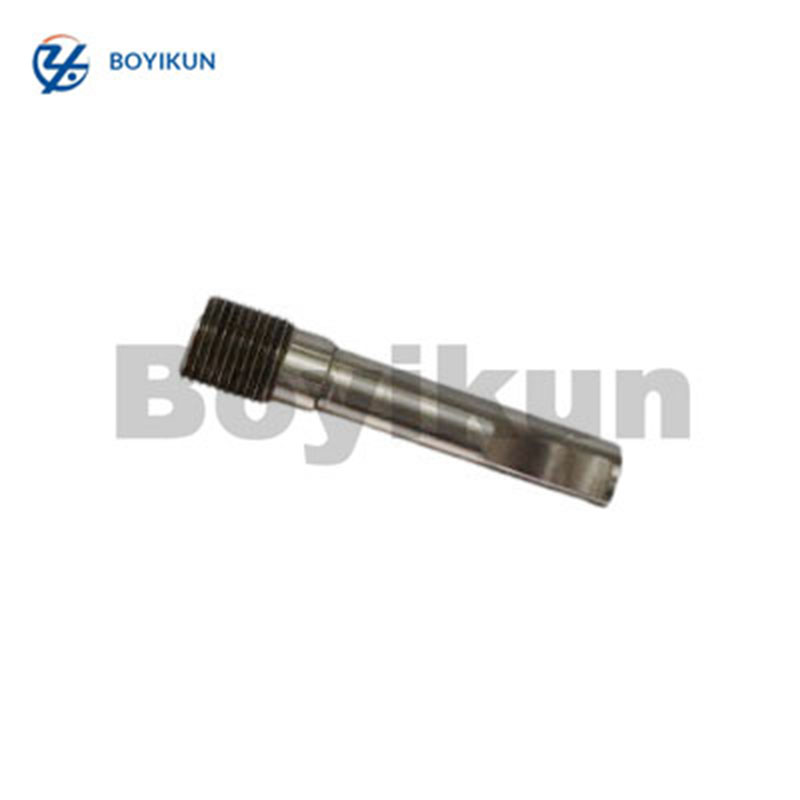
Watch a bar of cold-drawn steel enter the cell and disappear behind guarding. From there, a bar feeder advances material to a turning center that faces, drills, and parts off components without pause. A robot snatches each piece as it drops, moving it through deburring, washing, and a quick dimensional check. Nobody touches the part between raw stock and sealed carton.
The real payoff is not just labor savings—it’s how the process locks in repeatability. Tool wear compensation happens through automatic probing, and any feature drifting toward a control limit sends the part down a reject chute before it can contaminate a batch. Because no operator makes offset tweaks or changes clamping pressure, the parts you box at 2 a.m. match the ones from noon exactly.
At the end, finished components drop into thermoformed trays or foam-lined boxes, a label is applied, and the carton is sealed and stacked on a pallet. Lights off, the line keeps running. What used to take three people and a lot of judgement now happens in the dark, bar after bar, with nothing extra added and nothing left to chance.
Material Certifications That Arrive Before the Parts Do
In a well-run receiving department, the paperwork trail often moves faster than the truck. Certifications for raw materials—mill test reports, certificates of conformance, plating thickness logs—frequently land in the inbox before the physical shipment clears the dock. This isn't an accident. Suppliers that send documentation ahead give quality teams a head start: they can compare alloy chemistry, heat treat curves, and coating specs against the purchase order before a single part goes into inventory.
That early review matters most when the material is heading for a critical application. Instead of discovering a mismatch after parts have been cut or machined, engineers can flag deviations while the shipment is still in transit. It also avoids the awkward position of accepting material under a conditional release just to keep a production line moving. A certification that arrives first lets the receiving team decide whether the parts can be unloaded straight to stock or need to sit in a quarantine cage pending a deeper audit.
There's a practical side too. Incoming inspection backlogs rarely come from measuring parts; they come from chasing missing paperwork. When the certs are already on file, the physical receiving process shrinks to a visual check and a count. That small shift in sequence—paper before parts—removes the most common bottleneck in the supply chain and turns a routine delivery into a release-ready event.
Wholesale Pricing That Doesn't Reset When Your Print Changes
Most suppliers tie your wholesale discount to a specific print file, so even a small artwork update can bump you back to base pricing. That forces an ugly choice: stick with a design that's no longer working or place a huge order just to protect your margin.
Our pricing locks to your account, not to any single print. Change the graphic, adjust the text, swap colors, or roll out a completely new variant—your per-unit cost stays exactly where it was. No re-quoting, no minimum reorder to earn back your tier, and no surprise line items on the invoice.
That stability lets you treat your catalog like a living thing. Test a small batch, gather real customer feedback, tweak the layout, and scale up—all at the same wholesale rate. It's pricing built for iteration, not for punishing you every time your design evolves.
Your CAD File Is the Only Language We Need on the Floor
On our floor, a CAD file isn't a reference—it's the full brief. Every radius, thread callout, and material note lives inside the model, so the machinist never has to guess what the engineer intended. We stopped handing out separate setup sheets and marked-up PDFs because they always drifted from the actual part.
The file also speaks to every step downstream. CNC programming pulls directly from the solid, inspection uses the same geometry for probing routines, and even the deburr station sees the exact edge breaks called out in the model. One file, one interpretation, zero translation losses.
This approach works because we treat the model as a living document. If a revision happens, it happens in CAD first, and the floor sees it the moment it's released. No one has to ask which drawing is current or whether the change made it into production.
Lead Times That Account for Your Assembly Line, Not Just Our Schedule
Most suppliers hand you a fixed lead time from order to shipment, then call it done. That ignores what actually happens on your floor. We look at your line rhythm, shift patterns, and the buffer at each station, then work backward from the moment a part needs to be in someone’s hands—not from the date we happen to finish it.
If your line changes over three times a day, our deliveries are split to match those windows instead of arriving in one large batch that sits in the aisle. When a station’s buffer drops below a half shift, that specific part moves first, even if it means breaking the usual order sequence. The point is to keep your assembly moving, not to protect our shipping schedule.
What you get is a lead time that already has your variability priced in, so your planners aren’t chasing parts or reshuffling jobs at the last minute. We hold the buffer on our side and adjust delivery cadence as your takt changes, not the other way around.
FAQ
Most jobs run at ±0.005 mm without trouble. For tighter specs, we can get down to ±0.002 mm on certain features, but it depends on geometry and material. We'll tell you upfront if something pushes the limits.
Yes. Prototype quantities from a handful of pieces are welcome, and we scale to tens of thousands per month. The process shifts slightly for high volumes, but the quality checks stay the same.
Brass, stainless steel, aluminum, carbon steel, and some engineering plastics. Exotic alloys are possible on request, though lead times may stretch a bit.
A dimensioned drawing or CAD file speeds things up, but we can reverse-engineer from a physical part when needed. Clear photos and basic measurements help us give a faster quote.
Anodizing, passivation, zinc or nickel plating, heat treating, and laser marking. We can also do knurling, threading, and cross-drilling in the same setup.
In-process inspection with micrometers and optical comparators, plus a final inspection report with every shipment. We keep batch samples for two years in case a question comes up later.
Most standard orders ship in 2-3 weeks. Rush jobs can often be done in 5-7 business days if material is in stock. Complex finishes add a few days.
We do. If we see a way to reduce cost or improve manufacturability, we'll suggest it before cutting metal. Small tweaks like adjusting a shoulder radius or thread relief can save a lot.
Conclusion
When you source custom turned components, the real test isn't the initial quote—it's what happens after the order is placed. Our Swiss turning process keeps tight tolerances throughout the entire run, so the parts you receive in week six match the sample from week one. We handle everything from raw barstock to finished, boxed parts under one roof, which means no extra hands touching your components and no added variation creeping into the dimensions. Before a single box leaves the floor, you'll have the material certifications in hand—not as a follow-up email, but as part of the shipment paperwork. And on the engineering side, we don't ask you to translate your design into our terminology. Drop your CAD file, and the floor speaks that language immediately.
Pricing for this level of precision shouldn't feel like a moving target. If your print changes mid-contract—because a tolerance shifts or a feature gets added—our wholesale rates don't reset from scratch. We adjust the quote based on the actual revision, not on the inconvenience. Lead times are built around your assembly line's rhythm, not our machine schedule; if you need a staggered release or a rush on one particular diameter, we plan accordingly. As a wholesaler focused on high-quality custom components, we treat every order as a long-term supply relationship, not a one-time transaction. That means consistent tolerances, honest documentation, and delivery timing that actually supports your production floor.
Contact Us
Contact Person: Xianchen Hu
Email: [email protected]
Tel/WhatsApp: 86-13248645200
Website: https://www.hexnb.com/