

Prefabricated Fence Mold Selection: Smart Tips for Your Next Project
2026-07-08
Choosing the right prefabricated fence mold can make or break your project’s efficiency and final quality. With so many options on the market, it’s easy to overlook critical details that lead to costly delays. At LugongMachinery, we’ve seen how the right mold streamlines production and delivers flawless results. In this guide, you’ll discover smart tips to navigate selection factors, avoid common pitfalls, and set your next project up for success.
Matching Mold to Your Project’s Scale and Scope
Jumping into mold selection without considering the full extent of your project is like picking a vehicle without knowing if you’re hauling furniture or just grabbing coffee. Volume dictates mold material and construction. A few hundred parts might thrive with an aluminum prototype mold, while a production run pushing half a million units demands hardened tool steel with high cycle ratings. Scope matters just as much—if your design evolves rapidly, a modular mold with interchangeable inserts keeps you from scrapping the entire tool. This upfront alignment cuts wasted cycles and hidden costs before they start.
Beyond quantity, factor in the environmental and mechanical demands your mold will face. If parts require exotic materials or high-temperature resins, standard mold frames can warp or degrade, causing dimensional drift over time. We once saw a client push a general-purpose mold well past its thermal limit, and part consistency nosedived within weeks. Matching the mold’s cooling layout, gate placement, and venting to the specific material flow prevents the chronic tweaking that exhausts engineering teams. Treat the mold as a precision instrument tuned to your exact process, not a one-size-fits-all bucket.
Finally, let your forecast tell the truth. If your scope includes future product iterations, invest in standardized bases or family molds that share common cavities. This approach keeps re-tooling costs low when a new variant hits. For low-quantity, high-mix projects, consider scalable soft-tooling paths before committing to hardened steel. The real trick is resisting the instinct to over-buy on upfront durability or under-spec on flexibility—both mistakes stall momentum. When your mold choice mirrors the actual size and shape of your ambition, turnaround stays predictable, and quality stops being a daily surprise.
Material Matters: Picking the Right Mold Composition
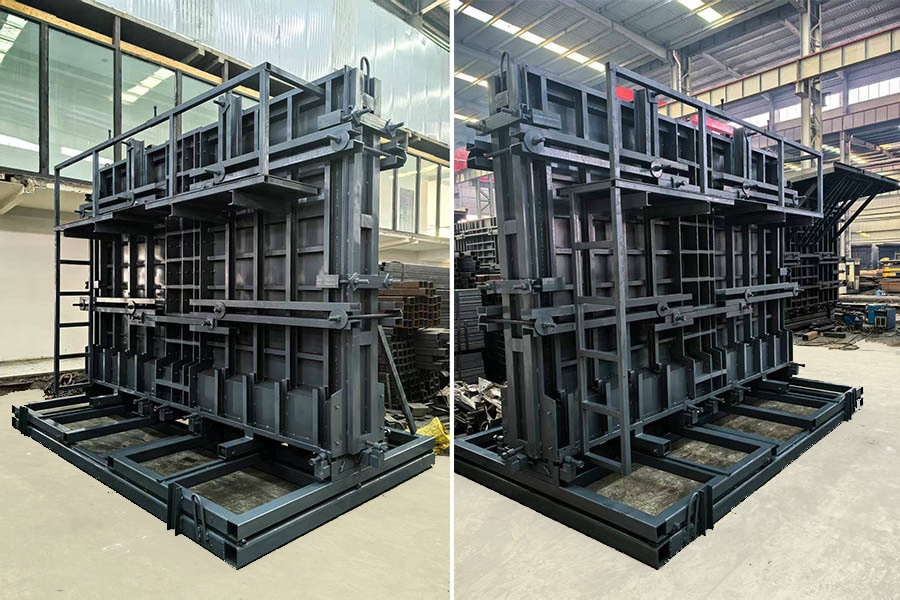
The lifespan of a mold doesn't just hinge on how well it's maintained—it starts with what you make it from. Choosing the wrong material can lead to warping, premature wear, or surface defects that multiply your scrap rate before you've even hit mid-production. It's not something you can fix later with a quick polish or a parameter tweak; it's baked into every cycle.
For low-volume or prototype runs, aluminum might be the obvious choice—it's faster to machine and cheaper upfront, but it won't hold up under high clamping pressures or abrasive materials. When you move into high-volume production, hardened tool steels become the backbone, offering the wear resistance to keep ejector pins sliding smoothly after hundreds of thousands of cycles. And don't overlook niche alloys if you're dealing with corrosive resins or need specific thermal conductivity to control cooling rates.
So how do you decide? It's rarely a one-size-fits-all answer—you have to weigh part complexity, expected production volume, the type of resin you're running, and even how fast you need to cycle. Sometimes spending more on a better mold base material pays for itself in reduced downtime alone. The key is to stop treating the mold as a commodity component and start seeing it as a precision tool that deserves a matching material strategy.
Design Flexibility Without Compromising Strength
Achieving true design flexibility often means navigating a delicate balance between bold, sweeping forms and the structural demands that keep them standing. It’s not about choosing one over the other—it’s about integrating them so seamlessly that the strength feels like a natural extension of the aesthetic. By rethinking material boundaries and exploring advanced fabrication techniques, even the most ambitious curves and cantilevers can be realized without hidden reinforcements or compromised proportions. The result is an architecture that feels both daring and inevitable, where every line serves both beauty and backbone.
This fusion becomes possible when design and engineering speak the same language from the very first sketch. Instead of treating structural support as an afterthought, it becomes part of the visual narrative—expressed in slender profiles, transparent connections, or hybrid composites that do more with less mass. The key lies in a holistic approach: selecting materials not just for their load-bearing capacity but for their ability to bend, taper, or adapt without weakening. When every component is pushed to its precise limit, you gain expansive, light-filled spaces that feel almost weightless, yet are resilient enough to withstand time and the elements.
What sets this approach apart is its quiet confidence. There’s no need to showcase thickness or bulk to signal durability; instead, the strength is inferred from the purity of the form itself. It’s a way of building that rewards curiosity—allowing designers to explore unconventional shapes and unexpected combinations, safe in the knowledge that the underlying system will hold. In the end, flexibility isn’t about adding more options, but about stripping away unnecessary constraints until only the essential, unbreakable core remains.
Budgeting Smart: Cost vs. Long-Term Value
When evaluating any purchase, it’s tempting to fixate on the upfront price tag. But a cheaper option often comes with hidden expenses down the line—frequent repairs, faster replacements, or lower efficiency. Shifting focus from immediate cost to long-term value means weighing durability, performance, and ongoing maintenance against that initial outlay. For instance, a well-made appliance might cost more today but save hundreds in energy bills and repair calls over its lifetime.
Think of it as an investment rather than an expense. A product built with higher-quality materials and thoughtful engineering tends to age gracefully, while a budget alternative can deteriorate quickly, costing you more in the long run. This principle applies everywhere, from software subscriptions that boost productivity to clothing that survives countless washes without fading. By prioritizing what something will do for you over years, not just its sticker price, you align spending with actual value.
Smart budgeting isn’t about always choosing the priciest option; it’s about recognizing when paying more upfront prevents a cycle of repeat purchases. Consider the total cost of ownership: maintenance, consumables, efficiency, and even resale worth. A purchase that still functions flawlessly a decade later often proves cheaper than buying three replacements in the same period. That shift in perspective turns budgeting from a restrictive chore into a strategic habit.
Supplier Vetting: Beyond the Brochure
A glossy brochure can make any factory look like a world-class operation, but you’re not buying a brochure—you’re buying the reality behind it. We’ve learned that the most telling details never make it into the marketing materials: the way a shift supervisor reacts under pressure, the condition of the backup power generator, or whether the QC team actually halts a line when something goes wrong. These aren’t things you can check off a standard audit checklist; they require spending time on the floor, watching how people work when they think no one is looking.
That’s why our vetting process is deliberately unglamorous. We show up early, stay late, and ask the uncomfortable questions that disrupt the polished narrative. We look at maintenance logs, not just production reports. We talk to the night-shift crew, not just the sales team. Real supplier evaluation isn’t about confirming what’s already on the company website—it’s about figuring out if the operation can survive a bad week without cutting corners. And that’s something no brochure will ever show you.
Installation Ease: Prepping for a Smooth Pour
Rolling out the welcome mat for a new concrete surface means giving the ground beneath it some serious attention. Before a single bag is opened or a mixer starts humming, clearing away debris, roots, and soft spots creates a solid foundation that prevents shifting later on. A well-compacted sub-base—typically crushed stone or gravel—levels the playing field, literally, and keeps moisture from pooling where it shouldn’t. It’s the kind of upfront effort that pays off in spades when the pour goes exactly as planned, without any last-minute scrambling.
Formwork might not be the star of the show, but it’s what keeps everything in line once the concrete starts flowing. Straight, sturdy boards anchored firmly into place act like guardrails, defining edges and holding the material exactly where it belongs. Checking for level over and over again might feel excessive, but it’s far easier to adjust a form than to fix a wavy slab. A quick slick of release agent on the inside face guarantees those forms will strip away cleanly, leaving behind crisp, professional-looking edges.
When the big day arrives, having every tool within arm’s reach transforms controlled chaos into a smooth rhythm. Trowels, screeds, floats, and a reliable source of water should all be staged before the truck shows up, because once the pour starts, there’s no pause button to go hunt down a missing float. A simple checklist and a spare pair of gloves turn a hectic job into a series of predictable steps. That calm preparedness doesn’t just make the work faster—it shows up in the final finish, where every trowel stroke lands exactly where it should.
FAQ
A prefab fence mold is engineered for repetitive, high-speed production of entire fence panels, not just individual pickets. It typically includes integrated post and rail forms, precise alignment features, and a smoother interior finish to reduce demolding time, whereas a standard mold might just shape one small component.
It depends on your production volume and budget. Steel molds withstand thousands of cycles and give the best finish, but they are heavy and pricey. Fiberglass is lighter and cheaper, ideal for mid-range runs. Polyurethane molds are great for detailed textures but wear out faster—good for custom jobs.
Absolutely. Look for molds that create interlocking edges or pre-formed joint pockets. Some advanced molds even cast alignment guides directly into the panels, so when you set them up on site, they self-align and lock together without messy adjustments.
Some manufacturers offer modular systems with interchangeable inserts. You can swap out decorative patterns or post caps without buying a whole new mold. This is a huge cost-saver if you offer multiple looks to clients.
Clean it immediately after every use—dried concrete is abrasive. Use a non-metallic scraper to avoid scratching the surface. Apply a quality release agent evenly before each pour, and check bolts and alignment pins weekly for tightness. Store it in a dry, covered area to prevent rust on steel parts.
Check the mold's own flatness tolerance—reputable suppliers provide spec sheets. Look for heavy reinforcing ribs on the backside to prevent flexing during vibration. Also, ask about the base frame construction: welded, ground-level frames hold trueness far longer than bolted ones.
Yes, if you're moving panels frequently. Embedded lifting anchors cast into the panel let you safely hoist and transport without slings damaging edges. This not only prevents breakage but also speeds up installation dramatically.
Ask about the number of cycles guaranteed, availability of spare parts, lead time for custom modifications, and whether they offer training on optimal concrete mix design. A good supplier will also provide a demo video so you can see the mold in action and gauge its ease of use.
Conclusion
Choosing the right prefabricated fence mold starts with truly grasping your project's scale and scope. A small residential boundary doesn't need the heavy-duty steel molds meant for miles of highway sound barriers. Equally crucial is the material of the mold itself—aluminum offers a balance of lightweight handling and durability, while steel excels for high-volume use despite its heft. And don’t box yourself in: the best molds let you play with textures and details, giving you that bespoke stone or wood look without sacrificing an ounce of structural integrity.
Your budget should stretch beyond the purchase price. A cheaper mold that warps after a dozen uses is no bargain. Factor in long-term value, and vet suppliers like a detective—ask for references, inspect sample casts, and see how they handle after-sales support. Finally, a smooth pour is never an accident. Look for designs that simplify assembly and stripping; well-engineered joints and thoughtful interfaces save time on-site, cutting labor costs and sparing you the headache of patching up avoidable imperfections.
Contact Us
Contact Person: Zhang Zhenlai
Email: [email protected]
Tel/WhatsApp: 8618563210000
Website: https://en.lugongmachinery.com/