

Snap Hook Supplier Selection Tips for Durable Outdoor Gear
2026-09-12
You’ve probably seen it happen: a supposedly rugged carabiner or snap hook fails on the trail, and suddenly a trusted piece of gear becomes a liability. The difference almost always comes down to the supplier. When durability is non-negotiable for your outdoor equipment, selecting a snap hook partner isn’t just about price—it’s about engineering, materials, and real-world testing. That’s where Kingming comes in. With a track record in precision hardware for demanding environments, Kingming offers the kind of quality you can stake your brand on. Here’s what to look for when evaluating snap hook suppliers for gear that has to survive everything you throw at it.
What a Snap Hook Supplier's Finish Says About Field Durability
The finish on a snap hook is not just cosmetic—it is the first layer that meets abrasion, salt spray, and repeated loading. A supplier that invests in proper surface prep before plating or coating, such as degreasing, descaling, and micro-etching, produces a finish that bonds tightly to the base metal. This bond is what prevents micro-cracks from forming at the gate or along the wireform, where corrosion typically starts. If the finish is uneven, thin at the edges, or shows pinholes, that is a direct warning that the hook will begin rusting after only a few weeks in the field, even if the load rating looks acceptable on paper.
Beyond corrosion resistance, finish quality also indicates how the supplier handles post-processing stresses. For example, a properly applied zinc-nickel or electroless nickel finish can withstand flexing and impact without flaking, while a cheap decorative chrome layer may look bright on day one but will peel under load, exposing the raw steel underneath. In marine or high-humidity environments, the difference between a mil-spec passivated stainless finish and a thin cosmetic lacquer is the difference between a five-year service life and a one-season failure. When evaluating snap hooks, scratch one sample, bend it, soak it—the finish's behavior under those small abuses tells you more about field durability than any spec sheet.
Ask for Salt Spray Test Results Before You Commit
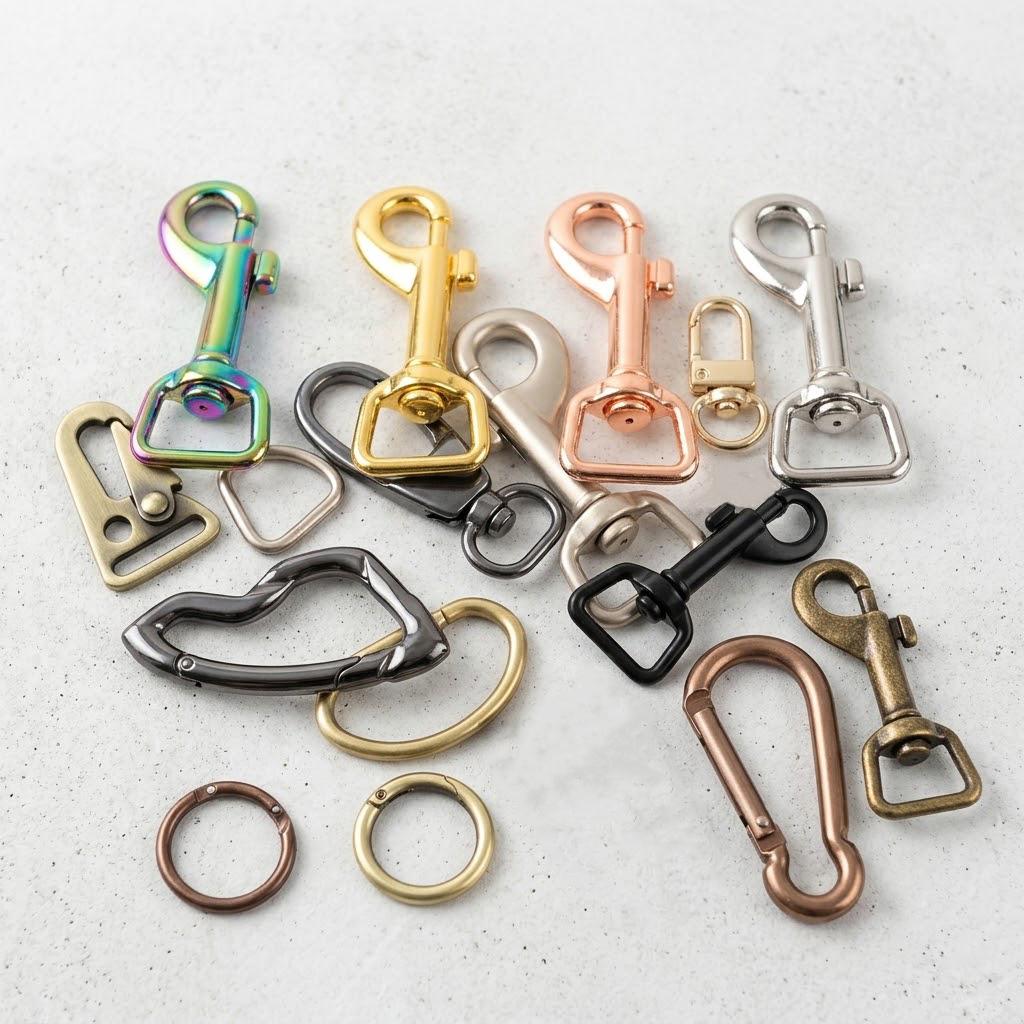
Salt spray testing tells you how a finish will hold up when the real world starts eating at it. A part can look flawless on day one and then turn into a rust-streaked mess after a few weeks near the coast or on winter roads. Before you sign off on a supplier, ask for actual test data, not a verbal promise that the coating is corrosion resistant. Independent lab reports or in-house chamber logs with clear parameters—hours exposed, solution concentration, evaluation criteria—give you something solid to compare across vendors.
The number of hours alone rarely tells the full story. Different base materials, pretreatments, and topcoats all shift how a component behaves under salt fog. One supplier’s 500-hour rating might hide early blistering or creep from a scribe line, while another’s 300-hour result could look cleaner on the same substrate. Ask for photos of the test panels after removal, the specific standard followed, and whether any post-treatment wax or oil was applied before testing. Those details matter more than a bold claim on a datasheet.
Making the request early also filters out shops that do not actually run the tests. If a vendor hesitates, gives vague answers, or sends a certificate that does not match your part geometry, that is a warning sign. You are not just buying coating thickness; you are buying confidence that the product will survive its intended environment. Salt spray data is one of the few ways to get that confidence before the first shipment arrives.
Why the Cheapest Quote Rarely Survives a Season of Scrambling
The cheapest quote looks great on a spreadsheet—until the first deadline slips and you're stuck making phone calls that should have been someone else's job. The 15% you saved up front quietly turns into rework, missed handoffs, and a calendar that keeps sliding right. What seemed like a lean budget becomes a second full-time role: managing a vendor who priced themselves into a corner and now has every incentive to cut corners.
Low bidders survive by trimming exactly the things that matter when a season gets chaotic—buffer capacity, skilled labor, and quality checks. When demand spikes or a supplier misses a date, there's no slack left to absorb the hit. Every fix becomes an emergency purchase order, every delay a chain reaction. The discount you banked at signing gets spent three times over in expedited shipping, overtime, and patching work that should have been done right once.
A quote that's too low usually means someone hasn't done the math on the messy parts. You won't see it in the proposal, but you'll feel it halfway through when materials are late and the crew walks off to a higher-paying job down the road. By then, bargaining for the lowest number has already turned into a liability—and the only thing left to negotiate is who gets blamed for the scramble.
How to Vet a Supplier When You Only Need 500 Pieces
When order volume drops to 500 pieces, many factories treat you like a side project. That's actually useful. Pay attention to how quickly they respond, whether they ask clarifying questions about your tolerances, finish, and packaging, and if they push back where needed. A supplier who just says yes to everything at this quantity is often guessing at what you want.
Don't settle for a price list and a handshake. Ask for two or three references that placed orders in the same range—under 1,000 units—and actually call them. Request a live video walkthrough of the production line mid-run, not just a polished showroom tour. If they refuse because "the line is busy," move on. Small orders are exactly where defects hide, so confirming they run your specific item on the same equipment they'll use for the real order matters more than any certificate.
Finally, get every fee on paper before sampling. Setup charges, plate fees, packing costs, and shipping terms often swallow any margin at 500 pieces. Ask what happens if quality fails inspection on the first batch—will they rework, refund, or ship anyway? A reliable small-batch partner will have answers for that without pausing.
The Load Rating Conversation Most Outdoor Brands Skip
Walk into any gear shop and you'll hear plenty about waterproof ratings, fill power, and denier counts. Yet almost no one brings up the number that actually determines whether your tent collapses in a windstorm or your car rack fails on the highway. Load ratings live in the fine print of spec sheets, quietly ignored until something bends, cracks, or gives way at the worst possible moment.
Part of the problem is that load ratings aren't sexy. They don't photograph well for Instagram, and they require explaining safety factors, dynamic versus static forces, and the difference between a laboratory test and a muddy, off-camber reality. Brands that do mention them often bury the details behind vague terms like "heavy duty" or "expedition proven," leaving you to guess whether that pulk sled can handle a fully loaded winter camp or just a weekend of firewood hauling.
The outdoor industry could learn from climbing and industrial rigging, where breaking strengths and working load limits are debated openly. Until then, your best move is to ask the uncomfortable question: what exactly is this rated for, and what happens when I exceed it by ten percent in the backcountry? If the answer comes back as marketing fluff instead of a number, you already know how much trust to place in that piece of gear.
Spotting a Supplier That Understands Alpine Conditions, Not Just Spec Sheets
Anyone can rattle off pressure ratings and temperature ranges from a catalog. What actually matters is whether the supplier has spent real time in snow-loaded terrain, where cold snaps don't follow datasheets and wind chill changes everything. A partner who knows alpine conditions will ask about your exact exposure, altitude band, and freeze-thaw cycles before quoting a single number. They won't hand you a generic solution and call it rugged.
Look for suppliers who talk about pack density, riming, and the difference between dry cold and wet cold. Those aren't engineering jargon for the sake of it; they're daily realities above treeline. A team that has dealt with sensor icing, brittle seals at minus thirty, and UV degradation at high elevation will steer you toward materials and designs that survive a full season—not just a lab test. That practical judgment only comes from boots on the ground, not from a clean spec sheet.
Ask them about their own field failures. A supplier worth working with will admit what broke, where, and why—then show you the fix. That kind of honesty is worth more than a hundred certifications. Alpine conditions are unforgiving, and you need a partner who respects that, not one who hides behind nominal values and hopes for the best.
FAQ
Ask for the actual alloy composition and heat treatment records, not just a generic "stainless steel" label. Outdoor gear sees salt spray, grit, and sudden loads, so the hook needs a material spec that matches those conditions.
Request accelerated weathering and thermal cycling test reports. A trustworthy supplier will have data on embrittlement at low temps and polymer or coating degradation after prolonged UV, rather than just claiming all-weather performance.
Yes, look for finishes that resist abrasion and corrosion without flaking. Hard anodizing, electroless nickel, or high-quality powder coating tend to fare better than thin decorative plating when the gear is bounced around rocks and carabiners.
Don't settle for a single breaking strength number. Ask for the minimum breaking strength under worst-case gate-open and side-load conditions, and verify the supplier uses at least a 4:1 safety factor for critical load paths.
It's often the first point of failure. Look for a gate that self-closes cleanly after repeated cycles, has a snag-resistant shape, and doesn't rely on tiny springs that can rust or lose tension after a few months in the field.
Both are worth it. Ask for pre-production samples from the actual production line, and if possible, tour the facility to see how they control tolerances, surface finish, and hardness. A supplier that hesitates on either is usually hiding process gaps.
Vague material certificates, inconsistent batch-to-batch dimensions, poor communication about test failures, or an inability to trace raw material back to the mill. These issues tend to get worse once you scale up.
Conclusion
When evaluating snap hooks for outdoor gear, the finish often reveals more than any catalog photo. A supplier that uses a dull, matte zinc-nickel coating rather than a shiny decorative chrome is already signaling an understanding of abrasion and corrosion in wet, gritty environments. Ask for salt spray test data—not just a certificate, but the actual hours to red rust. Many brands skip this and later find their quick links seizing after a single shoulder season. And while a rock-bottom quote can tempt a lean production run, the hooks that survive scrambling, hauling, and repeated gate cycles are rarely the cheapest. Pay attention to whether the supplier talks about edge retention on the gate notch or how the plating holds up under load, because those details cost money and show up only after months on the mountain.
Small-batch sourcing carries its own pitfalls, but a decent supplier will not treat a 500-piece order as an annoyance. Instead, they will walk you through their existing tooling options and maybe suggest a minor modification rather than demanding new molds. The real test is the load rating conversation: if a supplier cannot explain the difference between a static rating and a dynamic fall factor, keep looking. You want someone who asks where the snap hook will live—on a chest harness, a daisy chain, a backpack sternum strap—and whether it will face freeze-thaw cycles or salt from coastal crags. A supplier who references alpine conditions, not just spec sheets, understands that a snap hook is not a commodity. It is a small piece of safety equipment that your customers trust with their bodies.
Contact Us
Contact Person: Jamie Zeng
Email: [email protected]
Tel/WhatsApp: +86 13728219269
Website: https://www.kmhardware.com