

Stainless Steel Hex Nuts Factory: Inside the Precision Manufacturing Process
2026-10-26
Have you ever stopped to think about the stainless steel hex nut—the unsung fastener holding our world together? Inside a precision factory, these small components undergo a demanding transformation from raw steel to a perfectly formed, corrosion-resistant thread. At Wanluo, we obsess over every micron, combining cold forging, automated threading, and rigorous quality checks to deliver unmatched reliability. In this post, we pull back the curtain on the entire manufacturing process, revealing how we make sure each hex nut can handle whatever you throw at it. Ready to see precision in action?
Steel Certification Comes Before Any Machine Starts
"Steel Certification Comes Before Any Machine Starts" is literal on many shop floors. A new coil or plate doesn't move from receiving to the saw until its mill test report has been checked against the order. The operator isn't just looking for a stamp; they're confirming the heat number, chemical composition, and mechanical values match what the part actually needs. If the paperwork isn't right, the material stays on the truck or in a hold area.
This step often feels like a delay, but it prevents a worse one later. A beam that passes visual inspection can still fail in service because its yield strength is below what the drawing assumed. By requiring certification up front, a shop rules out the risk of machining, welding, or assembling the wrong grade. Once the machine starts, there's no easy way to undo a cut made in unverified steel.
Traceability is the second payoff. When a structure or component is audited months or years later, the certificate links that physical piece back to a specific heat and a specific set of test results. That chain of evidence is something a visual check or a magnet can't provide. So the rule sticks: certification clears the material before the first spindle turns.
Cold Forming Hex Blanks Under 200 Tons of Pressure
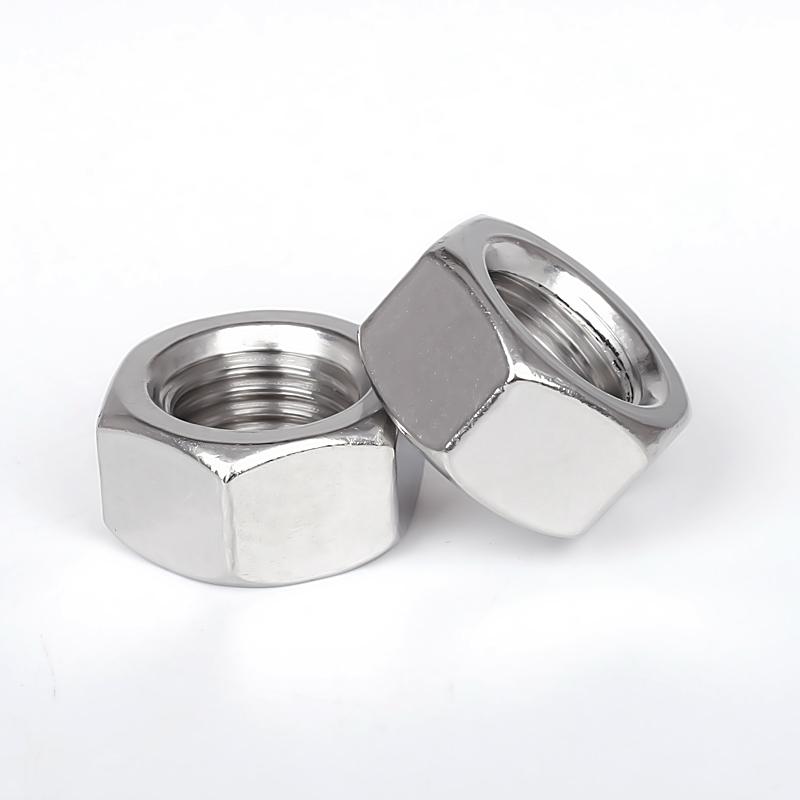
Shoving a slug of steel into a closed die at 200 tons doesn't sound subtle, but that's exactly what cold forming hex blanks requires. The ram doesn't crush the metal so much as make it flow—into six sharp corners, around the punch, and back up the shank if needed. At that pressure, even medium-carbon alloys behave like thick putty, filling every crevice of the tool before the press backs off. What comes out isn't a rough forging but a near-net hex shape with crisp flats and a uniform wall thickness you'd struggle to match by machining.
The 200-ton figure isn't arbitrary. It sits in a range where the die set can handle common hex sizes—say, 10 mm to 27 mm across flats—without excessive deflection or premature wear. Lower tonnage might leave the corners underfilled or force you to anneal the wire first. Higher tonnage adds cost and stresses the tooling for no real dimensional gain. Toolmakers compensate by using shrink-fitted inserts and tight punch guidance, so the pressure goes into deforming the blank, not springing the press frame.
The payoff shows up downstream. Because the hex is formed in one or two blows, thread rolling or tapping starts from a blank that's already concentric and sized within a few thousandths. Scrap drops compared to turning hex bar stock, and the cold-worked surface gives fasteners a bit more fatigue resistance. For high-volume runs of bolts, studs, or standoffs, 200 tons turns out to be a sweet spot—enough force to move metal predictably without turning the operation into a forging plant.
Thread Rolling vs. Cutting: Why Fatigue Life Hangs in the Balance
Fatigue failures in threaded fasteners rarely start deep inside the material. They begin at the root of the thread, where surface imperfections, micro-cracks, and stress concentrations converge. A cut thread leaves behind torn grain structure and sharp valleys—each one a potential crack initiation site. The machining process also tends to introduce tensile residual stress along the flanks and roots, which actively assists crack opening under cyclic loading.
Rolled threads, by contrast, displace metal rather than removing it. The grain flow follows the contour of the thread profile, keeping fibers intact instead of severed. This plastic deformation also creates a beneficial compressive residual stress layer at the surface, particularly in the thread root. Under service loads, that compressive layer must be overcome before a crack can start and grow. The result is a measurable jump in fatigue endurance, often 20 to 40 percent over the same thread size produced by cutting.
There are trade-offs. Rolling calls for ductile workpiece materials and is not always practical for very large diameters, hard alloys, or thin-walled parts. Cutting remains the better choice when thread geometry or material condition rules out deformation. But in applications where cyclic stress dominates—engine fasteners, suspension components, high-pressure fittings—the fatigue balance tips strongly toward rolled profiles. The difference is not cosmetic; it is the margin between early crack nucleation and years of service.
Passivation and the Chromium Oxide Layer That Fights Corrosion
Passivation sounds like a deliberate treatment, but for stainless steel it often happens on its own. The moment a freshly cut surface meets air, chromium atoms near the surface react with oxygen to form a transparent oxide film only a few nanometers thick. This layer is not a coating applied from outside; it is the metal itself, rearranged at the atomic level to become chemically inert. What makes it remarkable is that if the surface is scratched or machined, the layer reforms almost instantly in the presence of oxygen. That self-healing behavior is what separates stainless steel from ordinary carbon steel, which simply rusts when its protective paint or plating fails.
The key player is chromium, typically present at 10.5% or more by weight. Below that threshold, the oxide layer forms too sparsely to block the underlying iron from reacting with moisture and salts. But when chromium is present in sufficient quantity, the oxide film becomes dense and tightly adherent, preventing oxygen and water from reaching the reactive iron beneath. This is why stainless steel can sit in a damp kitchen or a marine environment without developing the familiar red-brown rust. The passive layer is not invincible, though. Chloride ions, found in seawater and even in some tap water, can puncture it locally, leading to pitting corrosion. That is why molybdenum is often added to the alloy for chloride-rich settings, helping the film resist breakdown.
In industrial practice, passivation is sometimes performed as a controlled chemical bath, using citric or nitric acid to remove free iron from the surface and encourage a uniform oxide layer to form. But even without this step, the chromium oxide layer builds itself whenever stainless steel is exposed to air. The distinction matters: passivation is not a one-time event but an ongoing equilibrium between the metal and its environment. A polished stainless steel railing outdoors may look unchanged for decades, yet at the microscopic level its surface is constantly losing and regaining oxide molecules. Understanding that dynamic, rather than treating the material as permanently sealed, is what allows engineers to choose the right grade for each application—and why stainless steel remains a workhorse where corrosion resistance is non-negotiable.
Optical Sorters and Hand Gauges: The Tolerance Gauntlet
Optical sorters sweep parts in seconds, flagging surface defects, dimensional drift, and mixed alloys before a human ever touches them. Their cameras and lasers work best on obvious rejects: a missed thread, a gouge, a length that falls outside the programmed window.
But the sorters are not the final word. Hand gauges—pin, snap, bore, thread—get brought in for the borderline cases, where a few microns separate a pass from a scrap. A pin that slides through one hole and hangs in another tells the operator something no pixel map can; the resistance, the wiggle, the slight lean all become data. This tactile check catches parts that look fine to a sensor but fail under real assembly conditions.
Run every part through both, and you get a tolerance gauntlet rather than a single inspection gate. The sorter thins the herd, and the hand gauge interrogates what remains. It is slower, yes, but it catches the drift that leads to returned batches and line stoppages.
Packaging by Application, Not Just by Size
Grouping packages by physical dimensions used to be the default, but it misses what actually matters: how the product is used, stored, and handled after the box is opened. A 200-gram pouch of coffee and a 200-gram pouch of desiccant have nearly identical measurements, yet one needs aroma protection and a resealable zip, while the other needs moisture-sealing and clear hazard labeling. Treating them as the same category only leads to overwrapped goods, higher material waste, and packaging that feels generic on the shelf.
When the starting point is a real application—like single-serve condiments for food delivery, sterile kits for clinical settings, or modular inserts for consumer electronics—the structural choices become obvious. Barrier layers, tear notches, dispensing mechanisms, and compliance symbols are selected because the use case demands them, not because a size chart suggests them. This shift also forces teams to ask better questions early: Will this be opened with one hand? Does it need to survive a drop at -20°C? Is the packaging part of the ritual or just a container? The result is less guesswork, fewer late-stage redesigns, and packaging that feels intentional to the person using it.
FAQ
Most production runs start with austenitic grades like 304 or 316 stainless steel wire or bar stock. The choice depends on corrosion resistance needs; 316 with molybdenum is preferred for marine or chemical environments. Some facilities also stock 410 or 416 for applications requiring higher hardness after heat treatment.
Cold forging uses a series of dies that strike a wire segment at room temperature, forcing metal to flow into a hexagonal outline and forming the central hole. This work-hardens the steel and preserves the grain flow, resulting in a stronger nut than one machined from solid bar. Multi-station headers can produce several thousand pieces per hour with minimal waste.
Thread tapping cuts or forms internal threads to exact pitch and class fit, often 6H for metric or 2B for inch sizes. Modern factories use high-speed tapping machines with automatic lubrication and tool-wear monitoring. Some switch to thread forming taps that displace metal rather than cut it, which yields smoother flanks and better fatigue resistance.
Passivation removes free iron and surface contaminants from machining or handling, allowing the chromium in the stainless steel to form a uniform, protective oxide layer. Without this step, microscopic iron particles can rust and create localized corrosion, undermining the stainless properties. The process usually involves citric or nitric acid baths followed by rinsing and drying.
Factories use automated optical sorters to check hex width, thickness, and thread presence at high speed. Sample batches undergo tensile testing, proof load testing, and hardness checks such as Rockwell or Vickers. Thread plug gauges verify fit, while salt spray tests may be used to confirm corrosion resistance for certain specifications like ISO 3506 or ASTM F594.
Each heat of raw material receives a unique code that follows the batch through forging, tapping, and finishing. Production records include machine parameters, operator sign-offs, and test results. Many facilities use laser marking on packaging or actual parts for small runs. This allows quick recall or root-cause analysis if a customer reports a field failure.
These nuts are used in food processing equipment, marine hardware, chemical plants, medical devices, and architectural fastening. Anywhere that exposure to moisture, cleaning agents, or salt demands corrosion resistance without sacrificing strength. Precision tolerances matter in assemblies with vibration or load cycling, such as pumps, valves, and structural connectors.
Many precision facilities keep a library of less common stainless grades like 303, 316L, or duplex, and can set up dedicated tooling for non-standard hex sizes or thread pitches. For low volumes, they may use CNC turning centers to machine nuts from bar rather than invest in a full cold heading line. Lead times are usually quoted after reviewing the drawing and required compliance standards.
Conclusion
Before any machine starts, the raw stainless steel arrives with full certification tracing its chemistry and mechanical properties. That paperwork matters more than most outsiders realize—if the alloy isn't exactly right, everything downstream fails. Once cleared, coils or bars move to cold forming presses that smash hex blanks under roughly 200 tons of pressure. The metal doesn't get cut; it flows into the hex shape while work-hardening slightly. Then comes the thread. A lot of shops still cut threads, but the better ones roll them. Rolled threads displace metal rather than severing it, leaving a denser, smoother surface that resists fatigue cracking far longer—a critical edge in vibration-heavy assemblies.
After forming, the nuts aren't just cleaned; they're passivated. That chemical bath strips free iron from the surface and helps a thin, invisible chromium oxide layer rebuild itself. That layer is what actually fights corrosion, not some added coating. Quality control gets brutal. Optical sorters scan every single nut at high speed, kicking out anything with the wrong dimensions or surface flaws, while hand gauges double-check critical tolerances on samples. Finally, packaging follows application logic rather than just size. Nuts destined for food processing get sealed in cleanroom-grade bags, marine-grade lots go into corrosion-inhibiting wraps, and standard construction stock gets bulk boxes. The same hex nut might leave the factory in three different packages, each matched to how it will actually be used.
Contact Us
Contact Person: Shane
Email: [email protected]
Tel/WhatsApp: 8613357785029
Website: https://www.wanluohardware.com