

Top 10 Phenylacetonitrile Intermediates Essential for Chemical Synthesis
2026-08-05
Phenylacetonitrile intermediates are the unsung heroes of modern chemical synthesis, quietly powering breakthroughs in pharmaceuticals, agrochemicals, and fine chemicals. But with dozens of derivatives available, which ones truly deserve a spot in your lab? In this post, we cut through the noise to reveal the top 10 phenylacetonitrile intermediates that no synthetic chemist should overlook. Whether you're optimizing a route or scaling up production, these building blocks deliver unmatched versatility and efficiency. At DSL Chemicals, we’ve seen firsthand how the right choice can transform a synthesis—and we’re here to share that insight.
Building Blocks That Shape Modern Pharmaceuticals
Every pill, injection, or infusion starts with a foundation of precise chemical structures. These molecular frameworks are not random—they are carefully selected fragments that determine how a drug behaves in the body. From simple aromatic rings to complex heterocycles, each piece influences solubility, stability, and the ability to reach its target. Medicinal chemists treat them like a toolkit, assembling and modifying these fragments to fine-tune potency and reduce side effects.
Beyond the lab, the choice of building blocks ripples through manufacturing and cost. Some scaffolds are easy to produce on a massive scale, while others require elaborate multi‑step synthesis that can limit supply. This practical side often dictates whether a promising compound becomes a widely available medicine or remains a footnote in research papers. Innovators constantly seek out new, sustainable ways to craft these cores, pushing the boundaries of what is chemically possible without sacrificing safety.
From Benzyl Cyanide to High-Value Molecules
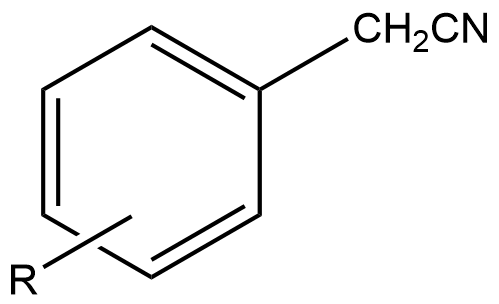
Benzyl cyanide might look like just another colorless liquid in the lab, but its real value lies in the reactive nitrile group attached to a benzyl position. This dual functionality makes it a springboard for synthesizing everything from pharmaceutical intermediates to specialty fragrances. Unlike simpler nitriles, the adjacent aromatic ring stabilizes transition states and opens up pathways you just don’t get with aliphatic counterparts.
Take the synthesis of phenylacetic acid derivatives—a classic use case. Through controlled hydrolysis or enzymatic transformation, benzyl cyanide converts cleanly into compounds that later become NSAIDs or advanced polymer additives. The trick is managing the reaction conditions so you avoid over-hydrolysis or unwanted side products, something that becomes second nature once you’ve worked with this substrate a few times.
What often gets overlooked is how benzyl cyanide behaves in reduction cascades. Selective hydrogenation can deliver β-phenethylamines—a core motif in CNS drug discovery—without the need for protecting groups. It’s this blend of predictable reactivity and surprising synthetic elasticity that keeps benzyl cyanide relevant in routes aiming at high-value targets, even as newer methods emerge.
Critical Pathways in Agrochemical Development
Bringing a new agrochemical to market hinges on a series of interconnected steps, each demanding a blend of scientific precision and practical insight. Early-stage discovery rarely follows a straight line—instead, it draws from diverse sources like natural product libraries, fragment-based screens, and serendipitous observations in field trials. The real art lies in discerning which leads are worth pursuing, balancing potency against considerations such as environmental persistence and non-target organism safety long before regulatory dossiers are even drafted.
Once a promising candidate emerges, the focus shifts toward understanding its behavior under real-world conditions. Metabolic fate studies in plants, soil dissipation rates, and hydrolysis profiles all come under intense scrutiny. Too often, compounds that shine in controlled assays falter when confronted with UV exposure, microbial activity, or variability in rain patterns. Formulation chemists then step in, tweaking adjuvants and delivery systems not just for efficacy but to minimize drift and off-target movement. This phase is less about ticking boxes and more about building a reliable performance portrait through countless small-scale plot tests across varied climates.
The final stretch weaves together toxicological evaluations and environmental risk assessments into a coherent narrative for registration. It’s not simply amassing data; it’s interpreting what a decade of studies means for a farmer’s field and a local watershed. Dossiers grow organically, shaped by constant dialogue with regulatory reviewers and an awareness that public perception matters as much as legal compliance. A successful pathway respects this complexity, knowing that innovation in agriculture must earn its place through demonstrated stewardship, not just novel chemistry.
The Role of Nitrile-Containing Synthons in Fine Chemicals
Nitrile groups pack a surprising amount of synthetic leverage into a compact, polarized unit. When embedded in a synthon, the cyano functionality serves as a masked carbonyl, a latent amine, or a versatile handle for heterocycle construction. In fine chemical synthesis, where structural complexity often collides with tight purity and yield requirements, these building blocks offer a reliable way to introduce nitrogen or extend carbon frameworks without cumbersome protecting-group maneuvers. Their electron-withdrawing nature also activates adjacent positions, enabling regioselective alkylations and condensations that would otherwise require aggressive conditions.
The real strength of nitrile-containing intermediates becomes evident in pharmaceutical and agrochemical campaigns. Consider the synthesis of certain calcium channel blockers, where a benzonitrile derivative undergoes selective hydrolysis to an amide, then further elaboration to the active moiety — all without isolating sensitive intermediates. Or in the creation of pyrethroid insecticides, where aliphatic nitriles participate in stereoselective cyclopropanation reactions. These transformations capitalize on the nitrile's ability to stabilize adjacent carbanions while resisting premature reduction or elimination, making them indispensable for constructing quaternary centers and strained rings.
Beyond classic reactivity, modern nitrile synthons have adapted to meet sustainability demands. Biocatalytic processes now convert nitriles under mild aqueous conditions, offering enzymatic routes to amides and acids that supplant stoichiometric heavy-metal reagents. Yet the enduring appeal lies in their chemical economy — a single functional group that can morph into acids, esters, amines, or tetrazoles depending on the downstream sequence. For the fine chemical practitioner, stocking a shelf of diversified nitrile building blocks means having a Swiss Army knife of reactivity ready to unlock complex architectures efficiently.
Enhancing Reactivity with Functionalized Aromatic Acetonitriles
The nitrile group in aromatic acetonitriles, while intrinsically electron-withdrawing, can become surprisingly inert without proper electronic or steric tuning. Attaching electron-donating substituents—such as methoxy or amino groups—at the para position of the phenyl ring significantly alters the polarization of the C≡N bond, making the α-carbon more nucleophilic. This subtle shift enables easier deprotonation and accelerates alkylation or acylation reactions that would otherwise require harsh conditions. In practice, even a single methoxy group can lower the pKa of the adjacent methylene protons enough to permit smooth enolate formation with mild bases like potassium carbonate.
Beyond simple electronic effects, the introduction of ortho-substituents creates a confined steric environment that can amplify reactivity in unexpected ways. Bulky groups like tert-butyl or isopropyl restrict rotational freedom around the aryl–CH2 bond, pre-organizing the molecule for attack on electrophiles. More importantly, ortho-directing functionalities such as imines or oxazolines can temporarily coordinate metal catalysts, facilitating directed C–H activation right at the benzylic position. This dual role—simultaneously blocking undesired pathways while steering the metal center—opens up direct coupling reactions that avoid pre-functionalization of the aromatic ring.
Perhaps the most dramatic rate enhancements come from transforming the nitrile itself into a more electrophilic species. Converting –CH2CN into an α-cyano ester or amide introduces a second electron-withdrawing group that dramatically acidifies the α-proton, allowing deprotonation with mild amine bases at low temperatures. Alternatively, pre-coordination of the nitrile nitrogen to a Lewis acid like BF3·Et2O temporarily withdraws electron density into the aromatic system, making the α-carbon susceptible to nucleophilic attack in a manner reminiscent of umpolung chemistry. Such strategies have proven invaluable in constructing quaternary centers without competing elimination, delivering products that were once considered too strained to access through conventional cyanoalkylation methods.
Emerging Uses in Specialty Polymers and Resins
Medical technology is quietly reshaping the demand for specialty polymers. Beyond familiar devices, custom-formulated resins now enable biodegradable stents that dissolve once blood vessels heal, eliminating secondary surgeries. Polymers with shape-memory properties guide catheters through tortuous pathways, while pH-sensitive coatings release drugs precisely at target sites. This shift toward resorbable and responsive materials is redesigning patient care from the inside out, pushing polymers into roles where they actively participate in healing rather than merely serving as inert structures.
Aerospace and electronics manufacturers are leaning on high-performance polymers to solve problems that metals can’t. Lightweight polyimides withstand extreme temperatures inside jet engines, reducing fuel consumption without sacrificing durability. Meanwhile, liquid-crystal polymer films provide ultrathin, moisture-resistant barriers for flexible circuits, enabling foldable consumer devices. These applications thrive not on generic material properties but on tailored formulations—doping with conductive fillers, adjusting dielectric constants—allowing engineers to sidestep traditional material constraints in compact, high-stress environments.
Sustainability pressures are drawing fresh attention to bio-based and chemically recyclable resins. Rather than simply mimicking petroleum counterparts, new plant-derived polyesters offer tunable degradation profiles for agricultural films that disappear after the harvest season. Epoxy resins formulated with dynamic covalent bonds can be depolymerized and rebuilt into virgin-quality products, challenging the take-make-discard model. These approaches move beyond incremental green tweaks, embedding circularity directly into polymer architecture at the molecular level.
FAQ
Phenylacetonitrile is an aromatic nitrile with a benzyl cyanide structure. Its nitrile group is versatile for transformations into amines, carboxylic acids, and heterocycles, while the benzyl position offers a reactive site for alkylations and condensations. This combination makes it a go-to intermediate in both academic and industrial settings.
Phenylacetic acid, obtained by hydrolysis of phenylacetonitrile, is arguably the most common derivative. It serves as a precursor to penicillin G and many other beta-lactam antibiotics, as well as analgesics and cardiovascular drugs.
Sure. Beyond phenylacetonitrile itself, you have substituted variants like 4-methoxyphenylacetonitrile and 3,4-dimethoxyphenylacetonitrile, which appear in dopamine receptor ligands and antihypertensive agents. Then there’s homophthalonitrile, used in dyes and pigments, and diphenylacetonitrile, which pops up in antispasmodic and antiarrhythmic drugs.
The activated methylene group in phenylacetonitrile readily undergoes cyclizations. For instance, reaction with hydrazines yields pyrazoles, with amidines it gives pyrimidines, and with salicylaldehydes it forms coumarins. These heterocycles are core structures in countless bioactive molecules.
They’re essential for synthesizing pyrethroid insecticides like fenvalerate and cypermethrin. Here, phenylacetonitrile provides the 3-phenoxybenzyl moiety after conversion to the corresponding alcohol or acid. This fragment is key for insecticidal activity and selective toxicity.
Phenylacetonitrile is toxic by inhalation and skin absorption, and it can release cyanide ions under certain conditions. Always work in a fume hood with nitrile gloves, eye protection, and a lab coat. Have cyanide antidote kit nearby and avoid any contact with acids that could generate HCN gas.
Yes, enzymatic hydrolysis using nitrilases or nitrile hydratases offers a milder, more selective route to phenylacetic acid compared to strong acid or base hydrolysis. Also, microwave-assisted reactions and solvent-free alkylations have been explored to reduce energy use and waste generation.
Conclusion
Phenylacetonitrile and its derivatives have become indispensable building blocks across multiple branches of industrial chemistry, particularly serving as the structural backbone for a vast array of high-value molecules. From the core benzyl cyanide scaffold, synthetic chemists can access diverse pharmacophores that shape modern pharmaceuticals, including angiotensin II receptor antagonists and calcium channel blockers, where precise nitrile positioning governs biological activity. The versatility of these intermediates extends deeply into agrochemical development as well, where functionalized aromatic acetonitriles provide critical pathways to pyrethroid insecticides and triazole fungicides. Strategic incorporation of substituents on the phenyl ring not only enhances reactivity but also enables tailored electronic and steric profiles, allowing these synthons to be fine-tuned for specific coupling reactions, hydrolysis steps, or reductive transformations that yield amines, acids, and heterocycles essential for both crop protection and therapeutic agents.
Beyond pharmaceuticals and agrochemicals, nitrile-containing intermediates derived from phenylacetonitrile have found sophisticated applications in fine chemicals, specialty polymers, and advanced materials. The electron-withdrawing nature of the nitrile group imparts unique curing behavior and thermal stability when incorporated into epoxy resins, cyanate esters, and high-performance coatings, while para-substituted variants serve as monomers for liquid-crystal polymers and flame-retardant additives. Emerging uses in novel resin systems demonstrate the adaptability of these scaffolds: selective hydrogenation or cyclotrimerization can convert simple benzyl cyanide compounds into branched architectures with controlled crosslink density and mechanical strength. This convergence of well-established pharmaceutical utility with expanding roles in material science underscores why these ten intermediaries remain at the forefront of synthetic innovation, bridging the gap between classic organic transformations and next-generation functional materials.
Contact Us
Contact Person: Wei Zhang
Email: [email protected]
Tel/WhatsApp: 862163529955
Website: https://www.dslchem.com