

Top 10 Polyurethane Sandwich Panel Production Lines for Efficient Manufacturing
2026-08-18
Polyurethane sandwich panel production lines are the backbone of modern construction, offering unmatched insulation, durability, and speed for efficient manufacturing. But with so many options flooding the market, how do you separate true workhorses from overhyped machinery? In this guide, we break down the top 10 lines that actually deliver on throughput, precision, and long-term reliability—and we’ve done the heavy lifting so you don’t have to. From energy-saving foaming systems to automated stacking, each pick is evaluated against real production demands. Whether you’re upgrading an existing facility or building from scratch, this list will point you toward the machinery that keeps downtime low and output high. And if you’re looking for a partner who understands the nuts and bolts of panel line integration, YI ZHOU TECHNOLOGY has been quietly powering efficient manufacturing setups worldwide.
Laminator Design Choices That Directly Impact Output Quality
Roller construction is the first place where output quality is won or lost. Heated rollers with the element cast directly into the shell distribute heat far more evenly than cartridge or external band heaters, and that uniformity is what keeps polyester film from developing subtle stretch bands or cloudy patches. A slight crown machined into the top roller also matters more than most operators expect: it compensates for deflection under load, so the nip pressure stays consistent from edge to edge instead of falling off in the middle of wide format work.
Pressure and gap adjustment are equally telling. Machines that rely on spring tension alone tend to drift after repeated cycles, while pneumatic or manually calibrated eccentric bearing blocks hold a set nip far longer. That stability shows up in edge seal quality and in how cleanly the adhesive wets out on textured or heavyweight stocks. Pair that with a separate cooling path after the nip—not just a passive rack—and you avoid the curl and silvering that come from letting film cool under uneven stress.
Film handling details get overlooked until a run goes bad. Dancer-arm or ultrasonic tension controls on the unwind keep the web flat as the roll diameter changes, preventing diagonal wrinkles and stretch lines. A well-placed idler angle and non-stick roller coating stop adhesive transfer before it becomes a maintenance problem. Even the exit tray angle plays a role: if it bends the still-warm sheet too sharply, you will see it later as lifting corners or a visible haze along one edge.
Foaming Station Tweaks for a More Uniform Core Density
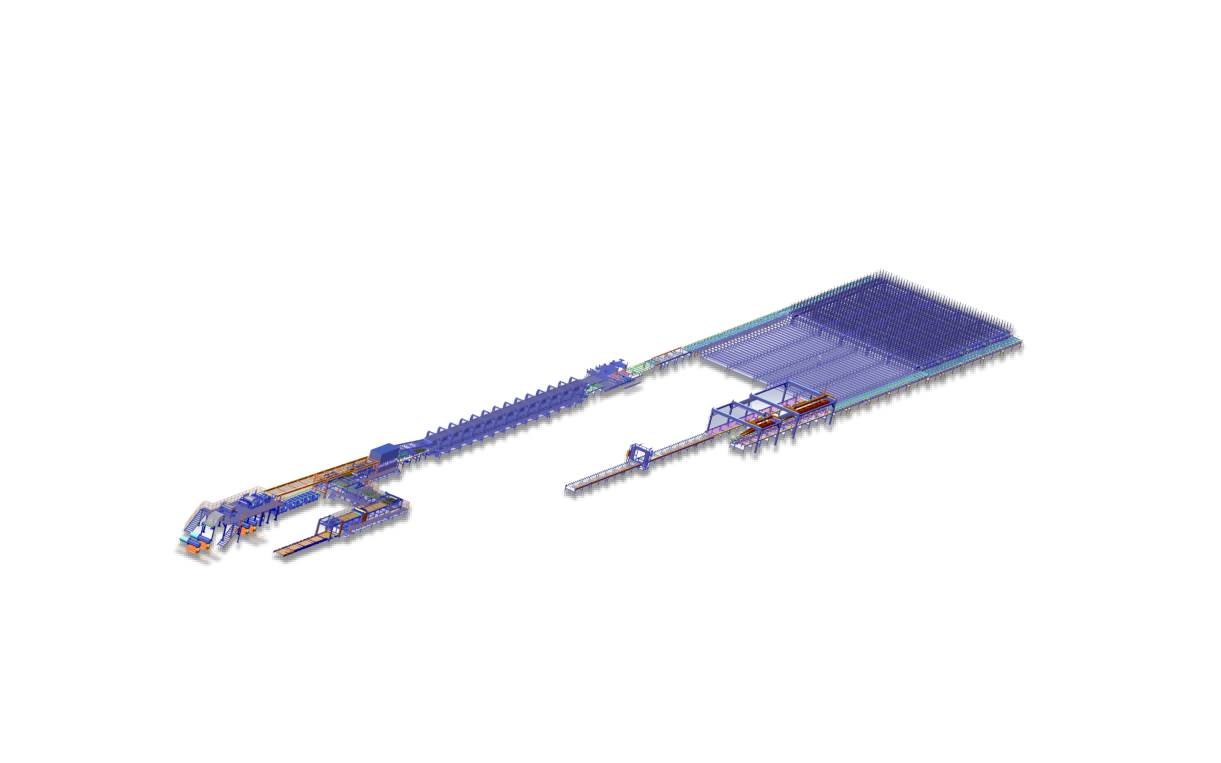
Achieving a consistent core density starts with small, deliberate changes at the foaming station. Often, operators overlook the subtle drift in chemical temperatures or the wear on mixing heads, but these factors directly shape how the foam rises and cures. A quick calibration of the isocyanate and polyol temperature bands—sometimes narrowing them by just a couple of degrees—can reduce density gradients across the panel. Equally important is checking the actual head pressure against the setpoint, as a slow leak or a clogged filter may not trigger an alarm yet still cause uneven distribution.
Beyond temperature and pressure, the pour pattern matters far more than many realize. Instead of a single fixed stream, try adjusting the oscillation speed or the width of the pour across the conveyor. A slightly wider, slower pass gives the liquid mixture more time to spread before it begins to expand, which helps eliminate denser edges or soft centers. You might also experiment with the nucleating air load—reducing it often increases density but makes the core more uniform, while too much air creates a frothy, weak structure with unpredictable density pockets.
Finally, don't ignore the influence of raw material lot changes and ambient humidity. Rather than reacting after a bad batch, keep a simple log of density readings every half hour and cross-reference it with any tweak you make. This way, you can spot which adjustment actually moved the needle. Sometimes the best fix is not a new formula but a return to baseline settings after a weekend shutdown, because thermal expansion in the lines can shift the ratio enough to throw off the entire afternoon's production.
How Conveyor Speed and Temperature Profiles Work Together
In a continuous curing or drying line, conveyor speed controls how long a part spends inside each thermal zone, while the temperature profile defines what heat it actually receives along the way. The two variables are not independent—change the belt speed and you instantly reshape the time axis of the profile, even if the zone setpoints stay the same. A profile that peaks at 200°C for ten minutes at one belt speed may only deliver four minutes of peak exposure at a faster setting, which can leave coatings undercured at the core.
Operators often treat oven temperature as the main adjustment point, but conveyor speed is usually the more effective tool for matching the recipe to the part's thermal mass. Thick steel or heavy castings need slower travel to soak heat through, whereas thin aluminium panels may reach full cure quickly and benefit from a faster pass. The trick is to use temperature profiling data loggers that travel with the product and record actual air and part temperatures, then adjust belt speed to align the measured curve with the target bake window.
A useful way to visualise the relationship is to think of the temperature profile as the shape of heat and the conveyor speed as the stretch or compression of that shape across time. If a new part shows underbake in the middle of the ramp zone, you can slow the conveyor slightly to extend that phase without raising the setpoint. Conversely, if you see early colour change or edge overheating, a modest speed increase may pull the part out of the high-heat zone before damage occurs. Small changes—often just 0.1 to 0.2 metres per minute—can shift the time-at-temperature enough to fix a finish issue that temperature adjustments alone cannot resolve.
Cutting and Stacking Systems That Keep Up with High-Volume Orders
When order volumes spike, the weakest link in a packaging line is often the transition from cutting to stacking. Manual handling slows everything down and introduces inconsistencies that automation cannot afford. Modern systems address this by pairing servo-driven cutters with intelligent stackers that adjust stack height and alignment on the fly, based on real-time throughput data.
The key is not raw speed alone but sustained precision over long shifts. High-volume operations need cutting tools that maintain blade sharpness without frequent stops and stacking units that use vacuum or mechanical grippers to place each sheet exactly where it belongs. Some designs even incorporate buffer zones, so a brief jam upstream doesn't force the entire line to halt.
Operators often overlook how much downtime comes from stack changeovers. The best systems now feature automated pallet exchange and continuous stacking without stopping the cutter, which means a full pallet can be swapped out without losing a single cycle. That kind of uninterrupted flow is what truly keeps high-volume orders moving.
Why Panel Flatness Depends on Pressure Distribution, Not Just Raw Materials
Even the most carefully selected wood veneer or high-grade aluminum sheet can end up warped if the pressing stage isn't given proper attention. Panel flatness isn't simply a property of the material you start with—it's largely shaped by how force travels through the stack during lamination. When pressure concentrates near the edges or around bolt holes, the center can remain under-compressed, allowing internal stresses to release unevenly once the panel leaves the press.
In many production lines, operators assume that a thicker raw board will automatically yield a flatter finished panel. But uneven pressure distribution can override that advantage. If the platens have slight thermal bow or the padding is worn in certain zones, those inconsistencies imprint directly onto the panel surface. The result is a panel that measures flat right after pressing but gradually twists or cups within hours or days as moisture and temperature equalize.
Addressing flatness therefore requires shifting focus from material specs to press mechanics. Checking platen parallelism, using calibrated pressure mapping films, and adjusting hydraulic cylinder sequencing can often correct warpage without changing the raw material at all. In short, a flat panel is not just bought—it's pressed into existence through balanced force, and that balance is what separates a stable panel from a costly reject.
Energy Recovery Options That Lower Operating Costs Over Time
Waste heat from exhaust stacks, air compressors, and refrigeration systems often drifts out of a facility unnoticed—yet capturing even a fraction of that energy can reshape a monthly operating budget. Instead of buying more fuel or electricity to heat water or condition incoming air, facilities can redirect thermal energy that already exists on-site. This approach doesn't require exotic technology; heat exchangers, runaround coils, and desuperheaters are proven, low-maintenance additions that quietly pay for themselves.
Ventilation energy recovery is another straightforward lever. A well-designed enthalpy wheel or plate exchanger can transfer both sensible and latent heat between exhaust and supply airstreams, trimming the load on rooftop units during peak summer and winter months. The savings compound in climates with extreme temperatures, where every degree of preconditioning reduces runtime for compressors and burners. Over a decade, the avoided energy purchases often dwarf the initial installation cost, especially when paired with demand-controlled ventilation.
For operations with large cooling or heating loops, heat pump retrofits offer a deeper cut. Instead of rejecting condenser heat outdoors, a water-source or air-source heat pump can lift that heat to a useful temperature for domestic hot water, preheating boiler feedwater, or even space heating in adjacent zones. This shifts a facility from a one-way energy consumer to a semi-circular system, where every process waste stream becomes a candidate for reuse. The result is not just lower utility bills—it's a more resilient operating model that gets cheaper to run as energy prices climb.
FAQ
Throughput depends mainly on the metering pump accuracy, the length of the heated press, and the synchronization between the top and bottom facings. A longer press allows faster line speeds at full cure, while fast-change profiling tools cut setup time between product switches.
Proper side seals and adjustable edge guides keep the rising foam contained. Leading lines use magnetic or pneumatic side barriers that move with the facings, and they monitor foam height with sensors to adjust output before overflow occurs.
Because the PU reaction rate is highly sensitive to heat. If the press temperature varies even a few degrees, panel flatness and adhesion can suffer. Zoned heating controls let different sections of the press run at different setpoints, which helps for thicker panels that need slower heat transfer.
Many modern lines can switch between 30 mm and 200 mm panel thicknesses by adjusting the gap in the double-belt press and changing side seal heights. Quick-adjust hydraulic systems can complete a thickness change in under 15 minutes, minimizing downtime.
Automated flying cut-off saws and vacuum stacking tables remove the need for manual measuring and handling. They sync with the line speed, so panels are cut to exact lengths without stopping the belt. This reduces scrap and lets a small crew manage a high-volume output.
Daily checks on the metering heads and mixing chamber prevent clogging from crystallized isocyanate. Weekly calibration of pressure sensors and temperature probes keeps the foam density stable. Belt surfaces need regular cleaning, and hydraulic filters should be replaced on a schedule to avoid press drift.
Some lines use heat exchangers to capture waste heat from the curing ovens and reuse it to pre-heat the facings or the polyol. This can reduce overall energy use by 10 to 15 percent, which makes a noticeable difference in regions with high electricity costs.
Conclusion
Selecting the right polyurethane sandwich panel production line calls for attention to the details that separate average output from consistently high-quality panels. Laminator design matters more than many realize—roller type, gap adjustment, and surface finish directly influence how evenly facing sheets bond to the core. At the foaming station, fine-tuning mixing head pressure and pour pattern helps achieve a uniform core density, preventing soft spots or excessive resin use. Conveyor speed and temperature profiles must be treated as a pair: too fast a line with an underheated curing zone leads to incomplete foam rise, while over-curing wastes energy and slows throughput. Cutting and stacking systems need to match the line’s peak speed, with servo-driven saws and automated stackers reducing bottlenecks during high-volume runs.
Panel flatness is often blamed on raw material quality, but pressure distribution across the laminator and during curing plays a larger role. Uneven pressure creates warped panels even with premium chemicals. Energy recovery options—such as capturing heat from the curing ovens to preheat incoming facings or feed the foaming station—lower operating costs meaningfully over a year. The best production lines integrate these elements without excessive complexity, allowing operators to adjust parameters quickly when switching panel thickness or density. In practice, efficient manufacturing comes from balancing speed, thermal control, and mechanical precision, rather than chasing a single high-tech feature. Lines that do this well deliver consistent thickness, flat panels, and reduced waste per shift, which is what ultimately keeps a facility competitive.
Contact Us
Contact Person: Sophia Jiang
Email: [email protected]
Tel/WhatsApp: +86 17367381818
Website: https://yzwelding.com/