

Top Continuous Still: A Complete Guide to Efficient Distillation
2026-06-09
Distillation technology has come a long way, but efficiency remains the holy grail for producers. If you’re seeking to streamline operations and boost output, the top continuous still is a game-changer. In this guide, we’ll break down how these systems work and why they’re essential for modern distillation. Along the way, discover how DYE is redefining performance with cutting-edge solutions that make a real difference.
The Evolution of Continuous Distillation: A Quick Overview
Early distillation was a labor-intensive batch process, where fermented liquids were heated in a pot still, the vapors collected, and the equipment then cooled and cleaned before starting the next cycle. This method, while effective for small volumes, lacked consistency and demanded constant oversight. As industries grew, the need for higher throughput and stable product quality pushed inventors to rethink the core design.
The breakthrough arrived in the 19th century with the Coffey still, a two-column apparatus that allowed a continuous feed of wash and a steady output of high-proof spirit. By using perforated plates and clever heat exchange, it eliminated the start-stop rhythm of pot distillation. This not only slashed labor costs but also made alcohol production scalable, influencing the whiskey and industrial alcohol sectors profoundly.
Modern continuous distillation systems have evolved far beyond those early designs, incorporating advanced process control, multi-feed columns, and energy integration techniques that cut waste dramatically. These units now split complex mixtures into precise fractions under tight specifications, serving everything from petrochemical refining to pharmaceutical purification. The underlying principle remains unchanged—separating components by boiling point—but the execution has become a finely tuned dance of thermodynamics and automation.
Inside a Continuous Still: Key Components and Process Flow
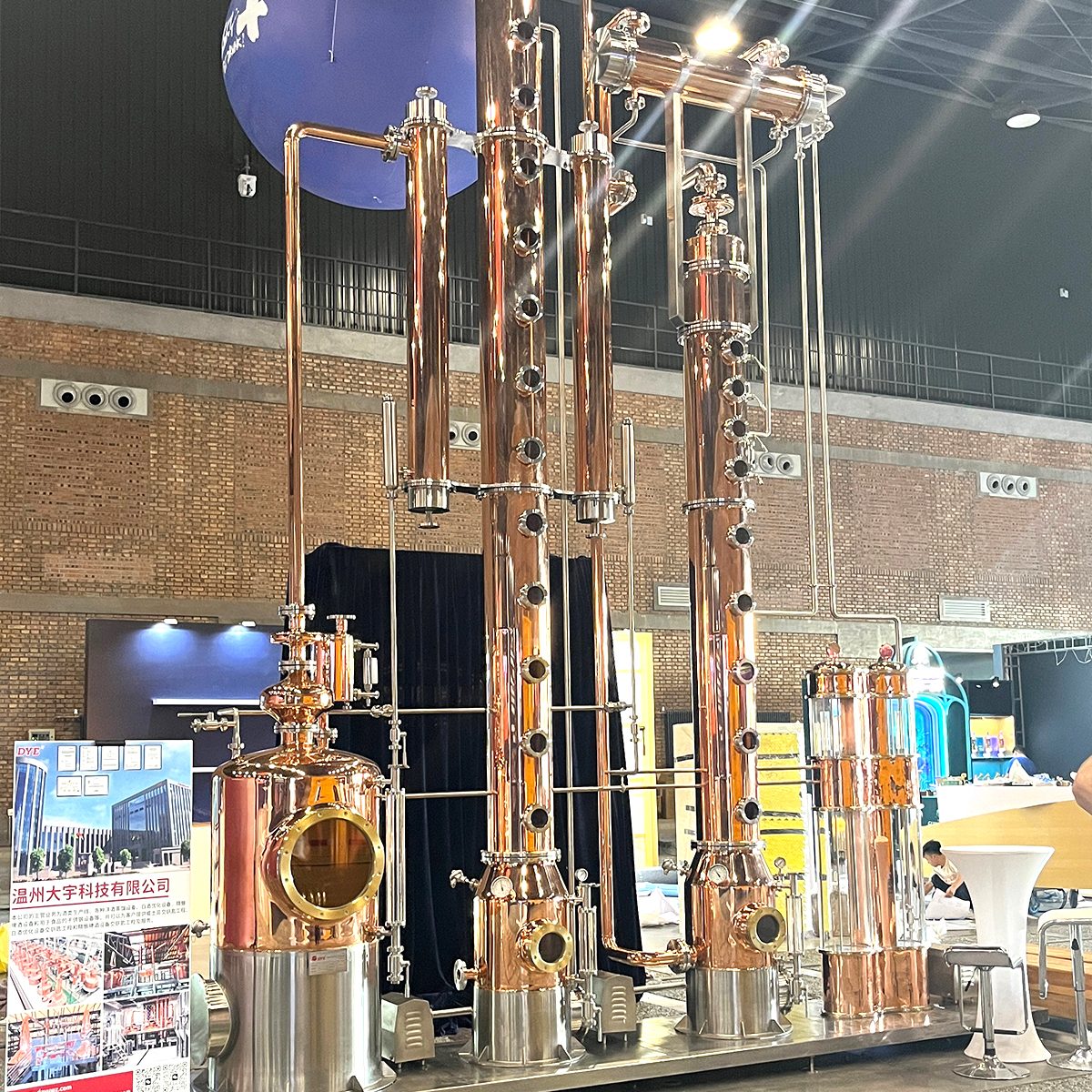
At the heart of a continuous still lies the analyzer column, a tall vertical chamber packed with a series of perforated plates or structured packing. Here, preheated fermented wash enters near the top and cascades downward, while steam is injected at the base. As the steam rises through the descending liquid, it strips away alcohol and other volatile compounds, exploiting differences in boiling points. This counter-current flow ensures efficient separation; the plates force intimate contact between vapor and liquid, creating multiple mini-distillations that progressively enrich the vapor with ethanol. By the time the vapor reaches the top, it carries a concentrated alcohol mixture, while the spent wash, now largely depleted of alcohol, drains out the bottom.
From the analyzer, the alcohol-rich vapor flows into the rectifier column, the second major component. In this section, the vapor condenses on a series of horizontal trays cooled by incoming wash passing through internal coils. This condensation releases heat, preheating the wash before it enters the analyzer—a clever energy-saving loop. The condensed liquid, or reflux, trickles back down the rectifier, repeatedly vaporizing and condensing to purify the alcohol further. The lighter, more volatile fractions (like acetaldehyde and methanol) concentrate at the very top, while the desired ethanol is drawn off as a side stream from a plate a few levels below. Fusel oils and other heavier compounds settle lower down and can be tapped separately.
The process flow also incorporates auxiliary components that fine-tune output and quality. A decanter often sits atop the rectifier to separate fused oils from water-alcohol mixtures, while a condensate system recovers any remaining alcohol from vent gases. Temperature and pressure sensors throughout the columns allow precise control; operators adjust steam input and reflux ratios to match the target spirit profile, whether it’s a light-bodied base for gin or a more characterful grain whiskey. Unlike batch distillation, the continuous method runs nonstop, feeding a steady supply of wash and yielding a consistent, high-purity spirit that still carries enough raw material character to remain interesting—a balance achieved by how and where product is drawn off the rectifier.
Efficiency Showdown: Continuous vs. Batch Distillation
When it comes to raw throughput and energy economy, continuous distillation often takes the crown. Because the process doesn't cycle between heating, cooling, and draining steps, thermal energy is better conserved, and the column operates at a steady-state sweet spot where reflux ratios and temperature profiles stay optimized. For high-volume, single-product operations like fuel ethanol or bulk solvents, the numbers are hard to argue with: less downtime, smaller equipment footprints per unit of output, and predictable heat integration that can shave operating costs significantly over time.
Batch distillation, on the other hand, thrives where product flexibility and changing feedstocks are the real efficiency metrics. A single batch column can process multiple different mixtures back-to-back without the complex side-draw systems or reconfiguration that a continuous train would need. That versatility can translate directly into shorter time-to-market for specialty chemicals, pharmaceuticals, or low-volume high-value products where building a dedicated continuous plant simply doesn't pencil out. The operational trade-off, of course, is a cyclic efficiency loss during start-up and cut transitions, though modern automation has narrowed that gap considerably.
Digging deeper, the showdown often boils down to how efficiency is defined. If it's solely energy per kilogram of pure product, continuous usually wins. But factor in capital flexibility, labor patterns, and the true cost of off-spec material during transitions, and batch systems start to look surprisingly lean. Smart operations may even blend the two approaches — using batch for test runs or pilot-scale production before committing to a continuous design, creating a kind of hybrid efficiency that neither method achieves alone.
Top Continuous Still Designs for Commercial and Craft Use
The landscape of continuous distillation has evolved well beyond the classic Coffey still, with designs now tailored to everything from massive fuel ethanol plants to boutique spirit producers chasing a specific flavor fingerprint. High-capacity column stills, often equipped with multiple rectification and stripping sections, allow commercial operations to churn out exceptionally neutral alcohol while maintaining energy efficiency through integrated heat recovery. Meanwhile, hybrid configurations that pair a continuous beer column with a batch pot still are gaining traction among craft distillers who refuse to compromise on character—they strip away unwanted congeners in a single pass but still capture the grain’s soul through copper contact and controlled condensation.
For those prioritizing versatility, modular continuous systems have become a game changer. These rigs let distillers add or bypass side draws, adjust plate counts, and even switch between bubble caps and structured packing depending on the mash bill. A distiller might start with a light rum, tweaking the draw-off point for a heavier ester profile, then pivot to a crisp vodka without swapping out major components. The real advantage lies in the ability to fine-tune reflux ratios and take-off rates in real time—something that batch distillation simply can’t match. It’s this granular control that has turned continuous stills from a tool of sheer output into an instrument of nuance.
On the craft side, scaled-down continuous columns are popping up that challenge the old notion that “continuous” means “soulless.” By deliberately engineering copper into vapor paths, incorporating liquid recirculation loops, and running at lower pressures, these smaller-footprint units produce spirits with depth that rivals double-distilled pot still product. Some designs even allow for a “pseudo-batch” mode, where a distiller can accumulate a heart cut over hours while still enjoying the steady-state benefits of continuous feed. Whether it’s a high-proof neutral for gin or a grain-forward whiskey profile, the right continuous design no longer forces a choice between efficiency and artistry—it can deliver both, provided the operator knows how to listen to what the still is trying to say.
Scaling Up Production: When to Switch to a Continuous Still
Shifting from a pot still to a continuous column still isn’t just about wanting more volume—it’s about recognizing when your operation has outgrown its batch-by-batch roots. The clearest sign is when demand consistently exceeds what your current setup can produce without running around the clock or sacrificing quality. If you’re regularly doing back-to-back runs just to keep up with orders, and your team is stretched thin, it’s time to evaluate the economics. Continuous stills excel at producing large quantities of consistent spirit with fewer hands-on hours, but the transition only makes sense when your market can absorb the output and you’ve dialed in a recipe that thrives at scale.
Another trigger is the desire for product uniformity. In a batch process, every run has slight variations—even with the best protocols. A continuous still, by design, reaches a steady state where cuts and flavor profiles stabilize, yielding near-identical spirit day after day. This is essential for brands building a flagship product where repeatable character matters more than wild experimentation. If you’re tired of blending batches to hit a target and want a stream that’s always on spec, the switch becomes compelling. However, be ready for a steep learning curve: balancing feed rates, steam pressure, and draw-off points demands a different skill set than running a pot.
The financial tipping point often arrives when the numbers prove a shorter payback period. A continuous still costs more upfront, but lower labor, energy, and downtime per liter can make it cheaper in the long run—provided you run it often enough. Calculate your true cost per bottle now, including indirect factors like overtime and waste. Then model what a 24/7 continuous operation would look like. If the savings recoup your investment within a couple of years and you have reliable access to feedstock and a growing customer base, it’s likely the right moment. But don’t jump too early: a continuous still starved of throughput becomes a very expensive piece of metal, and it locks you into a narrower product range. Scale only when your business model demands it, not just because the gear looks impressive.
Expert Tips for Maximizing Your Continuous Still’s Performance
One of the quickest wins you’ll find lies in keeping your wash as consistent as possible. Even small swings in pH or sugar content don’t just nudge the flavour profile—they force your still to constantly hunt for equilibrium. If you’re not already logging the gravity and acidity of every batch before it hits the system, start now. Over time, those records become your best diagnostic tool when the spirit suddenly tastes off.
The steam pressure you choose deserves more attention than it usually gets. Running too hot to chase speed inevitably smears fractions together, especially the heads and early hearts. Instead of pushing the limit, ease back until you see a clear, stable split on your hydrometer. That slower pace often pays for itself with a cleaner cut and less waste during blending.
Don’t overlook the mundane, like heat exchanger scaling or weeping gaskets. A thin layer of deposit inside the condensers quietly steals efficiency, while a tiny air leak can disrupt the vapour path enough to throw off your reflux ratio. Set a short weekly inspection routine—ten minutes spent checking seals and sight glasses can prevent hours of troubleshooting later.
FAQ
Instead of processing in batches, it feeds wash continuously while drawing off spirit at the same time. This steady-state operation eliminates the repeat heating and cooling cycles, saving energy and time. The internal fractioning plates create multiple mini-distillations in one pass, boosting purity without running the batch multiple times.
Each plate acts like a tiny distillation stage. As vapor rises, it bubbles through liquid on the plate, condenses partially, and reboils. Lighter alcohols rise higher, heavier compounds fall back. By controlling plate count and reflux, you can cut into any part of the run with surgical precision, pulling hearts off at a consistent proof for hours.
Absolutely, though it’s more about finesse than hardware. By adjusting feed rate, take-off points, and reflux ratio, you can shift from a clean vodka profile to a fuller-bodied whiskey style. Some distillers even add a doubler or thumper after the column for extra character. The still itself is just a tool; the recipe and running parameters define the spirit.
Overfeeding the wash is a classic—it floods plates and ruins separation. Ignoring foam buildup leads to entrainment, dragging tails into the hearts. Not stabilizing for long enough after startup means the first several liters are off-profile. And skipping regular cleaning, especially in the rectifying section, allows fusel oils to crust up and mess with heat transfer.
Space and throughput. A well-tuned continuous still can churn out consistent spirit 24/7 in a footprint a fraction of the equivalent pot still battery. It’s not just volume—it’s labor. One operator can manage a run while handling mashing or barreling. And for vodka or neutral spirits, it’s simply the right tool, as multiple distillations would be needed otherwise.
In a pot still, you chase the vapor temperature as it climbs. In a continuous still, you lock in a thermal gradient: steady temps from bottom to top, with each plate a specific degree. You tweak steam input and cooling water to anchor those plate temperatures. The real control is in reflux—returning more liquid to the column tightens the cuts and raises proof at the draw point.
Conclusion
Continuous distillation has come a long way from its early industrial roots, evolving into a streamlined process that combines precision engineering with practical know-how. Inside a modern continuous still, a carefully orchestrated flow of wash meets rising vapor across a series of plates or packing, stripping alcohol while concentrating flavors. The result is a steady stream of high-proof spirit—no batch cycling, no idle time. This shift transforms efficiency: compared to batch distillation, continuous setups slash energy use and labor while delivering greater consistency from first drop to last. It’s not just about speed; it’s about unlocking a stable rhythm that lets distillers fine-tune cuts and character on the fly.
Choosing the right design depends on your scale and ambition. Compact column stills suit craft producers chasing clean vodka or light rum, while larger multi-column systems serve high-volume whiskey or fuel ethanol operations. The decision to switch often hinges on market demand and margin pressure—when you’re boiling more hours than you’d like, upgrading to a continuous still can free up time and tank space. Once installed, smart operating habits matter. Gradual heat adjustments, regular column profiling, and timely tray cleaning keep performance from drifting. Veteran distillers also recommend tracking temperature deviations and rechecking feed rates after any recipe tweak. With the right approach, a continuous still becomes less a machine and more a reliable co-distiller, turning raw mash into refined spirit day after day.
Contact Us
Contact Person: Ada Xu
Email: [email protected]
Tel/WhatsApp: 0577-86806088
Website: https://www.dayuwz.com/