

Top Flood Gate Picks That Keep Your Property Safe and Dry
2026-08-27
Flooding waits for no one, and a poorly chosen gate can turn a small leak into a full-blown indoor pond. That's why we've focused on hardware that actually earns its keep when water pressure is high. From compact residential barriers to heavy-duty commercial units, these top flood gate picks are built to keep your property safe and dry. For dependable models backed by real engineering, THT stands out as a brand worth exploring before you make a final call.
Can Your Flood Gate Handle Debris and Not Just Water
Flood gates are often tested with clean water in controlled conditions, but real floodwater rarely arrives that way. Branches, gravel, plastic debris, and even mud can pile up against the barrier within minutes, changing the pressure profile entirely. If the gate was only designed to hold back a static water column, that extra debris load can bend the panel, stress the seals, or jam the lifting mechanism. The difference between a gate that survives a storm and one that fails often comes down to how well it sheds or resists this floating onslaught.
A good debris-ready design starts with the leading edge. Instead of a sharp vertical face that catches and holds material, some gates use a sloped or rounded profile so logs and branches slide up and over rather than wedging. Others incorporate a debris deflector upstream, or a coarse trash rack that can be cleaned without taking the whole gate offline. Sealing surfaces also need protection; a single twig trapped between the gate and its frame can create a leak path that gets worse under pressure. Looking at the gate’s bottom hinge is just as important, because silt and small stones tend to collect there and prevent full closure.
Practical experience shows that the most reliable flood gates for debris-heavy environments are not necessarily the most complex. Simpler designs with fewer moving parts, wide drainage gaps below the panel, and replaceable wear strips tend to hold up better over multiple flood seasons. Before selecting a gate, ask the manufacturer for debris impact test data or field photos from actual flood events, not just clean-water certification. If they can’t show how the gate performs with a load of branches against it, assume it hasn’t been truly tested for the conditions you’ll face.
Why Most Flood Gate Failures Start at the Edges
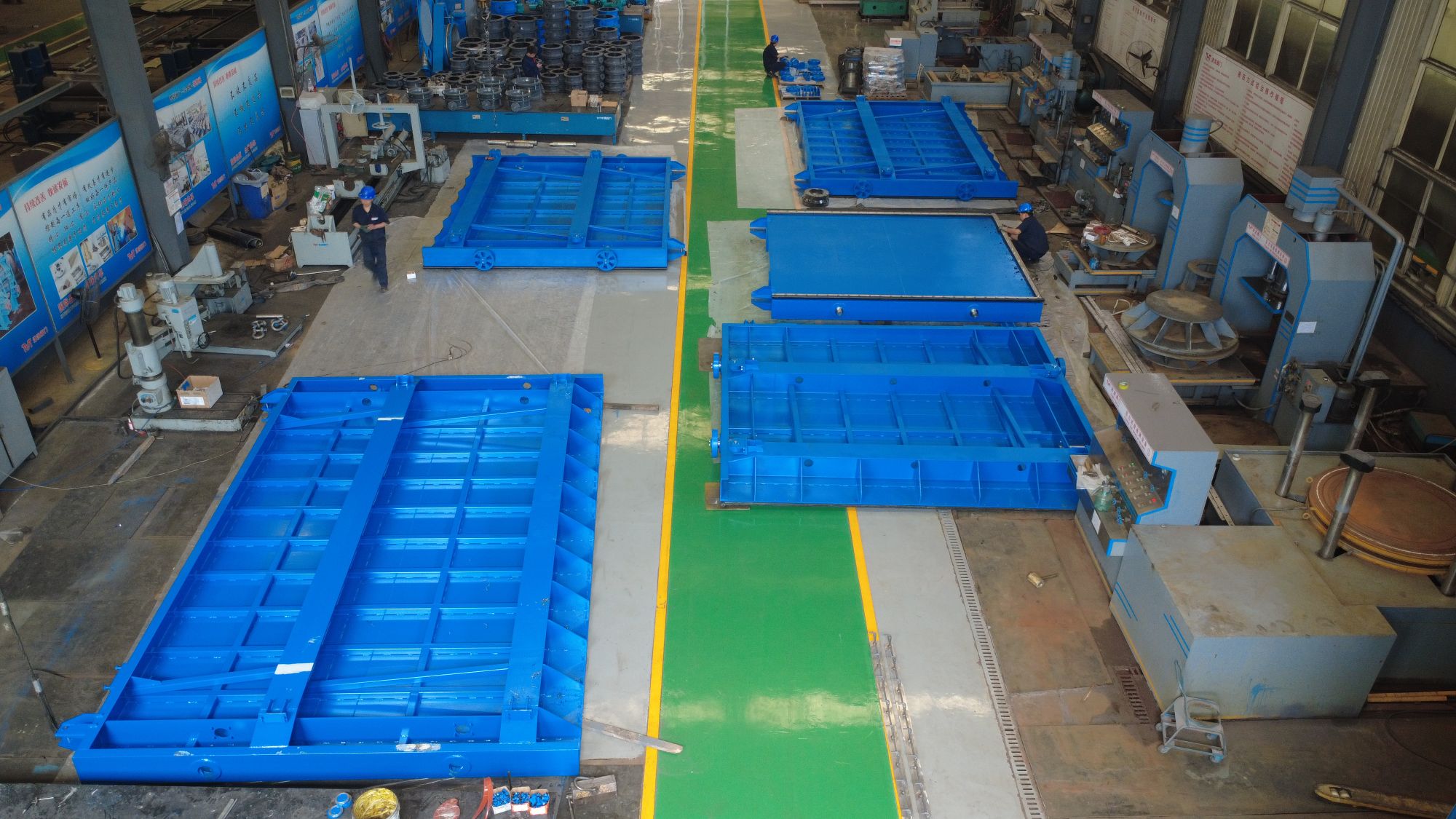
The reason most flood gate failures begin at the edges is straightforward: that's where the gate meets its frame or concrete seat. Even a slight misalignment, debris buildup, or worn seal creates a gap that concentrates water pressure. The pressure differential at a small edge gap can be far more destructive than the uniform load across the main panel, because water jets through and erodes the surrounding material quickly.
Another overlooked issue is differential movement. Concrete abutments and steel gate leaves expand and contract at different rates. Over time, the corners and vertical edges bear the brunt of thermal cycling. If fasteners or anchor bolts at the edges are not torqued correctly, the gate can rack slightly, causing the seals to unseat. Once the seal is compromised, vibration and cyclic loading accelerate fatigue cracking along the edge stiffeners.
Maintenance teams often focus on the visible center section, but edge hardware like side rollers, guide bars, and bottom seals are the real indicators of health. A quick check of seal compression along the full perimeter is more useful than a visual inspection of the middle plate. Caught early, edge wear is a cheap fix; ignored, it leads to gate jamming, frame distortion, or sudden failure during a storm surge.
What a Professional Installer Knows That YouTube Tutorials Miss
Most tutorial videos assume a clean, square room and a helper who never flinches. A pro walks in knowing the floor dips half an inch near the doorway, the wall you planned to anchor into hides a pipe, and that off-brand level from the kit was fine for hanging a picture but useless over an eight-foot run. You learn to measure twice, then watch the material move after lunch because the sun hit the wall.
There is also the quiet art of fixing what the last person left behind. YouTube shows you how to start from new drywall. A professional spends the first hour shimming, scribing, or scraping old adhesive so the new work doesn't inherit someone else's mistake. It is not glamorous, but it is why a pro's finished edge sits flat while the DIY version has a shadow line you cannot unsee.
Finally, pros respect the order of operations. Hooking a drill bit or driving a screw is easy; knowing when to stop and let a compound cure, when to switch to a hand tool because the cordless will overdrive into soft wood, and when a 10-minute job should actually be a 45-minute job to last ten years—that judgment only comes from touching hundreds of imperfect houses, not from a 12-minute clip.
Automatic Flood Gates Might Not Be Worth the Extra Sensors
The promise of automatic flood gates is that they react faster than humans and work around the clock. But that promise depends on a chain of sensors, controllers, and actuators that all have to function perfectly when floodwaters rise. In practice, a single failed float switch or a clogged pressure port can leave the gate stuck open, or trigger it closed at the worst possible moment. For many properties, the added reliability of a simple manual gate—perhaps with a clear operating procedure and a designated person responsible—comes close enough without the fragile electronics.
Sensor redundancy is often sold as peace of mind, but it introduces its own problems. More sensors mean more wiring, more calibration, more points of corrosion, and more troubleshooting when something goes wrong. During an actual flood, debris, mud, and electrical interference can corrupt readings or jam moving parts. A gate that relies on three different sensor types may fail safe, but it may also sit idle because the logic board rejects conflicting signals. Homeowners and facility managers end up paying for ongoing diagnostics rather than a robust physical barrier.
That money might be better spent on passive flood protection: taller barriers, watertight seals, backflow valves, or even relocating critical equipment. Automatic gates also draw attention as a high-tech solution, leading owners to underestimate less glamorous upgrades. Unless the site has a genuine need for unattended operation—like a remote substation or an underground entrance that floods in minutes—the extra sensors add cost, complexity, and failure modes that a manual gate simply doesn't have.
The Maintenance Habit That Keeps a Flood Gate Ready for Years
Most people assume a flood gate just sits there until it's needed, but the ones that survive decades are the ones that get moved on a schedule. Cycling the gate by hand or with its drive system every few months keeps the seals from taking a permanent set and stops the hinge pins from corroding into place. A gate that hasn't been opened in two years will often refuse to budge at the worst moment, not because the steel is weak, but because nobody bothered to work it. Treat it like a valve on a rarely used pipe: run it through a full open-close cycle, listen for grinding, and feel for stiffness before it becomes a problem.
The next habit that pays off is keeping the track and seal faces clean. Silt, leaf litter, and salt spray build up in the bottom channel and along the rubber sealing edge. That debris creates tiny gaps where water can slip through under pressure, and it also accelerates corrosion in the exact spot you need to stay smooth. A low-pressure rinse with fresh water after storms or high tides is usually enough, but avoid blasting the coating off with a pressure washer. While you're at it, run a rag along the seal and check for cuts, flattening, or embedded grit. If the rubber has hardened or cracked, replace it early rather than waiting for a leak to tell you.
Lubrication and fastener checks are the third part of the routine that gets skipped until something breaks. Use a marine-grade grease on the hinge points and roller wheels, not the general-purpose stuff that turns gummy or washes out after a few weeks. A thin coat on the threaded stem or rack gear prevents binding and lets the drive mechanism work without overloading the motor. Then go over the anchor bolts and wedge hardware with a torque wrench. Vibration, thermal expansion, and repeated loads will loosen them gradually, and a loose bolt in a flood gate is just a crack waiting to happen. Keep a small log of the date, what you cleaned, what you lubed, and any torque readings that changed. That written record is what turns a one-time fix into a maintenance habit that keeps the gate ready for years.
How to Size a Flood Gate for an Awkward Doorway or Driveway
For an awkward doorway or driveway, skip the single-width measurement. Mark the actual water path you need to block with chalk or tape, including any low spots on either side of the threshold. Then measure the true length of the bottom seal line, not just the narrowest gap between jambs, because a sloped or uneven floor changes where the gate actually has to press.
For height, measure vertically from the lowest overflow danger point—such as the outer lip of the driveway or the top of the sill—up to the highest water level you want to stop, and add at least six inches of freeboard. If the ground slopes across the opening, plan for a beveled bottom edge or an adjustable seal so both ends can sit tight. Give the frame width about two to three inches of extra room beyond the widest measured span to account for out-of-plumb walls during installation.
When the opening has brick, stone, or irregular side surfaces, mount vertical channels or angle tracks first so the gate can slide into place without flattening the entire opening. Before ordering, send the manufacturer a simple sketch of the opening with each width and height variation marked, rather than a single averaged dimension. That beats ordering to the largest number and avoids extra cutting or rework on site.
FAQ
For most homes, a removable aluminum flood barrier with a compression seal works well. It’s lightweight enough to handle before a storm, yet strong enough to hold back several feet of water. Look for one with a built-in neoprene gasket along the bottom edge — that’s what stops seepage on uneven thresholds.
If you deal with frequent flood warnings or can’t always be home to set up barriers, automatic gates pay for themselves in peace of mind. They rise passively with floodwater, so you don’t need power or a person on site. Manual options are cheaper upfront, but they only work if you have enough warning time and muscle to install them.
Measure the full width and height of each opening, then add at least 12 inches of overlap on each side for the seal to grip properly. Don’t just measure the door frame — include any steps, uneven ground, or siding that could break the seal. If you’re between sizes, go larger and trim the side channels rather than trying to stretch a small gate.
Yes, garage openings often need the widest gates, usually spanning 8 to 16 feet. You’ll want a multi-panel system with a central support post so the panels don’t bow under pressure. Some homeowners opt for a sliding or swing gate, but those need a firm concrete pad to anchor into.
Rinse off mud and debris with fresh water, then check all rubber seals for cracking or flattening. Lubricate any moving parts like hinges or slide tracks with silicone spray. Store removable panels flat and out of direct sunlight so the gaskets don’t warp. A yearly test fit before hurricane season catches most problems early.
They handle both, but the setup differs. Flash floods hit fast and recede quickly, so you need a gate that can be deployed in under 10 minutes. River flooding rises slowly but may stay for days, so the gate must resist prolonged hydrostatic pressure and seepage. Look for a gate rated for both short-duration surge and long-duration immersion.
Marine-grade aluminum and stainless steel are top choices because they resist corrosion without needing paint. For seals, EPDM rubber outperforms standard neoprene over years of wet-dry cycles. Avoid untreated steel or cheap plastic composites — they’ll rust or crack after one or two serious floods.
Yes, some designs use compression clamps or wedge anchors that fit into the door frame without permanent holes. Others rely on weighted bottom skirts and side channels that press against the walls. These are ideal for renters or historic homes, but they typically hold back less water — usually up to 2 feet — so check the rating carefully.
Conclusion
Most flood gate failures never start with a dramatic wall of water. They begin with a clogged channel, a loose seal, or a hinge that binds after one season of neglect. If you're shopping for protection, look past the marketing shots of clean water and ask whether the gate can shed leaves, branches, and sediment without jamming. Better yet, examine the edges. Water finds the weakest point, and cheap gaskets or uneven mounting surfaces are where leaks appear first. A professional installer pays attention to those details—making sure the frame is anchored into solid material, using the right backer rod and sealant, and sloping the base so water drains away instead of pooling. That's the stuff you rarely see in a weekend DIY video.
Automatic systems sound convenient, but every sensor and motor is another failure point during a storm. Many property owners are better served by a manual or passive gate that works without power and only needs a quick visual check. Sizing matters more than most people realize, especially for odd openings like sloped driveways or doors with uneven thresholds. Take measurements at multiple points, and if nothing stock fits, get a custom-width panel or an adjustable side seal rather than forcing a gap closed. Finally, build a simple maintenance habit: clean the track, lubricate moving parts, and replace worn rubber before storm season. The right flood gate isn't just a product—it's a system of good seals, correct sizing, and regular care.
Contact Us
Contact Person: Su Zhang
Email: [email protected]
Tel/WhatsApp: +86-25219206
Website: https://www.tht-valve.com/