

Top Melamine Polyphosphate Flame Retardant Options for Enhanced Safety
2026-07-18
Fire safety is a critical concern for modern industries, yet finding the right flame retardant can feel overwhelming. Among the top solutions, melamine polyphosphate stands out for its exceptional performance and environmental profile. At X.X.F.R, we've harnessed its potential to deliver uncompromised protection. In this post, we'll explore the best melamine polyphosphate options that truly make a difference—because when it comes to safety, settling for less isn't an option.
Unpacking the Chemistry Behind Melamine Polyphosphate
Melamine polyphosphate (MPP) is a salt formed from melamine and polyphosphoric acid, and its flame retardant efficacy stems from a delicate interplay of phosphorus–nitrogen synergism. At elevated temperatures, MPP undergoes endothermic decomposition, releasing inert gases like ammonia and water vapor that dilute combustible volatiles. Concurrently, the phosphate component catalyzes char formation on the substrate surface, creating a thermally stable barrier that insulates the underlying material from heat and oxygen. This dual-phase action—gas-phase dilution and condensed-phase charring—distinguishes MPP from purely halogenated or inorganic retardants, offering a cleaner, intumescent mechanism without corrosive byproducts.
The chemistry hinges on the thermal stability and stepwise degradation of MPP. Initially, the melamine moiety sublimes or decomposes around 300–400°C, absorbing heat and producing non-flammable nitrogenous gases. As temperatures rise, the polyphosphate backbone condenses into ultraphosphates and polyphosphoric acids, which then phosphorylate hydroxyl groups in the polymer matrix (if present) to form crosslinked phosphate esters. These esters subsequently dehydrate into a carbonaceous char reinforced by melamine-derived aromatic structures. The resulting intumescent shield is both physically expanded and chemically resilient, effectively smothering the flame. Subtle adjustments in the melamine-to-phosphate ratio can tailor the onset temperature and expansion ratio, making MPP adaptable to diverse polymers like nylons and thermosets.
A closer look at the molecular interactions reveals why MPP works so efficiently in nitrogen-rich systems. The triazine rings of melamine act as blowing agents and char strengtheners, while the phosphate units provide acid precursors for esterification. During combustion, the evolved ammonia and PO• radicals interrupt radical chain reactions in the flame front, further reducing heat release. Moreover, the absence of halogens eliminates dioxin concerns, aligning with stricter environmental regulations. Nanoscale dispersion of MPP, achieved through masterbatch or surface treatments, amplifies these effects by increasing the interfacial area for catalytic charring, ultimately enabling lower loading levels without sacrificing mechanical integrity.
Why Flame Retardancy Demands More Than Just Additives
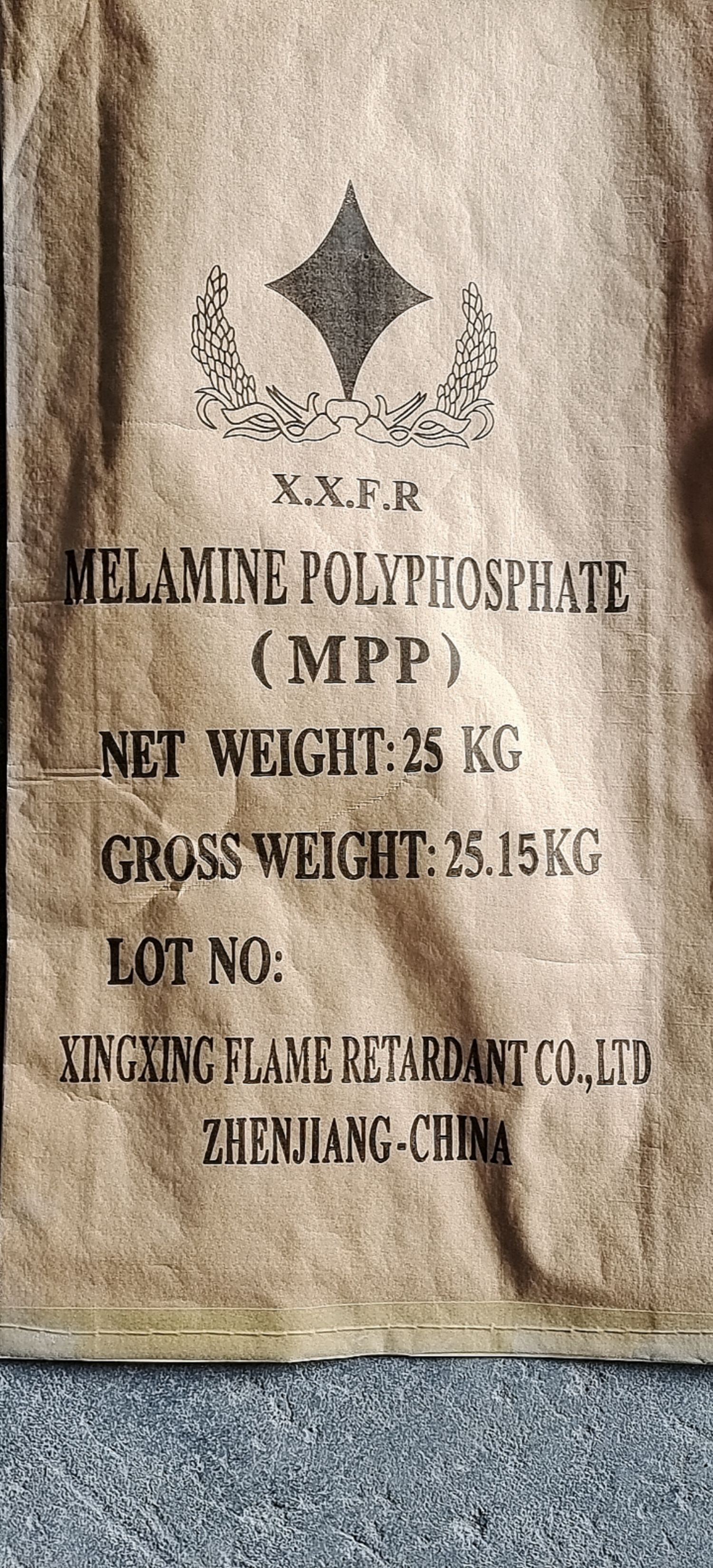
True flame retardancy goes far beyond simply mixing in a powder or liquid. While additives like halogenated compounds or mineral fillers can slow ignition, they often compromise the material’s mechanical properties, processability, or long‑term stability. Relying solely on additives ignores the complex interplay between the polymer matrix, the fire scenario, and the end‑use environment. A holistic approach considers the entire system — from the base polymer’s inherent char‑forming tendency to the way heat and mass transfer occur during a fire.
Advanced strategies focus on designing the material itself to resist fire. This can mean engineering the polymer backbone with thermally stable groups, creating intumescent systems that swell into an insulating barrier, or using synergistic combinations that work at different stages of combustion. For example, some materials are formulated to release water or non‑flammable gases when heated, cooling the surface and diluting oxygen. Others form a robust carbonaceous layer that shields the underlying material. These mechanisms require careful formulation and processing know‑how, far exceeding a simple additive approach.
Moreover, regulatory pressure and sustainability concerns are pushing the industry to move away from traditional additives that may be toxic or persist in the environment. The demand now is for flame‑retardant solutions that are not only effective but also safe throughout the product’s life cycle. This has spurred innovation in reactive flame retardants that bond to the polymer, bio‑based alternatives, and even coatings that provide protection without altering the bulk material. Ultimately, meeting modern fire‑safety standards means embracing a multi‑disciplinary mind‑set — one where chemistry, physics, and engineering converge to create materials that are inherently safer.
Navigating the Trade-Offs in Material Performance
Material selection rarely offers a perfect solution; every advantage carries a hidden cost. A polymer might excel in flexibility but degrade under UV exposure, while a metal alloy prized for hardness could introduce unwanted weight. Understanding these trade-offs requires moving beyond property data sheets to examine how materials behave under real-world stresses—thermal cycling, chemical contact, or mechanical fatigue. The goal is not to find a flawless material, but to match the most acceptable compromises to the application’s priorities.
Take the classic strength-versus-toughness dilemma. High-strength ceramics resist deformation yet shatter under impact, whereas ductile metals absorb energy but may permanently bend. Engineers often bridge this gap through composites or surface treatments, blending materials strategically. The decision hinges on failure consequences: a brittle fracture in a turbine blade is catastrophic, while a dent in a car panel is merely cosmetic. Mapping these risks against performance requirements exposes which properties you can forfeit and which are non-negotiable.
Cost further complicates the equation. Exotic alloys or advanced composites can deliver exceptional performance, but budget constraints force teams to reassess what “good enough” looks like. Sometimes a slight downgrade in one specification avoids an exponential price hike. By prototyping early and testing under conditions that mimic end-use—temperature extremes, repeated loading, corrosive atmospheres—you uncover whether the trade-offs truly threaten functionality. In the end, material mastery isn’t about avoiding compromises; it’s about choosing them wisely.
Real-World Applications That Benefit the Most
Industries where real-time decisions make or break outcomes gain the most from these advancements. Take healthcare, for instance—surgeons now rely on augmented reality overlays that map a patient's anatomy during complex procedures, reducing risks that were once unavoidable. Emergency rooms use predictive models to triage patients faster, flagging subtle signs of sepsis hours before symptoms become obvious. It’s not about replacing doctors but giving them a sharper lens when seconds count.
Logistics and supply chain networks have similarly transformed. Cross-border shipments once bogged down by paperwork and guesswork now flow through smart hubs that reroute cargo around weather disruptions or port congestions automatically. A warehouse manager can glance at a tablet and know exactly where a delayed component is, how it impacts production lines three countries away, and whether a drone delivery could beat the ground traffic in the last mile. Behind the scenes, edge devices process terabytes of sensor data on forklifts and conveyor belts, catching mechanical failures days before they happen.
Then there’s agriculture, a field where intuition is giving way to data-driven precision. Farmers in drought-prone regions use soil probes and satellite imagery to water only the thirsty patches of a field, cutting water usage by a third without sacrificing yield. Drones scan for early signs of blight, and algorithms determine the exact moment to harvest for peak sugar content in grapes—decisions that used to rely on a grower’s gut feeling and a refractometer. It’s a quiet revolution that keeps supermarkets stocked while using fewer resources.
How Regulatory Shifts Are Reshaping the Market
In recent years, a wave of new regulations has been quietly redrawing the boundaries of entire industries. From stricter data privacy laws to tighter environmental standards, companies are being forced to rethink their operations from the ground up. The immediate impact is often a scramble for compliance, but the long-term effects run deeper—reshaping competitive dynamics, altering consumer behavior, and opening doors for innovative players who can turn constraints into opportunities. In many sectors, the line between legal requirement and strategic advantage is becoming increasingly blurred.
One clear example is the financial services industry, where open banking rules have dismantled traditional data monopolies. Incumbent banks, once protected by customer information silos, now face agile fintech startups that build services on top of newly accessible data streams. Meanwhile, in the automotive world, emission targets are accelerating the electric transition far faster than consumer demand alone would have. This regulatory pressure doesn't just force product changes; it rewrites supply chains, fuels new partnerships, and drives a fundamental rethinking of business models that had seemed unshakeable for decades.
The real story, though, lies in how businesses are adapting. Rather than treating compliance as a box-ticking exercise, forward-looking companies are embedding regulatory shifts into their strategic planning. They’re using mandates as a catalyst for innovation, redesigning customer experiences to align with new expectations around transparency and trust. Those who move first often find that what started as a regulatory burden becomes a brand differentiator, insulating them from future shocks while competitors play catch-up. In this new landscape, regulatory fluency is becoming as critical as financial acumen or technological prowess.
Key Considerations for Selecting the Right Grade
When evaluating material options, it’s easy to default to the cheapest or most familiar grade. But without a clear picture of the actual conditions your product will face, that shortcut often backfires. Temperature swings, chemical contact, impact loads, and even the manufacturing process itself can expose subtle weaknesses. Taking the time to map out these demands early helps narrow the field to grades that won’t just survive, but hold up confidently over the long haul.
Another angle that’s frequently overlooked is how the grade behaves during production. Some materials flow beautifully but warp during cooling. Others resist wear in the final part but chew through tooling. And then there’s the balancing act of additive packages—fillers, stabilizers, and modifiers can shift properties in ways that look great on a data sheet but behave unpredictably in the real world. Specifying a grade that harmonizes processing behavior with end-use performance often separates a smooth launch from a troubleshooting nightmare.
Cost per pound is a distraction if you ignore total cost in use. A high-performance grade that eliminates secondary steps or extends replacement cycles can easily justify its upfront price. Smart decisions come from looking past the resin price tag to the full picture: scrap rates, cycle times, post-processing, and failure risk. When you frame material selection around long-term value rather than initial spend, the right grade becomes less about guesswork and more about simple arithmetic.
FAQ
Melamine polyphosphate (MPP) is a nitrogen-phosphorus-based flame retardant. When exposed to heat, it decomposes and forms a swollen, insulating char layer on the material's surface. This char blocks oxygen, reduces heat transfer, and stops flammable gases from escaping, effectively slowing down combustion. Its action is mainly through intumescence, making it popular in halogen-free safety formulations.
MPP works particularly well in polyamides and polyolefins, so you'll often find it in electrical connectors, automotive under-hood components, and electronic housings. It's also used in construction materials like insulation foams and coatings where fire safety standards are strict. Its compatibility with glass-reinforced plastics makes it a go-to for high-performance parts.
Compared to traditional brominated or chlorinated options, MPP is halogen-free, so it doesn't release corrosive or highly toxic fumes during a fire. This gives it a big safety advantage in enclosed spaces. It also tends to produce less smoke, which improves visibility and reduces inhalation hazards. Plus, it avoids environmental persistence issues that some legacy retardants have.
Key factors include particle size distribution for dispersion, thermal stability matched to your processing temperature (especially for high-melting polymers), and phosphorus content that dictates efficiency. You'll also want to check for surface treatments that improve moisture resistance and compatibility with your polymer matrix. Don't overlook the required fire test standard—UL-94 V-0 often demands specific loadings.
Yes, MPP's performance can vary. In polyamides, it interacts favorably with the polymer's own char-forming tendency, giving high efficiency. In polypropylene, a char former like pentaerythritol is often added to boost intumescence. Some grades are coated to reduce water absorption and improve dispersion in hydrophobic matrices. Always test with your exact formulation, as minor additives can shift behavior significantly.
It's definitely more sustainable than many alternatives. It contains no halogens, doesn't bioaccumulate, and its breakdown products are relatively benign. Many grades meet REACH and RoHS requirements. However, the full lifecycle—including raw material sourcing—should be considered. As the industry moves toward circular economy goals, MPP is seen as a responsible choice that balances performance with environmental mindfulness.
Conclusion
When exploring top melamine polyphosphate options, it becomes clear that their fire-quenching power stems from a dual-phase mechanism. The nitrogen-rich triazine ring releases inert gases to dilute oxygen, while the phosphate group chars and crosslinks the polymer to form an insulating barrier. This synergy pushes beyond simple additive blending—modern grades use surface treatments and particle engineering to preserve mechanical strength and electrical properties, sidestepping the classic compromise between flame retardancy and material integrity. In practice, the best choices balance these factors for demanding applications: slim electronics needing high CTI values, automotive connectors exposed to under-hood heat, and building materials requiring low smoke and toxicity.
Regulatory pressures like tighter halogen restrictions and evolving eco-labels further narrow the field. Grades that pass the latest IEC standards without relying on synergists like antimony trioxide are gaining ground, especially in regions phasing out certain flame retardants. Yet selection is rarely one-size-fits-all; the right MPP variant depends on the polymer matrix—be it polyamide 6,6 in glass-reinforced parts or thermoplastic elastomers in cable jackets. As formulators chase higher RTI values and thinner wall sections, the spotlight shifts to fine-tuned particle sizes and synergistic pairs, making the difference between a safety checkbox and true performance enhancement.
Contact Us
Contact Person: Guohua Wang
Email: [email protected]
Tel/WhatsApp: 8613003442895
Website: https://www.xxflameretard.com