

Top Ultrasonic Spray Nozzle Technologies Revolutionizing Industrial Coating Processes
2026-08-12
Industrial coating processes are undergoing a quiet but powerful transformation, driven by precision ultrasonic spray nozzle technologies that were once confined to niche labs. From uniform thin films to complex 3D surfaces, these innovations are rewriting the rules of efficiency and material savings. Among the pioneers shaping this shift is Siansonic, whose advanced nozzle designs are pushing the boundaries of what’s possible. Curious how these tiny devices are making such a massive impact? Let’s dive into the top breakthroughs that are redefining the industry.
How High-Frequency Vibrations Create Uniform Droplets
When a liquid stream exits a nozzle, its surface tension naturally drives it to break into droplets, a process first described by Rayleigh. Without control, this breakup yields droplets of varying sizes, as random disturbances along the jet grow and pinch off at irregular intervals. High-frequency vibrations inject a dominant, periodic perturbation that overrides these random instabilities. By vibrating the nozzle or the fluid itself at precisely tuned frequencies, the jet’s surface is forced into a consistent wave pattern, ensuring that each pinch-off event occurs at the same phase and position. This turns an otherwise chaotic process into a repeatable, precise one.
The physics behind this relies on selectively amplifying a specific wavelength of disturbance. According to Rayleigh’s theory, an inviscid jet is most unstable to perturbations with a wavelength about 4.5 times the jet diameter. High-frequency vibrations can be tuned to match this optimal wavelength, creating a single, dominant necking point that detaches droplets of equal volume. Advanced methods, such as piezo-driven actuators or magnetostrictive transducers, can modulate the excitation with sub‑microsecond precision, enabling the production of monodisperse droplets on demand—critical for applications needing exact dosing or uniform coating.
Beyond simple uniformity, high-frequency vibration opens doors to tailoring droplet behavior. By adjusting the vibration amplitude, the satellite drops that often accompany main drops can be suppressed or merged, refining the size distribution further. In industrial settings, this principle underpins inkjet printing, where precise droplet placement and size are paramount, and pharmaceutical spray drying, where uniform particle size ensures consistent drug delivery. The ability to harness a liquid’s natural instability into a controlled, predictable outcome demonstrates how a subtle mechanical input can transform fluid dynamics into a precise manufacturing tool.
Breaking Down the Self-Cleaning Nozzle Mechanism
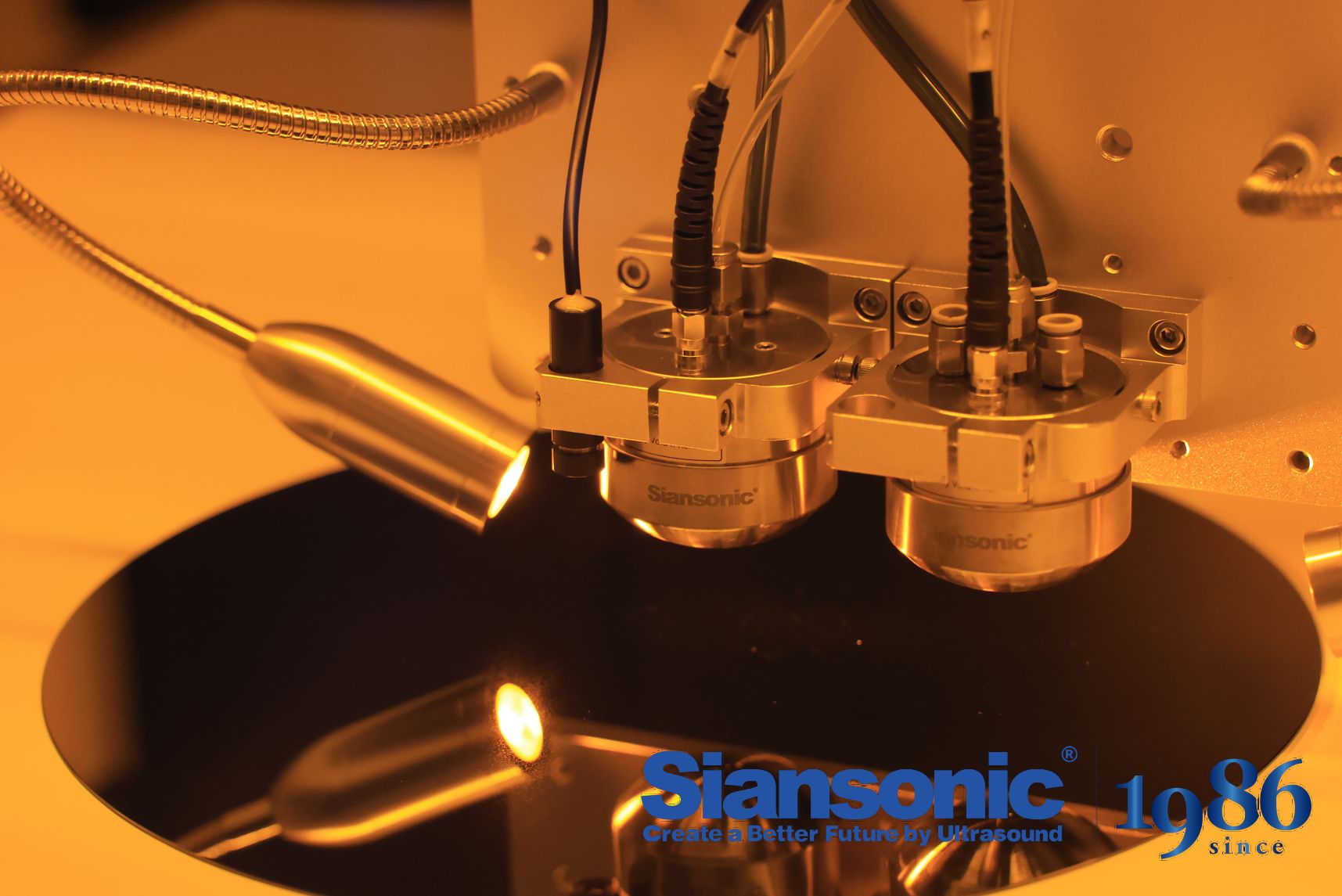
The self-cleaning nozzle tackles clogging without manual intervention. It achieves this by reversing flow or channeling fluid through alternative paths inside the housing. As residues accumulate, pressure builds and triggers a mechanical shift. This motion either widens a secondary outlet or momentarily tips a flexible element, sweeping debris away before normal operation returns. The cycle is fast and often goes unnoticed.
Durability comes from minimal moving parts. A spring-loaded piston or a deflector plate is usually the only active component. Hardened stainless steel or ceramic inserts handle repeated impacts, while the housing geometry itself guides the purge. No electronics are needed; the system runs on fluid dynamics alone, making it reliable in gritty environments like industrial spray lines or inkjet printers.
Application-specific tuning matters. High-viscosity fluids require larger clearances and a slower reset phase to prevent shearing. For delicate coatings, the nozzle uses a laminar-flow breakaway pattern that leaves no residue. Even the cleaning action can be softened to avoid splashing, and some designs nest an inner filter that self-flushes first, protecting the main orifice from ever seeing large particles.
Ultra-Thin Film Deposition for Solar Panel Efficiency
Precision coating technologies have changed the way photovoltaic cells capture sunlight. By depositing films just a few nanometers thick, manufacturers can tailor optical and electrical properties without adding bulk or weight. These layers minimize reflection, passivate surface defects, and steer charge carriers along optimal paths. The result is a notable jump in conversion efficiency, achieved not by adding more material but by engineering every interface at the atomic scale.
Atomic layer deposition stands out for its ability to build conformal films one atomic layer at a time. This method fills microscopic pinholes and covers textured surfaces uniformly, which traditional spray or evaporation techniques often miss. Zinc oxide, aluminum oxide, and titanium dioxide are common choices, each selected for a specific role—whether it is transparent conduction or electron selection. The tight control over stoichiometry and thickness means recombination losses drop sharply, directly boosting the current and voltage output.
Beyond the lab, ultra-thin films are making solar installations more adaptable. Lightweight, flexible panels can now wrap around curved structures without sacrificing performance. Manufacturing cost per watt benefits from reduced raw material use and faster deposition cycles. There is still a careful trade-off, though: too thin a film risks pinholes and shunting, while overly thick layers waste material and block light. Ongoing work focuses on finding that exact sweet spot where durability, cost, and efficiency intersect.
Why Piezoelectric Materials Are Changing Nozzle Design
Traditional nozzle designs rely on mechanical actuation that places physical limits on precision and response time. Piezoelectric materials sidestep these constraints by converting electrical signals directly into mechanical displacement. The result is a nozzle that can start and stop flow within microseconds, enabling drop-on-demand fluid delivery with sub-nanoliter accuracy. This is not a minor improvement over solenoid or pneumatic systems—it’s a fundamental shift that brings digital control to fluid dispensing.
The real-world impact shows up in applications where consistency and speed intersect. Industrial inkjet printheads now routinely operate at tens of kilohertz, each nozzle independently controlled by a piezo element that contracts or expands on command. The lack of heat generation—unlike thermal bubble-driven methods—preserves fluid properties and broadens the range of process-compatible materials. You see similar advantages in fuel injection systems where precise droplet sizing and timing directly improve combustion efficiency beyond what mechanical injectors can achieve.
What often goes unmentioned is the reliability angle. Piezo ceramics exhibit fatigue lifetimes measured in billions of cycles when driven below their coercive field. This means nozzles maintain consistent performance over industrial duty cycles without drift or degradation. Combined with their compact size and low power demand, they allow nozzle arrays to be scaled up into compact manifolds that would be unworkable with conventional actuators. Engineers are just beginning to explore what becomes possible when you remove the inertia and wear problems that have defined nozzle technology for decades.
From Laboratory to Production Line: Scaling Ultrasonic Coating
Moving ultrasonic coating from a benchtop curiosity to a full-fledged manufacturing process involves far more than simply running the same recipe on a bigger machine. Lab-scale setups thrive on flexibility: the operator can tweak atomization pressure, nozzle-to-substrate distance, and flow rate on the fly, compensating for subtle shifts in fluid viscosity or ambient conditions. On a high-speed production line, those manual adjustments disappear. Instead, the entire system must lock into a narrow process window that delivers repeatable film thickness and morphology across thousands of parts per shift. Engineers quickly discover that parameters that worked beautifully on a 10 cm² coupon can produce edge defects, overspray, or dry spots when replicated on a moving web or a dense array of components.
The core physics of ultrasonic atomization doesn’t scale linearly. In the lab, a single piezoelectric transducer vibrating at 40–120 kHz generates a fine mist that drifts gently onto the substrate, relying on gravity and low-velocity shaping air. As throughput demands increase, multiple transducers are clustered together, and the introduction of forced air or electrostatic assistance becomes inevitable to direct the droplets accurately at production speeds. However, adding these elements changes the droplet size distribution, solvent evaporation rate, and the standing wave pattern near the surface, often leading to coating non-uniformities that are invisible under slow batch conditions. Successful scale-up hinges on iterative mapping of these interactions, often using design-of-experiments approaches that treat nozzle pitch, air knife geometry, and conveyor speed as interdependent variables rather than isolated dials.
Equally critical is the shift from post-coating inspection to real-time, in-line quality assurance. Laboratory coating evaluation typically relies on offline profilometry or spectrophotometry after the fact. On a production line, waiting for a roll to be completed before detecting a thickness drift is unacceptable. This has driven the adoption of machine vision systems that track wet-film reflectance, laser triangulation sensors scanning across the web, and automated feedback loops that adjust fluid delivery to each nozzle. In some facilities, ultrasonic coating stations now sit inside climate-controlled enclosures where temperature and humidity are managed within tight tolerances to eliminate the day-to-day variability that plagued early scale attempts. The result is a technology that, after years of patient engineering refinement, now coats fuel cell membranes, stents, and flexible electronics with a consistency that rivals traditional gravure and slot-die methods—while retaining the solvent-free, non-clogging advantages that made ultrasonic coating worth scaling in the first place.
The Role of Nozzle Geometry in Coating Thickness Control
Nozzle geometry plays a pivotal part in determining the uniformity and precision of applied coatings across a substrate. The internal contour of the nozzle—whether straight, tapered, or bell-shaped—directly influences the velocity and pressure distribution of the coating fluid as it exits the orifice. A carefully engineered nozzle profile can subdue turbulence, minimize edge effects, and promote a laminar flow that translates into a consistent wet film thickness. For instance, a long, gradually converging nozzle tends to yield a smoother flow with reduced splattering, which is particularly crucial for high-speed roll-to-roll coating operations where even minute variations can cause visible defects.
Beyond the internal shape, the orifice diameter and length-to-diameter ratio are critical parameters that affect the fluid’s response to shear and extensional forces. A smaller orifice typically generates a higher exit velocity for a given pressure, which can lead to thinner coatings if not balanced with proper wetting dynamics. Conversely, a nozzle with a wide opening may struggle to maintain a stable film at low flow rates, resulting in ribbing or streaks. Adjusting these geometric features allows operators to fine-tune the coating thickness without altering the formulation, making nozzle design a versatile lever in process optimization. Moreover, the external face of the nozzle, such as the lip angle or the presence of a sharp edge, governs the point of detachment and can suppress dripping or necking, thereby preserving the target thickness across the entire width of the substrate.
Practical implementation often involves iterative testing, as computational fluid dynamics simulations still require empirical validation due to the complex rheology of modern coating materials. Subtle modifications—like rounding the nozzle exit or adding a slit profile—can mitigate the formation of boundary layer instabilities that lead to thickness fluctuations. In slot-die coating, for example, the geometry of the upstream and downstream lips dictates the pressure gradient in the coating bead, directly linking nozzle design to the achievable thickness window. A well-designed nozzle not only ensures repeatable outcomes but also extends the operational limits of the coating process, enabling thinner or more uniform layers that meet stringent industry standards.
FAQ
Unlike air-driven or pressure-based nozzles, ultrasonic spray nozzles use high-frequency vibrations to break liquid into fine, uniform droplets. This eliminates the need for high pressures or large volumes of carrier gas, giving you a softer, more controlled spray pattern that drastically reduces bounce-back and overspray.
They generate a narrow droplet size distribution through capillary wave atomization, where standing waves on the liquid surface create droplets with very consistent diameters. The gentle, low-velocity plume allows each droplet to settle evenly across the substrate, eliminating the heavy edges or mottling you often see with other methods.
You’ll find them in medical device coating for drug-eluting stents, precision electronics like conformal coatings on PCBs, thin-film solar panel manufacturing, and even food packaging where a flawless barrier layer is critical. Any sector that demands micron-level thickness control and defect-free films tends to adopt them fast.
Yes, but with some clever engineering. While traditional ultrasonic nozzles prefer water-like viscosities, newer models integrate heated liquid pathways or dual-frequency excitation to atomize fluids up to several hundred centipoise. This opens the door for spraying adhesives, photoresists, and even certain paste-like suspensions without dilution.
Look for titanium alloy construction for chemical resistance, a self-cleaning oscillation mode to prevent clogging, precision-shaped atomizing tips that shape the spray cone, and real-time feedback loops that adjust power based on flow rate. The best ones also decouple the liquid delivery from the atomization energy to keep the process stable over long runs.
Their ultra-low-velocity spray virtually eliminates overspray, and the tight droplet distribution means you’re not losing fine mist to air currents. Combined with the ability to operate at low flow rates and start/stop instantly without dripping, transfer efficiencies routinely exceed 95%, compared to 40–60% for conventional air spray.
Conclusion
Ultrasonic spray nozzle technologies are fundamentally shifting the landscape of industrial coating, driven by a wave of innovations that tackle long-standing challenges in precision and efficiency. At the core of this shift are high-frequency vibrations, typically generated by piezoelectric materials, which atomize liquids into remarkably uniform droplets without the need for high-pressure systems. This gentle, low-velocity spray virtually eliminates overspray and rebound, ensuring near-total transfer of expensive coating materials. One standout advancement is the self-cleaning nozzle mechanism, where the ultrasonic energy itself continuously prevents clogging by keeping solids in suspension and breaking down potential blockages in real time—minimizing downtime and manual intervention. Pairing this with sophisticated control over droplet size and velocity, modern nozzles can deposit films with extraordinary accuracy, a capability that owes much to advances in nozzle geometry. By precisely engineering the shape and internal channels of the nozzle, engineers can now fine-tune spray patterns and coating thickness to meet the exacting demands of sectors ranging from electronics to medical devices.
Moving beyond the lab, these technologies are proving their worth on the production floor, where reliability and scalability are paramount. A prime example is in the solar energy industry, where ultrasonic nozzles are enabling ultra-thin film deposition for photovoltaic cells. The ability to lay down perfectly even layers of conductive inks or protective coatings—often only nanometers thick—directly translates to improved cell efficiency and reduced material waste, a critical factor in making renewable energy more cost-competitive. Meanwhile, the shift from traditional pneumatic nozzles to compact, piezoelectric-driven designs is allowing manufacturers to integrate coating steps into tight production lines without sacrificing performance. As more industries adopt these systems, the focus intensifies on process control: from the way nozzle architecture influences liquid breakup to the closed-loop feedback systems that maintain consistency over thousands of cycles. This convergence of materials science, precision engineering, and practical scalability is not merely an upgrade—it is a redefinition of what industrial coating can achieve, opening doors to applications that were once considered impractical or impossible.
Contact Us
Contact Person: Ivy Zhang
Email: [email protected]
Tel/WhatsApp: +86 1081502288
Website: https://www.siansonic.com/