

Top UV Piezo Inkjet Printer Company Drives Innovation in Digital Fabrication
2026-07-05
Digital fabrication is evolving at breakneck speed, and a quiet revolution is being led by a top UV piezo inkjet printer company. Meet Danmajet—a name reshaping how industries think about precision, speed, and versatility in printing. From delicate electronics to rugged industrial parts, their innovations are blurring the line between prototyping and production. Yet most people still don't realize just how far UV piezo technology has come. What if the next manufacturing breakthrough is already sitting on your desktop?
Beyond Flat Surfaces: The Rise of Multi-Dimensional Piezo Printing
Piezo printing, a technology that harnesses the precision of piezoelectric actuators to deposit minuscule droplets, has long been confined to two-dimensional substrates. Its dominance in flat-surface applications—from ceramic tile decoration to direct-to-shape labeling on planar packaging—has driven remarkable advances in resolution and speed. Yet, the inherent limitation of working solely on level planes has left a vast array of objects untouched, creating a chasm between the technology’s potential and real-world demands. The push beyond flat surfaces isn't merely a minor evolution; it’s a fundamental rethinking of how we can integrate functional and aesthetic printing into the complex geometries that define modern manufacturing.
The shift toward multidimensional printing is propelled by breakthroughs in motion control and printhead kinematics. Robotic arms now manipulate substrates with six degrees of freedom, dynamically tilting and rotating irregularly shaped parts to maintain optimal standoff distance and perpendicularity to the surface. Simultaneously, advanced software slices three-dimensional models into conformal toolpaths, compensating for curvature and undulation in real time. This synergy enables the deposition of conductive inks onto smartphone antenna carriers that wrap around internal chassis, or the application of protective coatings onto turbine blades with compound curves—tasks once deemed impractical. The result is a seamless marriage of digital flexibility and geometric complexity, opening doors to new applications across automotive, aerospace, and consumer electronics.
Looking forward, multidimensional piezo printing is transcending the mere transfer of ink onto surfaces; it is evolving into a method for building surfaces themselves. By stacking layers of functional materials—piezoceramics, conductive adhesives, dielectric polymers—onto non-planar substrates, manufacturers can create embedded sensors and actuators directly within structural components. Imagine a prosthetic limb with integrated pressure sensors printed conformally onto its socket, or an aircraft wing with de-icing elements deposited in a single, continuous process without seams or fasteners. This convergence of additive manufacturing and multi-axis precision is blurring the line between decoration and functionality, promising a future where every surface, no matter how convoluted, becomes a canvas for innovation.
Ink Chemistry Meets Precision Engineering for Unmatched Print Quality
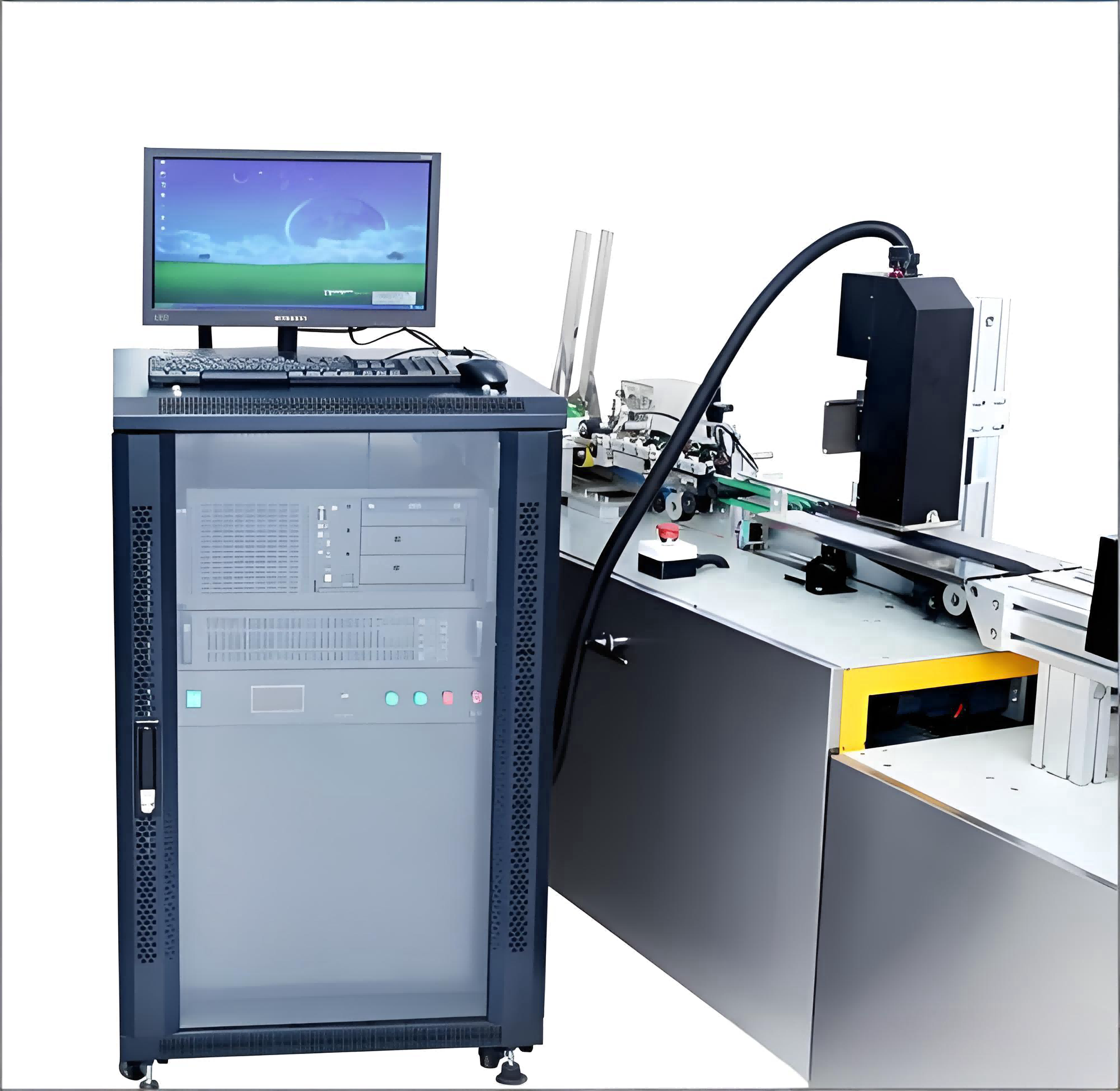
At the heart of every great print lies a carefully balanced interaction between ink and machinery. The chemical composition of the ink—pigments, binders, solvents—must be tuned to respond precisely to the way the printer lays it down. Too thick, and it clogs the nozzles; too thin, and it bleeds. The best formulations turn mere liquid into controlled droplets that reach the paper at the exact right moment, creating dots so fine they merge into seamless gradients.
Precision engineering steps in to handle the rest. Print heads with microscopic accuracy, servo-driven paper feeds, and tightly controlled temperature and humidity environments all ensure that each drop lands exactly where intended. Variations as small as a few microns can shift a line or muddy a detail. When ink chemistry and machine calibration work in concert, the result is not just a print, but a faithful reproduction of the original intent—whether it’s a photograph, a fine art piece, or a technical drawing.
That partnership between science and mechanics doesn't happen by accident. It requires continuous refinement: chemists tweaking surface tension and viscosity, engineers optimizing firing frequencies and nozzle geometry. The payoff is print quality that goes beyond resolution numbers—it's the tactile feel of smooth gradients, the crispness of text under a loupe, and colors that stay true for decades.
How One Company is Turning Digital Files into Physical Objects in Seconds
Imagine finalizing a 3D model on your laptop and, less than a minute later, holding the physical version in your hands. That’s the reality one pioneering company has engineered—compressing what was once a lengthy fabrication process into a near-instant transformation. The secret lies in a proprietary system that bypasses traditional manufacturing constraints, using an array of high-speed photopolymer projection and intelligent material layering. Instead of waiting hours or days for a prototype, designers and engineers can now iterate in real time, turning digital concepts into tangible objects almost as quickly as they can think of them.
At the core of this breakthrough is a radical shift away from layer-by-layer 3D printing. The company’s approach projects an entire slice of the object simultaneously into a light-sensitive resin, curing complex geometries in a flash. Advanced algorithms control the light patterns with micrometric precision, while a specially formulated material solidifies under exposure without the typical trade-offs in strength or detail. The result isn’t just rapid—it’s a seamless leap from screen to solid, enabling on-the-spot customization, last-minute design tweaks, and even small-batch production runs without tooling delays.
Beyond the technology itself, the real impact is in how it reshapes creative workflows. Artists test sculptural forms in minutes, not weeks; architects convert blueprints into scale models between meetings; medical professionals receive patient-specific surgical guides while the patient is still being prepped. By eliminating the friction between digital intent and physical realization, this company isn’t just speeding up manufacturing—it’s dissolving the boundaries of what’s possible when ideas can be materialized on demand.
Waste-Free Production: The Environmental Edge of UV Piezo Technology
Traditional printing often leaves behind a trail of unused inks, solvents, and contaminated materials that demand careful disposal. UV piezo technology sidesteps this entirely. Instead of relying on solvent-based fluids that evaporate into the air or require special handling, it uses 100% solid-content inks that cure instantly under ultraviolet light. Nothing is wasted waiting in the tray, nothing is rinsed down the drain, and there are no volatile organic compounds sneaking into the workspace. The result is a production line where every drop of ink ends up on the substrate—not in a landfill.
The precision of the piezoelectric printhead is what makes this zero-waste ambition practical. By controlling droplet placement with surgical accuracy, it eliminates overspray, misting, and the need for purging cycles that discard usable ink. Even during job changes or overnight pauses, the system remains stable, requiring minimal maintenance flushes. This degree of efficiency transforms waste streams from a cost center into a non-issue. Facilities can shrink their hazardous material storage, skip expensive disposal contracts, and cut the paperwork tied to environmental compliance—all while maintaining a cleaner, safer production floor.
Beyond the immediate shop floor, the absence of waste carries a quieter, long-term benefit: it reshapes the relationship between manufacturing and the surrounding ecosystem. Without chemical runoff, air emissions, or microplastic shedding, UV piezo lines can operate near residential zones, in sensitive environments, or inside tight urban facilities without triggering regulatory friction. This isn’t just about hitting sustainability targets—it’s about making production so inherently clean that waste becomes a concept from a different era. For companies trying to align with circular economy principles, that’s a fundamental advantage that extends far beyond a glossy annual report.
Customization Without Compromise: Small Runs, Big Impact
For brands tired of being told their vision requires thousands of units to be viable, small‑run production flips the script. It means you can launch a limited capsule, test a new design, or create a meaningful gift collection without warehouses full of unsold stock. The magic isn't just in lower quantities—it's in the freedom to iterate faster, to personalize deeply, and to say yes to ideas that massive factories would reject. When every piece matters, the connection between maker and product becomes tangible, and that energy carries straight through to the person who wears or uses it.
The real impact shows up in places big operations overlook. A restaurant can order 50 custom‑etched glassware sets that match their brand story, not a catalog. A boutique might collaborate on a 30‑piece apparel drop that sells out in a day because it feels exclusive and intentional. There’s no compromise on detail either—small runs often allow for techniques or materials that high‑volume production dilutes, whether it’s hand‑stitched seams, locally sourced clay, or packaging that feels like unwrapping a secret. What you get isn’t a watered‑down version of your idea; it’s the idea, exactly as you wanted it, brought to life in quantities that make sense for how you actually do business.
Beyond the obvious inventory advantages, small‑batch manufacturing rewires relationships. Suppliers become partners who problem‑solve alongside you, not just order‑takers. Lead times shrink because there’s no queue behind a million‑unit run. And when customers know an item was made in a limited batch, it shifts the value perception from generic to rare. That shift isn’t manufactured scarcity—it’s the honest byproduct of making things with care, in numbers that honor both the craft and the community you’re building.
The Quiet Revolution: Piezo Inkjet Printers in Next-Gen Factories
Walk through a modern factory floor and you might notice something missing: the loud hum of machinery. In its place, a new breed of printers works almost silently, yet with astonishing precision. Piezo inkjet technology, once confined to desktop photo printers, is quietly reshaping production lines. Unlike older methods that rely on heat to push ink through nozzles, these printers use electric pulses to deform a crystal, ejecting droplets with microsecond timing. It’s a subtle shift, but one that enables everything from conductive circuits on flexible films to bio-inks for tissue scaffolds—all without the messy, energy-intensive processes of traditional manufacturing.
The real magic lies in the versatility. A single printer can switch between materials as diverse as ceramic nanoparticles, organic semiconductors, or even living cells, simply by swapping cartridges and adjusting waveform settings. This adaptability is turning factories into chameleons, able to pivot from printing OLED displays one day to sensor arrays the next. Designers are no longer shackled by tooling constraints; they iterate rapidly, test prototypes on the same line that will run production, and scale up without retooling. It’s a lean, fluid approach that makes the rigid assembly lines of the past look like museum pieces.
Yet this transformation rarely makes headlines. It happens in the background—a silent overhaul of how we build the physical world. As industries chase sustainability and customization, piezo inkjet steps up not with a roar, but with a quiet hum of progress. The factories of tomorrow won’t just be smarter; they’ll listen to a different kind of rhythm, one drop at a time.
FAQ
Their relentless focus on push the boundaries of material compatibility and printhead precision. By developing proprietary piezo printheads that can handle a vast range of UV-curable inks, they've enabled applications that go far beyond traditional signage—think electronic circuit printing, 3D texturing, and direct-to-object decoration. This engineering-first mindset, combined with deep partnerships in industrial automation, has solidified their position at the forefront.
Innovation comes from their in-house R&D team constantly rethinking how inkjet can replace analog manufacturing steps. They release regular firmware updates that expand printer capabilities, like variable dot control for smooth gradients or real-time nozzle-out compensation. More importantly, they collaborate closely with end-users in prototyping labs, turning niche fabrication challenges into market-ready solutions faster than anyone else.
Instant curing under UV light means no drying time, so parts can be handled immediately, boosting production speed. The piezo printhead offers exceptional droplet control—ejecting consistent picoliter-sized drops for sharp details. Plus, UV inks adhere to an incredible variety of substrates, from glass to metals to flexible films, allowing for multi-material fabrication without pre-treatment in many cases.
It's transforming electronics manufacturing by printing conductive traces and solder masks. In packaging, it enables short-run customized boxes with tactile coatings. The automotive sector uses it for durable interior trim decoration and functional dashboard symbols. Even medical device makers are adopting it for direct printing on device housings with biocompatible UV inks.
They embed advanced vision systems that scan every printed swath, automatically adjusting alignment and droplet placement in real time. Their ink scientists develop custom formulations that bond at a molecular level to specific substrates, resulting in scratch-resistant, colorfast output. Extensive accelerated aging tests—UV exposure, thermal cycling, abrasion—guarantee that prints endure the intended environment.
Recently, they introduced a multi-material deposition system that can switch between conductive, dielectric, and structural UV inks in a single pass. This breakthrough enables the fabrication of fully functional electronic assemblies—like antennas with embedded circuits—directly onto 3D surfaces, eliminating multiple traditional manufacturing steps and opening up design possibilities that were previously impossible.
Conclusion
At the heart of digital fabrication’s next leap, a top UV piezo inkjet printer company is quietly reshaping how we think about manufacturing. Moving beyond flat surfaces, their multi-dimensional piezo printing systems now handle curved, textured, and even irregular substrates with the same ease as paper. This isn’t just about adding a third axis; it’s a fundamental shift that lets designers embed electronics directly into product housings or print functional gradients onto contoured surfaces. The secret lies in a tight marriage of ink chemistry and precision engineering—piezo heads fire custom-formulated UV inks with picoliter accuracy, yielding finishes that rival traditional coatings while adhering to glass, metal, and flexible polymers. What used to demand days of tooling now starts from a digital file and finishes in seconds, blurring the line between prototyping and production.
Another quiet strength is environmental: UV piezo technology enables waste-free production by curing instantly on demand, eliminating solvent evaporation and reducing material scrap. For brands, this means customization without compromise—small runs carry the same fidelity and durability as mass-produced items, but with zero setup penalties. Imagine short-batch packaging that shifts designs weekly, or medical devices tailored to individual anatomies, all flowing from the same machine. The real revolution, though, is in next-gen factories, where these printers hum alongside robotics, replacing whole painting and plating lines. They’re not just quieter; they’re smarter, self-calibrating, and networked into production ecosystems. By turning digital files into physical objects with unprecedented versatility and sustainability, this company isn’t just selling printers—it’s enabling a manufacturing paradigm where complexity is free, waste is optional, and every surface becomes an opportunity for precision.
Contact Us
Contact Person: Jacky
Email: [email protected]
Tel/WhatsApp: 086 15000607053
Website: https://www.danmajet.com