

Tris(2-ethylhexyl) Phosphate Maker Selection: A Practical Guide for Procurement Teams
2026-10-14
Most procurement teams don't think about tris(2-ethylhexyl) phosphate until a batch drifts out of spec or a shipment slips. Then the real cost of the wrong maker becomes impossible to ignore. This guide breaks down what separates reliable suppliers from risky ones, and why Fortune has earned a spot on more and more approved vendor lists.
When a Spec Sheet Isn't Enough: Reading TEHP Supplier Claims
A TEHP spec sheet can look flawless on paper—clear APHA color, low acid number, high purity. But those numbers often rest on methods the supplier chooses, not necessarily the ones that matter to your process. One vendor's 99.2% assay by GC area percent may hide a co-eluting impurity that another vendor's method would flag. Without knowing the test conditions, you are comparing labels, not materials.
Request the actual certificate of analysis for a recent production batch, not the idealized datasheet. Check whether the moisture and acidity values are typical or just best-case. If your application is sensitive to metal ions or residual alcohol, ask for those specific results—many TEHP suppliers will not list them unless you push. Low odor and low volatility claims often lack a defined test protocol, so treat those as starting points for your own verification.
Pull a sample and test it under your own storage and processing conditions. Run the incoming QC checks that reflect how you actually use TEHP, not just the generic industry specs. A supplier's claim becomes credible when it survives contact with your reality, not when it looks good on a PDF.
The Impurity Trail: What Cheap Quotes Usually Hide
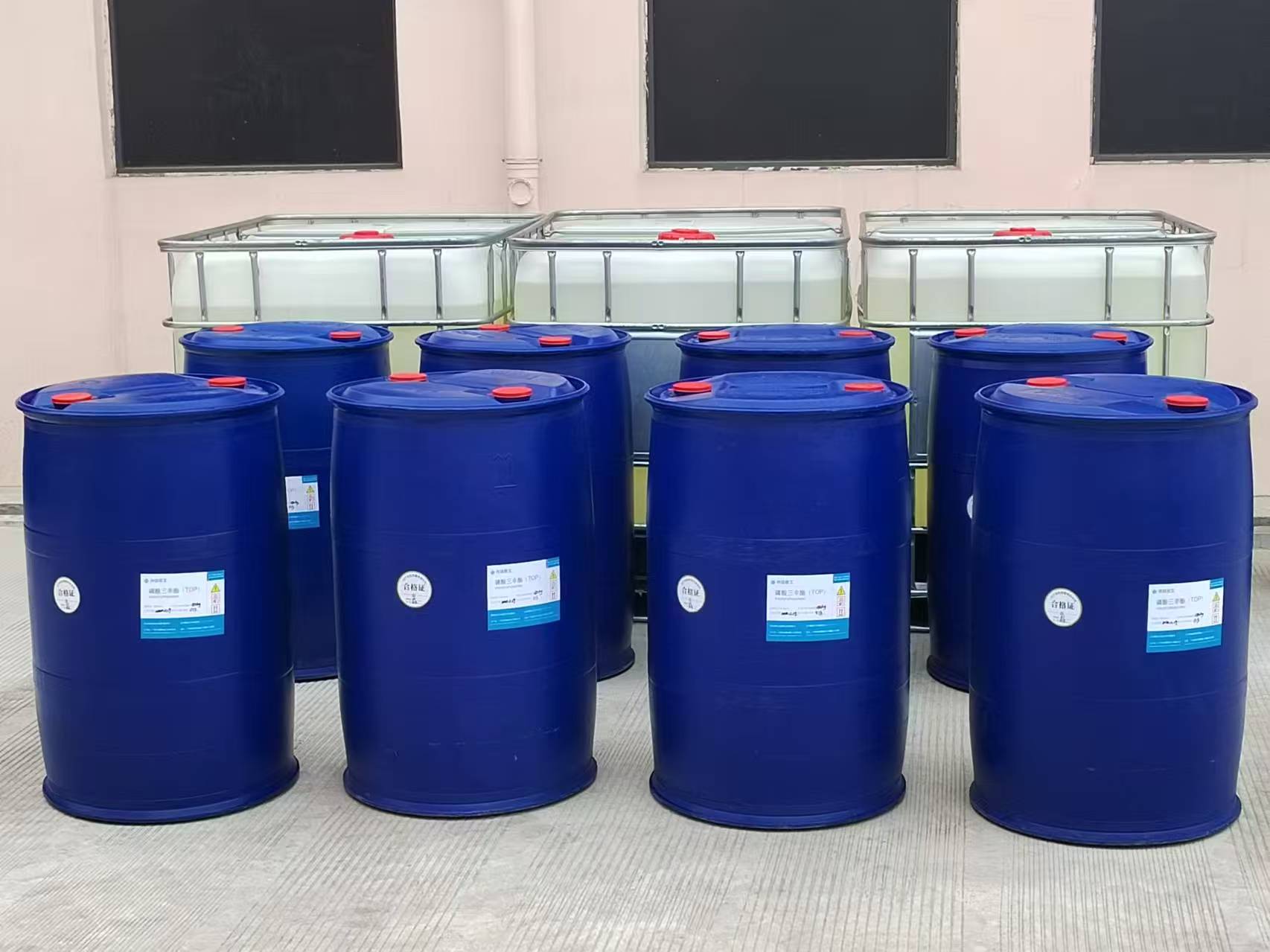
The lowest number on a quote rarely tells the whole story. Impurities in raw materials, skipped inspection steps, or substitutions that nobody mentions until delivery all tend to hide behind that attractive figure. A supplier can quietly switch to a lower-grade alloy, use a thinner coating, or skip a final tolerance check just to shave a few points off the price.
Those choices don't appear on the invoice, but they surface later as early wear, field failures, or batches that fail third-party testing. The impurity trail is easiest to spot when you compare line-item specifications instead of totals. Ask for mill certificates, traceability documents, and the exact test methods used.
Tracing that trail before signing means checking a sample yourself, visiting the line if possible, and asking how the supplier can hit that number while others can't. The real cost of a cheap quote is usually paid after the purchase order, not before.
Batch-to-Batch Drift: Why Consistency Beats a One-Time Sample
Every production run carries its own subtle fingerprint, even when the recipe, machines, and operators stay exactly the same. Raw material lots shift in moisture content or particle size, ambient temperature nudges reaction rates, and tooling wears down in ways no one notices until the output drifts. This batch-to-batch drift is not a sign of failure — it's the natural rhythm of any real-world process. Ignoring it means assuming a single snapshot can speak for the whole story, which it rarely can.
A one-time sample is seductive because it feels decisive: test it once, pass it, and move on. But that single data point is a lottery ticket. It might land on a lucky batch that happens to sit right at the target while the next ten batches wander off spec. Or it might catch an outlier and trigger an unnecessary alarm. Without seeing how values move from batch to batch, you cannot tell the difference between a stable process and one that is silently sliding toward the edge of its tolerance band.
Consistency, on the other hand, is measured over time, not at a moment. Tracking the same metric across dozens of batches reveals the drift pattern — whether it's gradual, cyclical, or sudden after a changeover. That pattern is what lets you predict when a process will need adjustment before it produces rejects. It also builds a baseline that makes real anomalies stand out against normal variation. In the end, a one-time sample tells you where you were; batch-to-batch consistency tells you where you're heading.
Supply Chain Mapping for TEHP: Red Flags Before They Reach Your Line
Mapping a TEHP supply chain rarely starts with the chemical itself. It begins with the quiet assumptions buried in purchase orders and supplier audits. A supplier might list a production site in one country, but the intermediate esterification step actually runs through a toll processor two borders away. That gap is where quality drifts and documentation gets creative. If your incoming TEHP batch shows a slightly wider boiling range than the certificate of analysis claims, it is often not a lab error. More likely, someone blended off-spec material upstream and hoped the next buyer would not run a full distillation curve.
Red flags do not always arrive as failed tests. They show up as subtle changes: a supplier suddenly offers faster lead times without explanation, or the pallet labels switch from batch-coded to date-only marks. One plastics compounder found its TEHP supplier had substituted a cheaper 2-ethylhexanol feedstock after a force majeure, and the resulting ester carried trace branched alcohols that attacked the stabilizer package in PVC. The finished film passed initial tensile tests, then yellowed within six weeks on the shelf. No single certificate caught it. Mapping the actual flow of alcohol feedstock and esterification capacity would have.
The most reliable early warning is not a document at all. It is the pattern of last-minute substitutions. When a TEHP shipment gets rerouted to a different port or a previously unknown third-party warehouse appears on the bill of lading, stop and verify the chain of custody. Ask for the esterification batch log, not just the final COA. If the log shows a gap between reaction completion and drum filling, or if the acid value spikes and then gets neutralized with an unlisted additive, pull that material from the line. TEHP that looks clean on paper can still carry process residues that will haunt your extrusion or calendering operation weeks later. Map the gaps, not the paper trail.
Negotiating Contracts That Account for Feedstock Volatility
Feedstock price swings rarely follow a clean curve, so locking a fixed price over a long term often leaves one side carrying all the risk. A more balanced contract ties the price to a published index or a basket of indices that both parties can verify independently. The trick is to define the reference point precisely: which publication, which regional assessment, and what time lag applies. Leaving those details vague turns the index clause into a future argument rather than a pricing tool.
Volume commitments need the same flexibility. Instead of a single take-or-pay figure, consider a corridor that expands or contracts when feedstock costs cross agreed thresholds. For example, if the index moves above a set ceiling, the buyer may reduce minimum offtake without penalty; if it drops below a floor, the supplier can cap delivery obligations. These triggers should be automatic, not subject to a new negotiation each quarter.
Force majeure language often ignores price-driven disruptions that are not physical failures. A well-drafted clause will distinguish between true supply interruptions and market-driven unwillingness to perform, and it will spell out how cost spikes affect delivery schedules, payment terms, and inventory carry. The goal is not to eliminate volatility but to assign its consequences before they hit, so neither side is tempted to walk away from the deal.
The Pre-Audit Checklist Most Procurement Teams Skip
When audit season rolls around, procurement teams often scramble to pull contracts, purchase orders, and approval trails. But a smaller set of pre-audit steps gets skipped because they aren't in the standard binder. Things like verifying supplier bank details against the original onboarding form, checking that delegation of authority limits haven't drifted after a reorg, or confirming that archived RFP scoring sheets match the final award memo. These gaps don't look like much day to day, but auditors notice them faster than a missing signature.
Another overlooked area is system access. Procurement staff move roles, interns leave, shared logins linger, but the access review is often treated as an IT task. Before an audit, a quick pull of who can approve POs above certain thresholds, who can edit vendor master data, and whether any terminated employee still shows as an active approver can prevent a painful finding. It's not glamorous, but it's the kind of check that keeps a clean report from turning into a remediation plan.
Finally, many teams skip the "narrative walkthrough" of one or two recent purchases from requisition to payment. Re-reading the process map is not the same as clicking through the actual system screens with a colleague. That walkthrough can uncover that the documented three-way match no longer happens because a new ERP field bypasses it, or that a policy update from last year never made it into the training deck. Catching those mismatches before the auditor does is the whole point of a pre-audit checklist.
FAQ
Start with production consistency. Many makers claim purity, but batch-to-batch variation can quietly disrupt downstream formulations. Request retained samples from at least three recent lots and compare viscosity and acid value trends before discussing price.
Ask for the drying and packaging process, not just the certificate. Look for sealed nitrogen blanketing during bulk transfer and moisture-barrier drum liners. If they hesitate to share a process flow, that moisture spec is probably optimistic.
Yes, but not in the way most assume. The esterification catalyst and neutralization steps matter more than geography. Some Asian producers use a gentler post-wash that leaves fewer trace metals, while others cut corners on filtration. Test for iron and chloride residues regardless of origin.
Shared storage tanks for different esters, missing changeover logs, or a quality lab that only tests final product once a week. These indicate low-volume TEHP runs where contamination risk is high. A maker dedicated to phosphate esters will have segregated lines and daily in-process checks.
ISO 9001 is a floor, not a differentiator. For TEHP, look for evidence of statistical process control on the esterification reactor and a documented impurity profile for raw 2-ethylhexanol. A small plant with narrow spec limits and strong traceability can outperform a large certified one.
Epoxy-lined steel drums are better than bare steel for moisture and iron pickup, but the drum closure matters more. Check that gaskets are fluoropolymer, not rubber, because TEHP slowly swells standard elastomers and can leak plasticizer into the product. Ask for a closure torque specification.
Shift the conversation to total cost of quality. Offer longer contract terms in exchange for guaranteed impurity ceilings and a right-to-audit clause. Makers value predictable offtake more than spot premiums, so leverage volume commitment to get tighter specs rather than just a lower unit price.
Conclusion
Selecting a Tris(2-ethylhexyl) Phosphate (TEHP) maker goes far beyond checking a spec sheet or comparing quotes. Savvy procurement teams treat supplier claims with a healthy dose of skepticism: a data sheet might list 99% purity, but the real story lives in the unlisted impurities that can damage downstream processes or fail regulatory tests. Cheap quotes frequently hide these impurities, and a single impressive sample means little if the supplier's production drifts from batch to batch. Consistency is the real currency—verify it through third-party testing and historical batch data, not a one-off certificate of analysis.
Mapping the entire supply chain, from raw material feedstock to final packaging, reveals red flags before they reach your production line—such as reliance on a single phosphate source or logistics chokepoints. Contracts should be structured to absorb feedstock volatility, perhaps through index-linked pricing or flexible volume bands, rather than locking in fixed prices that suppliers may try to escape later. Finally, the pre-audit checklist most teams skip—checking waste handling permits, solvent recovery systems, and quality lab capabilities—is often the only way to confirm a maker's real capacity. Do the audit before signing, not after.
Contact Us
Contact Person: WANG SIHAI
Email: [email protected]
Tel/WhatsApp: +86-13815295628
Website: https://www.fortunechemtech.com/index_en.html