

Trunk Mat Manufacturer Reveals How to Pick the Perfect Custom Cargo Liner
2026-09-19
Most cargo liners are sold as one-size-fits-all, but your trunk isn't. FANDEWEI, a trunk mat manufacturer with years of hands-on production experience, walks us through the non-obvious details that separate a liner you'll replace in a year from one that actually protects your vehicle. Here's what to look for before you buy.
Start With the Trunk’s Worst Corner, Not Its Overall Length
When you open a trunk, the first thing you notice is rarely the full sweep of space from backrest to bumper. Instead, your eyes land on the spot where the floor meets the side panel near the latch—often a cramped, awkward corner with a wheel arch bulging in. That corner is where things get real. If a stroller, a golf bag, or a bulky suitcase can’t clear that protrusion, the rest of the trunk might as well be empty. So don’t be fooled by a spec sheet quoting 15.9 cubic feet behind the rear seats. The number sounds generous, but it includes every airy inch above the seatbacks and below the roof. What matters is whether that usable rectangle—the one between the arch and the opposite wall—swallows your everyday gear.
A smarter approach is to bring a couple of test items with you and place them directly into that tight corner first. Tilt them the way you would after a grocery run or a late-night airport pickup. If the item slots in without forcing the hatch down, you’ve found a trunk that understands real life. Many modern sedans and crossovers taper sharply toward the rear, creating a visual illusion of capacity. The tailgate may close with a satisfying thunk, but the space near the latch is often too shallow for anything taller than a folded umbrella. That’s the corner to check first—not the length from the rear bumper to the front seatbacks.
Once you’ve confirmed the worst corner works, the rest of the trunk becomes a bonus. You can pile soft bags toward the middle, stack flat items under the parcel shelf, or tuck a first-aid kit into the side pocket. But if that corner fails, every other dimension is just a number. So next time you’re comparing trunks, ignore the headline figure. Squat down, look at the narrowest point near the latch, and imagine your bulkiest item trying to live there. That’s the only test that counts.
Why the Backseat Split Matters More Than the Cargo Width
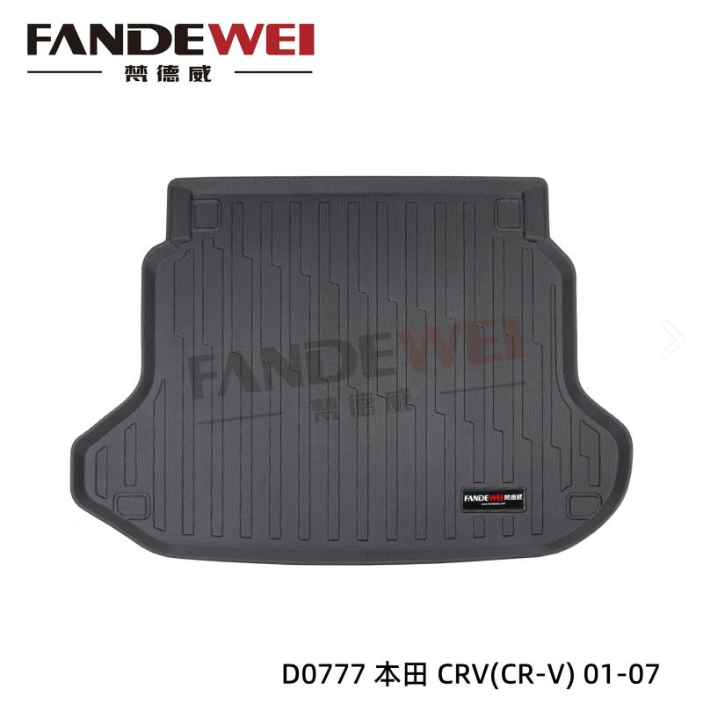
A wide cargo area looks impressive on a spec sheet, but it rarely saves you from an awkward loading situation. The real test comes when you need to carry something long and a passenger at the same time. A split-folding rear seat changes the equation. Instead of dropping the entire bench and losing every back seat, a 60/40 or 40/20/20 split lets you fold just one side. You keep a seat for a kid or a friend while threading a pair of skis, a ladder, or flat-pack shelves through the open section.
Cargo width is also constrained by things you cannot easily measure: wheel arches, interior trim, and the shape of the tailgate opening. A few extra inches of quoted width do not help if the item you are hauling is long but narrow. The limiting factor is usually length, not girth. A split backrest extends that length in a usable way without forcing you to choose between people and gear. When the seat is one solid piece, that choice becomes binary, and no amount of width solves it.
Think about a typical weekend run: a child in a car seat on one side, a big box or a rolled-up rug on the other. With a split bench, the car seat stays installed and the cargo slides in next to it. Without the split, you would be folding the whole seat, uninstalling the car seat, or borrowing a roof rack. That kind of real-world flexibility outweighs a wider cargo floor every time.
Feel the Underside: Grip Pattern Tells You If It Will Stay Put
Turn the pad over and run your fingertips across the backing. Dense rubberized texture with fine repeating ridges tends to bite into the desk instead of sliding. If the pattern feels shallow, smooth, or overly glossy, expect drift when you move the mouse quickly.
Press the pad against a desk and shove it sideways. A reliable grip pattern holds firm until you lift an edge on purpose. Small geometric shapes—dots, waves, diamonds—create multiple contact points. Flat or patchy textures let the pad creep, especially on glass or lacquered finishes.
Pay attention to drag direction. Run your thumb one way, then reverse. More resistance in one direction means the pattern is working. If both directions feel equally slippery, the underside won’t keep the top stable over a long session.
Don’t Trust a ‘Custom Fit’ Label Until You Check the Cutouts
A lot of brands throw the words 'custom fit' on a box without ever scanning the actual item they claim to fit. The fastest way to cut through that noise is to turn the product over and study the cutouts. Real custom work has openings that follow the exact outline of vents, sensors, brackets, or latch points. Generic copies, by contrast, often leave you with oval holes where square ones belong, or a thin slit where a chunky connector needs room to breathe. If the cutout doesn't match the shape you see on your own gear, the label means nothing.
Cutouts are where a product proves whether it was built from real measurements or just padded out from a stock template. On a car floor mat, that means checking the retention hook holes and the dead pedal area. On a phone case, it means looking at the speaker grilles and the charging port. A half-millimeter error might not sound like much, but it can block a microphone, keep a door from latching, or cause a mat to slide over the accelerator. Once you start paying attention to those openings, you'll quickly see which 'custom fit' products were actually designed by someone who held the original part in their hands.
Before you buy, don't settle for a single marketing photo that only shows the item from a flattering angle. Look for customer images that reveal the back or the inner surface, where cutouts are most visible. If you can, compare the cutout positions against a technical drawing or a known reference point on your own device. And if the seller can't show you that area clearly, treat that as a warning sign—not a minor detail. A label is cheap to print; accurate cutouts are much harder to fake.
Spill-Proof Edges Only Work If They Match the Factory Grooves
The spill-proof rim on your travel mug isn't a universal fix. If the edge doesn't sit snugly into the original grooves molded into the lid, you'll end up with dribbles down your shirt no matter how tightly you twist. Factory grooves are cut to a precise depth and angle, and a slightly warped aftermarket edge simply can't hold the seal under pressure.
Think of the lid and edge as a matched pair, like a key and a lock. When you replace one without checking the groove alignment, you're forcing a square peg into a round hole. The result is a false sense of security: it feels tight at first, but the first real tilt sends coffee seeping through the gap. Always compare the new edge against the original groove pattern before trusting it on your commute.
Even within the same brand, small design revisions change the groove spacing. A lid from last year might look identical, but the edge from this year's model won't seat correctly. That's why seasoned travelers keep the original edge stored with the mug and never assume compatibility based on appearance alone.
The Real Test Is How the Liner Behaves After a Week of Groceries
After seven days of milk jugs sweating onto the surface, a crushed berry hiding under the celery, and one slow leak from a package of chicken thighs, most liners start to give up. This one didn't. The raised edges kept liquids from creeping underneath, and the textured top layer stopped containers from sliding every time the drawer opened. Even the corner that held a leaking bag of spinach dried without leaving a stain or a smell.
What really stood out was how the liner didn't curl or bunch up after being loaded and unloaded repeatedly. By the end of the week, it still lay flat, with no sticky residue and no need for scrubbing—just a quick wipe and it looked like the day I put it in. That kind of no-fuss performance is why I'd trust it for the long haul.
FAQ
Most are thin, flexible enough to curl, and lack raised edges. A custom liner should use denser rubber or TPE with reinforced corners and a textured surface so tools or gear don't slide.
Don't just lay a tape across the widest point. Map the narrowest section between wheel wells first, then measure length from seatback to latch, and subtract about 1/4 inch on each side for seasonal expansion. Better, use a manufacturer template or send photos of the floor with the OEM mat removed.
At least 1.5 inches for daily liquids; 2.5 inches if you haul coolers or wet gear. Too high gets in the way of sliding boxes, so look for a sloped outer wall instead of a sharp vertical one.
Rubber suits heavy, abrasive loads but can smell in heat. TPE is lighter, odor-resistant, and stays flexible in cold. Carpet looks better but traps moisture. A hybrid with a rubber core and carpet top works only if you rarely carry wet items.
Check the bottom pattern. Small suction cups or a grid of nibs grip better than a smooth back. Also verify the edges have a slight outward flare, not inward curl, so they press against the trunk walls instead of folding under weight.
A cutout for tie-down hooks or cargo anchors. Without it, you lose the ability to strap items in place, or you end up slicing the liner yourself. Ask the manufacturer to match the exact anchor positions from your VIN or floor photo.
Not necessarily. Thicker material resists punctures but can make the floor feel spongy and interfere with a low trunk cover. Around 3mm to 4mm for TPE or 4mm to 5mm for rubber is the sweet spot for most vehicles, unless you regularly drop sharp metal parts.
Conclusion
A trunk mat manufacturer's first advice sounds backwards: ignore the total length and start with the trunk's worst corner. That tight spot behind the wheel arch or the odd notch near the latch tells you more about fit than any straight-line measurement. If the mat doesn't hug that difficult contour, it will shift and buckle later, no matter how generous the overall dimensions seem. The same goes for the backseat split. Most people measure cargo width, but the split point—where one side folds down independently—often determines whether a liner truly fits a daily routine. If the mat's seams or cutouts don't line up with that split, you'll be fighting the liner every time you load long items.
Once the shape checks out, turn the mat over. Run your hand across the underside; a shallow or slick grip pattern means the liner will slide under heavy grocery bags. You want a texture that bites into the factory carpet without being abrasive. Don't trust the words "custom fit" on the box until you've laid the mat in the car and checked every cutout—tie-down hooks, cargo net anchors, seat-release levers. A true custom liner leaves them accessible, not buried. Then look at the raised edges. They only contain spills if they follow the factory grooves in the trunk floor; a generic lip just creates a dam in the wrong place. Finally, give it a week of groceries. If the edges curl, the material creases permanently, or the mat creeps forward after daily loading, it's not the right fit. The real test is not how it looks on day one, but whether it stays put and easy to clean after repeated use.
Contact Us
Contact Person: Jet
Email: [email protected]
Tel/WhatsApp: 8619903745266
Website: https://www.fandewei.com/