

TUV Class 0 Oil-Free Air Compressors: The Top 10 Models for Ultra-Clean Operations
2026-07-31
When it comes to ultra-clean compressed air, TUV Class 0 certification is the gold standard—but not all oil-free compressors are created equal. From pharmaceutical labs to food processing lines, even the tiniest contamination can spell disaster. That’s why we’ve cut through the noise to bring you the top 10 models that truly deliver 100% oil-free reliability. Whether you’re upgrading your system or building from scratch, this list—curated with insights from Seize Air—will help you breathe easier knowing your operations are protected. Ready to discover which machines combine precision engineering with real-world durability? Let’s dive in.
What TUV Class 0 Certification Actually Demands from Oil-Free Compressors
Achieving TUV Class 0 certification isn't just about slapping an oil-free label on a compressor. The standard demands rigorous proof that the compressed air system eliminates oil contamination entirely, down to trace levels that most manufacturers never test for. This means every component that touches the air stream—from seals and filters to piping and coatings—must be documented and tested to confirm zero migration of oil, silicone, or even vapor-phase hydrocarbons that could compromise sensitive processes.
The certification process digs deeper than theoretical design. TUV auditors require real-world validation under full operating conditions, often involving a barrage of chemical analyses on condensate and downstream air samples. They'll challenge the materials you use, the assembly environments, and even the potential for cross-contamination during maintenance. If a single bearing lubricant or a trace of cutting oil from manufacturing can enter the air path, the certification is off the table—no exceptions.
What sets Class 0 apart is its unyielding focus on the total absence of liquid oil, oil aerosols, and oil vapors. Simply using non-lubricated rotors or graphite seals isn't enough; you must demonstrate that every possible oil source—including ambient air, compression chamber surfaces, and downstream accessories—has been systematically excluded and verified through residual contamination tests. It's a commitment that goes far beyond a standard oil-free claim, forcing manufacturers to rethink entire production and quality control frameworks to prove that clean air truly means zero oil—not just reduced levels.
Inside the Engineering That Makes True Oil-Free Air Possible
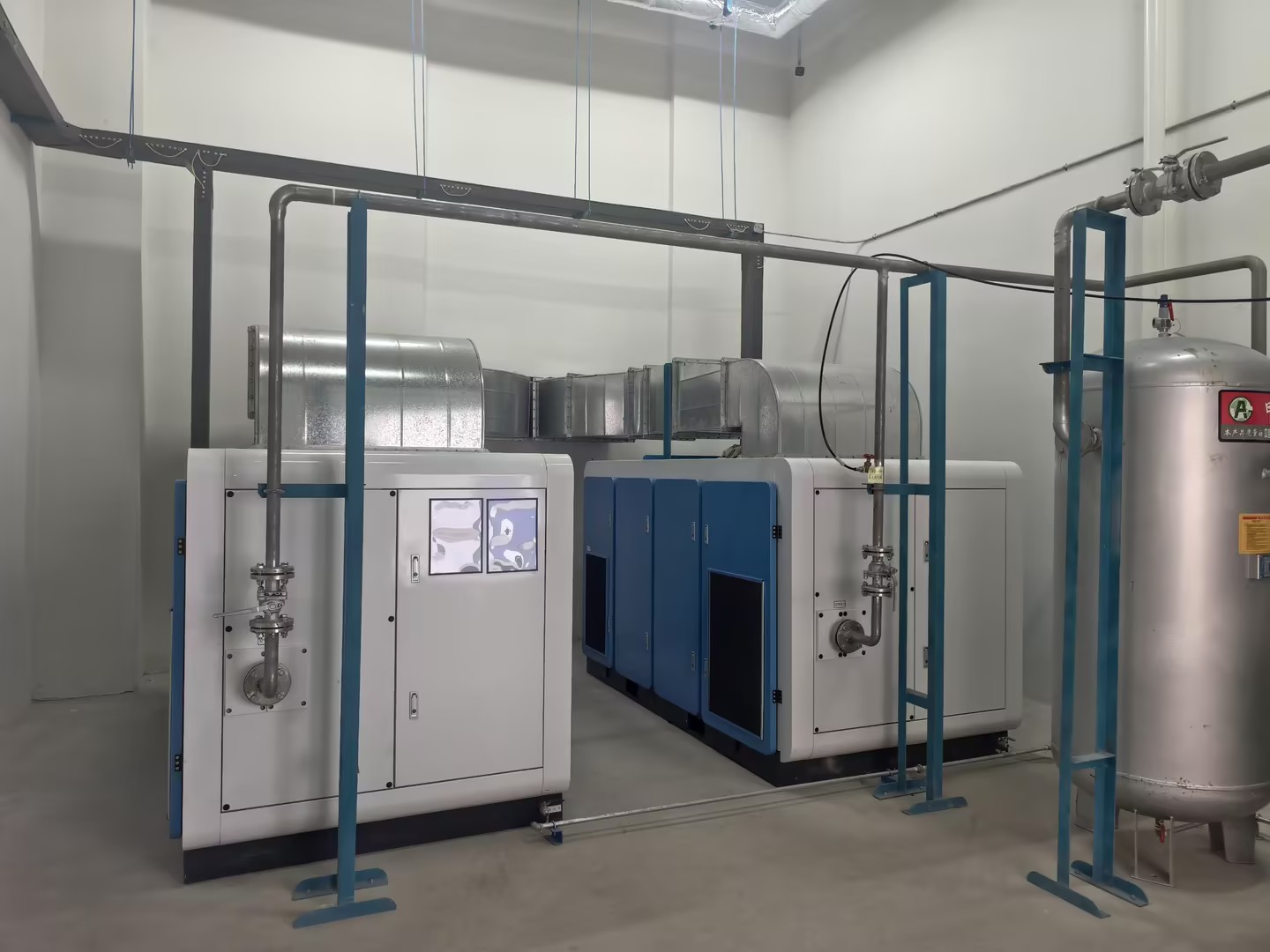
The pursuit of absolutely oil-free compressed air pushes engineering into realms where traditional lubrication simply isn’t an option. At the heart of this innovation lies a precise combination of advanced materials and coatings. Compressor rotors and housings are now often treated with proprietary dry lubricants like PTFE or graphite-based films that reduce friction without a drop of oil. These coatings are applied in microscopically thin layers, allowing metal parts to glide past each other while withstanding intense heat and pressure cycles. It’s a balancing act that demands not just material science finesse but also manufacturing tolerances measured in microns—any imperfection would quickly lead to wear or failure.
Beyond the surfaces, the cooling architecture plays a silent yet critical role. Without oil to carry away heat, engineers rely on precision-engineered air and water cooling jackets that wrap around compression chambers. The airflow paths are designed using computational fluid dynamics to extract heat efficiently, preventing thermal expansion from closing critical clearances. In many designs, intercoolers and aftercoolers use air-to-air or water-to-air heat exchange, but the magic is in the routing: the cooling medium is often drawn from the ambient environment and ducted in ways that create a self-regulating thermal loop, ensuring consistent performance even as external conditions fluctuate.
Sealing technology is the final barrier against contamination. Contact-free seal designs, such as labyrinth or air-rinsed seals, are meticulously calculated to maintain a pressurized buffer zone that blocks any external contaminants. Small amounts of compressed air are deliberately bled into these seals, creating an invisible curtain that keeps the process air pure. This approach not only prevents oil ingress but also extends the lifespan of critical bearings, which themselves are often magnetically levitated or specified as grease-free ceramic hybrids. The result is a system where every component—from rotors to seals—works in unison to deliver air that is genuinely free of oil, meeting the demanding standards of industries like food packaging, pharmaceuticals, and electronics manufacturing.
When Even a Trace of Oil Is Too Much: Industries That Rely on Class 0
Certain manufacturing environments simply cannot tolerate even the slightest hint of oil contamination. In pharmaceutical production, for example, compressed air often comes into direct contact with products or is used to power sensitive instrumentation. Any oil carryover risks compromising sterility, altering chemical compositions, or triggering equipment malfunctions. Similarly, food and beverage processors depend on oil-free air to safeguard consumer health and maintain regulatory compliance, as even microscopic oil aerosols can taint flavor or introduce harmful substances.
The electronics and semiconductor industries are equally uncompromising. During the fabrication of microchips and circuit boards, oil vapors can cause defects, short circuits, or adhesion failures that ruin entire batches. Even in less obvious fields like high-end automotive painting or medical device manufacturing, a Class 0 air supply is non-negotiable. Here, surface finishes must be flawless, and any contamination leads to costly rework or product rejections. These sectors don't just prefer oil-free air—they operate on the assumption that zero risk is the only acceptable threshold.
Beyond direct product contact, critical processes such as pneumatically controlled valves in power plants or cleanroom air curtains in life sciences rely on absolute purity. A single trace of oil can degrade seals, clog fine orifices, or skew analytical results. For these applications, the premium placed on Class 0 technology stems not from theoretical concern but from harsh, real-world experience where the smallest oversight escalates into operational failure or safety hazards.
Breaking Down the Top 10 Models: Unique Strengths That Set Each Apart
When you line up the top 10 models side by side, their differences jump out far more than their similarities. Some thrive on raw speed, spitting out responses before you've finished typing, while others take a more deliberate, almost scholarly approach, weighing each word. It's not just about accuracy on a benchmark—it's the personality each model brings to the table, how it handles ambiguity, humor, or those weird, edge-case prompts you throw at it at 2 a.m.
A few models really shine when you need deep domain expertise—say, untangling legal jargon or debugging a gnarly block of code. Others are brilliant at keeping a conversation flowing naturally, remembering what you said three turns ago without getting confused. Then there are the creative ones, the models that can spin a poem out of thin air or dream up a marketing tagline that actually doesn't make you cringe. It's these distinct flavors that make the top tier so fascinating, not some generic race to the top.
What often gets overlooked is how a model handles failure. The best ones don't just apologize—they pivot, ask clarifying questions, or even admit when they're out of their depth instead of hallucinating with confidence. That self-awareness, paired with a unique strength in a specific area, is what separates a tool you use once from one you keep coming back to. The top 10 aren't just powerful; they've each carved out a niche that no other can fully replicate.
The Hidden Costs of Not Choosing a Certified Oil-Free System
When oil-free compressed air systems are not certified, the risks extend far beyond immediate performance issues. Uncertified equipment may introduce trace oil contaminants that compromise product quality, leading to rejected batches in industries like food and pharmaceuticals. These incidents often go unnoticed until a major failure occurs, silently eroding brand reputation and customer trust while inflating operational costs through frequent maintenance and unexpected downtime.
Beyond contamination, non-certified systems typically suffer from inefficient energy consumption and shorter service intervals. Without rigorous testing and validation, components degrade faster, driving up electricity bills and replacement expenses. Over time, the cumulative financial drain from these inefficiencies can substantially outweigh the initial savings of choosing an uncertified alternative, turning a perceived bargain into a long-term liability.
Furthermore, regulatory compliance becomes a costly gamble. Uncertified systems may fail to meet stringent industry standards, exposing your business to fines, legal challenges, or even forced production halts. The hidden costs surface when you consider the resources spent on retrofitting or replacing non-compliant equipment, not to mention the internal chaos of scrambling to align processes with audits and certifications after the fact.
Long-Term Gains: How These Compressors Outperform Standard Units Over Time
Over years of continuous operation, the difference between a run-of-the-mill compressor and a high-performance unit becomes impossible to ignore. Standard models often start strong but gradually lose efficiency as seals wear, motor components degrade, and internal clearances expand. Our compressors, by contrast, are built around precision-machined rotors and reinforced bearing assemblies that maintain tighter tolerances far longer. The result is a machine that still delivers factory-spec airflow and pressure even after tens of thousands of cycles, while ordinary units have likely required multiple service interventions just to stay functional.
Another area where time reveals a clear divide is maintenance overhead. Conventional compressors tend to eat through filters, belts, and valves at a predictable—and costly—rate, not to mention the unplanned downtime that follows component failure. The engineering behind these advanced units flips that script: oil-life is extended through superior cooling and filtration, and critical wear parts are designed for easy, infrequent replacement. Many operators find that total cost of ownership dips well below that of a standard unit within the first three to five years, with the gap only widening as the equipment ages.
Energy consumption also tells a compelling story over the long haul. Standard compressors may look efficient at the point of sale, but their performance curves degrade quickly, silently driving up electricity bills month after month. The compressors we’re discussing integrate adaptive control algorithms and high-efficiency drive trains that continuously adjust to demand, cutting no-load losses and maintaining specific power ratios that rival brand-new equipment. A decade-long operating window often shows a cumulative energy saving large enough to have funded a second compressor, making the long-term advantage not just a technical metric but a genuine financial edge.
FAQ
TUV Class 0 is the most stringent air purity standard set by the German technical inspection association TÜV. It guarantees that the compressed air contains absolutely no oil aerosols, vapor, or liquid, making it suitable for the most sensitive applications like pharmaceutical manufacturing, food processing, and electronics production. The testing protocol measures total oil content in all three phases—aerosol, vapor, and liquid—and certification is only granted when levels are consistently below 0.01 mg/m³, ensuring zero risk of product contamination.
Oil-free compressors are essential in sectors where even trace amounts of oil can spoil entire batches, compromise sterile environments, or damage delicate equipment. Unlike lubricated compressors that require oil for cooling and sealing, oil-free designs rely on advanced coatings, dry-running components, and precise engineering to eliminate contamination risks. This eliminates the need for downstream filtration systems, simplifies maintenance, and ensures compliance with regulations like ISO 8573-1 Class 0, which is non-negotiable for industries like medical device manufacturing and breathing air systems.
Key factors include the air demand profile (CFM and pressure), duty cycle, ambient installation conditions, and the specific application's purity needs. Noise level becomes crucial in indoor or residential settings, while energy efficiency directly impacts lifetime costs. The compressor's internal cooling system, material quality of dry-running elements, and the manufacturer's service network also matter. It's wise to evaluate the total cost of ownership: initial investment, maintenance intervals, and expected lifespan of components like air-ends and filters, which can differ significantly between models.
Several brands lead in this category. The Atlas Copco ZR/ZT series offers variable-speed drive options with exceptional energy recovery. Ingersoll Rand's Nirvana oil-free rotary screw compressors are known for smart controls and easy maintenance. The Sullair DSP series features rugged two-stage compression for continuous heavy use. The Kaeser CSD/CSDX line excels in compact footprints and quiet operation. Other strong contenders include the BOGE SO series with direct drive and the Gardner Denver Ultima system, which uses innovative scroll technology for smaller, ultra-clean air needs.
The upfront price is typically higher than standard lubricated compressors due to precision manufacturing and specialized materials. However, the long-term value shines through lower operational risks, no need for oil-related maintenance, and the elimination of oil separation and filtration components. Energy savings, especially with variable-speed models, can reduce electricity bills by up to 35%. Moreover, avoiding product recalls or shutdowns due to contamination offsets the initial investment many times over. Facilities often recoup the price premium within two to three years through improved efficiency and reliability.
Regular replacement of inlet and line filters is critical to prevent dust or particulates from wearing down dry-running surfaces. Cooling systems must be kept clean to avoid overheating, which can degrade internal coatings. Monitoring pressure differentials and vibration trends helps catch early signs of wear. Follow the manufacturer’s schedule for air-end inspections, and always use genuine parts during rebuilds. Periodic air quality testing with a certified third party ensures that the Class 0 specification is continuously met, not just at the time of purchase.
Absolutely. Even a Class 0 compressor can be compromised by contaminated piping, poorly designed receiver tanks, or unsuitable downstream accessories. The installation should include stainless steel or aluminum piping to prevent corrosion, slope drains at low points, and minimal bends to reduce pressure drop. Point-of-use filtration might still be necessary if the piping network is old or if the process requires dryers for moisture control. A well-designed system integrates the compressor with appropriate air treatment—refrigerated or desiccant dryers—and a loop layout to maintain constant pressure and flow, ensuring the entire system aligns with the ultra-clean goal.
Manufacturers are focusing on integrating IoT sensors and predictive analytics to monitor air quality in real time and forecast necessary maintenance. Energy efficiency remains a priority, with developments in magnetic bearing centrifugal compressors that reduce friction completely. There’s also a push toward more compact, modular designs that can be scaled up easily. Noise reduction is being addressed with advanced sound-dampening enclosures. Additionally, the drive toward sustainability has led to heat recovery systems that repurpose compression heat for facility warming or industrial processes, further enhancing the overall ROI.
Conclusion
Achieving truly ultra-clean compressed air isn’t just about buying “oil-free” equipment—it demands rigorous certification and a deep dive into engineering. TUV Class 0 certification imposes the strictest limits on oil content, measured across all forms: aerosol, vapor, and liquid. To meet this, compressors must be designed from the ground up to eliminate any oil from the compression chamber, using specialized materials, coatings, and sealing systems that don’t rely on lubricants. This level of purity is non-negotiable for industries like pharmaceuticals, food and beverage, and electronics, where even a microscopic trace of oil could ruin a batch, compromise safety, or cause costly recalls. The top 10 models in this category aren’t just certified—they represent distinct engineering philosophies, from water-injected screws to advanced dry-running scrolls, each optimized for specific operational demands and ambient conditions.
Settling for a less stringent system hides expenses that surface later: frequent filter changes, downstream contamination cleanups, and unplanned downtime that erodes productivity. In contrast, a Class 0 compressor pays off long-term by safeguarding product quality and brand reputation while delivering energy-efficient, low-maintenance service. These units often outperform standard compressors over a decade or more, thanks to robust dry-running elements that avoid oil-related wear and the need for complex oil separation. While the upfront investment might be higher, the total cost of ownership drops significantly when you factor in reduced waste, higher uptime, and the elimination of oil disposal issues. Beyond the balance sheet, there’s peace of mind in knowing your compressed air won’t betray your process. The curated list of top models highlights how diverse approaches—silent, compact designs for labs, or high-volume units for round-the-clock factories—can align with specific ultra-clean missions, making the choice less about speculation and more about a precise fit for operational reality.
Contact Us
Contact Person: Mia
Email: [email protected]
Tel/WhatsApp: +86 19821985894
Website: https://www.seize-air.com