

Wastewater Treatment Blower Working Principle Explained
2026-08-31
At a wastewater treatment plant, the blower isn't the most glamorous piece of equipment—but it's the one that keeps the whole biological process alive. Aeration accounts for a huge share of a plant's energy use, and small inefficiencies snowball fast. In this guide, we look past the jargon and explain the actual working principle behind wastewater treatment blowers: how they deliver air, why different designs matter, and where Seize Air fits into the picture. By the time you finish, you'll know exactly what to watch for—and what to avoid.
What Actually Happens Inside a Wastewater Blower
Most people assume a wastewater blower works like a big fan, but that’s far from the truth. Inside the housing, two or three lobed rotors spin in opposite directions without ever touching. Each lobe traps a fixed pocket of air against the casing and carries it from the intake side to the discharge side. Because the pocket’s volume doesn’t shrink until the moment it opens to the outlet pipe, the compression happens almost instantly—more like popping a balloon than gradually squeezing air. The result is a series of sharp pressure pulses, not a smooth flow.
That pulsing action explains why these machines run hot and loud. With clearances between lobes and housing often under a few thousandths of an inch, air slips back past the rotors at higher pressures, turning into heat instead of forward flow. You also get condensation because the air heats up, then cools in the discharge line. Oil-free designs keep lubrication out of the air path, but the timing gears at the drive end still need constant oil splash. If the gears wear, the lobes can kiss and destroy the blower in seconds.
What matters most is not the motor or the pipes, but the small unglamorous parts: relief valves that vent excess pressure, inlet filters that stop grit from grinding the lobes, and silencers that tame the low-frequency thump. Ignore those, and the inside of the blower becomes a slow-motion sandblaster.
Why Microbes Dictate Blower Speed More Than Operators Do
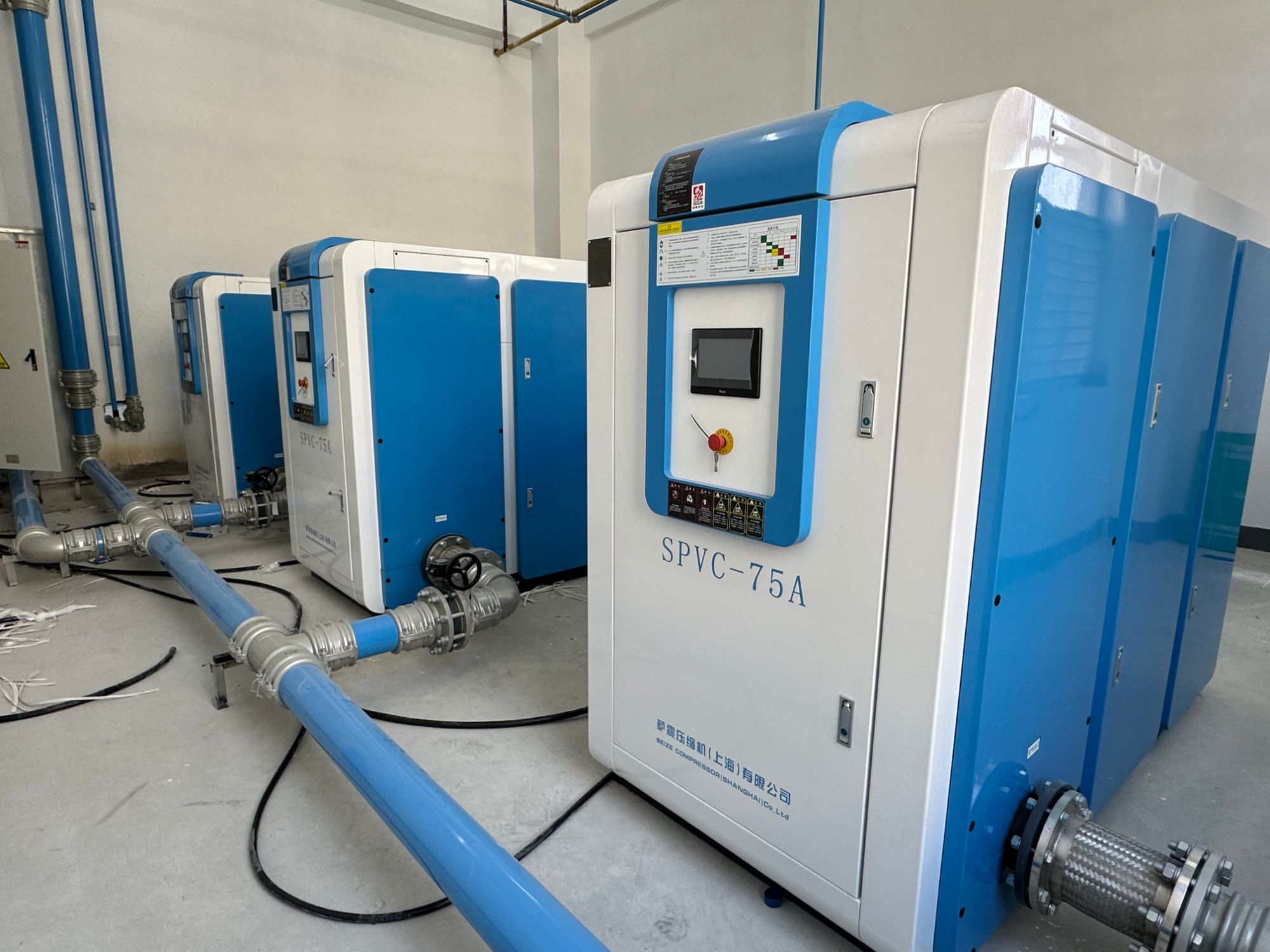
Aeration blowers rarely follow an operator's fixed schedule. They respond to oxygen uptake rates that shift by the hour as microbial communities break down organic load. An operator can set a dissolved oxygen target, but the real air demand comes from the respiration of bacteria, protozoa, and fungi in the mixed liquor. If the biology slows down, extra air simply strips CO₂ and wastes energy. If the biology surges, an underpowered blower leaves the system gasping.
Influent spikes, temperature swings, and toxic shocks change microbial activity long before a lab result reaches the control room. Nitrifiers might double their oxygen consumption within a narrow window, while heterotrophs compete for the same electron acceptors. The blower speed then tracks biological respiration, not a manual setpoint. Holding a constant RPM often creates feast-or-famine conditions: over-aeration during low-load periods and oxygen starvation when the biomass suddenly gets hungry.
The practical question isn't how fast someone wants the blower to run, but how fast the biology is consuming oxygen in real time. Plants that tune air delivery to respiration data rather than operator habit get more stable effluent and lower energy bills. Microbes act as the load, the sensor, and the feedback loop all at once. Operators can set boundaries, but the actual command comes from the organisms doing the work.
Positive Displacement vs. Centrifugal: Two Ways to Push Air, Two Very Different Behaviors
The core difference comes down to how each machine traps and moves air. A positive displacement unit draws in a fixed volume, seals it off, and then forces that same pocket out against whatever pressure is waiting downstream. That means flow stays nearly constant even as system pressure climbs, at least until something gives. Centrifugal designs take a different route—they spin air outward using an impeller, turning velocity into pressure. Here, flow is tied directly to pressure: push harder and the volume drops off quickly.
In practice, this makes each style suited to very different jobs. Positive displacement blowers are the go-to for applications that need steady air delivery no matter the load, like wastewater aeration, pneumatic conveying, or vacuum trucks. Centrifugal machines shine where airflow demands swing and pressure needs are moderate but consistent, such as in large cooling systems or combustion air supply. They can throttle efficiently across a range, but they don’t like dead-heading.
It also changes how you protect the system. Positive displacement units almost always require a relief valve because they’ll keep building pressure until something fails. Centrifugal compressors generally don’t need that same safeguard—they simply surge and stall if pushed past their curve. Understanding that behavioral split matters more than raw specs when you’re sizing a system.
How a Pressure Curve Exposes Hidden Inefficiencies Before They Cost You
A pressure curve rarely lies. Plot pressure against flow or speed, and the shape you get is a signature of how a system actually behaves—not how it was designed to behave on paper. Most operators glance at a single gauge reading and miss the story unfolding across the whole curve. That story often shows a pump working harder than it should, a filter quietly choking, or a valve that hasn't fully opened in weeks. The curve makes those inefficiencies visible long before they turn into breakdowns.
What makes a pressure curve so useful is its sensitivity to small deviations. A healthy system produces a repeatable curve with predictable slopes and knees. When something degrades—say, impeller wear or a partially clogged strainer—the curve shifts slightly. The peak pressure drops a bit, or the curve flattens in an unexpected spot. These changes are easy to dismiss as noise if you're only watching alarm thresholds. But read as a pattern, they point to specific problems early enough to schedule a low-cost fix instead of an emergency shutdown.
The real payoff comes when you stop treating the pressure curve as a troubleshooting tool and start using it as a routine health check. Overlay today's curve on last month's baseline and the drift becomes obvious. A slow trend toward lower pressure at the same flow might mean a wearing seal or growing internal leakage. Catching that drift while it's still small means a planned maintenance visit—not a weekend callout or a ruined batch. In that sense, the curve doesn't just expose inefficiencies; it hands you the time and information to do something about them before they cost real money.
Dissolved Oxygen and Bubble Size: The Real Blower Performance Metrics
Conventional blower specifications often emphasize airflow rate and power draw, but these figures can be misleading in real aeration systems. A blower that moves a large volume of air does not necessarily deliver more oxygen to the water, because the transfer efficiency depends on how the air is dispersed. Dissolved oxygen concentration is the actual result that matters for biological processes, and it is directly influenced by the physical characteristics of the bubbles produced. If the diffuser system generates coarse, fast-rising bubbles, most of the oxygen simply escapes to the atmosphere before it can dissolve. Therefore, evaluating a blower based on its ability to support fine bubble formation and maintain target dissolved oxygen levels provides a far more accurate picture of its true performance.
Bubble size plays a critical role in oxygen transfer kinetics. Smaller bubbles have a much higher surface-area-to-volume ratio, which allows for faster gas exchange across the air-water interface. They also rise more slowly, extending the contact time between the air and the liquid. In practice, a blower that produces the right pressure and flow characteristics to drive fine-pore diffusers can achieve significantly higher oxygen transfer efficiency than a larger unit pushing air through coarse diffusers. This means that a seemingly less powerful blower can outperform a bigger one if it is better matched to the diffuser system, highlighting that the real metric is not raw airflow but the resulting dissolved oxygen profile.
Monitoring dissolved oxygen in the tank or basin offers a direct performance indicator that integrates all system variables, including water depth, temperature, and organic load. A well-designed aeration setup should maintain dissolved oxygen above a specified threshold with minimal energy input. When operators focus on bubble size distribution and dissolved oxygen trends instead of nameplate airflow, they can identify underperforming equipment, optimize blower speed or valve settings, and reduce energy waste. Ultimately, the combination of fine bubble generation and stable dissolved oxygen control is what defines an efficient aeration system, making these two factors the genuine performance metrics for blowers.
When Constant Airflow Fails: The Case for Variable Speed Blowers
A fixed-speed blower runs at one pace no matter what the house actually needs. On a mild afternoon, it still pushes the same volume of air as it does during a heat wave. The result isn't just wasted energy—it's uneven temperatures, short cycling, and a system that can't react when a filter gets dirty or a room adds sun load. Constant airflow assumes a static world, and homes simply don't work that way.
Variable speed blowers change that math. Instead of a single blast, they ramp up or down in small increments, matching airflow to the real-time demand. A multi-stage or modulating system can run at 40% capacity for hours, pulling more moisture out of the air and keeping temperatures steady without the constant on-off jolt. In cooling mode, the lower, longer cycles also mean better dehumidification—something fixed-speed units struggle to deliver.
The practical difference shows up in comfort and sound. A variable speed motor rarely runs at full tilt, so it's noticeably quieter, especially at night or in rooms near the air handler. Over time, the slower ramp-up also reduces stress on ductwork and the blower itself. When constant airflow fails to adapt, variable speed steps in with a response that feels less like an appliance switching on and more like the house simply staying comfortable.
FAQ
It pushes air into the aeration basin so the aerobic bacteria get enough oxygen to break down organic waste. Without that steady supply of air, the biological process slows down and effluent quality drops quickly.
A positive displacement blower traps a fixed volume of air and forces it out, so the flow stays fairly constant even if pressure changes. A centrifugal blower accelerates air with an impeller and converts that velocity into pressure, which means flow drops off as backpressure rises. For deep tanks with stable pressure, centrifugal often makes sense; for shallower or highly variable conditions, positive displacement is more predictable.
The air flow sets the dissolved oxygen level. Too little and the bacteria can't metabolize the waste; too much wastes energy and can shear the floc or cause foam. Operators usually aim for a dissolved oxygen setpoint around 1.5 to 2 mg/L and adjust blower output to stay in that band.
Dissolved oxygen is the actual target variable. The blower doesn't just move air; it determines how much oxygen transfers into the mixed liquor. Oxygen transfer efficiency depends on bubble size, depth, and diffuser condition, so blower output has to be matched to those conditions to keep DO steady.
First you verify oil levels, check that the discharge valve is open or the bypass is lined up, and confirm the inlet filter is clean. Then start the motor, watch the pressure gauge, and let the blower run unloaded for a few minutes. Once temperatures and vibrations look normal, you gradually bring it up to the required flow and switch to automatic control.
Regular oil changes, air filter cleaning or replacement, belt tension checks, and vibration monitoring are the core tasks. For positive displacement blowers you also need to inspect lobes and timing gears for wear. For centrifugal units, check bearing temperatures and impeller clearance. A simple daily walk-around listening for unusual noise catches most problems early.
Lobe blowers are cheaper upfront and easier to rebuild, but they're noisier and less efficient at higher pressures. Screw blowers cost more initially yet run quieter and use less power at pressures above roughly 0.7 bar. If energy is the dominant operating cost and pressure is stable, screw usually wins; if the plant is small and capital budget is tight, lobe may be fine.
Clogged inlet filters, worn rotors or impellers, leaking discharge piping, and fouled diffusers all force the blower to work harder for the same air delivery. Sometimes the operating point drifts because tank levels or sludge characteristics change, so the blower ends up running against a different system curve than it was sized for.
Conclusion
Inside a wastewater blower, air is compressed and forced through diffusers at the bottom of aeration basins, creating a column of fine bubbles that transfer oxygen to the mixed liquor. The actual demand for air is set not by human operators but by the metabolic rate of the microbial community—when organic load spikes, microbes consume oxygen faster, and the blower must respond with more airflow to keep dissolved oxygen levels in the optimal range. Two dominant blower designs handle this task very differently: positive displacement units deliver a nearly constant volume of air per revolution regardless of pressure, while centrifugal blowers operate along a performance curve where airflow drops sharply as backpressure rises. Monitoring that pressure curve is more than a maintenance ritual; subtle shifts in the curve's shape can reveal clogged diffusers, fouled impellers, or leaking air piping long before energy bills balloon.
The true measure of a blower's usefulness is not just cubic feet per minute but how effectively that air dissolves into the water—dissolved oxygen concentration and bubble size are the real performance metrics. Smaller bubbles from fine-bubble diffusers expose more surface area per unit of air, improving oxygen transfer efficiency, but producing them requires the blower to overcome higher static pressure. A fixed-speed blower sized for worst-case conditions wastes enormous energy during average or low-load periods, blowing air that simply rises to the surface without transferring. Variable speed blowers, driven by real-time dissolved oxygen sensors, modulate airflow to match microbial respiration, avoiding both oxygen starvation and costly over-aeration. This shift from constant airflow to demand-based control is what separates an energy-bleeding plant from one that treats wastewater without bankrupting its operating budget.
Contact Us
Contact Person: Mia
Email: [email protected]
Tel/WhatsApp: +86 19821985894
Website: https://www.seize-air.com